
Topline
President Donald Trump’s approval rating dipped to a record-low 36% in the latest survey released Tuesday, down four points from last week and 11 points from the start of his second term as the Iran war has driven up gas prices.
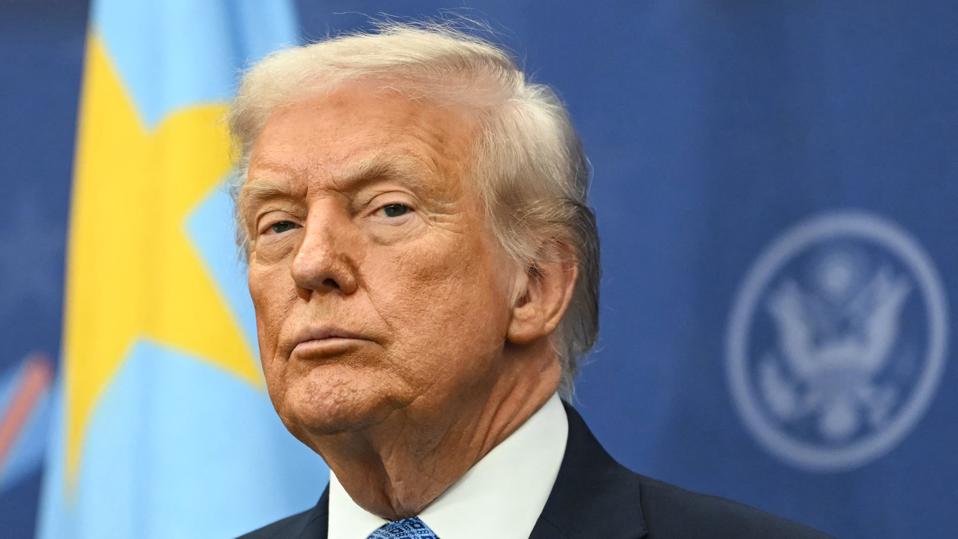
U,S. President Donald Trump in Washington, DC, on Dec. 4, 2025.
AFP via Getty Images
Timeline
Trump’s approval rating fell to a record low of 36%, according to a Reuters/Ipsos poll released Tuesday, a four-point decline from his approval rating last week and down 11 points from his 47% approval rating at the start of his second term (the latest poll of 1,272 U.S. adults was conducted March 20-23 and has a margin of error of 3).
Approval of Trump’s strikes on Iran were down two points from last week, to 35%.
Gas prices have gone up 34%, to $3.98 a gallon on average nationally, since the war began on Feb. 28, according to AAA.
Among Trump supporters who identify as “MAGA,” 81% said they support the U.S. military operations in Iran, according to a Politico survey, while 61% of “non-MAGA” Trump supporters back the strikes (the poll of 3,851 was taken March 13-18 and has a margin of error of 1.6).
Some prominent right-wing figures, including Tucker Carlson, Megyn Kelly and former Rep. Marjorie Taylor Greene, R-Ga., have splintered with Trump over the war, arguing it goes against his “America First” philosophy and violates his campaign promises not to enter into any new wars.
Trump’s approval rating remains stable, at 40%, in a Reuters/Ipsos poll taken March 17-19, a one-point increase from the groups’ poll taken just after the war began (the latest survey of 1,545 U.S. adults has a margin of error of 3).
The poll found 55% oppose sending troops to Iran, yet 65% believe Trump will—he said Thursday, “we’re not putting troops anywhere,” when asked about the deployment of 2,200 Marines to the Middle East.
An Economist/YouGov poll conducted March 6-9 found Trump’s approval rating has increased two points, to 40%, since the groups’ previous poll taken Feb. 27-March 2, while his disapproval rating has decreased four points, to 55% (the latest poll of 1,563 U.S. adults has a margin of error of 3.4).
That’s despite 52% saying they disapprove of the way Trump is handling the situation in Iran and 56% saying he should have first sought Congress’ approval, though 54% said they were not surprised he ordered the strikes.
Meanwhile, a New York Times analysis of polls taken in the initial days of nine other U.S. military interventions dating back to World War II found fewer Americans support the U.S. military action in Iran (41%) than all of the other conflicts.
The Libya Intervention in 2011 was the only other conflict to receive less than majority support (47%), according to The Times analysis.
The findings are the latest to show the majority disapprove of Trump’s handling of the Iran conflict, though it hasn’t changed his overall standing with voters: in The New York Times’ poll tracker, Trump’s 41% approval rating is unchanged since Feb. 28, and it’s decreased less than one point in Nate Silver’s poll tracker.
Thirty-seven percent of voters approve of the way Trump is handling his job as president in the latest Quinnipiac poll conducted March 6-8, while 57% disapprove, largely consistent with Trump’s approval rating in February (the latest poll of 1,002 registered voters has a margin of error of 3.8).
Fifty-three percent oppose the U.S. military action against Iran, and 40% support it, while 55% do not think Iran posed an imminent military threat to the U.S. and 39% think it did, the poll found.
Trump’s approval rating stayed stagnant at 43% in Emerson College’s February survey, compared to last month, but his disapproval rating increased four points, to 55%.
His approval rating among Hispanics has plummeted in the wake of attacks on Venezuela in January and immigration crackdowns in major cities that led to the killings of two Americans by federal agents in Minneapolis last month.
A total of 37% of Hispanic respondents approve of his job performance, while 58% disapprove in the latest poll, compared to 43% who approved and 45% who disapproved last month (the poll of 1,000 likely U.S. voters was conducted Feb. 21-22 and has a margin of error of 3).
Trump’s approval rating declined one point, to 40%, from January in the latest CBS/YouGov poll that found 60% disapprove of his job performance (the poll of 2,381 U.S. adults was conducted Feb. 20-23 and has a margin of error of 2.3).
The poll found a majority of voters disapprove of Trump’s handling of immigration, the economy and inflation, and 53% said the country is worse off than it was a year ago.
Trump’s approval rating dropped to 36% in the latest CNN/SSRS poll, from 48% a year ago (the poll of 2,496 U.S. adults conducted Feb. 17-20 has a margin of error of 2.5), with the steepest declines among adults ages 35-49 (-19 points), Latinos (-19) and adults ages 18-34 (-16).
His approval rating is down three points from the last CNN/SSRS poll in January and his disapproval rating has increased two points.
Trump logged a 39% approval rating and 60% disapproval rating in a Washington Post-ABC News-Ipsos poll released Monday, compared to a 41% approval/59% disapproval rating in the groups’ last poll in October (the latest poll of 2,589 U.S. adults was conducted Feb. 12-17 and has a margin of error of 2.2).
Trump on Monday rejected the polls as “fake” and claimed, without evidence, he’s “much higher” than 40%.
Trump logged a 43% approval rating and 55% disapproval rating in Morning Consult’s weekly poll out Tuesday, a one-point decrease in his approval rating and two-point uptick in his disapproval rating (the poll of 2,200 registered U.S. voters was taken Feb. 13-16 and has a margin of error of 2).
The -12 net approval rating is a record low for his second term, and his 42% favorability rating is also an all-time low.
The share of voters who said lowering costs is a top priority for Trump fell five points over the past week, to 47%, the largest single-week decrease in the metric in Morning Consult’s weekly Trump polls.
Trump’s approval rating stayed stagnant at 38% and his disapproval rating increased one point, to 60%, in the latest Reuters/Ipsos survey released Tuesday, compared to last week’s poll (the latest survey of 1,117 U.S. adults was conducted Feb. 13-16 and has a margin of error of 3).
The share of respondents who said Trump is doing a good job on immigration fell to 38%, the lowest level of his second term, down from 39% in January and 50% at the start of his second term.
Trump’s approval rating increased two points, to 39%, and his disapproval rating stayed stagnant at 56% in this week’s Economist/YouGov poll compared to last week (the survey of 1,682 U.S. adults was conducted Feb. 13-16 and has a margin of error of 3).
The latest poll from AP-NORC found Trump has a 36% approval rating and 62% disapproval rating, compared to a 40%-59% split in the groups’ January poll (the latest survey of 1,156 U.S. adults was conducted Feb. 5-8 and has a margin of error of 3.9).The poll is the latest to find widespread disapproval of his immigration policy, with 62% saying his deployment of federal immigration agents into U.S. cities has gone too far, while his approval rating on his handling of immigration generally has declined from 44% in August to 38%. The share of independents who say Trump has “gone too far” in deporting immigrants has increased from 46% in April to 60% in the latest survey, and approval of his immigration policy as a whole has fallen among independents from 37% in March to 23%.
Trump’s approval rating decreased one point in Morning Consult’s weekly survey, to 44%, three points below where it was during this point in his first term, while 53% disapprove of his job performance (the survey of 2,200 registered voters was conducted Feb. 6-9 and has a margin of error of 2).
Trump’s approval rating improved one point from January, to 39%, in the Marist/PBS February poll, while 56% disapprove of his job performance (the poll of 1,462 U.S. adults was conducted Jan. 27-30 and has a 2.9-point margin of error).
Trump had a 38% approval rating in Marist’s poll at this point in his first term, significantly below the 52% average for U.S. presidents dating back to 1938, according to Gallup.
The Marist/PBS poll is the latest to find Americans have negative views of Immigration and Customs Enforcement’s actions—in the wake of Renee Good and Alex Pretti’s killings by federal agents last month—with 65% saying ICE has gone too far, 12% saying it’s not gone far enough and 22% saying its approach is about right.
Trump’s approval rating declined three points, to 37%, in the latest Quinnipiac University survey compared to its poll last month, while 56% disapprove of his job performance (the poll of 1,191 registered U.S. voters was conducted Jan. 29-Feb. 2 and has a margin of error of 3).
The poll found 60% believe the Trump administration is being too harsh in its treatment of undocumented immigrants, 30% said it’s handling it about right and 7% said it’s being too lenient—61% also said they believe the Trump administration has not given an honest account of Pretti’s shooting, compared to 25% who said he has and 14% who have no opinion.
Trump’s approval rating declined one point, to 42%, in Marquette Law School’s poll of 1,003 U.S. adults conducted Jan. 21-28 (margin of error 3.4), with 58% disapproving of his job performance, compared to its last poll in November that found 43% approve of his job performance and 57% disapprove.
The poll also found 60% disapprove of the way ICE is enforcing immigration laws and 40% approve.
Trump’s net approval rating improved 2.2 points in the latest Economist/YouGov survey compared to last week, with 41% approving of his job performance and 56% disapproving (the survey of 1,504 registered voters was conducted Jan. 30-Feb. 2 and has a margin of error of 3).
Americans’ views of Trump’s handling of inflation and prices also improved—from a net -34 in October to -23 now, the Economist notes.
The poll found 50% of voters believe Trump’s approach to immigration is too harsh, 36% said it’s about right, 8% said it’s too soft and 7% are not sure.
A plurality, 37%, also said all immigration agents should be removed from Minneapolis, while 21% said the administration should send more.
Trump’s 45% approval rating in Morning Consult’s weekly survey was the same as last week, though his disapproval rating went up one point, from 52% to 53% (the survey of 2,201 registered U.S. voters was conducted Jan. 28-29 and has a margin of error of 2).
The rating is close to Trump’s record-low Morning Consult registered in November and is below his approval rating at this point in his first term, when 46% of voters approved and 50% disapproved of his job performance.
Trump “faces the worst news environment of his presidency,” Morning Consult reported, as voters are 28 points more likely to have heard something negative than positive about him in recent days.
The January survey from Harvard CAPS/HarrisX found 45% approve of Trump’s job performance and 51% disapprove, a two-point decline from his 47% approval rating in December and just one-point above his 44% record-low in the groups’ monthly polling (the latest survey of 2,000 registered voters was conducted Jan. 28-29).
More than half of respondents, 51%, said Trump is doing a worse job than former President Joe Biden, while 49% said he’s doing better.
A plurality of voters, 46%, also said Trump is performing worse than they expected, while 26% said he’s meeting their expectations and 28% said he’s performing better.
Big Number
41%. That’s Trump’s average approval rating so far during his second term, equal to his 41% average approval rating throughout the duration of his first term, according to Gallup.
How Trump’s Approval Rating Compares To Previous Presidents
Trump’s overall average approval rating for his first and second terms (41%) is lower than all presidents dating back to Harry Truman, according to Gallup. Joe Biden had the next lowest average, 42%, followed by Truman (45%) and Jimmy Carter (46%).
Key Background
Trump’s approval rating has plummeted from about 52% at the start of his term to around 41%, with steep declines coinciding with his “Liberation Day” tariff announcement in April last year and a record-long government shutdown that began in October, according to Nate Silver’s poll tracker. Ongoing economic concerns, including relatively high cost of living, and dissatisfaction with his hardline immigration policies have taken a toll on Americans’ views of Trump’s job performance. A February CNN/SSRS poll found 32% of respondents said Trump has had the right priorities, while 68% said he hasn’t paid enough attention to the country’s most important problems. That’s compared to a 40%/52% split at the end of February last year. Meanwhile, the poll found an overwhelming majority of respondents, 57%, said the economy and cost of living was the one issue they would most like Trump to focus on in his State of the Union speech on Feb. 24, of six issues the poll asked about, followed by immigration (13%). His handling of the Epstein files and the killings of two Americans by federal immigration agents in Minneapolis have also received low marks in polls—56% of respondents in a Washington Post/ABC News/Ipsos poll released in February said his administration hasn’t been transparent about the Epstein files. And despite 50% in the Post/ABC/Ipsos poll saying they support Trump’s push to deport all undocumented immigrants, 58% said he is going too far in trying to achieve that goal. Meanwhile, Trump has lost a significant amount of support among key demographics that helped him win the 2024 election, including independents, Latinos and young men.
Further Reading
President Trump’s Approval Rating: Latest Polls (New York Times)
How popular is Donald Trump? (Silver Bulletin)