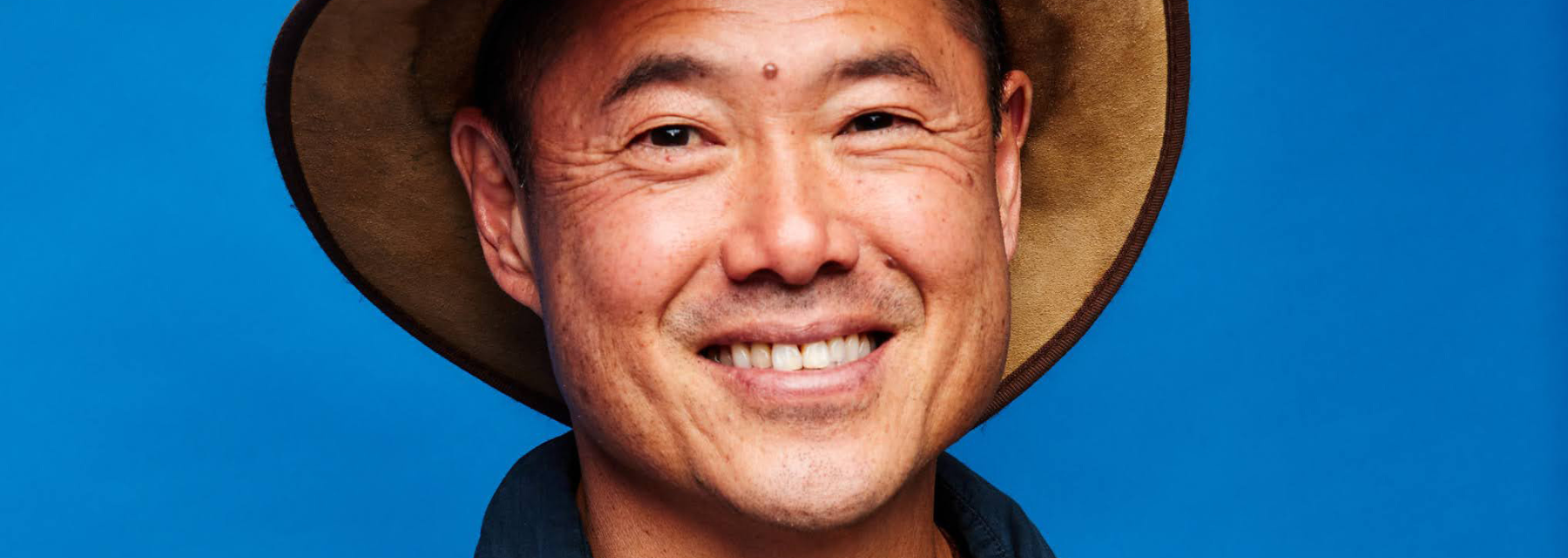

Bill Tai is a venture capitalist who chose a non-traditional path, driven by his “refugee mentality” and a belief in a decentralised world. He used his passion for the ocean to create a community that became the key to funding ventures like $65-billion Canva and $10-billion Blackbird Ventures.
This story appears in Issue 19 of Forbes Australia, out now. Tap here to secure your copy.
The year is 1986. Silicon Valley is becoming the crucible of the semiconductor industry, and the innovation being forged at Intel, Motorola, and Texas Instruments will go on to underpin decades of game-changing technology.
Inside this crucible was LSI Logic, an up-and-coming computer chip design company headquartered in Santa Clara. It was the workplace of 23-year-old electrical engineering graduate, Bill Tai, and his colleague and distant relative Jensen Huang, the eventual founder of Nvidia.
While many of Tai’s peers would work for decades in the semiconductor industry and go on to build multi-billion-dollar companies like Altera, Xilinx, Broadcom, and the trillion-dollar Nvidia, Tai would continue pivoting to his next venture and next sector. His path was not to build a corporate empire; it was to evolve, build community, and provide kindling to entrepreneurs far and wide so that they may ignite bonfires.
This unique approach – of lighting the flame and bringing others aboard to fuel it – is rooted in his worldview that sees the future as a return to something ancient: community.
From Twitter to Hut 8
Tai struck a match that brought people together to invest in Australian start-up unicorns Canva and Safety Culture, and prominent homegrown VC Blackbird Ventures. Before meeting Melanie Perkins and Cliff Obrecht in Perth in 2010, Tai gave Zoom founder Eric Yuan his first cheque. Three years before that, he invested in Tweetdeck, which Twitter subsequently acquired.
These days, Tai is looking to make investments in green energy, the creator economy, and the intersection of health and AI. He invests through his own vehicle, KiteVC, and ACTAI Ventures, a consortium of kitesurfing investors from around the globe.
Recent investments in the energy sector include blockchain infrastructure company Hut 8 Mining, a spinout from Bitfury, which he also backed. Hut 8 is now listed on the Toronto Stock Exchange. Tai also invested in Australia’s first ICO (Initial Coin Offering), WA-based Powerledger.io, which develops software to track and trade renewable energy.
His orientation toward health stems largely from his belief that the broken US healthcare system could bankrupt the US economy, and that there is a fundamental misalignment between patient needs, doctors’ incentives, and the margins on drug prescriptions. To improve the quality of care and reduce administrative burden, he and Australian Alexander Tayler – of Cambridge Analytica fame – created AI start-up Dyad.
Decentralisation is a key theme in the investments he makes. As he sees it, energy is stored productivity, and therefore a currency. “The sources of energy that are ‘green’ have all fallen in cost below that of burning stuff and to some extent can now be ‘decentralised,” he says.
According to Tai, the Industrial Revolution was just a short “blip” in human history, and we are now returning to a decentralised world where a centralised power will no longer control productivity. Instead, he sees a “granular economy of hundreds of millions of people that are self-productive units.”
In his worldview, this shift is driven by a new source of power: electrons. Unlike fossil fuels, controlled by corporations and OPEC, electrons can be generated by individuals on their land or rooftop and come from freely available sources like the sun and wind.
When it comes to the explosion of AI, there is an enormous investment opportunity in the power-hungry cooling and storage infrastructure, he says.
Necker, Branson, stress tests and Zoom
When Tai wrote a cheque that put Townsville unicorn Safety Culture in play in 2013, he did it because of personal experience.
“I had a summer job in high school where I drove a forklift in a chemical factory. I opened a 55-gallon drum and got this shit all over me,” says Tai. “Rick Baker, the founder of Blackbird, says he met this guy in Townsville, and he’s got a really interesting product. And I say, ‘What is it?’ And he says, Well, it’s like a forms automation thing on the iPad for occupational health and safety.”
When Safety Culture founder Luke Anear pitched the digitised streamlining of paperwork for workplace incidents to Tai in Townsville, the VC was all ears. “I was like, that’s a winner. I committed US$100k with Rick on the spot.”
These days, putting money into a company has to have at least a billion-dollar upside, Tai says.
“The odds of it hitting are not high. I have to feel like a company can be worth a billion dollars to consider it.”
Bill Tai
He often needs time to get to know the entrepreneurs before investing. “I knew Eric for several years before we pulled the trigger on Zoom,” he says.
When they did eventually march forward with the live-conference platform, the speed and video quality needed to be stress-tested. What better location could there be to troubleshoot than Richard Branson’s remote island in the Caribbean?
“It’s 2013. I get to Necker, and the latency for a video call to the US is 400 milliseconds. To calibrate that, California to Australia is 100 milliseconds, and that’s the limit for it to work,” Tai explains.
True to his optimistic form, he decided the start-up pitch show must go on. “I’m like, shit, this is gonna be hard. I had Melanie [Perkins] pitching Canva at Necker and people presenting from Japan, Mountain View, Los Angeles, London, New York, San Jose,” he laughs. He troubleshot his way out of it. “I got the IT guy from Necker to run a microwave link, and we got it down to 200 milliseconds. And it worked.”
Tai says that the Necker trip is indicative of when he is happiest – surrounded by advanced technology, ideal kitesurfing conditions, and founders he has faith in. I ask what personality traits he looks for when inviting people to join ACTAI Global, and without hesitation, he rattles off three. “People who stand for something greater than themselves,” he says. “A willingness to use their power to empower others. And to leave places better off than how they were found.”
Spotting talent
Those are some of the qualities he saw in Perkins on his first trip to Perth in 2010. Two years later, his instincts were confirmed.
It was a mild summer Thursday in July when Tai attended a pitch event in the ballroom of the East Palo Alto Four Seasons hotel. The storied VC had participated in many start-up competitions prior, but on this day, he was there to see a young Australian entrepreneur he had made a big bet on.
“I remember being in the audience watching Melanie Perkins on stage. Everybody else stood behind the podium, flipping their slides. Melanie got out and began walking across the stage. And I thought, you know, I’ve always liked this gal. She has it. She has that charisma, that leadership.”
It was a pivotal moment for Tai. He had taken Perkins under his wing two years before, making introductions for her in Silicon Valley, and helping her and Cliff Obrecht, her co-founder and now husband, find friends they could stay with in both San Francisco and Redwood City, just 20 minutes from where he now sat.
Watching Perkins pitch Canva in front of a room full of Silicon Valley types, Tai was reminded of the presentation style of Cisco CEO John Chambers. “Going to Cisco meetings in the 90s, it was like a Baptist revival. Instead of standing in the front behind a podium, Chambers would grab a mic and walk up and down the aisle, and talk to people, and just like a preacher, get everybody spun up.”
It was that quality he saw in Perkins. The ability to engage the room and transcend the pitch event. To be remembered, and to inspire people – investors, users, talent, whoever – to get on board with what she was building. “I watched the audience respond, and from that moment on, I had no worries about her and Canva,” says Tai. “We’re good here,” he thought to himself.
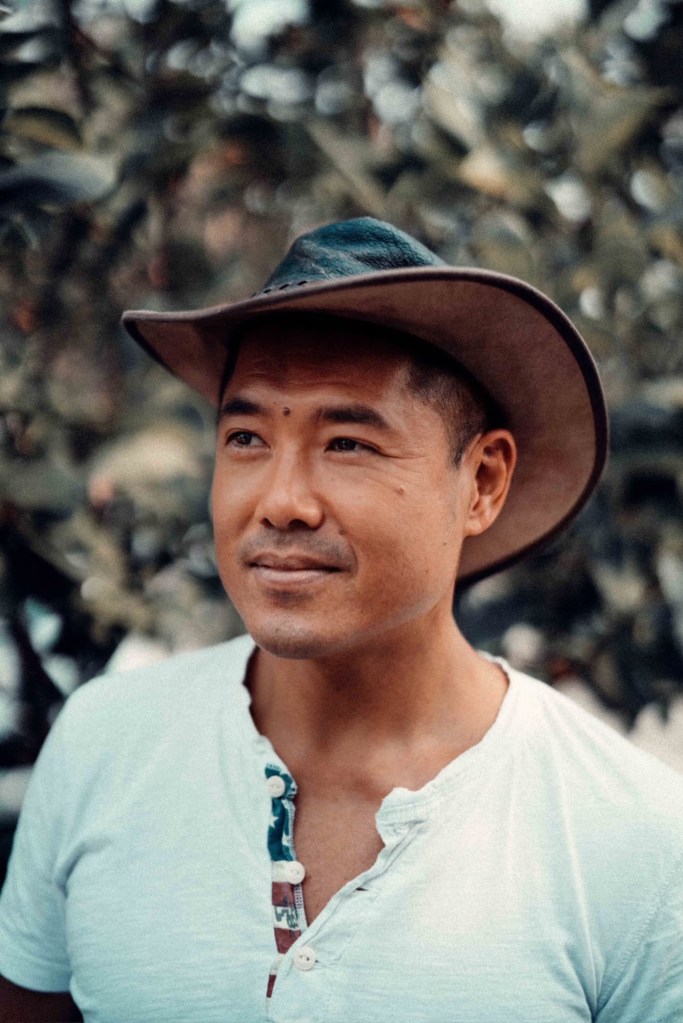
Spotting talent of Perkins-calibre is a skill Tai had been honing for years. “I can see things that other people don’t in an entrepreneur, and it’s happened over and over,” he says, wearing his trademark brown hat while sitting in the Palo Alto boardroom of his investment vehicle KiteVC on a crisp spring afternoon. “I don’t know if it’s only my ability to pick because they’re the right people, or if it’s that, plus the fabric of people and community I’ve built over the years.”
That community was known as MaiTai in the early 2010s. It was an informal gathering of folks who came together to commune with the ocean, share ideas, and keep an eye out for the next big wave – environmentally, technologically, and fiscally.
“It was an amazing group which spanned tech, creatives, investors and athletes, all hand-picked by Bill who met people around the world and thought they’d be a good addition,” says Rick Baker.
The eclectic MaiTai group included some of the earliest employees of Tech’s Magnificent Seven. “Wesley Chan and Aiden Senka were on my early trips, and many of the first 30 employees of Google, Facebook and Twitter,” Tai says. Google founder Sergey Brin was with the group in Marrakech and has attended fundraisers for ACTAI Global’s philanthropic work. Richard Branson, a Guns N’ Roses drummer, and a Black Eyed Pea have also attended Tai’s 100-strong trips over the years.
Growing up Taiwanese in Chicago
Tai’s parents emigrated to the US from Taiwan so that his father could attend graduate school. Tai and his siblings were born in the US and raised in a middle-class suburb of Chicago.
Like many Asian-American children, Tai says he faced heavy pressure from his parents to excel academically. But as a C student who couldn’t concentrate, he felt “forced into a box,” until he discovered his natural affinity for electronics. “When I was 12 or 13, I read an article about Steve Jobs and Steve Wozniak’s first company, and a hacker device you could put on the mouthpiece of a payphone to make free phone calls anywhere in the world.” He used a Radio Shack project kit to replicate the device, and his fascination with the capability of computers was born.
When it came time for university, Tai defied his father and turned down an offer to attend Ivy League college Princeton. Instead, he enrolled in the University of Illinois, a highly ranked engineering school. “I knew a lot of people who went there, and it just felt right. But my dad thought I was ruining my life.”
His gut instinct paid off. The University of Illinois had a fabrication line when most colleges didn’t, which allowed Tai to make transistors on flat pieces of silicon. He graduated and immediately had his sights set west.
“I had job offers at IBM, Motorola, Hewlett-Packard, and acceptances into Harvard, Stanford, and Northwestern to do an MBA. I turned them all down, packed up a Dodge Colt and drove to California to find LSI Logic and a computer club.”
Bill Tai
His father didn’t speak to him for three years. “He was like, LSI, who? What are you doing?”
He ended up marketing microchips in the lead-up to the dot-com boom. It was the mid-80s when Tai arrived in Silicon Valley, and IBM and Intel were thriving. Eight-year-old Apple had just released the Mac.
Tech campuses were replacing the last of the Santa Clara Valley’s orchards, and suburbia was coming to the fore. “I lived over the fence from a cherry orchard in Sunnyvale, and LSI Logic was built on a chrysanthemum field,” says Tai with a laugh. He had come to California inspired by the Homebrew Computer Club – made famous by Apple’s Steve Jobs and Steve Wozniak – but says he was just too late, and it was declining.
He felt inspired among the ‘Californian misfits’ who shared his interest in using technology to build things; however, he had found his place in life. “It was this formative period that was filled with people who didn’t just come to Silicon Valley to make money. They came here as a creative outlet because they wanted to build.”
The road to AMD, Nvidia, and TSMC
Tai may have been too late to the Valley to hang with Jobs, Wozniak, Bill Gates and Paul Allen in Melbourne Park, but he timed it perfectly to cut his teeth with the future leaders of AMD, Nvidia, Xilinx, Broadcom, and Altera.
“They all came out of LSI Logic. It taught me how much community matters,” says Tai. There is also a familial connection to this ‘pod’ of early LSI Logic employees that traces back to Taiwan. “My uncle’s wife is Jensen Huang’s first cousin. So I’m related to Jensen, and to AMD CEO Lisa Su through marriage – not blood.”
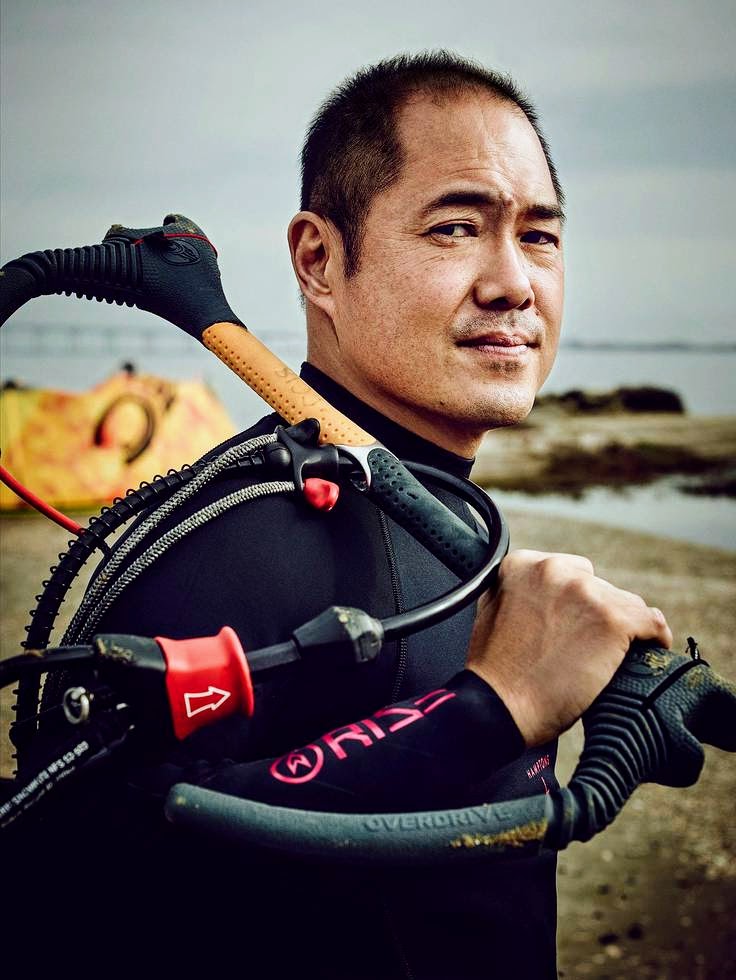
Two years into his stint at semiconductor LSI, Tai left Sunnyvale to pursue graduate studies at Harvard in Boston. He worked part-time for LSI from the East Coast and took up sailing on the Charles River in his spare time, igniting his love of being on the water.
Serendipitously, his time at Harvard also led to a four-month stint in the birthplace of his parents, helping to set up the trillion-dollar Taiwan Semiconductor Manufacturing Company (TSMC) that now manufactures Nvidia, AMD and Broadcom chips.
After cold-calling the incoming CEO of TSMC, Tai was on a plane to Taipei in May 1987. “TSMC wasn’t incorporated until November that year, so I was part of the group of people that put together the frameworks and models for what it would become,” explains Tai. “I created a market-based spreadsheet model that suggested we build a 60,000-wafer start, 5-inch wafer plant, in 4 modules of 15,000 wafers each.”
He was given employee badge number 1 while in Taiwan, where he was setting up TSMC, he says. And while he wasn’t given a financial position in the hyper-successful company, he looks back fondly on those early days helping the Taiwanese – and global – semiconductor industry take shape.
The Panic Attack That Changed Everything
The cadence of Tai’s life has not always been as Zen as it is today. In the mid-1990s, after establishing the semiconductor business for a US investment bank, Tai left the finance arena and founded iAsiaWorks, an internet data centre start-up. During this period, his plate wasn’t just full, it was overflowing.
“I was on seven public boards, 15 private ones, CEO of a company going public, and I had data centres in 10 countries in Asia. I’d get up early, drive down to Sand Hill Road, do my job from 8:30 am, work until 2 am, and sleep for four hours. And I did that for seven years.”
The physical and mental toll came to a head when he returned from a trip to Tokyo. “I go to Japan for a two-hour meeting with a telecommunications company and fly back. I had a briefcase and a backpack, and I was walking up my stairs to the same place I’ve been living for 10 years. And I’m like, this is the end of my life. I’m literally at capacity. I can’t do anything new or anything more. I will be walking up this staircase every day until I die,” recounts Tai.
The panic attack made him reorient his life. Within a couple of years, iAsiaWorks was a public company, Tai stepped down as CEO, and wrapped up all of his board positions. He was ready for the next chapter: backing company builders.
He joined Charles River Ventures (now CRV) as a partner and focused on making deep tech investments in Silicon Valley. He founded two more companies, IPinfusion and Tradebeam, but installed other people to run them. And he dipped into his own funds to invest in the new economy bubbling up in the Valley. “My field was not social, so I would write checks myself to learn. That’s how I funded TweetDeck [which evolved into Twitter] and Tango and Voxer, because I wanted to learn and I was willing to take the risk of my own money.”
He had found his sweet spot – building innovation-oriented communities, and as a self-described ‘free agent, floating catalyst.’ He could tap in and tap out as he pleased.
“I get super passionate about something. I’ll put it in play. It’s going, and I go to the next thing,” he says. “I’m a backer of three venture funds, and I never want to be responsible. I never want to be a CEO again in my life. I’m okay writing cheques, but I never want to go without sleep – or fire anyone – again.”
Combining a love of the ocean, a deep understanding of technology, and a desire to decentralise society to enable more equity within it has allowed Tai to ignite a new generation of founders and venture capital. He says that building a powerful Australian-oriented community along the way has “made his many successes all the sweeter.”
Look back on the week that was with hand-picked articles from Australia and around the world. Sign up to the Forbes Australia newsletter here or become a member here.