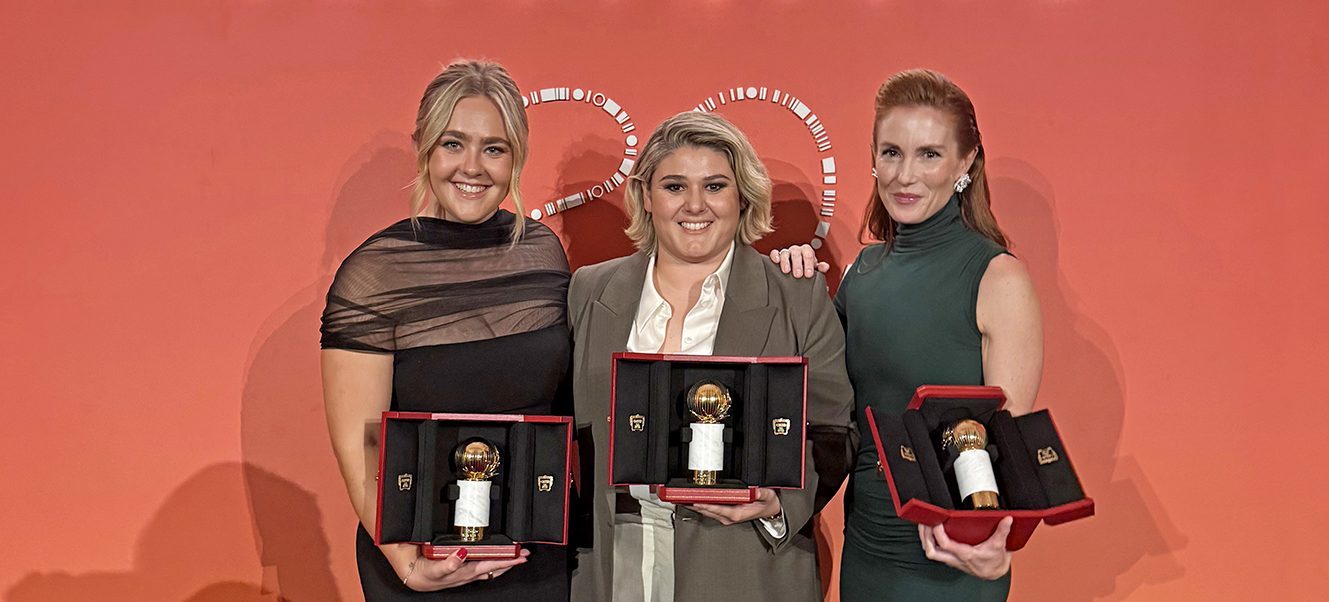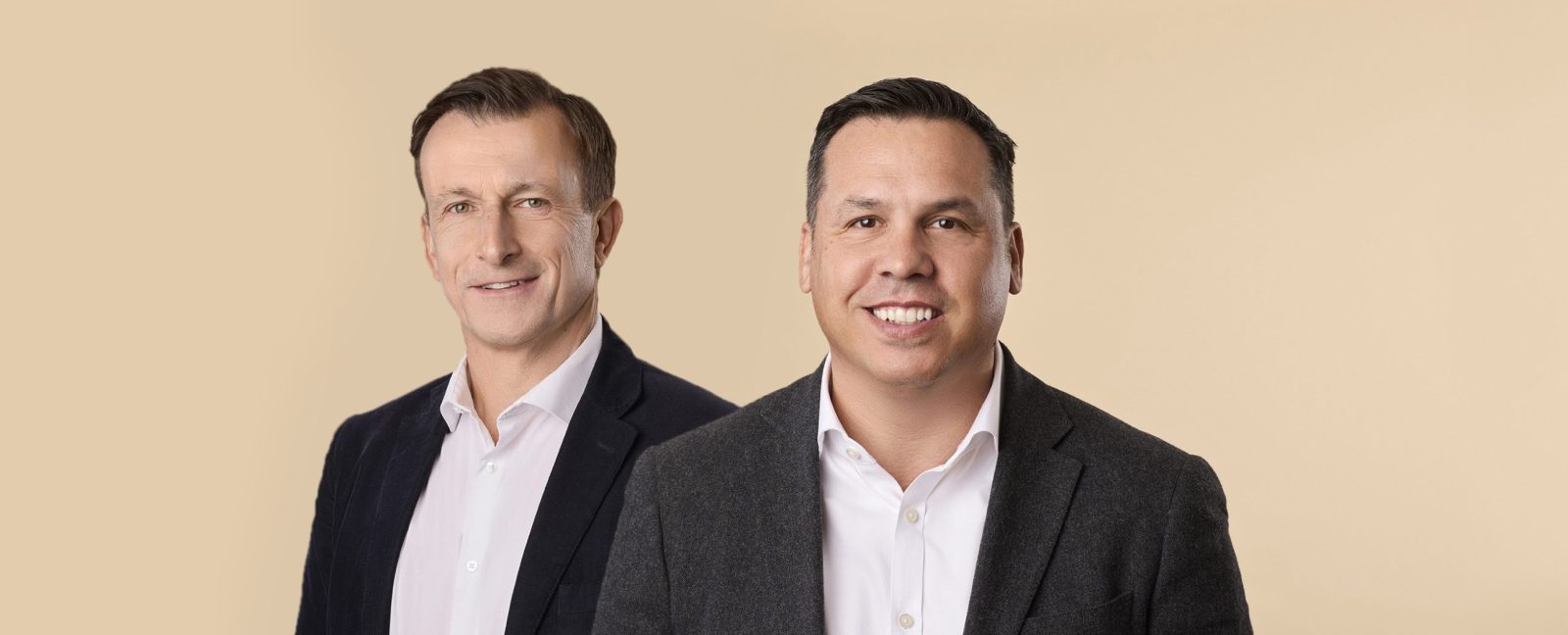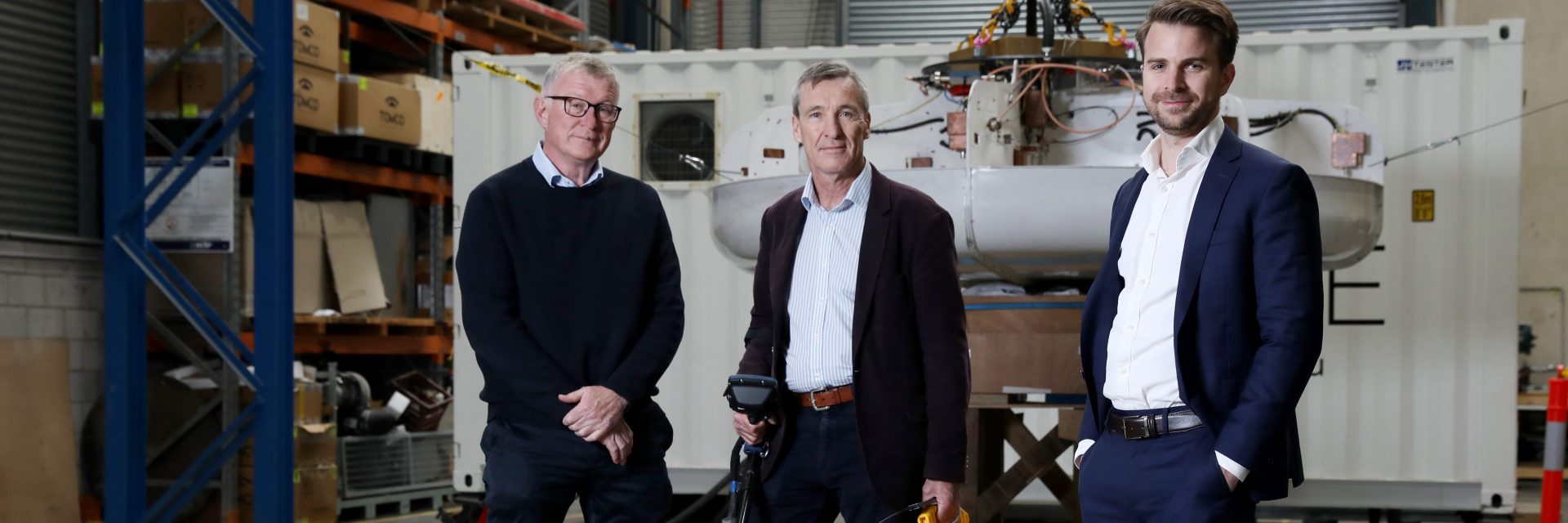

Two CSIRO spinouts — NextOre and MRead — have merged to form MagnaTerra, uniting mining innovation and humanitarian purpose in a $150 million deal.
Nick Cutmore’s career as a CSIRO scientist saw him commercialise some 14 tech breakthroughs – mostly helping the coal, iron ore and gold mining industries – but now he’s focused on digging up something more dangerous … and meaningful.
The 70-year-old has left the government research agency where he’s spent his career to focus on the new company, MagnaTerra Technologies. “This is the last company that I will ever form,” Cutmore says. “And I want it to matter.”
MagnaTerra was created in July this year out of a merger between two companies Dr Cutmore helped spin out – mining-tech company NextOre and humanitarian demining start-up MRead. They raised $11 million, valuing the merged entity at $150 million.
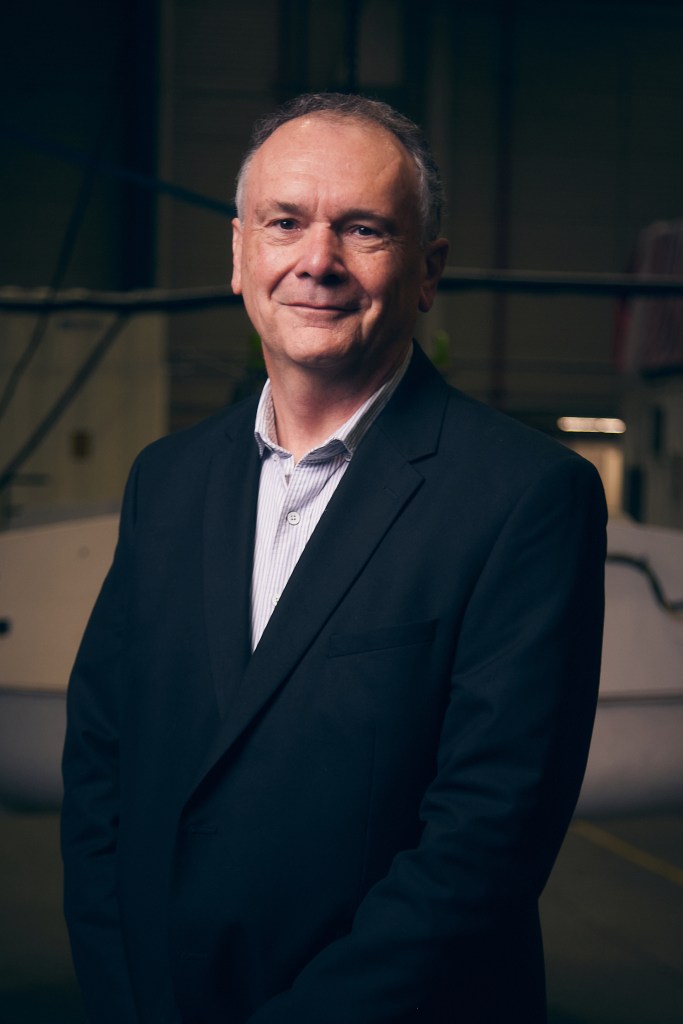
The common denominator between the miner and deminer was their use of world-first magnetic resonance technology.
NextOre’s tech has already changed how we mine copper, while MRead’s IP has been shown to be able to identify explosives underground, but has the potential to also detect drugs and bombs in suitcases, and immediately identify them.
Four-letter words
One of the most awarded research scientists in Australia, Cutmore is almost apologetic about his early career highlights, which include a Eureka Prize for national security and an Australia Prize for commercialisation. “They were in what is now a four-letter word, coal,” he says.

There’s a picture of him standing next to then prime minister, Paul Keating, winning a prime ministerial prize for the coal analysis technology that was the basis for the company that is now Scantech.
His attempts to find good Australian companies to license CSIRO innovations met with mixed success, he says. “I was always stuck with two unattractive options back then, which were very, very large companies that understood technology but didn’t understand the industry you were applying it to. Or they really understood the industry, but had little capability to commercialise the technology. There was a big gap in the middle.” And it’s still there, he says.
“My career has been filled with lots of experiences of developing technology over very long periods. Licensing them. Sometimes they’re brilliantly successful, and sometimes they just fizzle away. If you’ve spent ten years building that technology, it’s pretty disappointing to see it fizzle.”
One of his successes was Chrysos Corporation, which used X-rays to assay the mineral content of dirt being dug up. When Chrysos listed on the ASX in 2022, Cutmore points out, the CSIRO made almost as much from that one deal as it had got from its more famous WiFi royalties, which netted about $430 million.
Chrysos has more than doubled in value since April, with a market capitalisation of more than $930 million at the time of going to press.
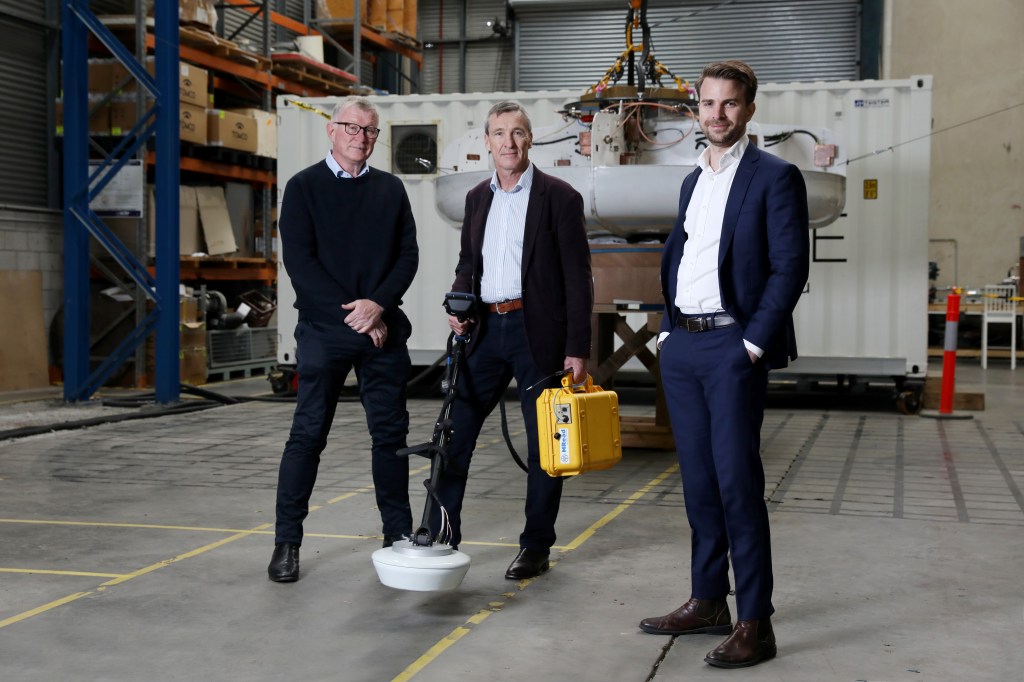
Through his work in Chrysos, Cutmore got to know the executive chair of RFC Ambien, Rob Adamson, an advisor, investor, and venture builder in the natural resources sphere.
When Cutmore told Adamson that the CSIRO had magnetic resonance technology that promised to be even more groundbreaking than Chrysos, lowering mining costs and environmental impact, Adamson was all ears.
Naive to the noise
Magnetic Resonance Imaging [MRI] has been commonplace in medicine for decades, with the great whirring doughnut of the laboratory able to create detailed images of the body’s internal structures.
Magnetic resonance [MR] involves sending radio waves at a target and listening for what comes back. Unlike a radar or an X-ray, in MR, strong magnets disrupt protons, giving them the machine the ability to analyse the target at an atomic level. So it can tell if there is, say, copper in a rock or TNT in a suitcase.
But too much radio “noise” in the wild had consistently thwarted attempts to use the methods outside of controlled environments.
“In the early 2000s, magnetic resonance sounded like a dream,” says Cutmore. But CSIRO scientists got some funding for it in the wake of 9/11 because it had the potential to be able to find explosives in baggage.
” If I say, ‘I want to save 2,000 lives a year from demining,’ that’s actually pretty hard to establish.”
MRead cofounder Nick Cutmore
Had the CSIRO team been less naïve, they might have given up, says Cutmore. “The Americans had a good go at it. They spent probably $50 million to $100 million trying to make it useful in the real world, and failed.”
But the CSIRO scientists took a new approach and just kept chipping away. “You don’t do this continually,” says Cutmore. “You have a go at it. It doesn’t work very well. Later, you get more money and have another go.”
The first commercial target was “ore sorting” – the ability to scan a conveyor belt coming out of a mine and detect which rock is worth processing and which should be thrown away, creating enormous savings in energy, water and pollution.
So when Cutmore brought the magnetic resonance tech to Adamson, he could see the impact. “We wrote the business plan,” says Adamson. “We rounded up friends and family and mates in the gold industry to invest.”
They founded NextOre in 2017 in a joint venture with the CSIRO, Worley and RFC Ambrian.
NextOre trialled the technology with gold miner Newcrest and proved that it worked.
“The [magnetic resonance] sensors we built were about 1,000 times larger than anything anyone had ever built,” says Cutmore. “In the laboratory, people were looking at test tubes. In a mining plant, you’re looking at around 5,000 tonnes an hour going through a sensor.”
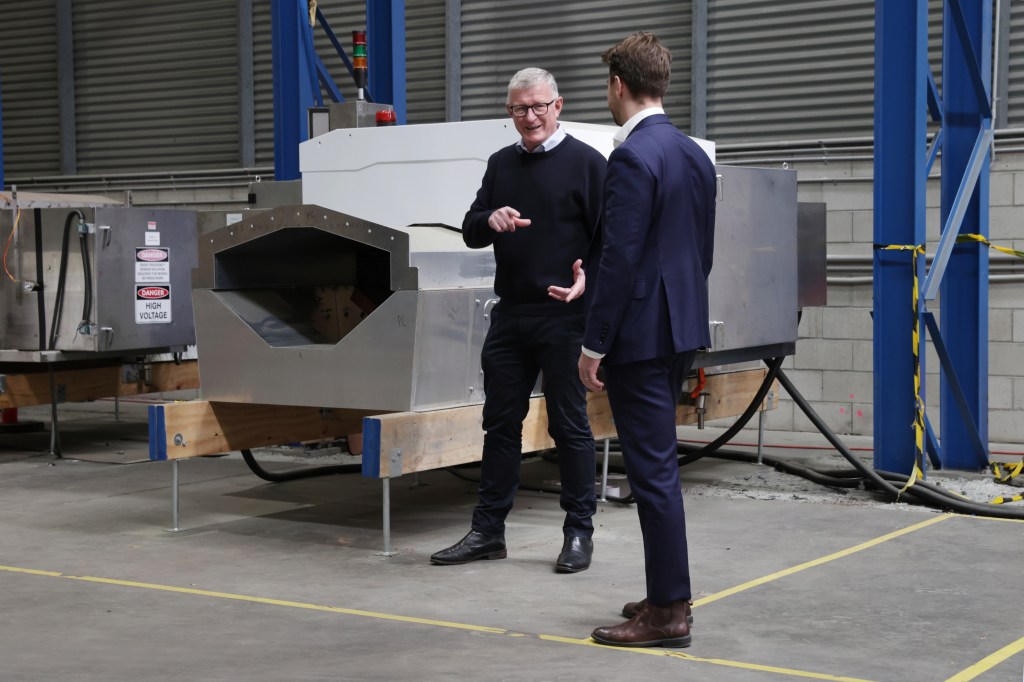
NextOre is in the market, focused on copper, doing $4 million in revenue last year, but with the prospect of including all metal ores.
Meanwhile, other CSIRO researchers were still looking at how they could use magnetic resonance to spot explosives and drugs in shipping containers.
“But the thing that lit us up,” says Cutmore, “was humanitarian demining. You can’t go to these areas and not feel the pain and suffering of people exposed to the remnants of war.”
Cutmore spent two years during the COVID-19 pandemic trying to convince investors and the CSIRO that demining was investable.
“If I say, ‘I’m going to save a billion dollars for the copper industry,’ people go away and start working out if I’m telling the truth. If I say, ‘I want to save 2,000 lives a year from demining,’ that’s actually pretty hard to establish.”
Resonating with resonance
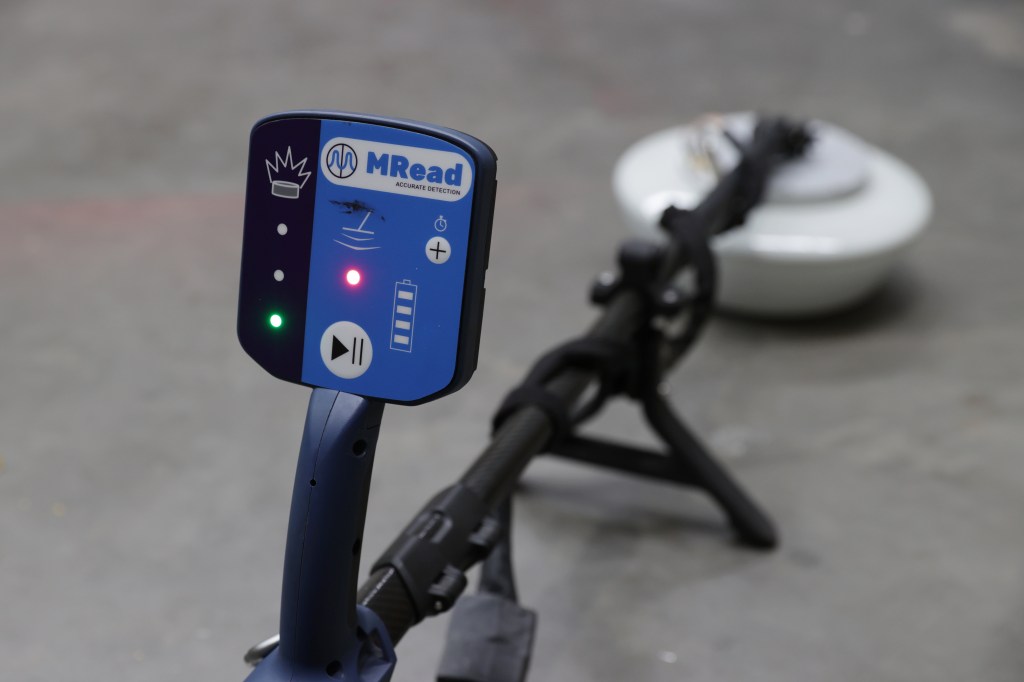
But Cutmore got Adamson on board. They wanted to make a handheld demining unit that looked like a metal detector.
Adamson thought he’d just go and do what had worked so well with Chrysos and NextOre. “Same playbook. Different target market,” he says. “Fortunately, because we’d had some success with Chrysos, people were willing to start backing us then. But it was harder because you go to most VCs and despite them saying they’re impact investors, when you say, ‘We’re doing humanitarian de-mining,’ they’ll say, ‘But it can be used in defence as well.’ Their eyes close and they say, ‘Bugger off’.”
But Adamson had something of a secret weapon. He’d met John Shanahan, a British soldier who’d transferred to the Australian Army, on the sidelines of various of their sons’ school sports.
Between Shanahan’s various tours of Afghanistan, Adamson had asked him what his plans were when he retired from the military. “We might have this new technology that can detect mines,” Adamson had said. “Would you be interested in being involved?”
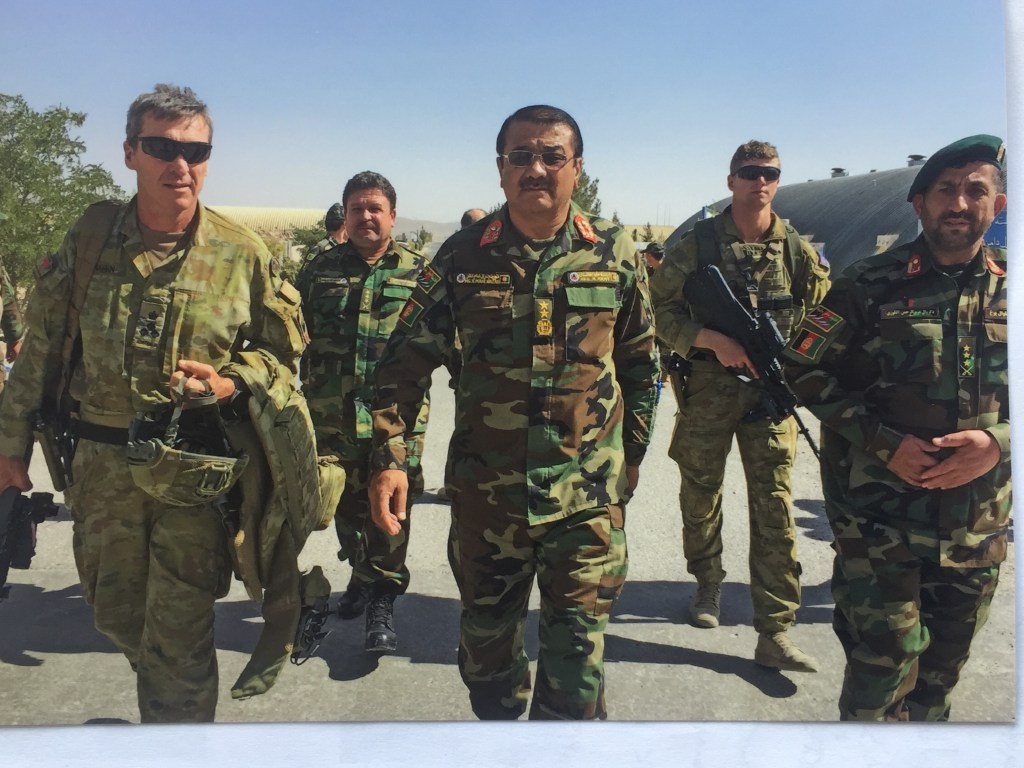
“I wasn’t your usual staff officer,” says Shanahan. “I liked to get out in the field, therefore being shot at and blown up a lot, but when I wasn’t doing that, I was with industry working on innovation to try and get equipment … which could be a weapon system, it could be communications, electronic countermeasures, a type of protective clothing or whatever.”
Shanahan left the military after his fourth tour of Afghanistan in which he was seconded to be the commanding general of a US division in 2019. He went into consulting for a few years before the demining kit started to get close, and he joined the new entity, MRead, as managing director.
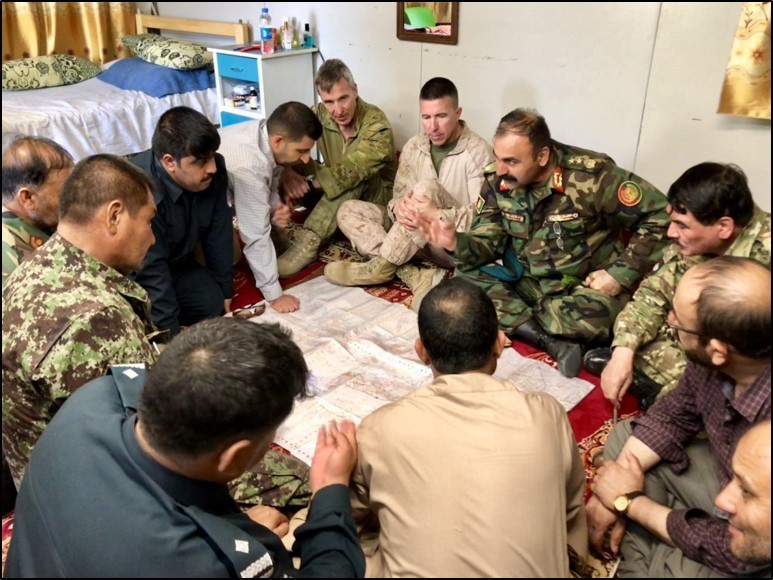
Shanahan was adamant that the best place to focus the business was in humanitarian demining, as opposed to military. He helped open the door for them at Halo Trust, the world’s largest humanitarian demining non-profit.
“As an ex-army person, what could be better than doing stuff that makes a difference to people’s lives?” he says. “We found we have resonated wherever we go. Everybody will talk to us. We’re not trying to sell them anything because we’re pre-revenue.”
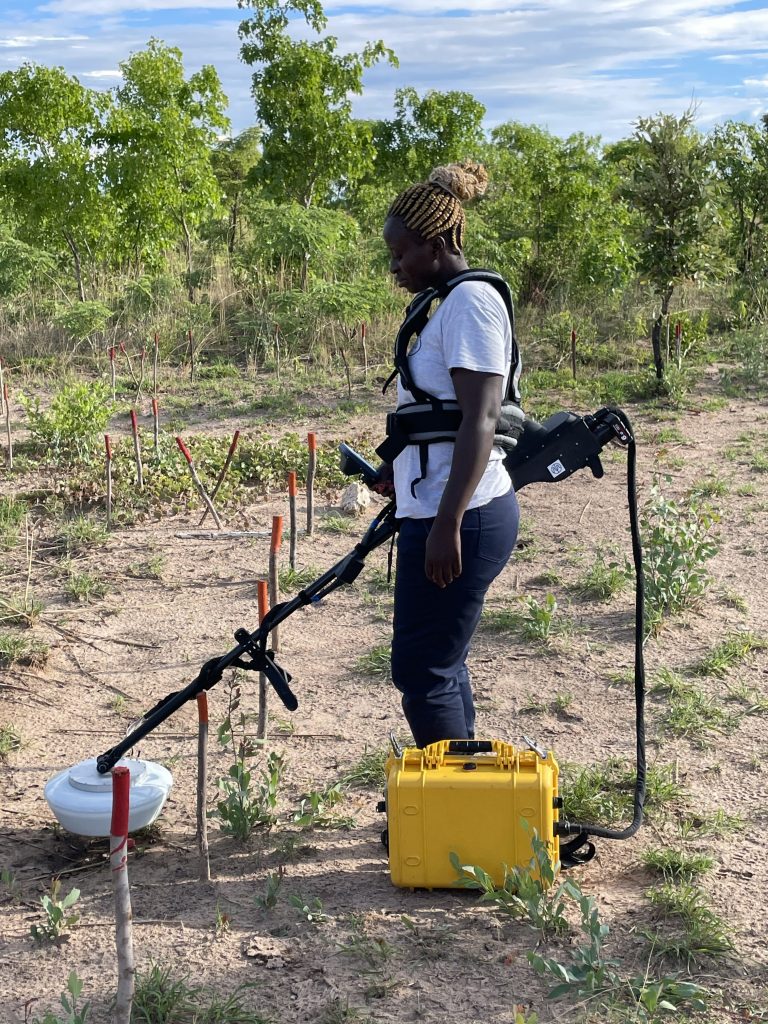
Halo Trust has taken them to Cambodia and Southern Angola, where, last year, they tested the technology on real mines, albeit ones that had been pre-dug up and reburied for a controlled experiment. They passed.
Next year, they will return for more rigorous field trials.
“People can see that we’re here for altruistic reasons,” says Shanahan, “but at the same time, practically, we can test our sensors against live mines in real live minefields.”
So they had two CSIRO spinouts, each backed by RFC Ambrian, each working on magnetic resonance. NextOre CEO Chris Beal suggested they might be better off pooling their talents, says Cutmore.
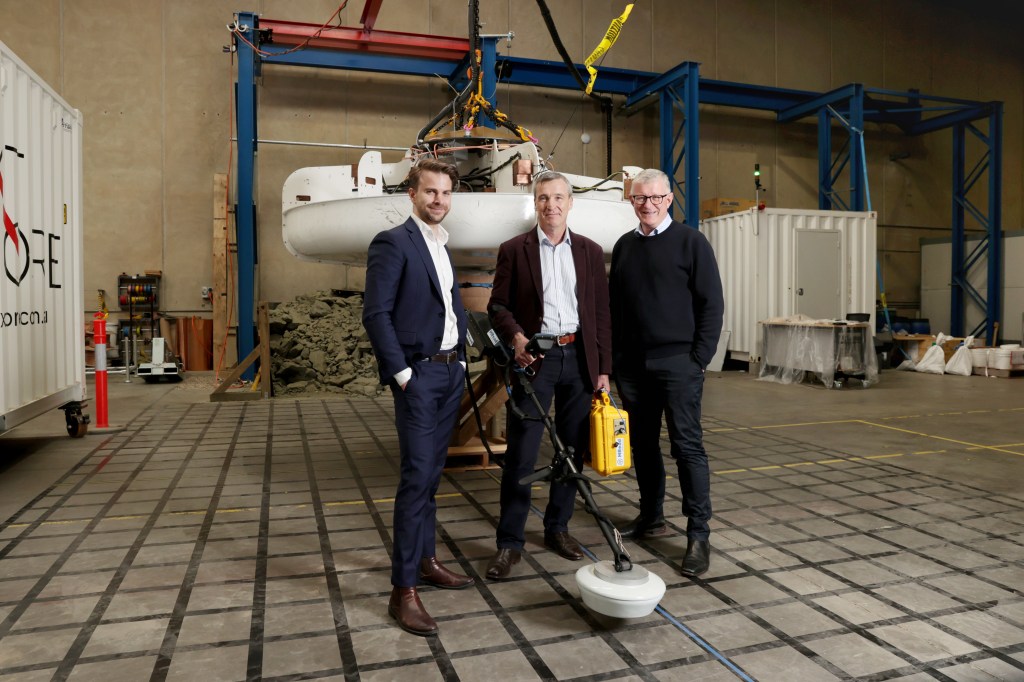
“Because it’s a really specialised area of science, it takes so long to train someone up, and we’d got that team working quite well in NextOre. So, here we are wanting to rapidly increase the science team at MRead. How do you do that when it’s so unique? Putting them all in the same room made sense.”
The demining equation, 850 years to go
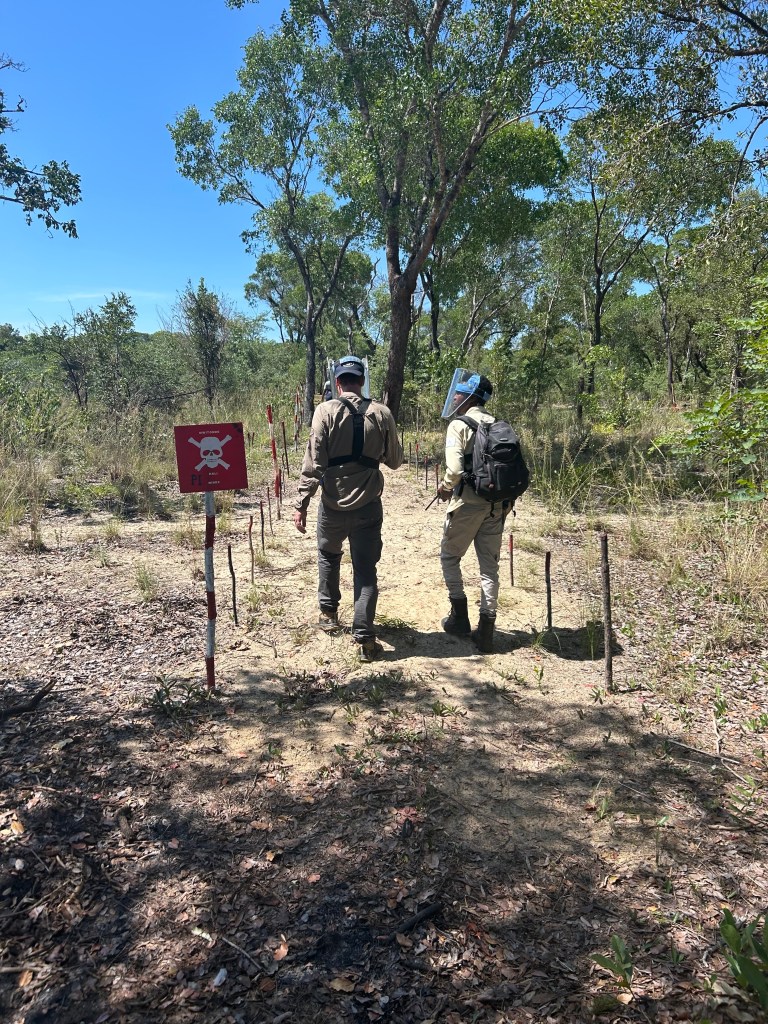
More than 100 million landmines are in the ground in 60 countries, a number that is growing with the conflicts in Gaza and Ukraine.
Less than 120,000 are cleared each year.
At that rate, it will take about 850 years to be rid of them.
Deminers currently use metal detectors, but former battlefields are full of metal. The deminers in Angola, for example, dig up 135 pieces of scrap for every landmine. And each piece of metal takes 30-45 minutes to painstakingly identify.
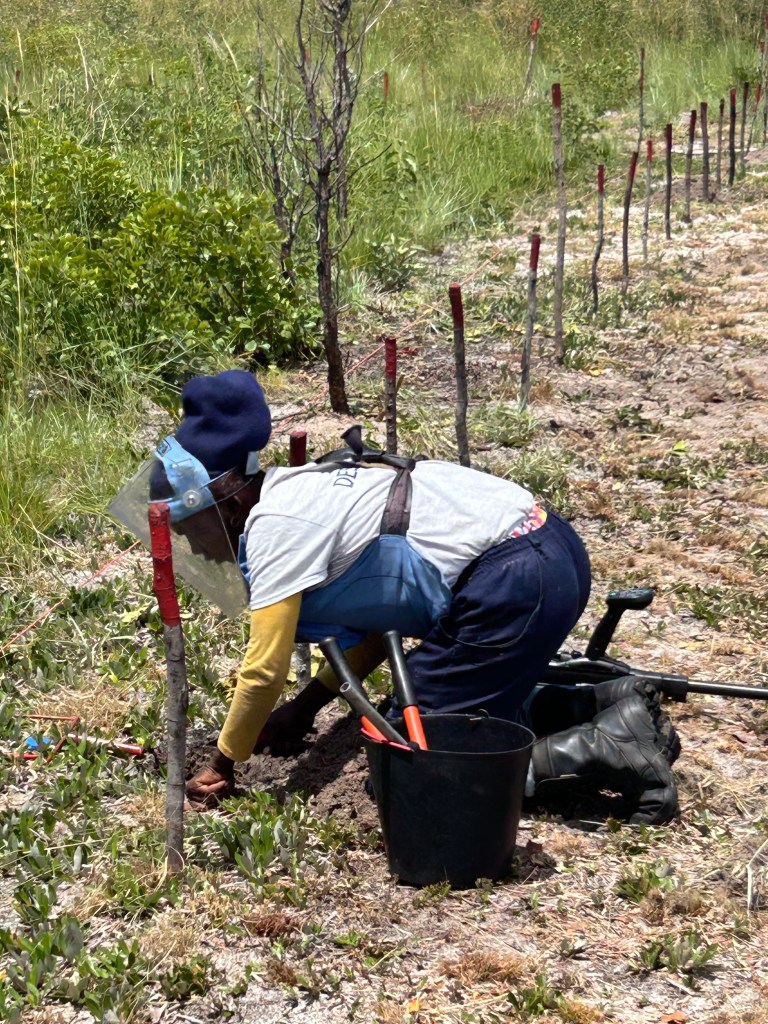
The magnetic resonance technology promises to allow deminers to detect explosives – not metal – massively reducing the false positive rate.
Landmines cause almost 6,000 casualties a year, 80% of whom are women and children.
The hope is that one day a robot, or perhaps even a drone, could go in and do the detecting, taking humans out of the equation.