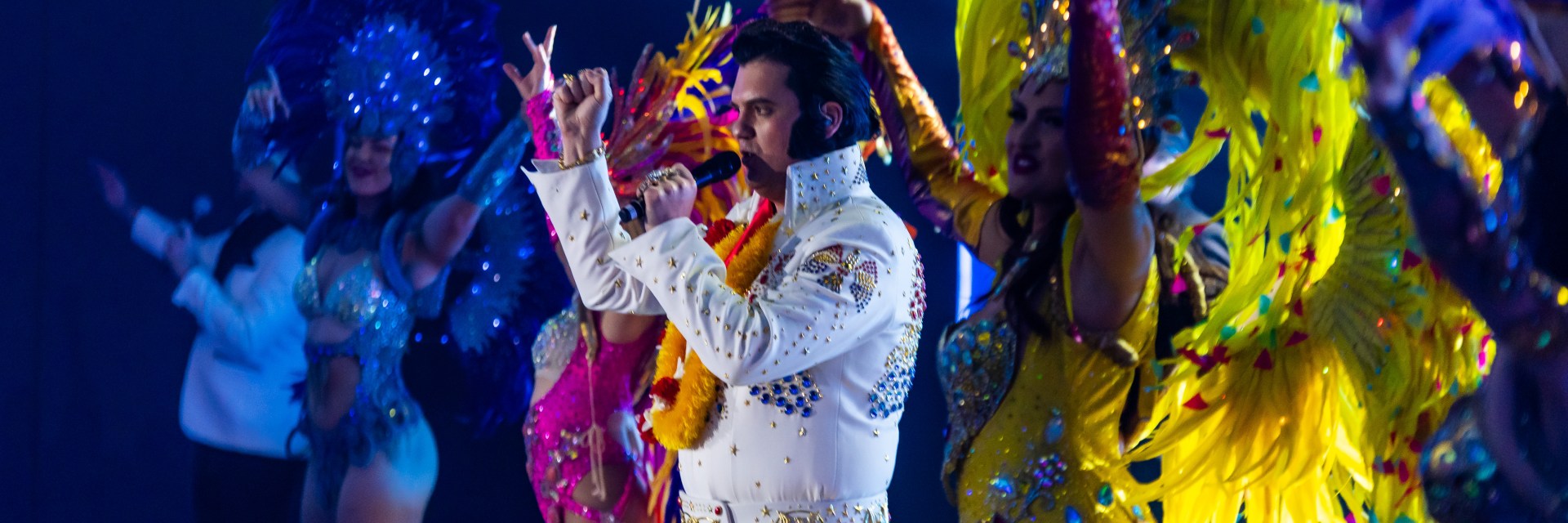

With the annual Elvis Festival kicking off today, and around 50 Elvises set to descend on Parkes, we look at the business lessons behind The King – reinvention, differentiation, and carving out your own Blue Ocean.
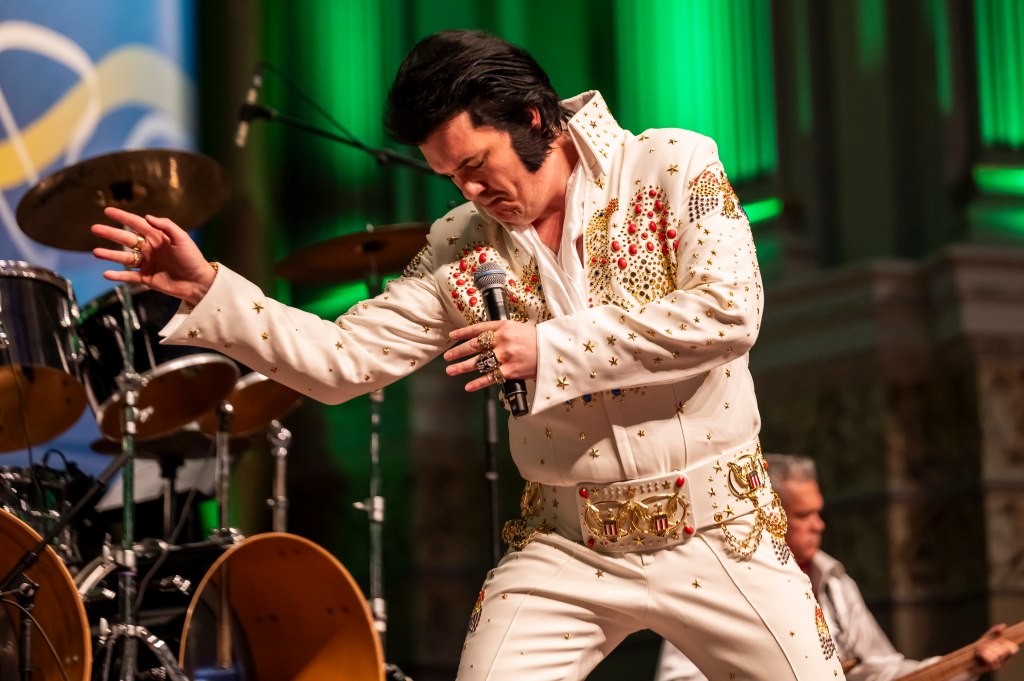
Tristan James – “Australia’s number one Elvis tribute show” according to his website – loves the book Blue Ocean Strategy.
Which is pretty funny when you consider that it is all about creating a new product with no competitors when James is involved in a business that is all about recreating what an aging and plump singer called Elvis Presley was doing more than 50 years ago.
But hear him out.
“Red ocean is where everyone else is fighting for the same market,” he tells Forbes Australia. “Blue ocean is where you create a new market.” He cites Cirque du Soleil as the classic case study.
But Elvis, James argues, was the original.
“Like John Lennon said, ‘Before Elvis, there was nothing.’ Elvis took the music of African Americans and was the first white boy to sing it, at a time when America was still very divided. He grew up in a black neighbourhood, and he loved the music and gospel, and he changed the world by putting his own spin on it.”
So when James descends on the central NSW town of Parkes for the 33rd annual Parkes Elvis Festival, starting January 7, along with 25,000 visitors, he’ll be proving his entrepreneurial chops by trying to sail Elvis into a Blue Ocean.
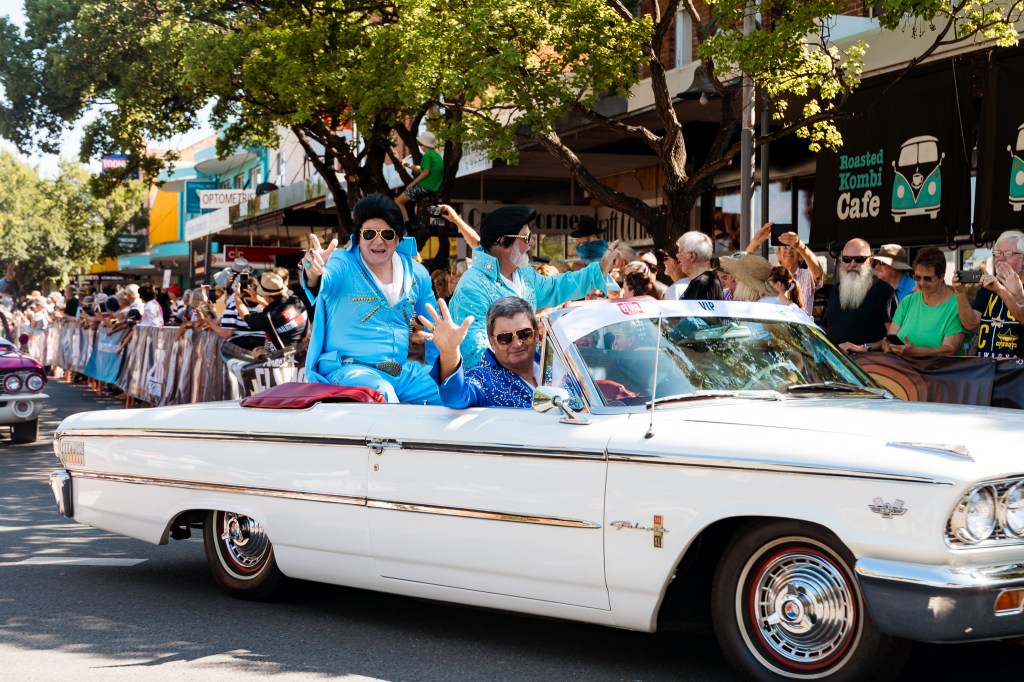
Because this story is about that tension between reverence and innovation and how to make a buck out of something you love. Each of the Elvis Tribute Artists [ETAs] Forbes Australia spoke to, from rural South Australia to outer Sydney, has taken something from The King. Follow your passion, reinvent or die, find your Blue Ocean – and be good to your mum.
Elvis Pizza
Before he ever belted out a note in a jumpsuit, Paul Fenech was an engineer with a sideline in a martial arts school.
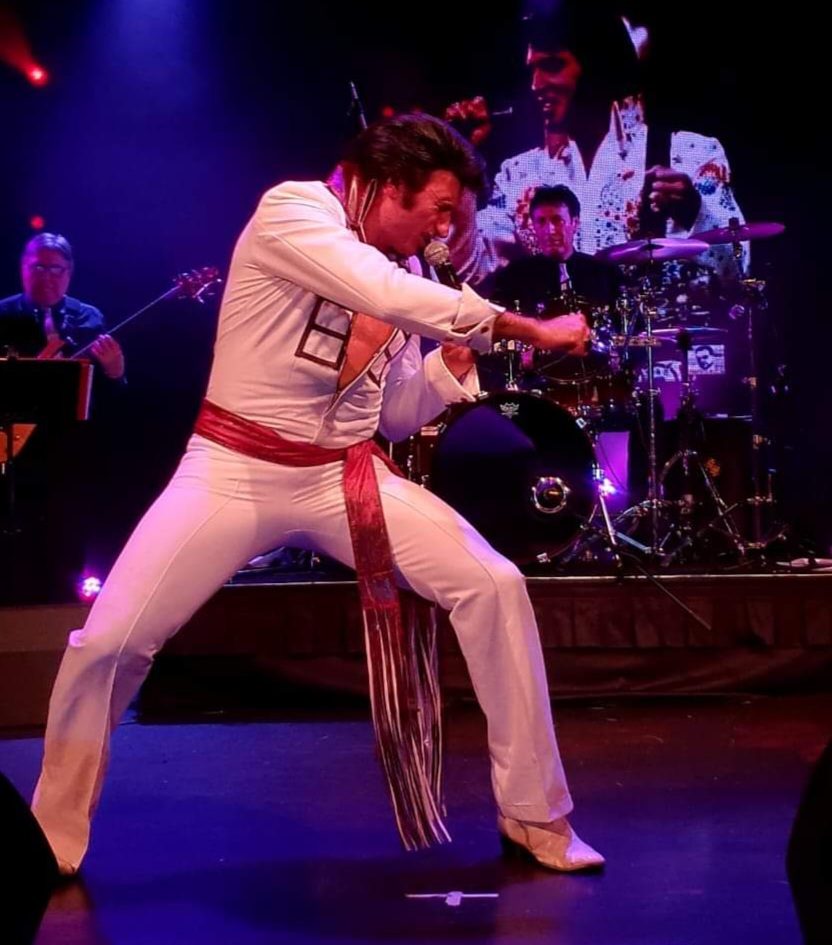
But a near-death experience with encephalitis in 1997 put him in intensive care for weeks. He walked out 12 kilos lighter, unsteady on his feet and unsure what came next. His wife’s solution was a family night out at Elvis Pizza in Rushcutters Bay, Sydney, the kind of divey, BYO joint where the owner took off his apron around 10pm and belted out a few numbers by The King and everybody sang along.
“I loved it that much, I went the following weekend,” says Fenech. And the next.
About four weeks in, “Elvis” asked him if he wanted to get up and do a song. “You seem to know all the words.”
Fenech loosened by more than a few drinks unleashed the dormant Elvis that lived inside. The crowd went off. “He took the mic off me. ‘Better sit down, mate. I’m the star of the show.’”
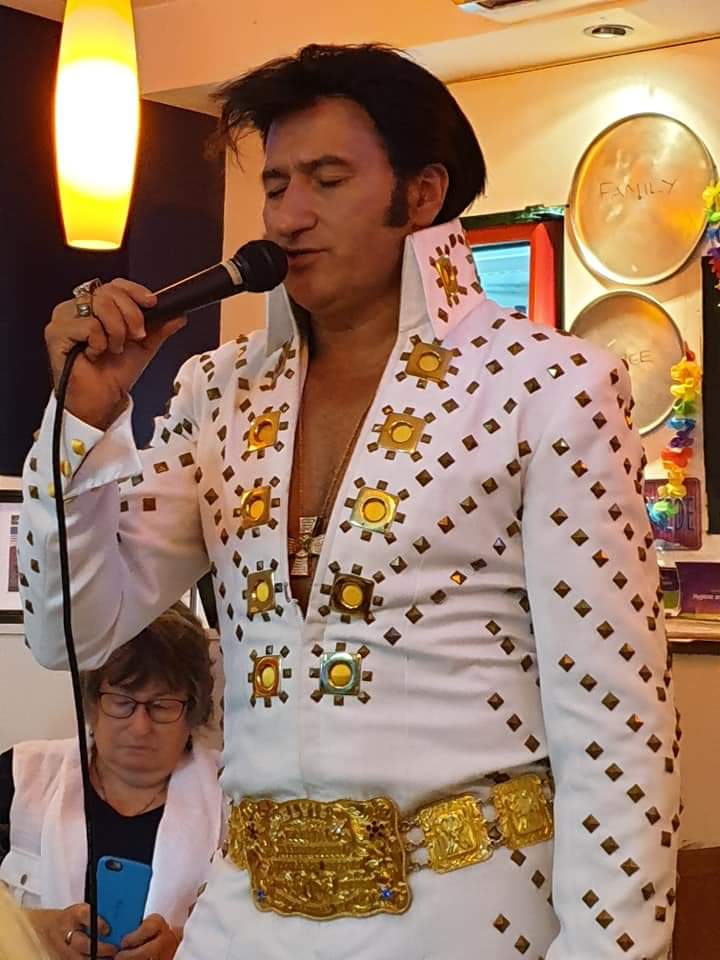
Fenech was soon performing regular sets. His wife sewed him a gold jacket. Word spread. People asked for business cards he didn’t have. Bookings came for 70th birthdays and weddings.
By 2004, he’d bought the restaurant from the exhausted owner and imbued with new-business-owner energy, took Elvis Pizza next level. He hired managers and cooks so he could keep teaching karate in the afternoons and performing at night.
And while Uber eventually squeezed the delivery margins and forced him to sell in 2017, Elvis Pizza had already done its work. It made him an in-demand tribute artist – Singapore, Papua New Guinea, New Zealand – and a three-time Australian representative at the global Ultimate Elvis Tribute Artist contest, held in Memphis across the road from Graceland each year.
“I could get up there and do what everyone else is doing, but my brain goes ‘How do we stand out?’”
Tristan James
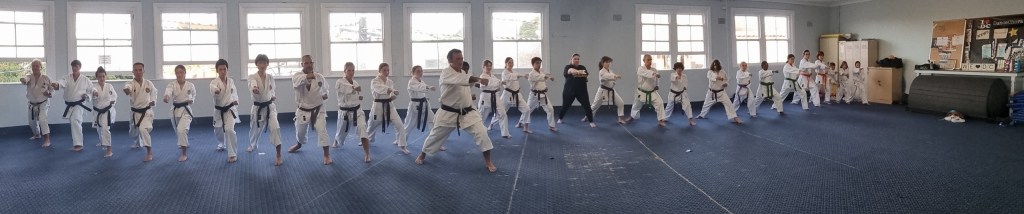
Now 57, Fenech engineers by day on major infrastructure projects and teaches karate to a hundred students by night. The wigs and jumpsuits still come out though.
And if he’s learned anything from embodying Elvis for a quarter-century, it’s this: “Follow your instincts. Elvis was born to be a performer with a golden voice and stage presence. But if he didn’t follow his gut, there wouldn’t be an Elvis. So I follow my dreams and my instincts. No regrets.”
Sparkie Elvis
Sean Leedham was 12 when he first stepped onstage as Elvis, wearing an eagle he’d glued and glittered onto a shirt for his Year 7 graduation. By the next performance he’d levelled up, hand-sewing thousands of tiny beads into a second homemade eagle. Karaoke followed, then a mentorship of sorts with a tougher, older tribute artist who gave him vocal tips and a gold lamé jacket.
Leedham always preferred 70s Elvis, so at 17 he ordered a DIY Aloha jumpsuit kit from the US. His dad sewed the suit; Sean added every stud in the famous eagle pattern. Soon he was gigging at the Ridgeway Diner????? in South Australia, sometimes as Elvis, sometimes as Ringo in a Beatles cover set, thanks to his drumming skills.
Aged-care homes came next, then the weddings, birthdays and funerals that spin out from a good performance. But tribute work never paid the bills. He’s got two kids to feed.
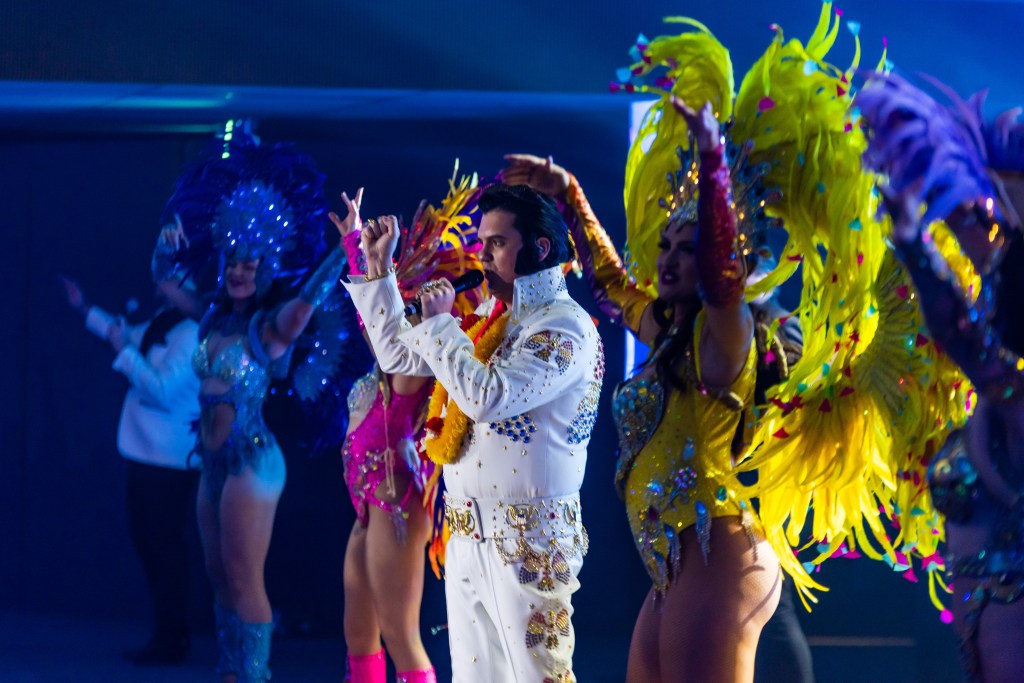
Leedham calls himself an “electrician enthusiast” – 15 years on the tools with qualified sparkies, but never the $10,000 certificate. These days he splits his week between traffic-management work and a handyman business that has him too busy for holidays, too busy for Elvis. The annual trip to Parkes is his only break – “a working holiday”.
Elvis buying Cadillacs for old ladies, being good to his mum, Leedham says, taught him some things that stuck: be generous, be kind and remember where home is. “If you’ve got a dollar and someone needs it more, hand it over. That’s what Elvis did. That’s what I try to do.”
The Pelvis MC
Tristan James didn’t set out to become Elvis. He was an enterprising DJ from Toowoomba in the naughties who, from the age of 17, was lugging speakers into local halls, cutting his teeth on weddings, birthdays, school formals.
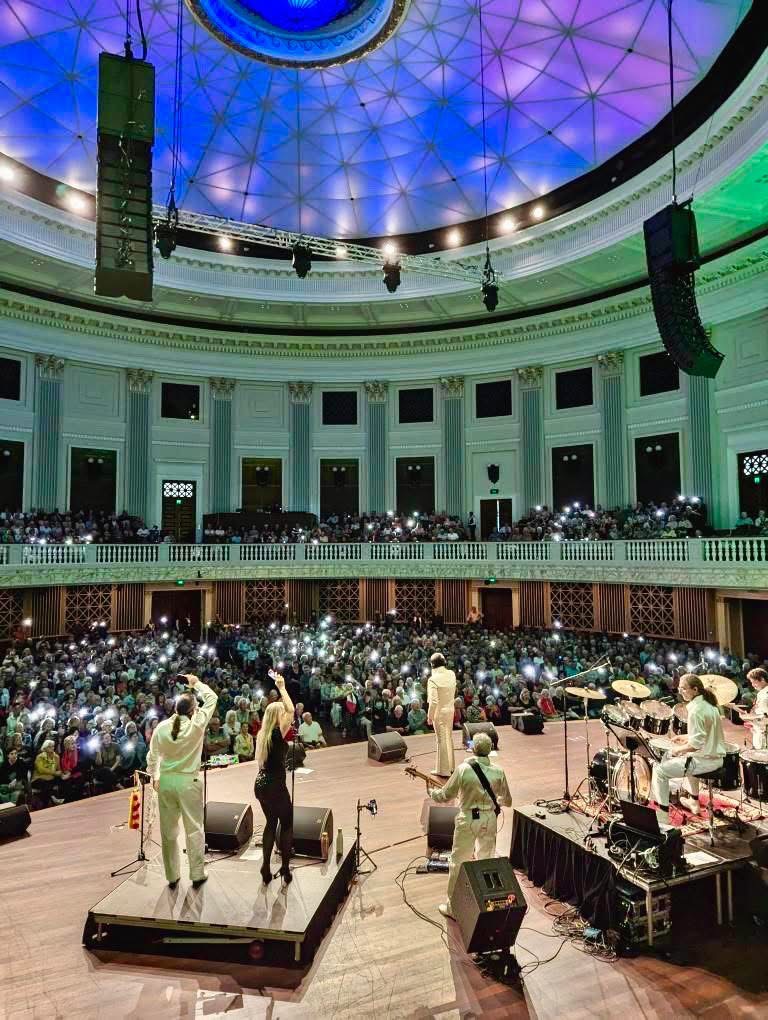
He went to university in Brisbane, studied marketing, worked the electronic dance-music festivals, hyping crowds, MCing stages. “I built my chops in entertainment pretty young,” he says. “But singing? No.”
Four years ago, aged in his mid-30s, he decided to freshen up his DJ business. He signed up to an entertainment-booking website, clicking through its 500-odd categories: wedding DJ, corporate DJ, MC. One of those clicks was an accident, he is adamant.
“I don’t remember choosing ‘Elvis impersonator’ at all. I swear on my heart.”
But one day someone reached out asking if he’d perform at their mum’s birthday. James said yes. He bought a jumpsuit off Amazon.
He walked into Barbara’s living room having never sung an Elvis song in his life. It was also Barbara’s last birthday. She had terminal cancer. The whole family had gathered. “That made it more important not to stuff it up.”
It went surprisingly well. The next booking came, and was sadder still – a woman whose husband had died two weeks earlier, wanting Elvis at her birthday because he had loved the music.
“Those first shows were full of misery,” he says. “But they were also full of meaning. I started to understand the power of Elvis to people of a certain age, and why tribute artists are a thing.”
From there, the thing snowballed. A mate with a band lent him musicians; then he built his own group – now a 10-person rotating roster he calls the Australian Elvis Band, which, depending on the pay, can do full Vegas-era arrangements.
He toured, hustled, marketed, built it into a micro-business that’s almost, but not quite, full-time. And somewhere in the middle of it, tribute became vocation.
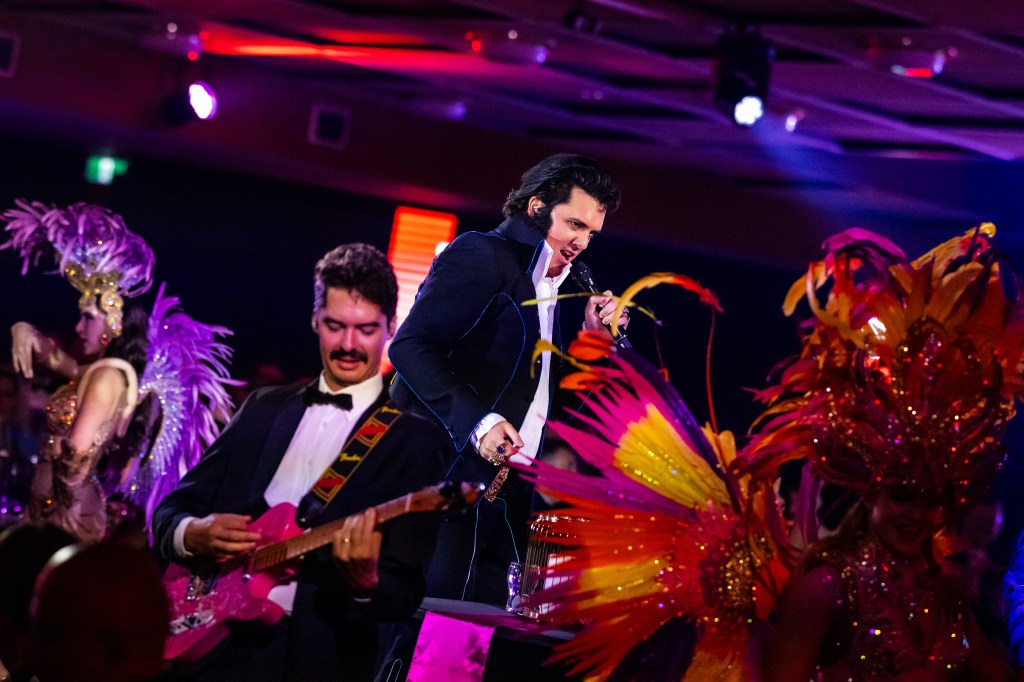
He’s also become Elwood Blues in a Blues Brothers tribute act which uses the same band as Elvis. He’d love to have two bands, or more, and not be on stage so much. He wants to “be the man in the chair”.
Tribute-land is crowded. There are, he says, fifty-plus Stevie Nicks tribute shows in Australia alone. Fleetwood Mac fans are still young enough to go to a pub. Elvis, by contrast, doesn’t often get booked into rowdy venues.
“The average age of an Elvis fan who was actually there would have been a teenager in the ’70s,” he says. “They were born in the ’50s or maybe the ’40s. That crowd will be gone soon.”
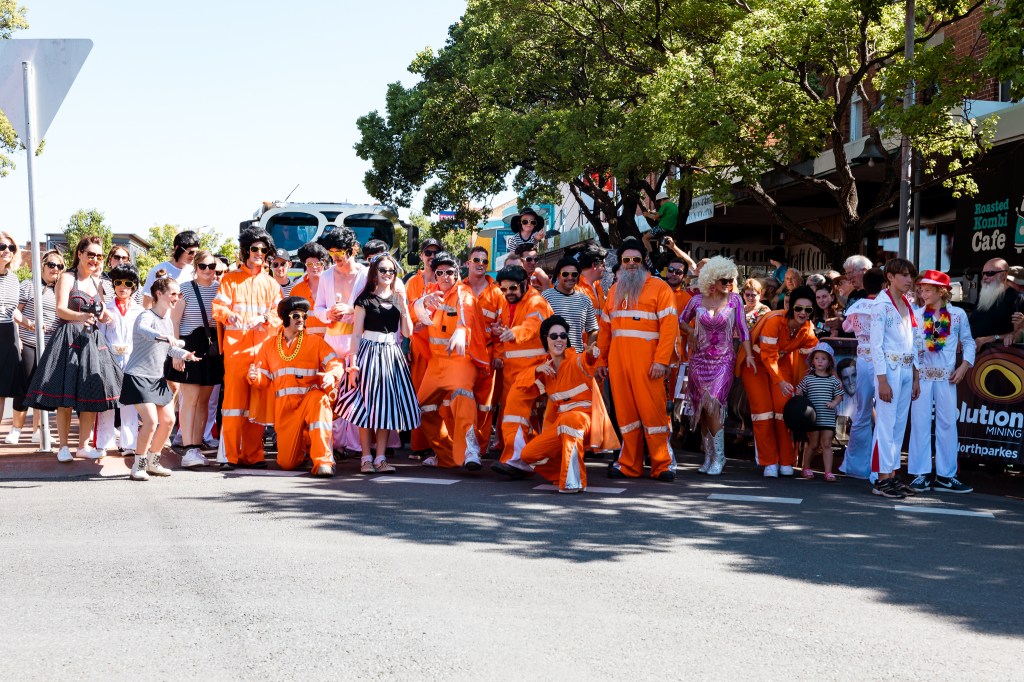
The Baz Luhrmann film gave the brand a bump for a younger audience. But he knows that isn’t a strategy. Keeping Elvis relevant to people who grew up on Nirvana, hip hop, or electronic dance music is the job for ETAs like him. “We have to innovate,” he says. “We have to ask: what can we add?”
He points to Dwight Icenhower in the US, who has imagined Elvis surviving into the late ’80s and reinventing himself accordingly. Icenhower’s “’88 Comeback Special” recasts the King in a Thriller-era leather-and-sequins hybrid, and folds in covers from the decade he never lived to see. [Think Robert Palmers Addicted to Love, Stray Cat’s Rock This Town, Eddie Rabbit’s I Love a Rainy Night, some Hall and Oates, Whitney, you get it].
James’s Blue Ocean idea is Shake Rattle and Rave, a show he’ll be debuting at Parkes, fusing his DJ world with his Elvis world, remixing The King as a dance-music proposition with a visual montage of Elvis on screen, all synced to a beat built for glow sticks rather than theatre seats.
“I want to take it the Edinburgh Fringe Festival, Adelaide Fringe Festival. But we’re gonna road test it at Parkes.”
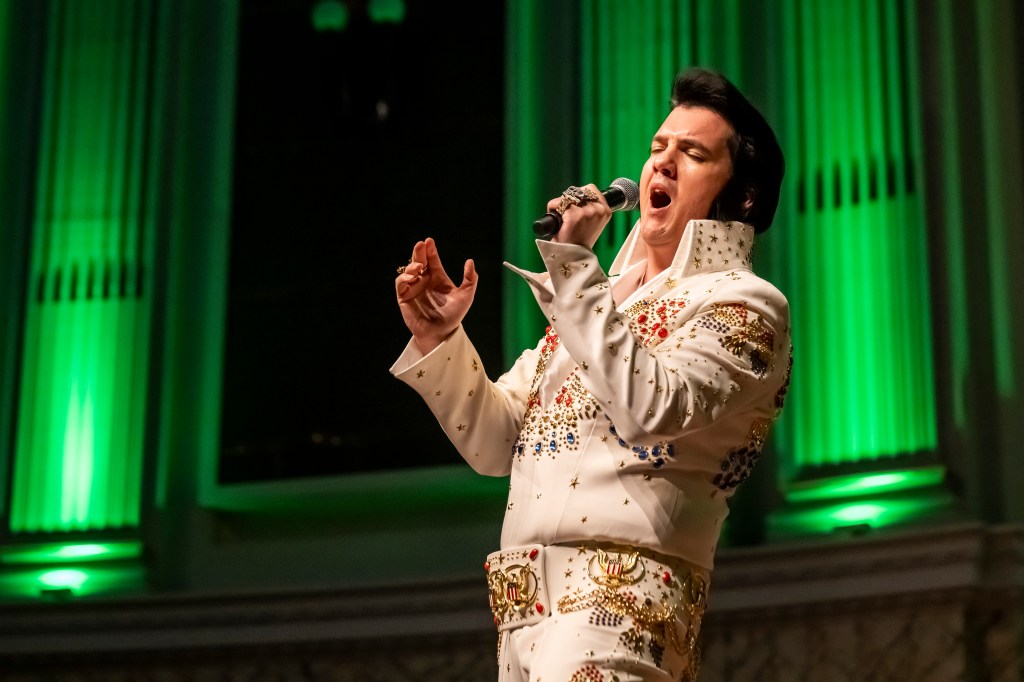
Most tribute acts swim in red oceans: saturated, blood-warm, overfished. You throw a rock, he says, and you hit a Stevie Nicks. His mission is to find the quiet water.
“I could get up there and do what everyone else is doing, but my brain goes ‘How do we stand out?’”
The biggest lesson James got from Elvis, though, was actually from his manager, Colonel Tom Parker. “Colonel Parker was all about the consumerism of Elvis. Like, he made badges saying ‘I love Elvis’, and he made badges saying ‘I hate Elvis’. He wanted to take their money either way.”
Look back on the week that was with hand-picked articles from Australia and around the world. Sign up to the Forbes Australia newsletter here or become a member here.