Rome has enough “museum” hotels where the lobby feels like a tomb and the bar closes at midnight. This 5-star 93-room outpost trades hushed luxury for a nightlife-first ethos, housed in a former 1940s bank designed by Italian Rationalist icons Cesare Pascoletti and Marcello Piacentini.
The Rome EDITION sits just off Via Veneto, a stretch once known for paparazzi and late nights, now lined with embassies and offices. It’s a short walk to Piazza Barberini, the Spanish Steps and Trevi Fountain. You don’t need a car, and you don’t need to plan much.
The property marked the Italian debut of EDITION, a global collaboration between boutique pioneer Ian Schrager and Marriott that pairs minimalist design with high-concept social spaces designed. In March 2026, a 148-room sister – The Lake Como EDITION – is due to officially open.
The building itself was completed in the 1940s and originally housed a bank. It’s a Rationalist structure, designed by Cesare Pascoletti with Marcello Piacentini, and it still reads that way from the street. The facade is blunt and you could probably walk past it without realising what’s inside.
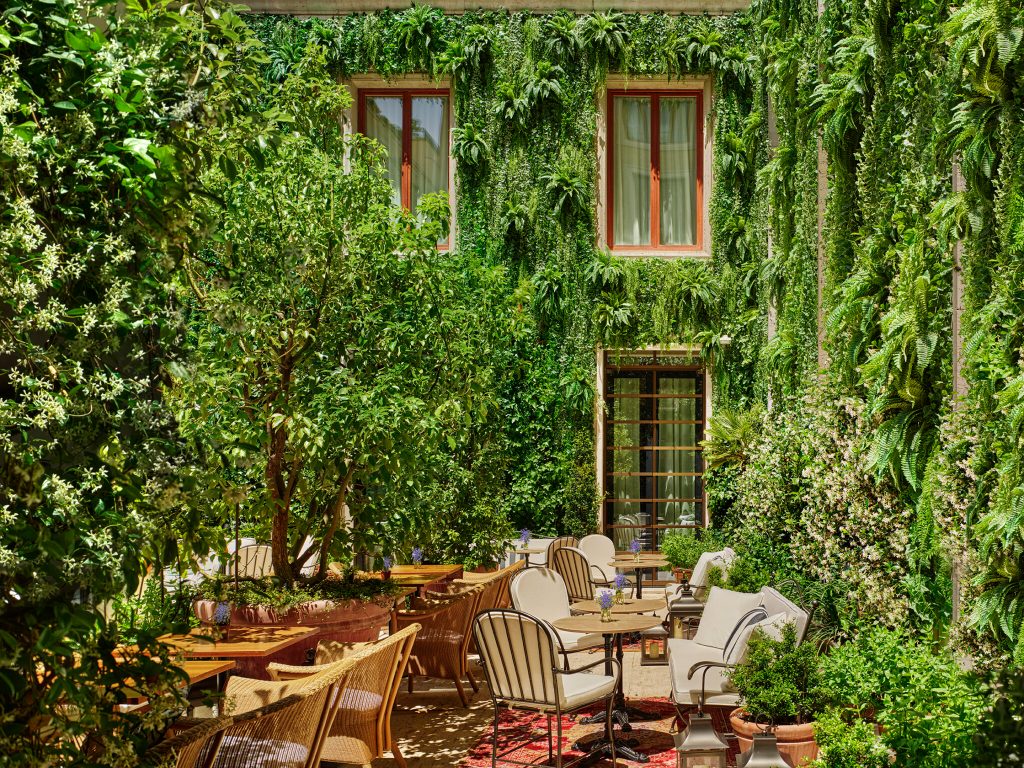
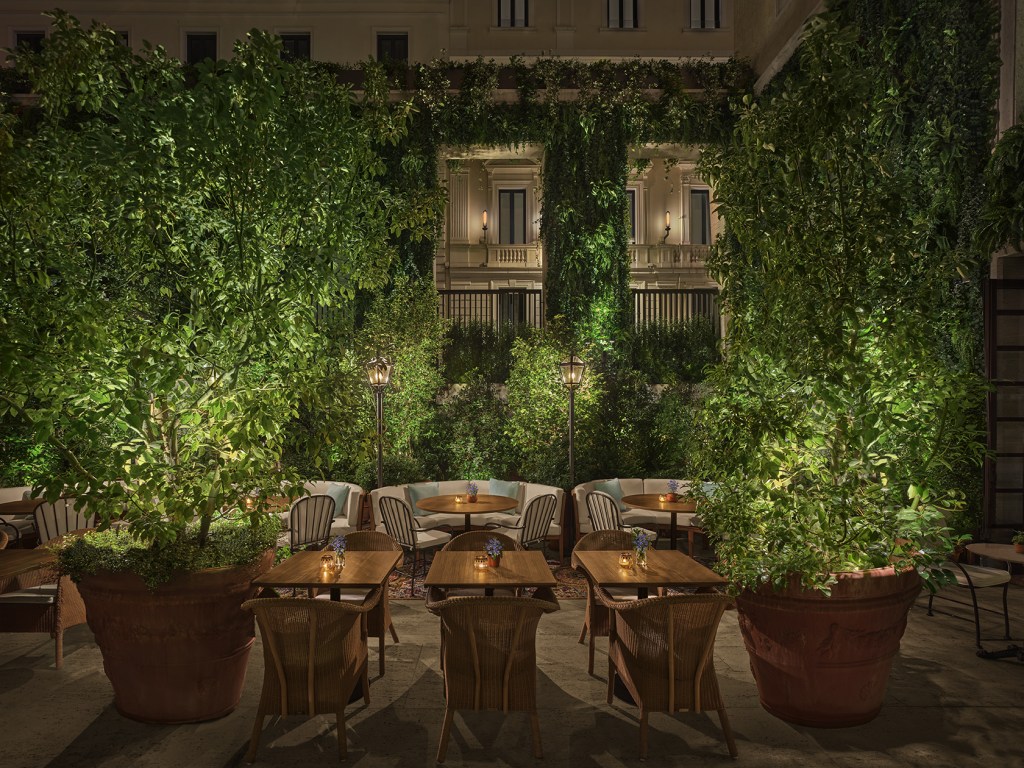
But the first thing you notice upon entering from the street entrance is the courtyard garden, which contains 400 species of plants and climbing jasmine, acting as a natural sound filter. You could easily sit here with a glass of vino and watch the day fade away.
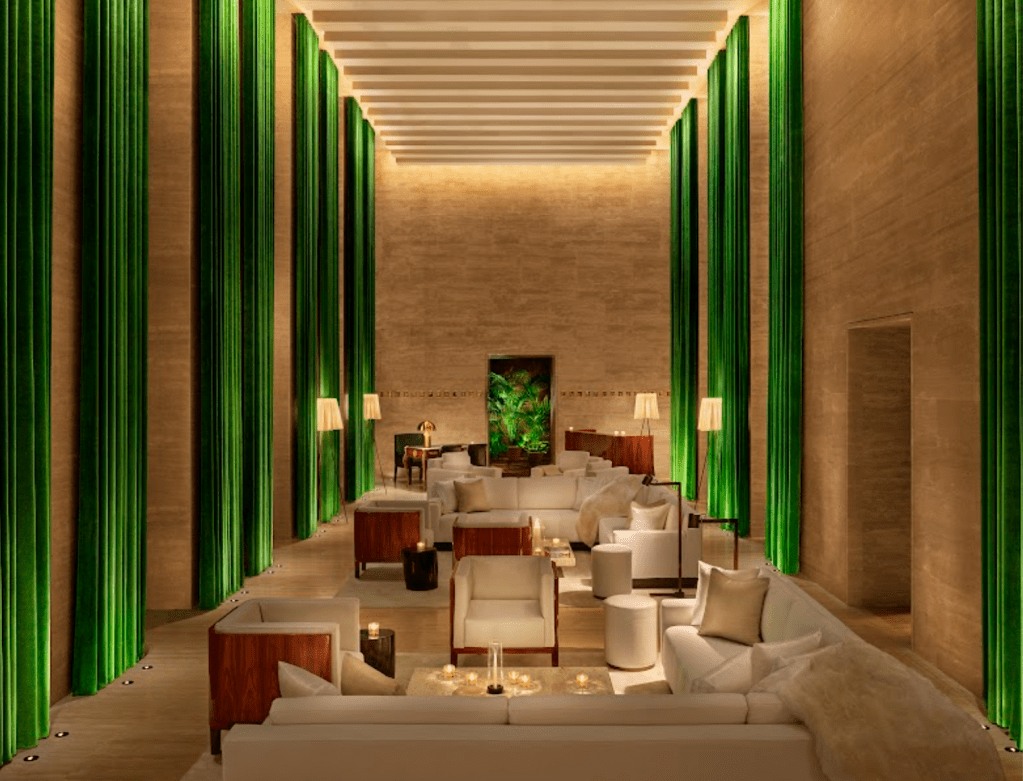
Inside, the scale is massive. The ceilings are seven metres high. The walls are porous travertine – the same stone used for the Colosseum – but here it is stripped of too much historicist fluff.
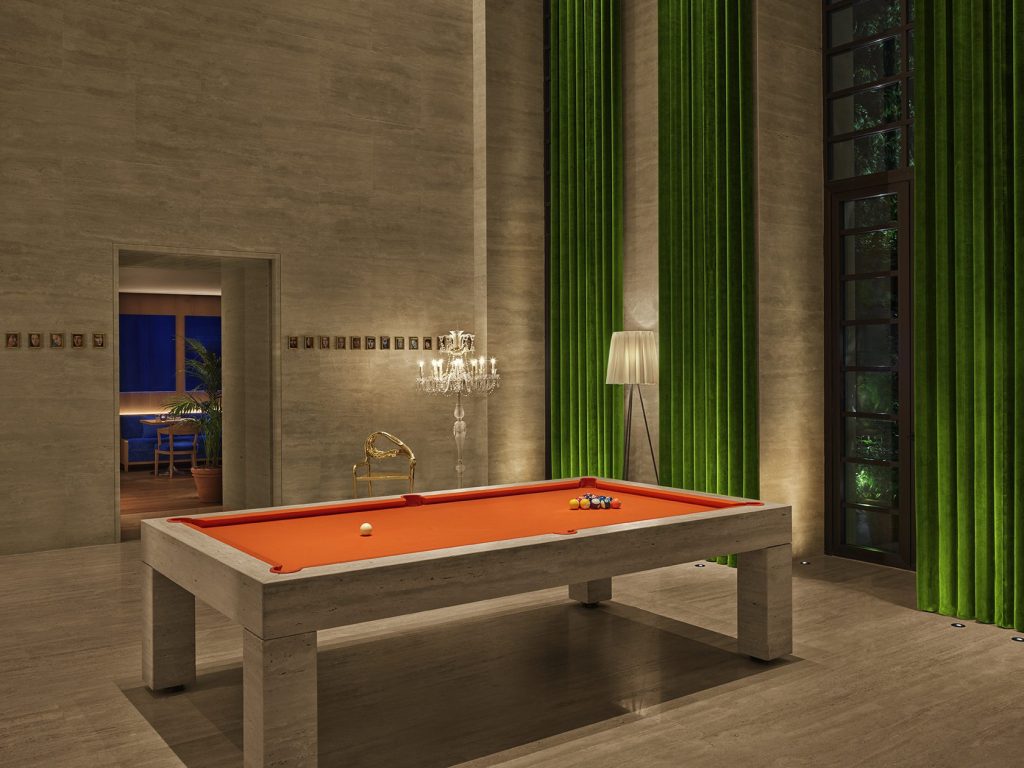
The design team used green velvet drapes to soften the stone. A custom orange pool table sits in the centre – although I didn’t see anyone brave enough to actually play on it.
Eat & Drink
The hotel’s social life is split across three bars, each with their own charm.
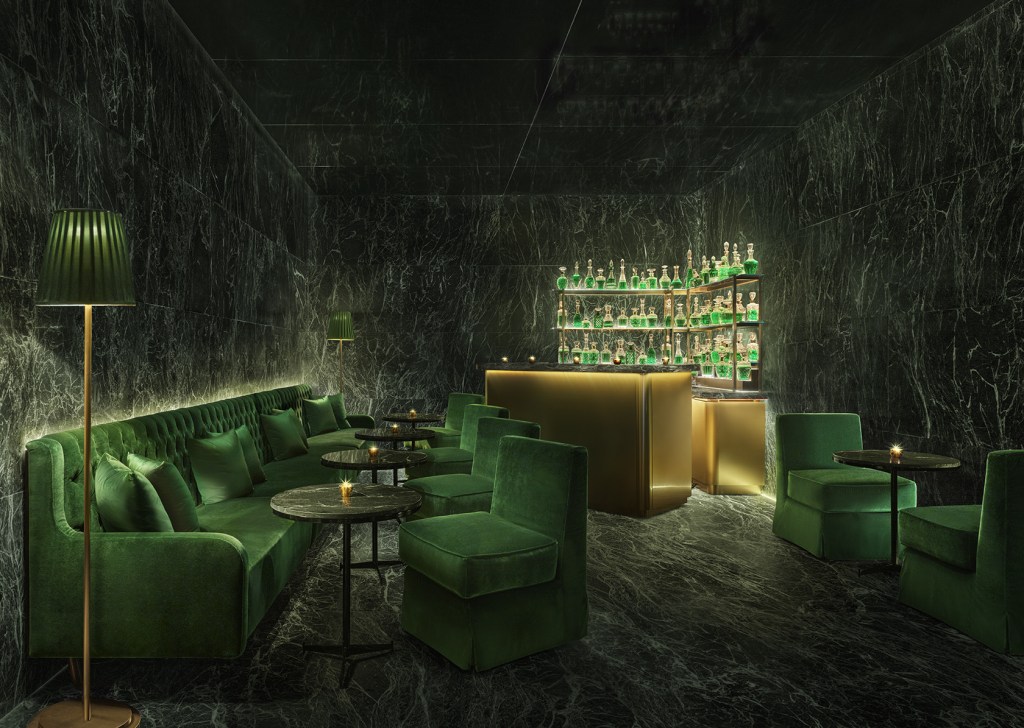
The Jade Bar – a vault with only 12 seats – is the most specific room in the building. The walls are floor-to-ceiling green antique marble. There are no windows and the cocktail program focuses on scent using products developed with Le Labo. It’s a pretty intimate experience – and a great way to kick off an evening whether you’re staying in or heading down the road for a night out.
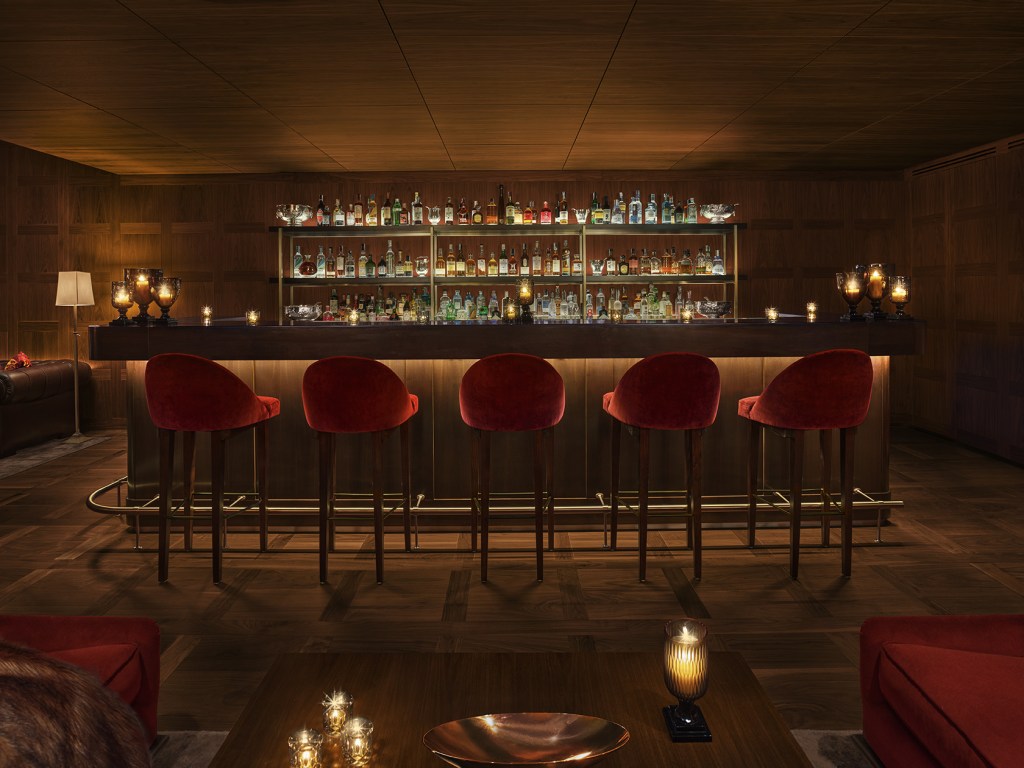
The Punch Room offers a different energy with its dark and wood-panelling. It features a Rosso Levanto marble fireplace and the focus here feels like it’s probably designed more for evening crowds – but once again, you couldn’t really go wrong at any hour.
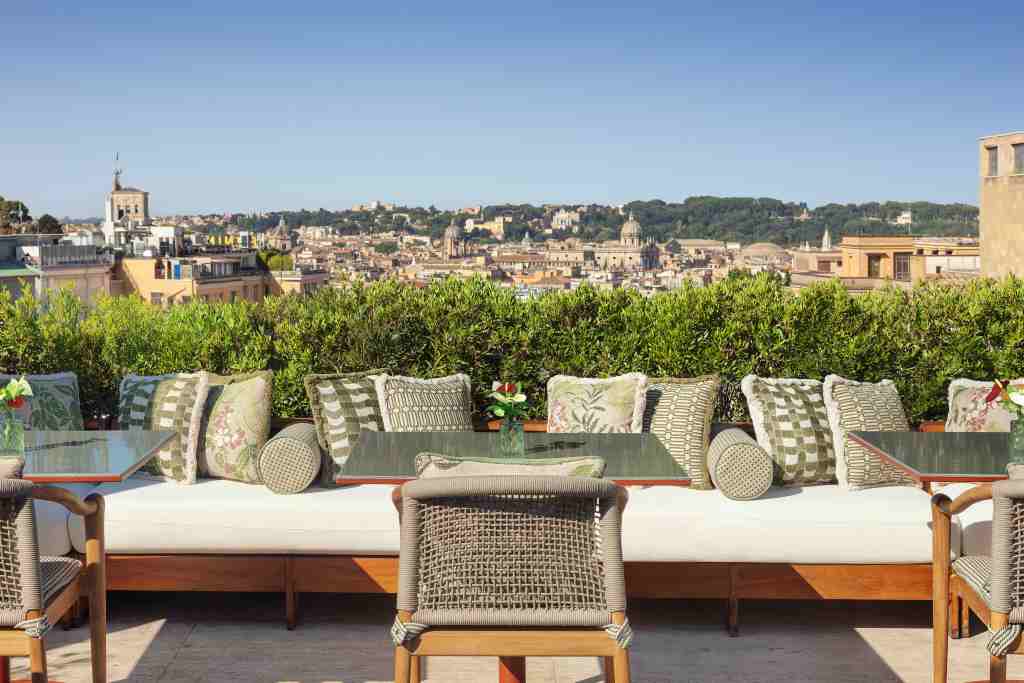
On level seven, the roof is where most people eventually end up.
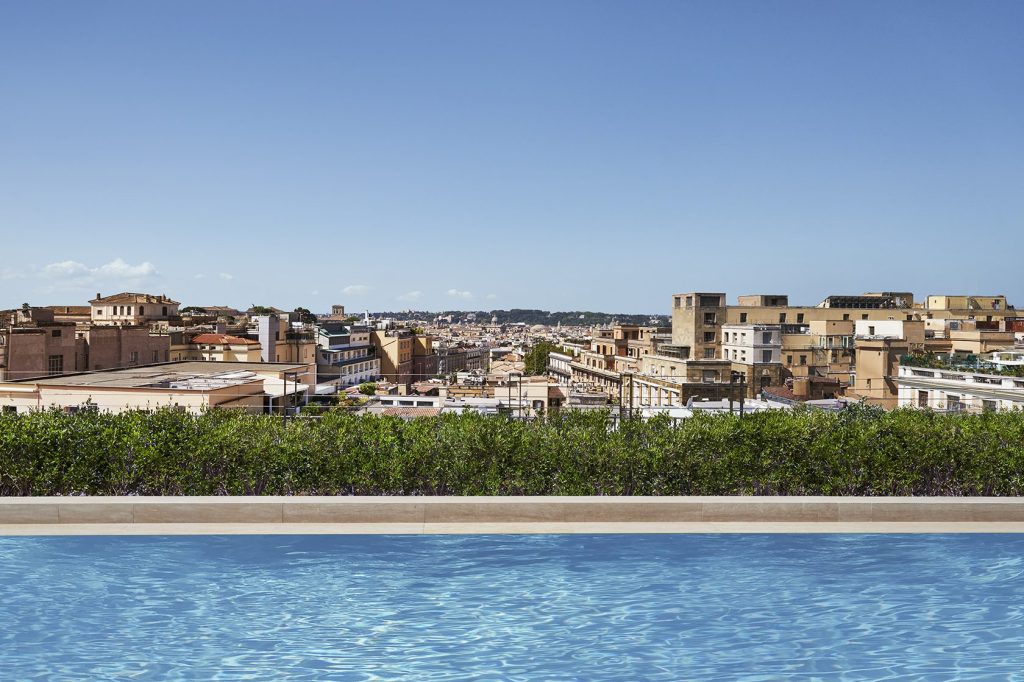
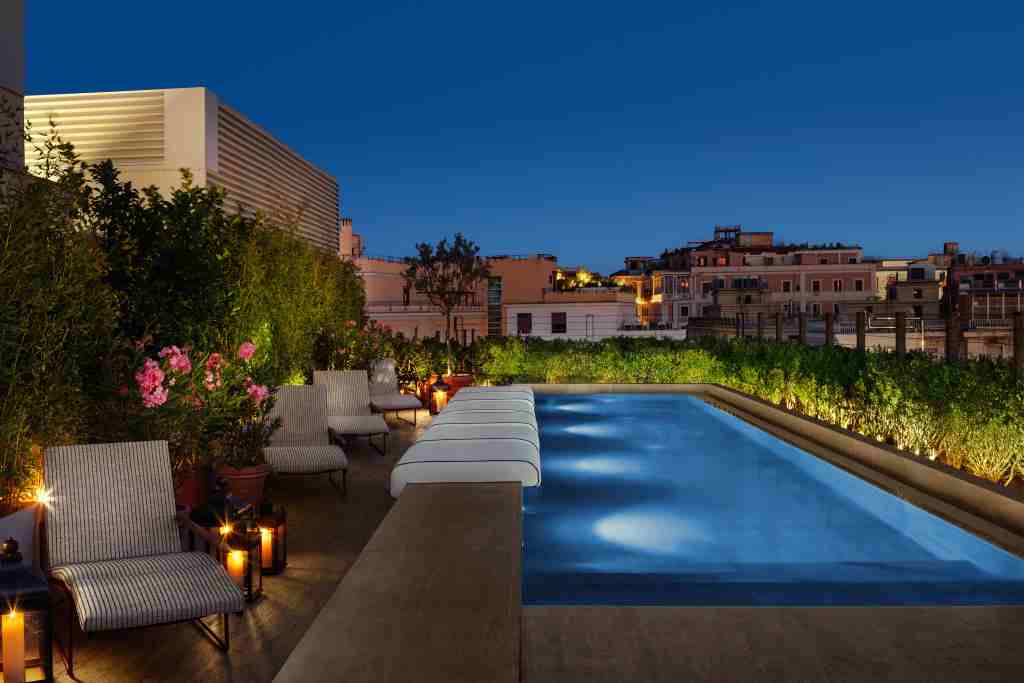
Rome’s height limits mean rooftop views are rare, and this one looks across the Pantheon and Sant’Andrea della Valle. There’s a plunge pool, a long bar, and table service throughout the day. It’s open from lunch through late evening and tends to peak just before sunset.
Food across the hotel is overseen by chef Antonio Gentile, who runs Anima on the ground floor and the rooftop kitchen upstairs.
The menus lean Roman and Neapolitan, with familiar formats and seasonal changes. Anima is open all day and draws a local crowd, particularly at lunch and early dinner.
The hotel’s location makes it easy to step in and out. Villa Borghese is nearby. So is Antico Caffe Greco. Barberini metro station is a few minutes away if you’re heading further across the city.
The Rooms
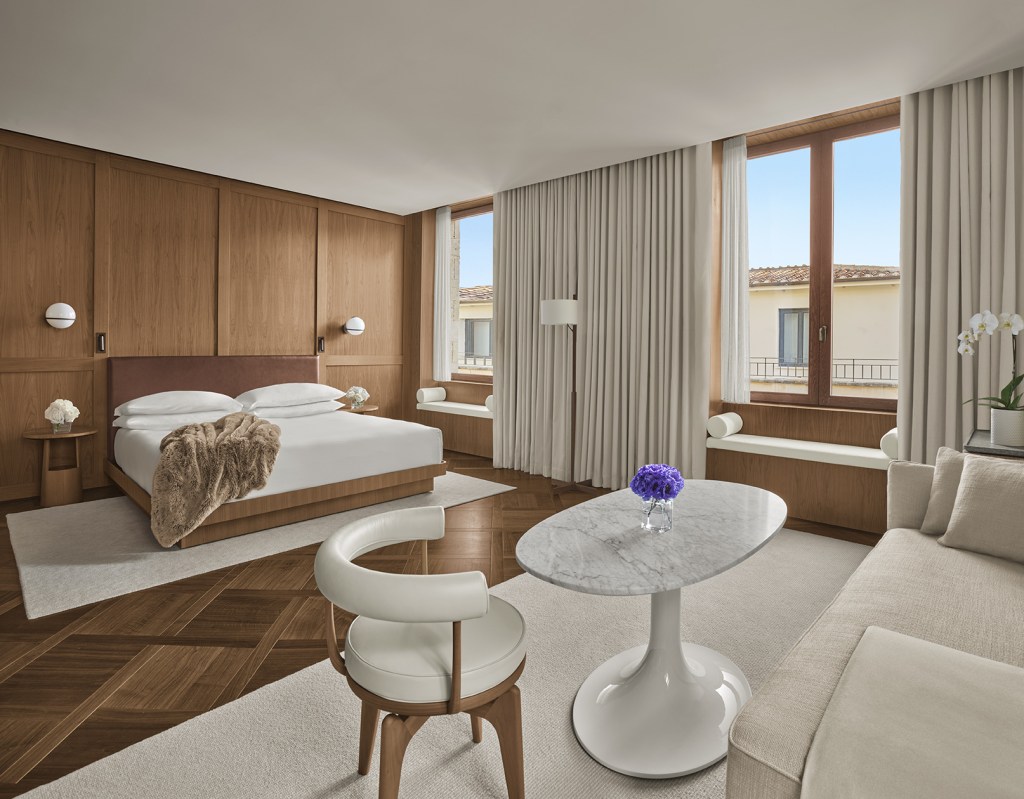
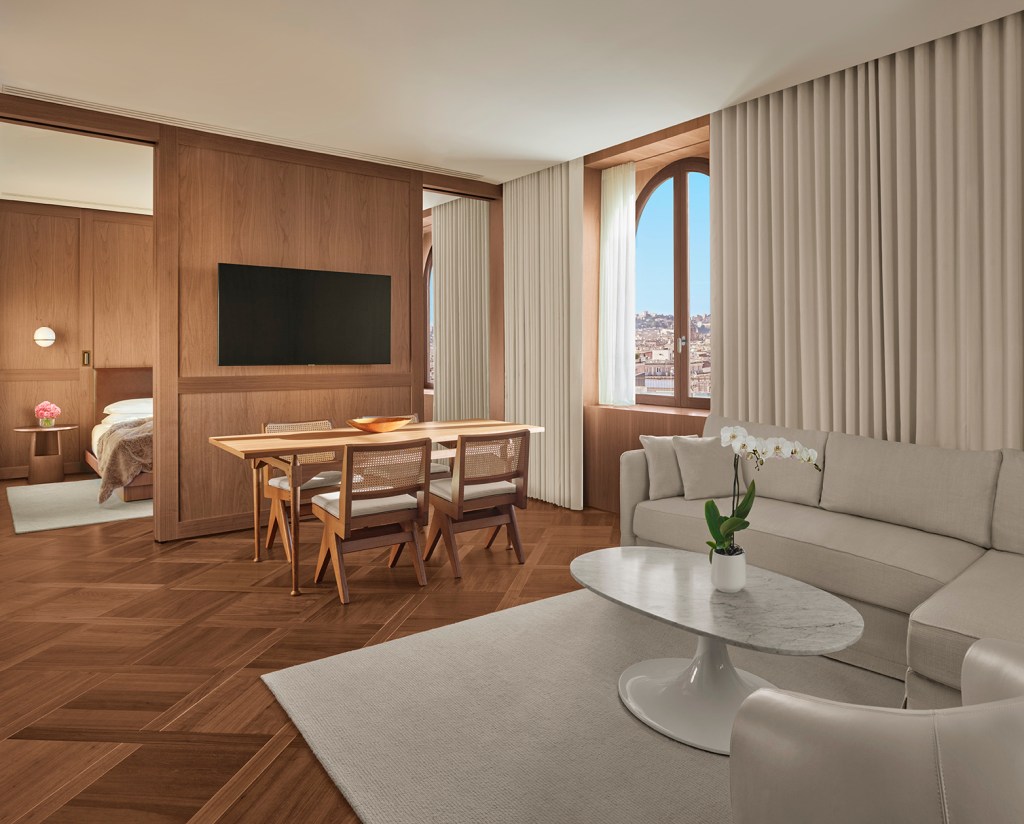
Downstairs, the rooms are intentionally restrained and most are standard-sized rather than expansive, with layouts designed for short stays and city use. Floors are light oak herringbone, walls are white, and storage is built in rather than freestanding.
Every room includes a Charlotte Perriand Indochine chair, a small desk, and a control panel that runs lighting, temperature and blinds from the bedside.
Bathrooms are consistent across categories. Carrara marble is used throughout, paired with brushed metal fixtures and walk-in showers.
Le Labo toiletries are standard, and water is provided in glass bottles rather than plastic (little touches matter). Rooms facing the courtyard are said to be a bit quieter, while street-facing rooms trade the silence for a bit more light.
The gym sits below ground and operates as a straightforward training space rather than a wellness centre.
It’s compact but well-equipped, with Technogym machines, free weights and space for stretching. There’s no pool access here – that’s reserved for the rooftop – and no push toward classes or programming.
The Verdict
Depending on dates and availability, basic rooms start from around €500 – €600 per night, with many listings clustering between about $700 and $1,000 a night (before taxes and city fees) for a king or superior room. That said, on peak dates and in higher categories, rates can exceed €1,300 – €1,600 per night.
Those prices put it in line with other top-tier stays in the city rather than the midrange market. Breakfast isn’t automatically included and typically costs around €50 a person if added on at booking. In context, you’re paying for a full-service environment where food and drink, late-night hours and multiple social spaces are part of the experience.
So, is it worth it? Well, whether you’re starting off your holiday with a bit of luxury or need a break from the bustling streets of Rome for a night or two, The Rome EDITION makes sense. It’s central, it runs late, and it gives you plenty of options.
Look back on the week that was with hand-picked articles from Australia and around the world. Sign up to the Forbes Australia newsletter here or become a member here.