Exclusive: What sets Breaker apart, the founder and CEO says, is shifting from a ‘one to one’ dynamic in autonomous systems, to ‘one to many.’
What may come to mind when hearing the term ‘orchestra’ is a symphony of instruments and formally attired musicians. In this brave new AI world, however, orchestration takes place between sentient beings and machines.
“Robotic orchestration happens when an AI agent acts as a mediator between a human and a team of robots (that could be drones, ground rovers or autonomous planes) that translates plain English instructions into machine-readable commands that robots can execute, and vice versa,” Michael Irwin, the co-founder co-CEO of Breaker, tells Forbes Australia.
“It’s about interpreting human intent and converting it into coordinated robotic action across an entire team of unmanned systems.”
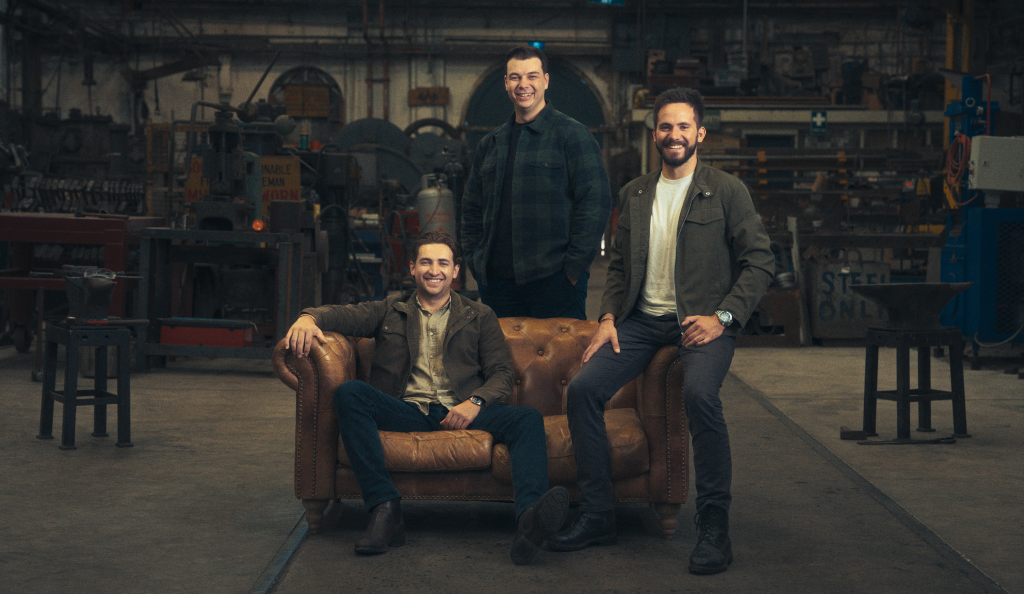
Sydney-based machine learning engineer Irwin is at the helm of autonomous defence startup Breaker, which has just secured a $9 million seed raise. San Francisco-headquartered VC Bessemer led the round, joined by Australian deeptech VC Main Sequence, which also invested $2m in Breaker’s pre-seed round 12 months ago.
This raise is three-times larger than the median seed round raised in Australia, and in the top quartile of US seed raises. What sets Breaker apart, Irwin says, is shifting from a ‘one to one’ dynamic in autonomous systems, to ‘one to many.’
“In most places where robotic platforms are deployed today, there is a one to one relationship. One operator to one robot. And that operator is under complete cognitive saturation. Their entire job is managing that robot, head down staring at a screen, hands on the controls. Despite what people might think, these systems aren’t realistically autonomous. They’re remote controlled,” says Irwin.
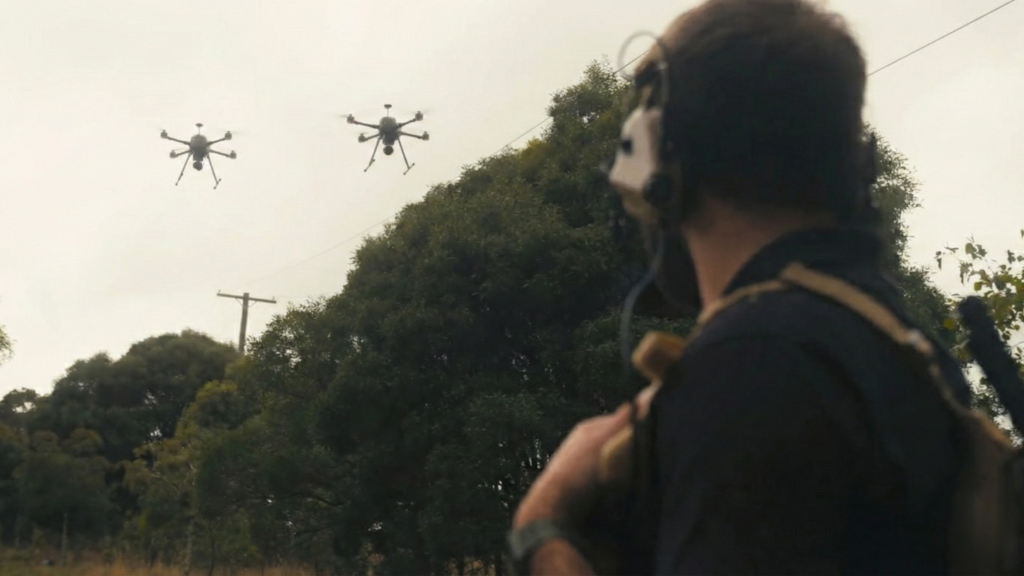
What he and his co-founders developed through Breaker is a system where one human can control a ‘fleet’ of machines.
“A helicopter pilot can coordinate a squad of drones mid-flight. A vehicle operator can task robotic systems while driving. A soldier on the ground can manage an unmanned team while still focused on their primary mission,” says Irwin. “What we enable is true collaborative autonomy. The ability to work with a robot as a teammate. You tell the robot what you want, it thinks, gives feedback, talks to you like a teammate and helps you like a teammate.”
This ‘teamwork’ advantage is further enhanced by giving verbal instructions to the agents.
“By using voice, a pilot can coordinate a team of drones mid-flight, or a soldier can manage unmanned systems while still focused on their primary task. Our software changes the operator-to-robot ratio, allowing small teams to control large numbers of robots through voice,” says Irwin.
And that enhances capability and makes defence workers more efficient.
“In this drone warfare era, the next frontier isn’t making individual robots smarter. It’s how you manage and coordinate teams of them at speed, at scale, and under pressure.”

Another vital element in modern defence operations is that drones and other autonomous devices can continue to operate if connectivity is disabled. According to the company, Breaker’s software ‘runs entirely onboard each robot,’ without relying on the cloud or external networks.
And that gives them a greater likelihood of executing mission-critical tasks.
“When communications are jammed or denied, the agents continue operating autonomously, making mission-aligned decisions at the edge,” says Irwin.
Putting the seed funds to work
Just two years old, Breaker has contracts at home and Stateside, and is now looking to scale.
“We’re in grow fast mode right now. We’re on a mission to build our product and scale really quickly, both in the USA and Australia. The funds will be used for hiring top talent, completing our existing contracts and getting new ones,” says Irwin.
Watching autonomous systems rendered useless in conflict zones in recent years, has reiterated the dire need for the technology the founders are developing.
“Ukraine proved this at scale. All of the intelligence sat on centralised servers with none on the platforms themselves. As soon as the connection to that server was cut, the platform was useless. The desire to break the one-to-one ratio and build more resilient systems was clear, but nobody was solving it, so we decided to,” says Irwin.
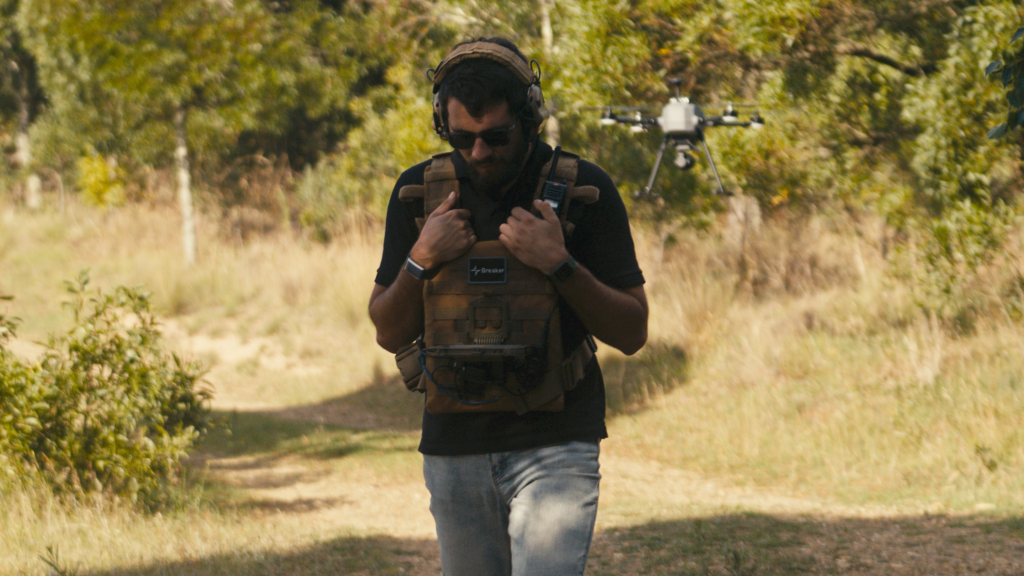
The company is conscious of not letting adversarial nation states gain a competitive advantage from the homegrown Australian innovation, and is tapping into the relationships developed under the AUKUS pact.
“There are certain countries we would never sell our technology to. We are focused on providing capability to Australia and its allies. That includes the United States, the United Kingdom, and Europe,” says Irwin.
“We have been granted AUKUS Authorised User Status by the Australian Government which means we can engage in licence-free exports of our AI agent to the United States and United Kingdom, accelerating collaboration under AUKUS Pillar II.”
Look back on the week that was with hand-picked articles from Australia and around the world. Sign up to the Forbes Australia newsletter here or become a member here.