Dozens of nations at the Milan Cortina Games promised their athletes cash for podium finishes, but one country’s success puts it in a league of its own financially.
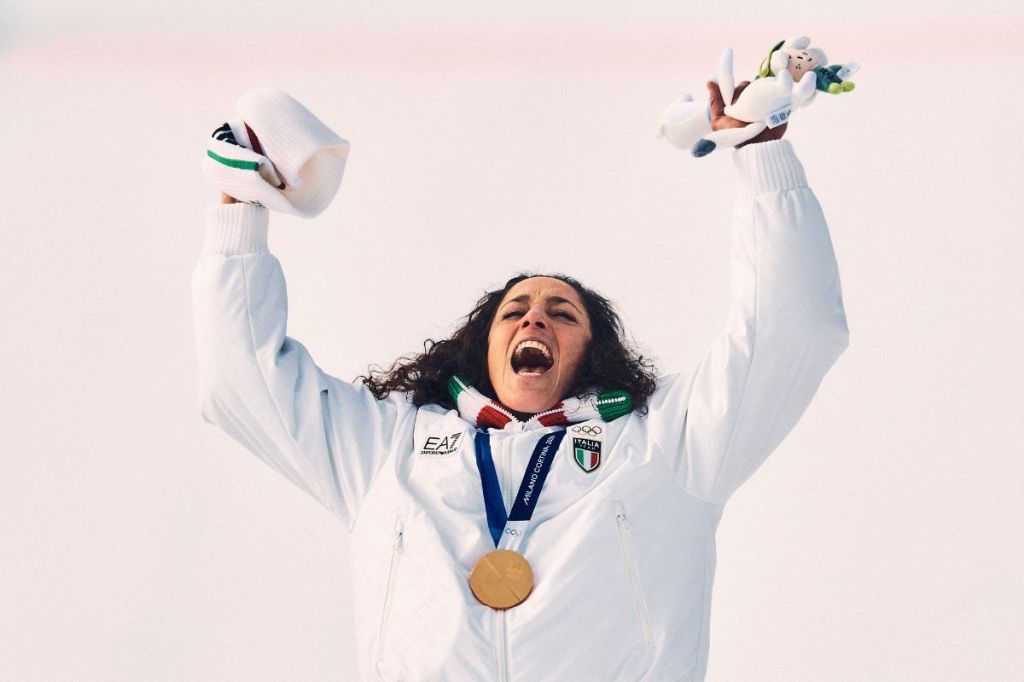
Italy spent billions of dollars preparing to host this year’s Winter Olympics in Milan and Cortina d’Ampezzo. But now, after Sunday’s closing ceremony ends two and a half weeks of heroics and heartbreak, the country’s tab is set to rise by another $7.8 million.
Ahead of the Games, the Italian National Olympic Committee committed to paying a cash bonus to any of the country’s athletes who won a medal: roughly $213,000 for gold, $106,000 for silver and $71,000 for bronze (converted to U.S. dollars at the exchange rate at the start of the Olympics). Those rewards were generous—among the 37 delegations that confirmed to Forbes that they were offering financial incentives to Olympians who reached the podium, only Singapore, Hong Kong, Poland and Kazakhstan had plans for larger prizes.
However, Singapore (offering roughly $787,000 for gold in an individual sport) and Hong Kong ($768,000) were shut out of the medal table, as they have been at every previous edition of the Winter Games, and Kazakhstan ($250,000) had a single top-three performance: Mikhail Shaidorov’s victory in men’s figure skating over the heavily favored American Ilia Malinin. Poland, pledging a combined $355,000 for individual gold from its Olympic committee and the national government, fared better, with a total of four medals in ski jumping and speedskating.
Yet even that medal haul looks modest next to Italy, which automatically qualified for every event as the Olympics’ host nation and capitalized by racking up 30 medals—the country’s best-ever result at a Winter Games, ten medals better than its previous high from 1994 and 13 more than in 2022. In terms of both total medals and golds (ten), Italy ranked third among all delegations this year, behind Norway (41 medals, a Winter Olympics-record 18 gold) and the United States (33 medals, 12 gold).
Factor in all of the Italian team members—from mixed doubles curling, for instance, or doubles luge—and the medals bounty puts the country’s Olympic committee on the hook for just under $7.8 million in bonuses by Forbes’ math.
Podium Paydays
Among the 37 delegations that confirmed they were offering incentives to Olympic medalists, 19 had at least one top-three finish this year, putting them on the hook for $5,000 to $7.8 million in bonus payments.
Country | Gold Bonus | Total Medals | Total Payout |
Italy | $213,000 | 30 | $7,757,000 |
United States | $37,500 | 33 | $3,022,500 |
Switzerland | $64,000 | 23 | $1,512,000 |
Poland | $355,000 | 4 | $1,238,000 |
Germany | $35,000 | 26 | $921,000 |
Canada | $15,000 | 21 | $915,000 |
Norway | $17,000 | 41 | $513,000 |
Czechia | $117,000 | 5 | $466,000 |
Slovenia | $81,000 | 4 | $450,000 |
Netherlands | $35,000 | 20 | $366,000 |
Finland | $59,000 | 6 | $283,000 |
Kazakhstan | $250,000 | 1 | $250,000 |
Spain | $111,000 | 3 | $205,000 |
Bulgaria | $151,000 | 2 | $181,000 |
Estonia | $118,000 | 1 | $83,000 |
Australia | $13,000 | 6 | $67,000 |
Brazil | $67,000 | 1 | $67,000 |
Denmark | $16,000 | 1 | $12,000 |
New Zealand | $3,000 | 3 | $5,000 |
The U.S. has the next-highest bill for any delegation that confirmed its financial awards to Forbes, at more than $3 million, even though the figures per medal are much lower, at $37,500 for gold, $22,500 for silver and $15,000 for bronze. Forbes estimates that Norway—a perennial powerhouse at the Winter Games—will shell out $513,000, but that number actually undersells its Olympic commitment. The nation will continue to pay that sum each year, with each Norwegian medalist eligible for an annual stipend worth about $17,000.
That distinction highlights the many ways in which countries’ incentive plans differ. Some nations pay less for athletes in team events, for example, and some cap the number of bonuses each individual can claim. The source of the funding can also vary, whether from the national Olympic committee, the government or a team sponsor.
And while Forbes’ calculations are limited to top-three performances, some countries will pay for results well off the podium—down to 16th place in the case of Cyprus, for instance, although the island’s two skiers at these Games finished no better than 34th in their events.
Forbes’ payout figures similarly exclude any compensation for coaches and any non-cash benefits to Olympic medalists, such as perks promised to any Polish individual gold medalists that include a Toyota Corolla, a furnished two-room apartment, a painting, a vacation voucher and jewelry worth up to about $800.
Of course, not every nation makes medal bonuses available. Ireland and Great Britain, for instance, provide grants and training stipends to their elite athletes but don’t offer additional pay directly tied to their Olympic performance.
On the opposite end of the spectrum is Italy, which was pedal to the metal for medals from the first event of these Games, with Giovanni Franzoni and Dominik Paris finishing second and third in the men’s downhill on February 7. Italy’s athletes will also benefit from a 2025 budget law that made the medal bonuses tax free, aligning with other countries such as the United States, where Olympians generally don’t pay federal taxes on their medal bonuses as long as their total income is less than $1 million.
The smaller scope of the Winter Olympics—with 116 events, about a third of the 339 at the 2024 Summer Games—curbs the Italians’ spending somewhat. Two years ago, after the country won 40 medals in Paris, Forbes calculated Italy’s total payout at $10.7 million.
But even now, the nation’s invoice is set to keep growing. The Paralympics open on March 6, and the Italian Paralympic Committee is poised to pay medalists the equivalent of $118,000 for gold, $65,000 for silver and $41,000 for bronze.
This story was originally published on forbes.com and all figures are in USD.
Look back on the week that was with hand-picked articles from Australia and around the world. Sign up to the Forbes Australia newsletter here or become a member here.