Futures powered by education

With fewer than two in 10 children in Papua New Guinea (PNG) attending early childhood education, the case for strengthening systems to improve outcomes is both compelling and complex. UNICEF’s PNG representative explains why we should be investing in Australia’s northern neighbour.
BRANDVOICE – PARTNER CONTENT
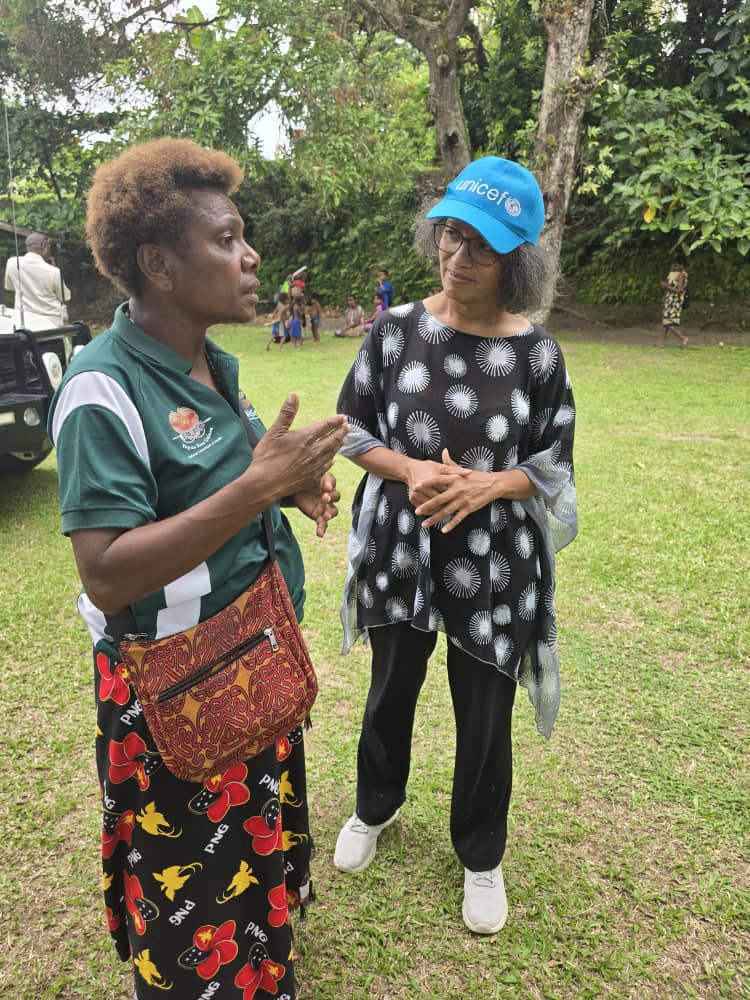
Humanitarian and UNICEF representative in Papua New Guinea, Dr Veera Mendonca, knows from personal experience just how much education can change outcomes.
“I came from a very poor background, and it’s only because of education I’m here talking to you today,” she says.
After decades of providing support to children and families in countries including Ukraine, Bangladesh and several parts of Africa, Mendonca is now continuing her work for UNICEF in PNG, collaborating with government and local community partners to try to reverse a series of alarming health, education and wellbeing indicators.
“We have indicators that you would be shocked to hear anywhere else: only two out of 10 make it to secondary school, while one in five girls is sexually abused,” she says.
Sadly, it doesn’t end there: one in two children experiences developmental challenges due to malnutrition, and only 15% of children have their births registered. Unsurprisingly, it creates challenges that follow children into their adolescence and adulthood.
“Education is the vaccine,” she says. “We cannot continue to leave these millions of children in Papua New Guinea behind.”
There’s no ‘simple fix’ though; instead, it involves systems-level change, where interconnected parties come together and tackle the root causes of problems, as opposed to the symptoms, Mendonca says.
Changing early education systems in PNG
Systems-level change is core to UNICEF’s approach and has several different pillars. UNICEF works closely with communities, local governments and community leaders to understand the causes of problems and to build new and sustainable models to try and change outcomes.
It’s neither quick nor easy, partly because of the complex interplay between deeply embedded structures and historical processes. At baseline, collaboration between local and national governments, local communities and local organisations is needed to effect change.
“Globally, what UNICEF has shown is every dollar (of donations) that we invest in early childhood development gives us around $7 to $17 in return.” – Dr Veera Mendonca
In the past year, UNICEF has worked across 11 provinces in PNG to advance reforms in the early education sector, made possible by a 2020 government policy change.
“Approximately 20% of children in PNG access early education, and it’s largely been limited, informal and unevenly accessible, especially if you look at rural areas,” Mendonca says.
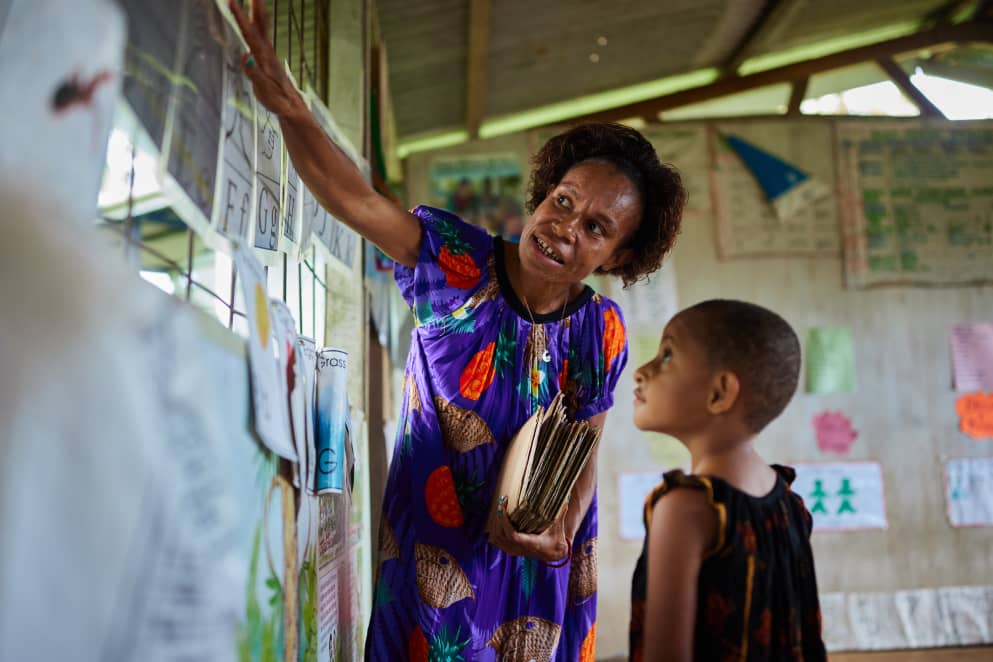
The work involves setting up model centres to integrate early learning into community programs, improve teacher training and create a more universal early education pathway.
“It’s making sure supplies are available, parents, school boards are engaged, creating this child-friendly space at the community level,” she says.
Setting up the centres comes with financial challenges, given poor water sanitation, resourcing and training and the importance of creating disability inclusivity, Mendonca says.
“We train teachers within the communities, but we create systems of support for them, including mentoring support from national to local, so teachers have the right evidence coming to them, but they’re also embedded; they’re part and parcel of the local community,” Mendonca says.
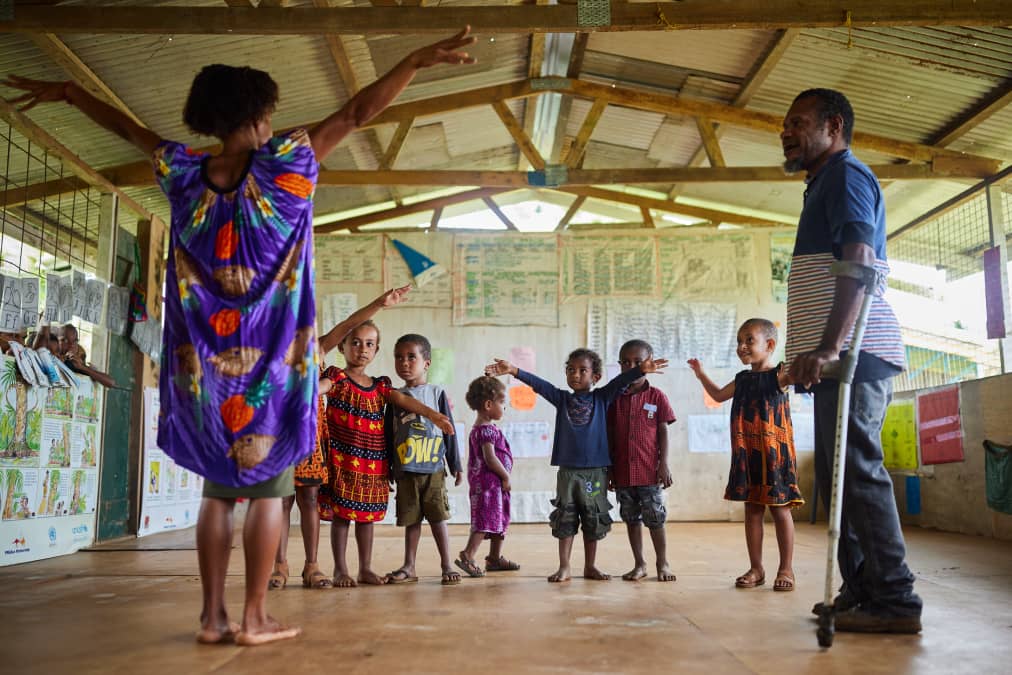
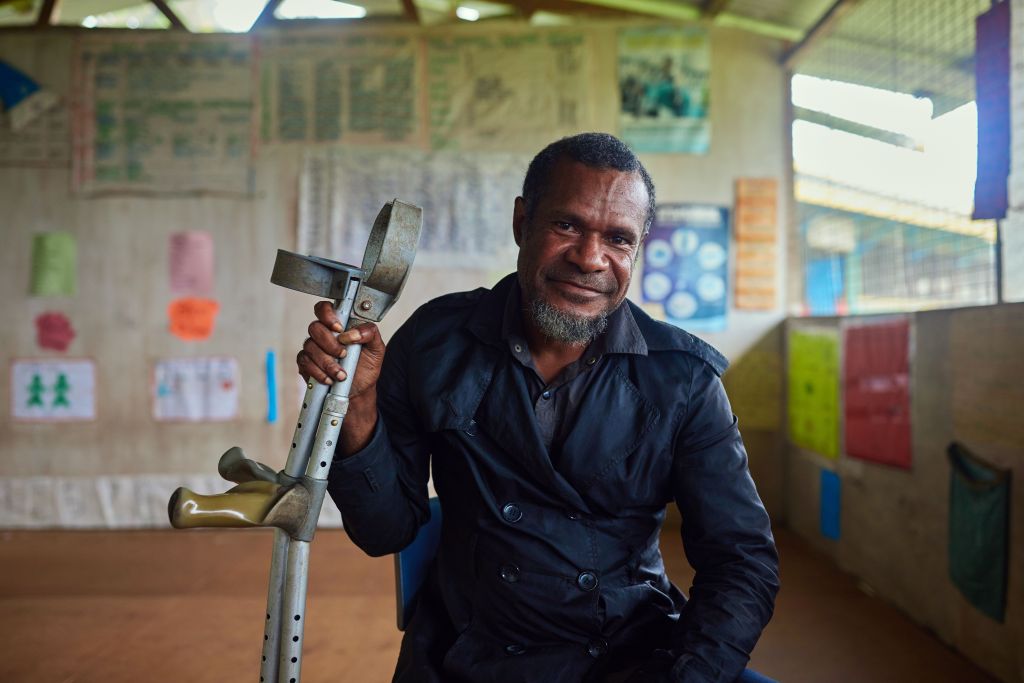
Local teacher Rueben Moses is a prime example. Moses was partially paralysed by polio as a toddler, but now works at one of the established model centres.
“Despite my disability, UNICEF trained me to conduct an early childhood education (ECE) play class,” he says.
To date, two model ECE centres were set up in the initial phase, with an additional 12 in the pipeline.
True connection
While changing systems takes time, it also pays significant dividends, Mendonca says.
“Globally, what UNICEF has shown is that every dollar (of donations) that we invest in early childhood development gives us around $7 to $17 in return,” she says. UNICEF is 100% donor funded.
“We are trying to make sure that the early childhood education is integrated into local district budgets and investment plans, so that it is longer term, sustained and supported. It needs continuous support, because it’s not just a project.”
UNICEF Australia CEO Tony Stuart says having local partners on the ground to negotiate and execute change through local organisations is an essential part of the process.
“From my conversations with supporters, one question comes up again and again: how can a large organisation like UNICEF truly connect with local communities?” says Stuart. “UNICEF works hand-in-hand with communities. Last year, more than 70% of our implementing partners were local organisations.”
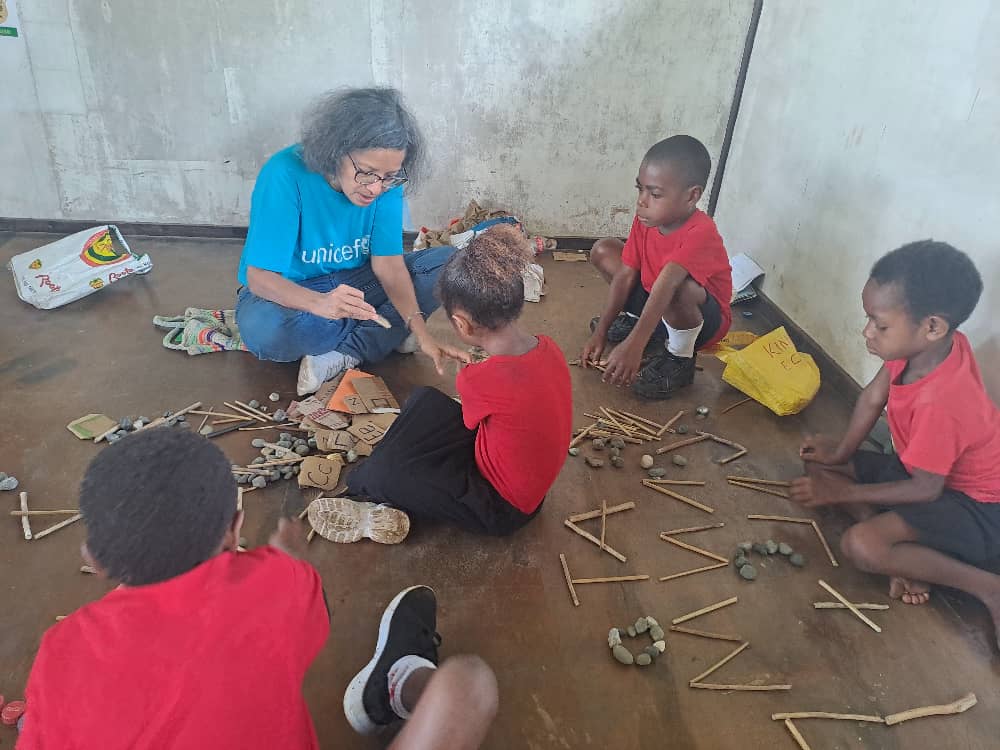
“We provide the resources, training and support to scale, and it’s the local teams who lead the work. And we align with community-defined needs to ensure that programs are relevant and sustainable.”
Anecdotally, Mendonca says feedback from those trained by UNICEF highlights the organisation’s impact.
Dessie Voa is a village health assistant from the Gazelle District of East New Britain who returned to her village with a ‘thrill in her eye’.
“When I came back from the training, everyone was so surprised and impressed that I disappeared for two weeks, and I came back with so many skills and knowledge. I felt special as everyone said that now I was a magician with all this new information,” she says.
To achieve scalability, UNICEF Australia says it needs philanthropic partners to join it on a long-term journey.
“It’s not only an investment, but it’s going to be hugely beneficial for the Pacific, to make sure that you have healthy, strong neighbours,” Mendonca says. “Ultimately, it will benefit everybody.”
To read more about how UNICEF Australia partners with philanthropists to fund life-changing programs in the Pacific and across the world, visit https://www.unicef.org.au/support-unicef-australia/philanthropy
Want to see more Forbes articles on your feed? Tap here to make Forbes Australia a preferred source on Google.
Look back on the week that was with hand-picked articles from Australia and around the world. Sign up to the Forbes Australia newsletter here or become a member here.