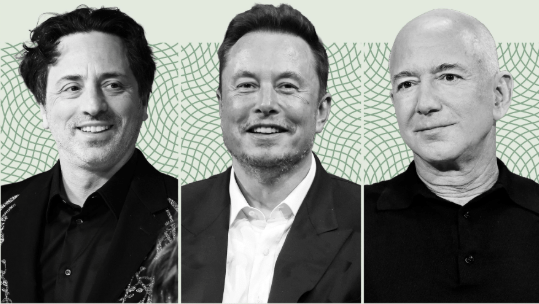
The cast of billionaires who have kowtowed to the President is extensive, including everyone from Jeff Bezos and Mark Zuckerberg to Sundar Pichai and Sam Altman. That’s what makes Dario Amodei’s refusal to cave so stunning — and may be behind Claude’s surge to the top of the App Store.
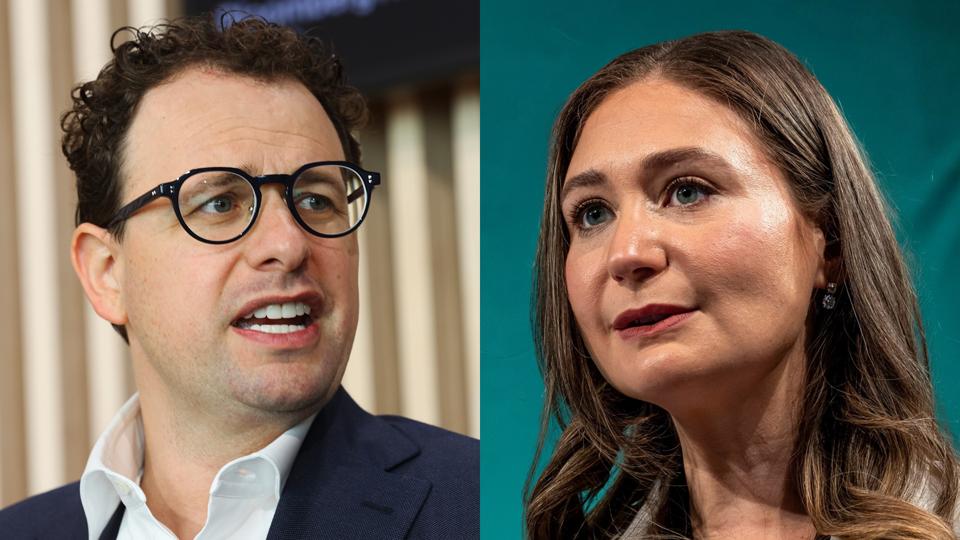
After a high-profile standoff with the Pentagon, AI giant Anthropic and its CEO Dario Amodei are facing the full weight of President Donald Trump’s wrath. “The Leftwing nut jobs at Anthropic have made a DISASTROUS MISTAKE trying to STRONG-ARM the Department of War, and force them to obey their Terms of Service instead of our Constitution,” Trump wrote in a post on Truth Social last week.
Anthropic drew the ire of the federal government last week after the company refused to allow the Department of War unfettered access to its AI model Claude, particularly in what Anthropic describes as mass surveillance and fully autonomous weapons.
Taking the moral high ground could come at a hefty price: In response, Secretary of Defense Peter Hegseth deemed the company a “supply chain risk,” banning any contractor, supplier, or partner that does business with the US military to use Anthropic. In the face of that threat, Amodei didn’t budge. “We cannot in good conscience accede to their request,” Amodei wrote in a blog post explaining the decision. The next day, Trump directed every federal agency to immediately cease use of Anthropic’s technology.
“In this instance, Anthropic has been willing to blow up an important relationship with the government by sticking to their guns,” said Paul Scharre, a former official at the Department of Defense, where he worked on policies related to autonomous weapons. “They’ve been willing to stick to their principles even when there’s a cost to doing so. And I think that is notable. Not all companies necessarily do that.”
The media frenzy around Anthropic’s stance has brought it some goodwill from Trump critics. Over the weekend, Claude shot to the top of Apple’s App Store charts, surpassing ChatGPT for the first time (though the app’s popularity had also been rising since the Super Bowl and after well-reviewed model updates). The pop star Katy Perry posted a screenshot on X of a Claude Pro signup page with a heart around it. Outside of Anthropic’s office in San Francisco, fans scrawled uplifting messages in chalk on the sidewalk, including, “YOU DO NOT STAND ALONE,” and “GOD LOVES ANTHROPIC.” Though the company has been working to scale its systems to accommodate its recent popularity surge, a service outage to Claude on Monday was instead due to a technical issue, and not an influx of users, a spokesperson said.
Anthropic declined to comment on Amodei’s stance and the political consequences to arise from it. But those who have been following the evolution of this five-year-old company won’t be surprised by its stance.
After all, this isn’t Anthropic’s first tussle with the administration. Amodei reportedly likened Trump to a “feudal warlord” in a now-deleted Facebook post that urged his network to vote for Kamala Harris. Last year, Anthropic lobbied against Trump’s signature “Big Beautiful Bill” over its aim to curb AI regulation with a 10-year suspension on state-level AI laws. Anthropic prevailed and the provision was ultimately not included in the legislation.
Then in October, Anthropic cofounder Jack Clark, a former technology journalist who spent two years at Bloomberg, published an essay titled “Technological Optimism and Appropriate Fear.” He argued that while he is hopeful for the future of AI, he’s “also deeply afraid.” “We are growing extremely powerful systems that we do not fully understand,” he wrote. In response, White House AI czar David Sacks, a venture capitalist and member of the PayPal mafia, called the company “woke” and accused it of “fear-mongering.”
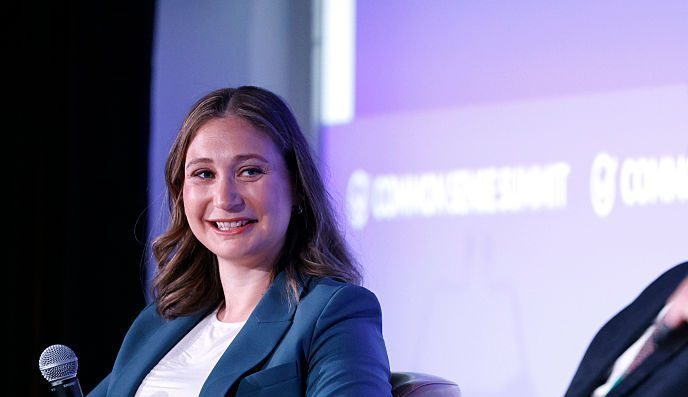
Some of Anthropic’s cofounders have also spoken out on social issues related to Trump’s policies. After the death of Alex Pretti, an ICU nurse who was shot by federal immigration agents in Minnesota, Dario called the situation “horror.” “What we’ve been witnessing over the past days is not what America stands for,” Daniela Amodei, Anthropic’s president and Dario’s sister, said in a LinkedIn post. And cofounder Chris Olah said the events “shock the conscience.”
(Dario and Daniela, who both appear to be registered Democrats, have given thousands of dollars to Democrat and Independent political candidates, but not Republicans, according to OpenSecrets. Three other cofounders also appear to be registered as Democrats; a fourth does not appear to be a U.S. citizen and the last could not be identified in records.)
Two days after the killing of the ICU nurse, Dario posted his 20,000 word essay, “The Adolescence of Technology,” on AI’s risks. While he didn’t specifically call out the U.S. government, he cited the potential abuses of AI technologies by democratic governments. “Democracies normally have safeguards that prevent their military and intelligence apparatus from being turned inwards against their own population but because AI tools require so few people to operate, there is potential to circumvent these safeguards.” He also cited the reluctance of other tech companies to criticize the U.S. government and its support for extreme anti-regulatory policies on AI.
The battle with the Pentagon not only puts Anthropic in opposition to the federal government, it also casts Amodei in a different light than his tech billionaire counterparts. While he’s kept a distance from Trump, many others have kissed the proverbial ring, showing up at events at the White House and Windsor Castle. At a September dinner to celebrate the administration’s rollout of its national AI strategy, the President and First Lady were flanked by Meta CEO Mark Zuckerberg (who’s also dined with him several times at Mar-a-Lago) and Microsoft cofounder Bill Gates. Across the table, which was adorned with yellow and white roses, were Google cofounder Sergey Brin and Apple CEO Tim Cook.
There have been other overtures: Apple’s Cook has also visited Trump in the oval office and gifted him with a custom Apple plaque sitting atop a 24–karat gold base. Amazon founder Jeff Bezos reportedly nixed a planned endorsement of former Vice President (and Trump opponent) Kamala Harris at The Washington Post, which he owns. Amazon Prime also reportedly spent $35 million to promote Melania, the vanity project documentary about the First Lady.
“They’ve been willing to stick to their principles even when there’s a cost to doing so. And I think that is notable. Not all companies necessarily do that.”
Paul Scharre, former Department of Defense official
Then there’s Altman, who had been a registered Democrat but apparently dropped any party affiliation years ago. The OpenAI CEO has publicly appeared with Trump several times, including on the President’s first full day back in office to announce Project Stargate, a $500 billion AI infrastructure initiative. “I have found this President to be an easy one to work with on AI,” Altman told Forbes last month. “He gets the importance of infrastructure buildout in the country, importance of energy, and has done a lot.” (On Friday evening, a day after Amodei refused to capitulate to the DoW, Altman announced OpenAI had struck its own deal with the Pentagon.)
Anthropic’s battle with the DoW further widens the gulf between the company and OpenAI. Anthropic’s very beginnings came from a schism with OpenAI over AI safety — a disagreement that saw Dario and Daniela Amodei, along with fellow cofounders Jack Clark, Sam McCandlish, Chris Olah, Tom Brown and Jared Kaplan, defect to forge their own AI firm. More recently, Anthropic seemingly took aim at OpenAI with Super Bowl ads that appeared to skewer the company’s decision to place ads in ChatGPT. And perhaps the most deliciously petty of spats: At a summit in India last month, Dario Amodei and Altman refused to join hands during a photo op in which every other executive did.
Now Anthropic has positioned itself as something of an anti-OpenAI, and it enjoying a spike of popularity. This isn’t the first time a tech company has received good PR from a high-profile standoff with the government. In 2016, Apple refused to unlock the iPhone the FBI recovered from one of the mass shooters in the San Bernardino, California, attacks a year earlier. Always known as a privacy-centric company, the refusal to comply brandished Apple’s image as a steadfast protector of its users — along with marketing campaigns to go with it. Cook has taken no such stance of late.
The Amodei siblings grew up in San Francisco’s Mission District in the 1980s. Their father was an Italian immigrant and leather craftsman, who died when they were young adults. Their mother was a project manager for libraries, overseeing construction and renovation efforts. “They gave me a sense of right and wrong and what was important in the world,” Dario has said, “imbuing a strong sense of responsibility.”
As a kid, Dario became obsessed with math and physics. He went on to study physics first as an undergrad at Stanford, then as a PhD student at Princeton. He joined Google’s vaunted Google Brain research lab in 2015, before moving to OpenAI a year later and eventually rising to become the ascendant AI lab’s vice president of research. At Anthropic, he’s reportedly known by some employees as Professor Panda and has a stuffed animal in his office he calls “the wise octopus.”
His sister Daniela, whose passion early on was classical flute, went to UC Santa Cruz to study English literature and got into politics, working for former Pennsylvania congressman Matt Cartwright. Then after five years at payments giant Stripe, first in recruiting then in risk management and policy, she joined her brother at OpenAI where she served as vice president of safety and policy. Both siblings, along with the rest of Anthropic’s cofounders, have pledged to give 80% of their fortunes to charity — a sum currently worth $39.2 billion, based on Forbes estimates.
That humanities streak ultimately might be what sets Anthropic apart its rivals. In fact, in a video interview last month, Daniela, sitting in the company’s fully stocked library, said that studying humanities would be “more important than ever” in the age of AI. Then there is the Nelson Mandela quote, one of the chalk scrawlings outside the Anthropic office, that might prove her point: “Courage is not the absence of fear, but the triumph over it.”
This article was originally published on forbes.com and all figures are in USD.
Want to see more Forbes articles on your feed? Tap here to make Forbes Australia a preferred source on Google.
Look back on the week that was with hand-picked articles from Australia and around the world. Sign up to the Forbes Australia newsletter here or become a member here.