After a rough stretch, investment firm AQR is on a 5-year hot streak thanks to a new AI infused investing strategy and strong tax-friendly returns, beloved by financial advisors.
Last year was a banner year for many hedge funds and quant shops, and Greenwich, CT-based Applied Quantitative Research—better known as AQR—was no exception. Its assets under management have ballooned to $187 billion, increasing $73 billion in 2025. All three of its billionaire founders saw their net worths double.
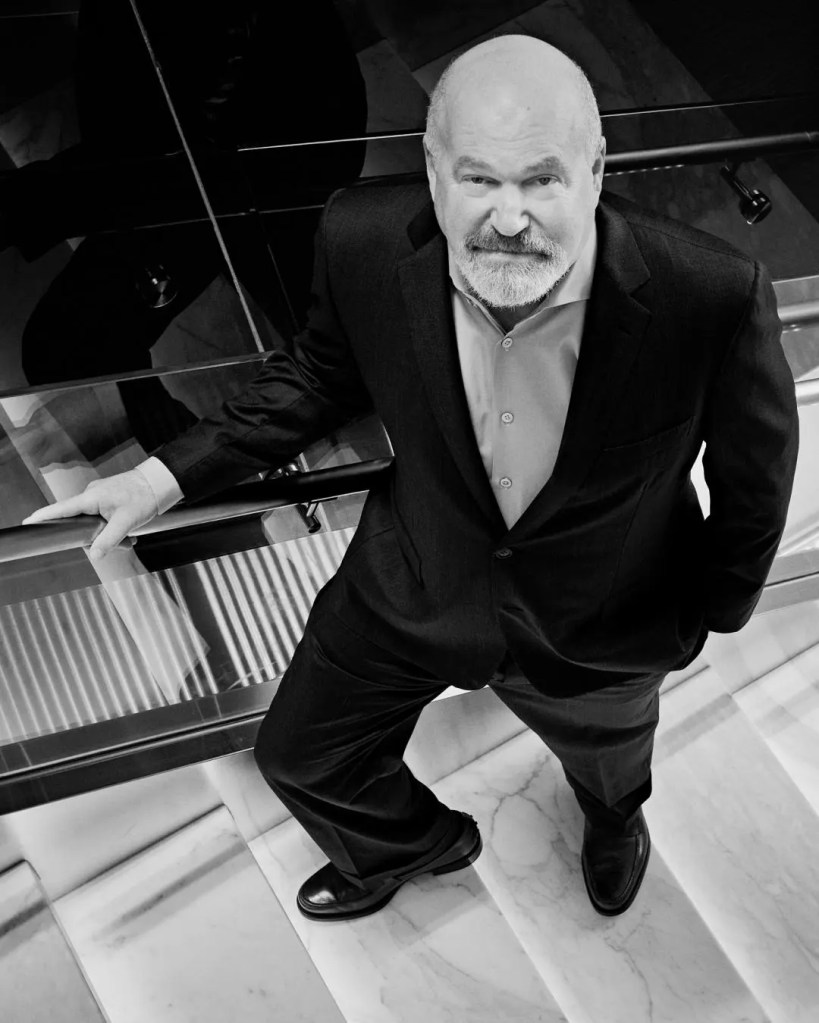
Cliff Asness, AQR’s PhD-holding chief investment officer and largest individual shareholder with an estimated 30% stake, is now worth $6.3 billion, making him the 664th richest in the world. Cofounders John Liew and David Kabiller each saw their net worths jump to over $2 billion. The three founders—who started AQR in 1998 after working together at Goldman Sachs Asset Management—are all heavily invested in AQR’s funds, tying their own fortunes to the firm’s performance.
Last year AQR’s core multi-strategy Apex fund, which has $6.7 billion in assets, returned 19.4%, while its Delphi long-short fund (also $6.7 billion in assets) returned 16.7%, according to a person familiar with the matter who asked for anonymity to share private information. On average over the last five years the two funds have each returned 16.6% on an annualized basis, the person added. (For comparison, the S&P 500 returned 14.4% annualized over that same time period). Among the firm’s more than two dozen open-ended mutual funds, AQR’s Equity Market Neutral Fund, with $3.2 billion in assets and around 2,000 positions, held both long and short, gained 26.5% in 2025. Over the last 5-years it has averaged 19.6% annually versus around 8% for most funds in its category.
If AQR maintains last year’s growth trajectory it will soon eclipse its previous all-time high of $226 billion in assets (in 2018), which would cap an impressive comeback for the firm, which managed less than $100 billion as recently as four years ago amid underperformance and customer outflows.
AQR’s turnaround has coincided with its full-throated embrace of AI and deliberate expansion of machine-learning techniques across research and trading. As a factor-based investor, AQR traditionally sought to use value investing metrics like price-to-book or return on equity to determine which equities in the market are over or undervalued. It then relied on human input to assign weights to the various factors they use to drive stock selection. Now, machine learning is helping do that—detecting complex interactions between factors, recalibrating their weights in real time, mining huge datasets for predictive signals. On the research side, natural language processing (think ChatGPT or Claude) is helping analysts comb through reams of data to improve their models.
AQR, whose founders Asness and Liew were schooled under the University of Chicago’s efficient market Nobel Laureate economist Eugene Fama, was late to the AI party compared to peers like Renaissance Technologies and D.E. Shaw. AQR hired its first head of machine learning in 2018, and that person lasted just seven months in the job. But his replacement, Brian Kelly, a Yale finance professor, has made a big splash. In December 2021, Kelly co-published a 141-page academic paper, The Virtue of Complexity in Return Prediction, which concluded that more sophisticated machine learning models outperformed simpler models in forecasting stock returns and constructing investment portfolios. Several academics wrote their own papers in response that disputed Kelly’s findings saying that the research relied on an overly narrow dataset. AQR has defended the paper and continues to stand by its findings.
More recently, Asness himself has taken up the mantle of AI evangelizer-in-chief. He remarked that AQR has “surrendered more to the machine” and that AI was coming for his own job. Despite all the talk, AQR insiders insist AI has not extinguished human input. “ML and AI are definitely paying dividends in our process, but they’re evolutionary, not revolutionary, to what we do,” says a person at the company.
To wit, the revolutionary stuff appears to be happening in the less sexy distribution side of the business, where AQR is meeting rising demand from financial advisors seeking tax-friendly funds for their wealthy clients. This category of investor—rather than AQR’s traditional institutional client base like pension funds and endowments—is now its largest source of inflows. The CEO of Affiliated Managers Group, which owns a minority stake in AQR, said during last month’s earnings call that AQR’s advisory client base is “driving significant organic growth,” and that its own full-year net inflows of $51 billion were “primarily driven by AQR.”
In particular, AQR’s Flex separately managed accounts—a long-short investment vehicle for advisors and high-net-worth clients—is on a tear. This sort of long-short tax-advantaged portfolio buys stocks it expects to rise and bets against those it expects to fall, aiming to profit from both while reducing market swings and limiting taxable payouts so investors may keep more after taxes. One year ago, Flex counted $23.2 billion in assets, according to its webpage. Nine months later it had nearly doubled in size to $45.4 billion. Flex now makes up nearly a quarter of AQR’s total assets (as of the end of 2025).
According to Justin deTray, a Bay Area-based advisor at $580 billion (assets) advisory firm WealthSpire, Flex is winning over so many RIAs because AQR charges lower fees and has more “cache” than the upstarts seeking to muscle in. On top of that, secular tailwinds are at play, with newly minted tech millionaires looking to lock in their wealth after a yearslong stock market boom. “There’s a lot of prospects who are sitting on a ton of unrealized games in Mag Seven or hyperscalers,” says deTray, citing his own experience with clients. “AQR is really well positioned to move into this space.”
Can AQR keep up its great run? Market volatility—which Trump is providing plenty of—tends to boost hedge funds and quant shops, but AQR’s comeback story now hinges on whether its models can keep outrunning the market—and other hedge funds now embracing their own AI-infused quant strategies.
This article was originally published on forbes.com and all figures are in USD.
Want to see more Forbes articles on your feed? Tap here to make Forbes Australia a preferred source on Google.
Look back on the week that was with hand-picked articles from Australia and around the world. Sign up to the Forbes Australia newsletter hereor become a member here.