This Western Sydney-born and raised C-suiter was brought in to protect the $9 billion Crown Resorts from money laundering, counter-terrorism, bribery, and corruption on the casino floor.
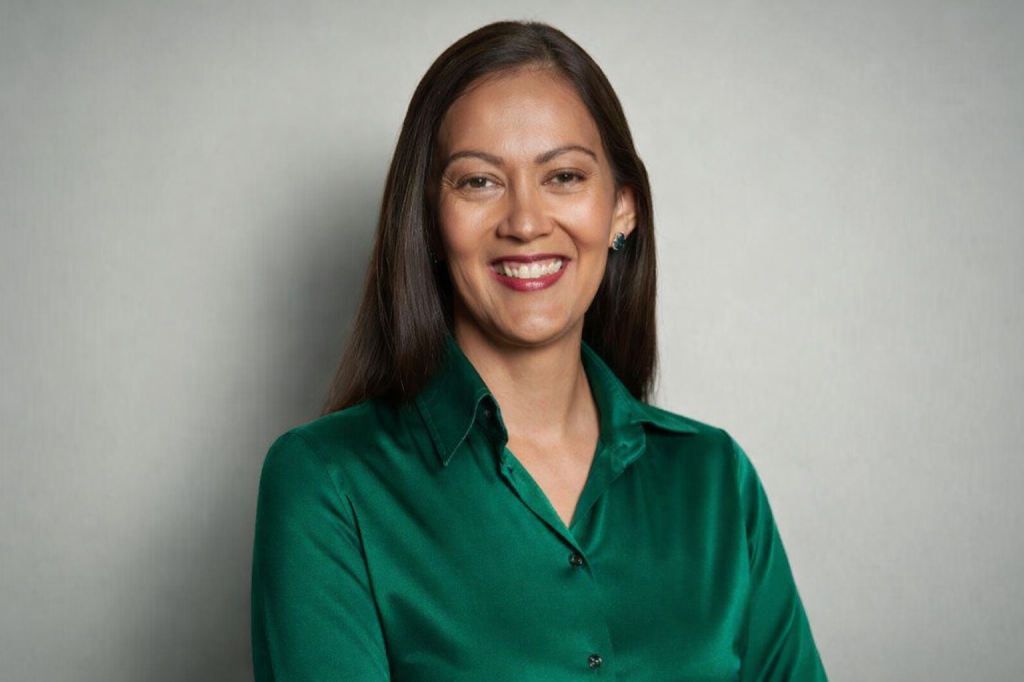
In the corridors of Crown’s Australian resorts, there is a shift taking place in how the organisation manages safety. Chief Risk Officer Armina Antoniou’s purview isn’t the architecture or the luxury suites, however. Her domain is the data.
Antoniou is overseeing a transition where risk management has moved from a compliance checklist to a proactive, technology-led duty of care.
The scale of this mandate is substantial. Crown Resorts is one of Australia’s largest entertainment groups, employing approximately 20,000 people across three major hubs. In Victoria and WA, Crown is the largest single-site private-sector employer in the state, with roughly 13,500 staff in Melbourne and 5,000 in Perth. Another 2,000 people work in the company’s newest – and flashiest – property in Sydney.
Managing risk across Crown’s geographically spread, multi-purpose facilities is no easy task, says Antoniou.
“My mandate ranges from the risks of money laundering and criminals, to thinking about how we open up a venue or restaurant, insurance, to general casino and gaming compliance,” Antoniou tells Forbes Australia in an exclusive interview.
It’s a job that can be made more efficient with emerging technology, she says. Late last year, AI detection and monitoring technology was implemented at Crown Resorts to help flag at-risk and problem gambling behaviour on the casino floors.

This technological pivot to AI is part of a broader financial and cultural restructuring. After three years of regulatory scrutiny and approximately $700 million in fines, the now Blackstone-owned company has returned to a stable financial position. Crown reduced costs by $220 million in 2025, recorded revenue of $2.8 billion, and posted a $142 million profit.
The path to the C-suite
Antoniou joined Crown in 2021 after a decade with Tabcorp, when it became clear that Crown needed to think about risk in a more serious way.
“The portfolio of my first role at Crown was the anti-money laundering uplift, counterterrorism, anti-bribery, corruption, money laundering through the casino floor – the things that were discussed at the Royal Commissions. The state regulators want the casinos to be run free of criminal influence,” says Antoniou.
Her path to the C-suite did not follow a typical corporate trajectory. Growing up in Western Sydney, Antoniou’s only exposure to the legal profession was through the screen. “The only lawyer I knew was Jimmy Smits from LA Law,” she recalls with a laugh.
Influenced by that image of high-stakes problem-solving, she pursued a combined business and law degree, and like Smits became an attorney.
Her journey into corporate litigation was more by circumstance than design, she says. A decade into her career, the law firm she worked with sent her to Westpac to help with an anti-money laundering case, just before the regulator was due to arrive.
“I went in and said, look, if I were the regulator, I’d ask you these 10 questions. They were like, how would you know that? I said, well, I’ve read all your documents. I’ve read the legislation. These are the bits that don’t make sense to me,” says Antoniou.
This nuts-and-bolts style of analytical thinking was honed over the previous ten years.
“I was on coal mining cases and then a tax case. And then a coroner’s inquest,” says Antoniou of her first job out of law school. A partner in the legal practice identified her strengths early on.
“After a few years, I said to my boss, ‘You always give me the person whose house near the coal mine collapsed, or, you know, the housekeeper who witnessed something in the coroner’s court. Why?”
His response stuck with her.
“He said, ‘Look, you just connect with people. Some lawyers interview real people – not accountants or doctors, but real people – and they just answer yes or no to our questions. We give them to you, and we end up with witnesses who are telling very rich stories.”
Antoniou attributes relating to ‘real people,’ and getting them to tell her their stories, to having a grounded upbringing in Sydney’s outer suburbs.
Reshaping Crown
That background – working with witnesses who were often unfamiliar with the legal process – taught her that you must understand the human element before you can fix a system. When she arrived at Crown, she found an organisation where she says the desire to do the right thing was present, but the awareness of what that looked like in practice was inconsistent.

Her solution was a simplification of the rules. She moved away from the “customer is always right” culture that was typical in hospitality – and had historically allowed employees to override red flags for the sake of service. In its place, she built an “if this, then that” framework.”
“We made the systems simple enough that you know if this happens, this is what we expect of you,” says Antonio. “If the customer says these words, then you’re to refer it to this team. If you observe these signs, the action we expect is, escalate it to either this team or that team.”
The CRO also hard-coded compliance into the technology – ensuring it was not possible to override the risk-signalling system in specific circumstances. She made integrity the default setting.
The burner phone and pre-AI intuition
Clearly a proponent of using big data for productivity, Antoniou maintains that sometimes technology is only effective when paired with human curiosity. She illustrates this with a story from the ‘Tabcorp’ days, earlier in her career.
During a major televised terrorism investigation, Antoniou ran the suspects’ names against the database she maintained. She found a match – but the phone number in her system was different from the burner phones that the police were tracking.
She contacted the Australian Federal Police. “I said, look, I don’t know if this is helpful, but just so you know, that guy in the media… I’ve got a different phone number.” A week later, a detective confirmed that the crooks had left the burner phones in stationary locations, meaning they couldn’t be tracked.
The phone number that Antoniou enlightened the AFP about enabled the suspect to be digitally traced and arrested.
“Technology or not – if someone is curious and wants to do the right thing, they can actually contribute to something meaningful,” she says.
Leveraging ‘big data’ to solve financial crime is another area to watch, says Antoniou. This combination of data and human observation can be applied to modern threats like ‘scambling’ – a blend of scams and illegal gambling sites – that law enforcement is increasingly targeting.
Scams, addiction, and Mindway
“Scambling is where money mules and illegal gambling sites and scams all come together. It didn’t happen at Crown, it was an online gaming scam. But those are the sorts of things where AI and tech and harnessing big data can be used to protect the vulnerable,” says Antoniou.
New threats emerge often, she says, as criminal masterminds work to outrun the law. And this is where emerging technology can be particularly helpful.
Drawing on neuroscience and artificial intelligence, Antoniou says Crown is trialing a new tool called Mindway AI to predict and prevent unsafe gambling. The Danish-founded technology company acts as a digital guardrail to redirect behaviour before it escalates.

“We train our people to look for signs of distress. Are people trying to borrow money from others? Are they punching the table when they lose?,” says Antoniou.
Not everything is visible to the human on the gaming room floor, however.
“If you’re a $100 a week kind of gambler and all of a sudden you go to $5000 a week. Those changes and behavioural patterns aren’t always observable because we’ve got staff on different shifts, and guests can go to different areas of the casino.”
The advantage of the outsider
Managing a team of 120 within a corporation that facilitates around 36 million visits annually, Antoniou is aware that she does not fit the standard executive mould.
She recalls a moment early in her career as a lawyer when a client in a meeting responded curtly with, “Don’t you know shorthand?” In response to her follow-up question.
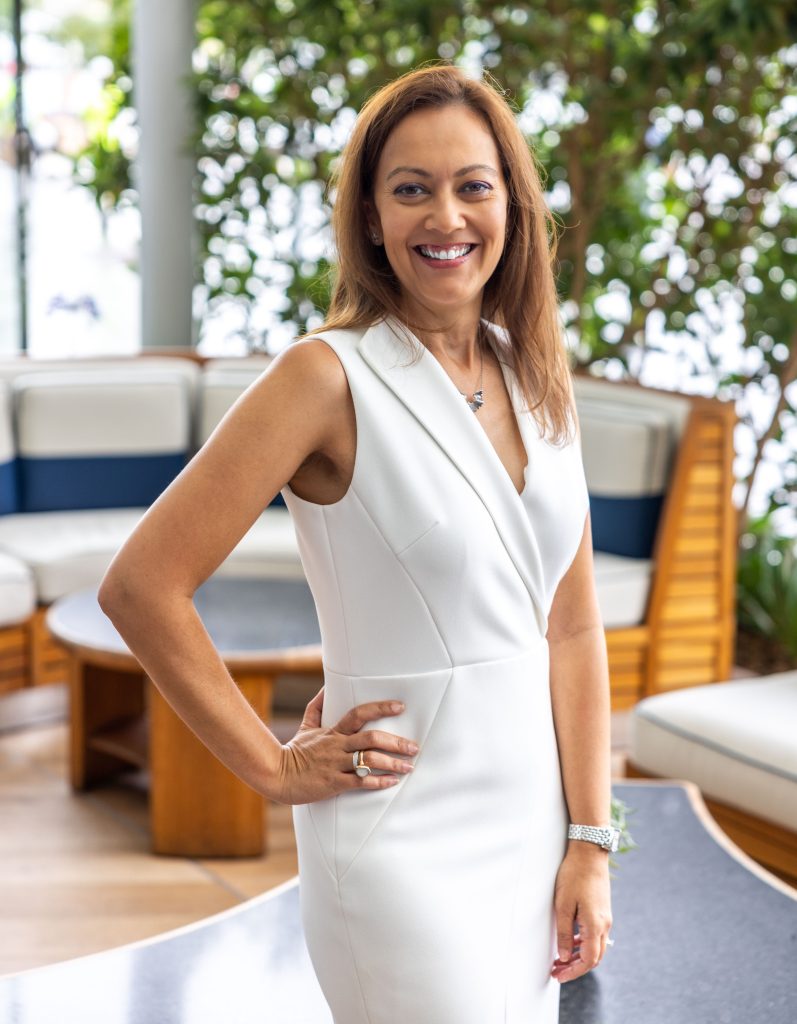
It was a reminder that – as a woman from a ‘non-elite’ background – she was sometimes viewed as support staff rather than a lawyer. “I always thought I was slightly different to everyone else, yet it is only more recently, that I’ve begun to see that as an advantage,” she says.
Antoniou argues that her background provides a grounded view of corporate responsibility. Because she did not grow up with excess, she views company resources with a high-level of respect. She brings a no-waste mentality to her mandate, believing that those who have been resourceful in their personal lives are often the most disciplined with a company’s financial health.
For this Parramatta-born exec, risk isn’t a department of “no.” It’s a human-centred mission to ensure that Australian establishments featuring the iconic Crown logo operate as good corporate citizens.
Want to see more Forbes articles on your feed? Tap here to make Forbes Australia a preferred source on Google.
Look back on the week that was with hand-picked articles from Australia and around the world. Sign up to the Forbes Australia newsletter here or become a member here.