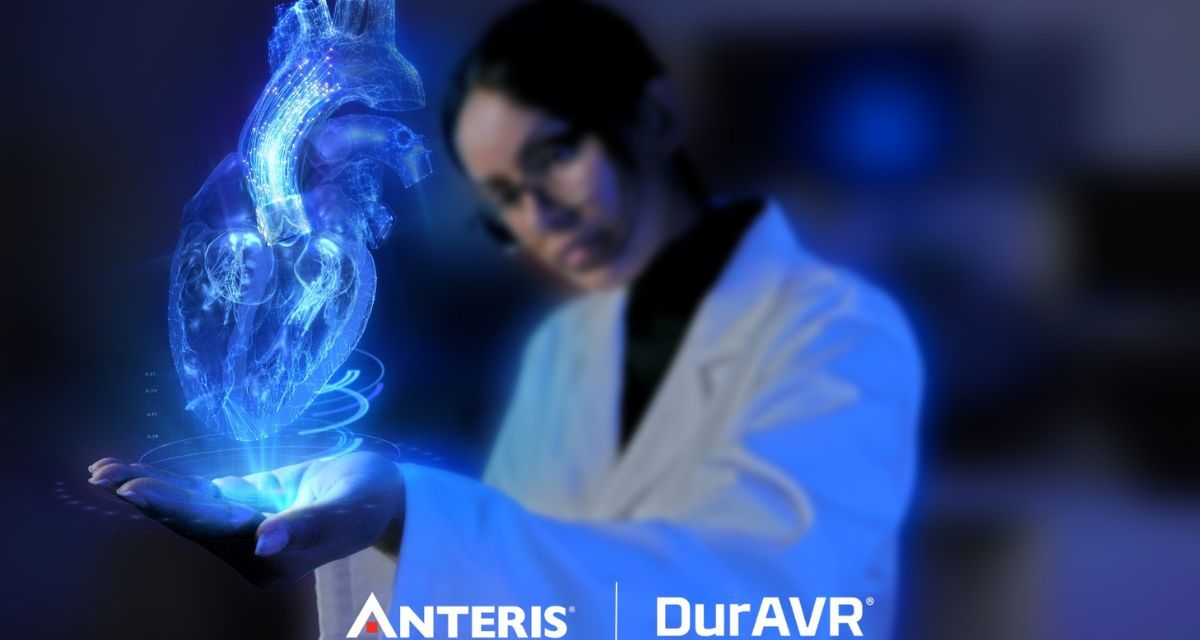

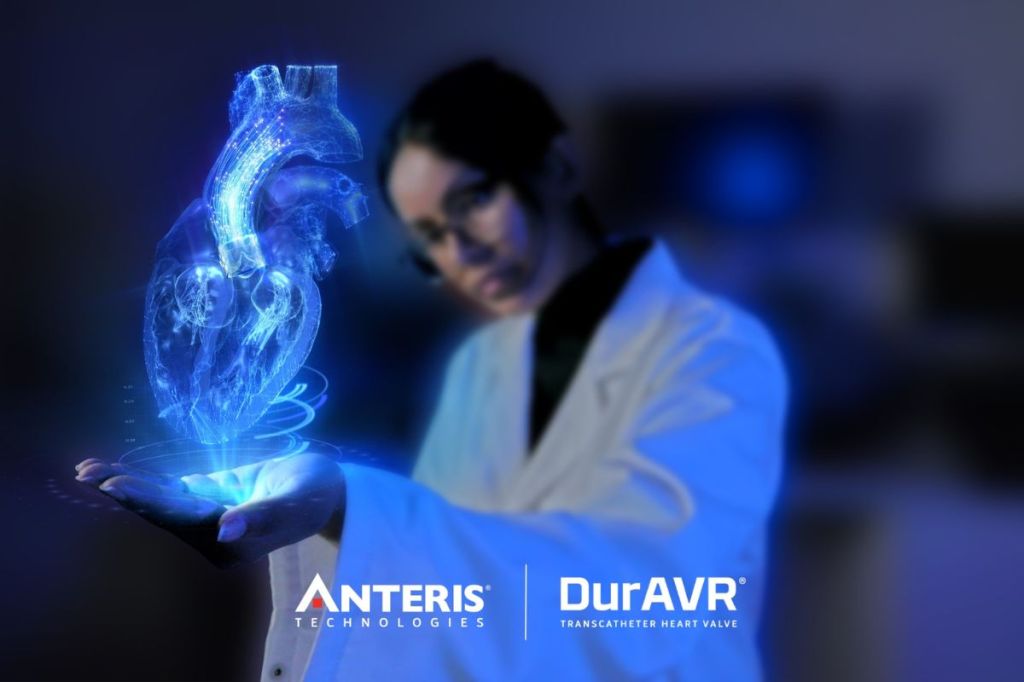
Anteris Technologies was founded in Australia and operates internationally across the US and Geneva. The company is now listed on both the NASDAQ and the ASX. CEO Wayne Paterson explains the company’s heart valve technology.
The accent is the first tell. Paterson has spent the past two decades offshore – China, Korea, Europe, and the US – his vowels drift sporadically. But the larger dislocation isn’t linguistic, it’s professional. For most of his career, Paterson was immersed in pharmaceuticals, reaching leadership positions in Merck and Roche, two of the world’s largest drugmakers. He helped bring 36 drugs to market, some of which generated US$5-6 billion apiece. When he took over Anteris, he made a decision that surprised many: he scrapped the drug strategy. He pivoted the company towards medtech devices.
A fatal disease with no drug fix
The target is a condition called aortic stenosis (AS), and the stakes are simple: untreated, symptomatic AS has a 30-50% mortality rate over two years.
The condition results from calcium build-up that stiffens the aortic valve’s leaflets, the gateway that allows blood to leave the heart’s left ventricle. Doctors measure severity using the mean gradient, a pressure reading across the valve. In a healthy state, it’s negligible, ~5 mmHg or less. Severe disease is often 40-50 mmHg and can climb higher.
Unlike many heart conditions, there is no pharmacotherapy. No pill can currently dissolve the calcium or reopen the valve. Once severe stenosis has been reached, the only real treatment is replacement, swapping out a piece of anatomy.
Historically, that meant open-heart surgery: crack the chest, stop the heart, go on bypass, cut the valve out, sew a new one in. Today, many patients with aortic stenosis undergo transcatheter aortic valve replacement (TAVR). A replacement valve is crimped onto a catheter, about a pencil-thick, threaded through the femoral artery in the groin, guided up to the heart, then expanded into position. Yet even in the modern era of TAVR, ‘treated’ doesn’t always mean ‘fixed’.
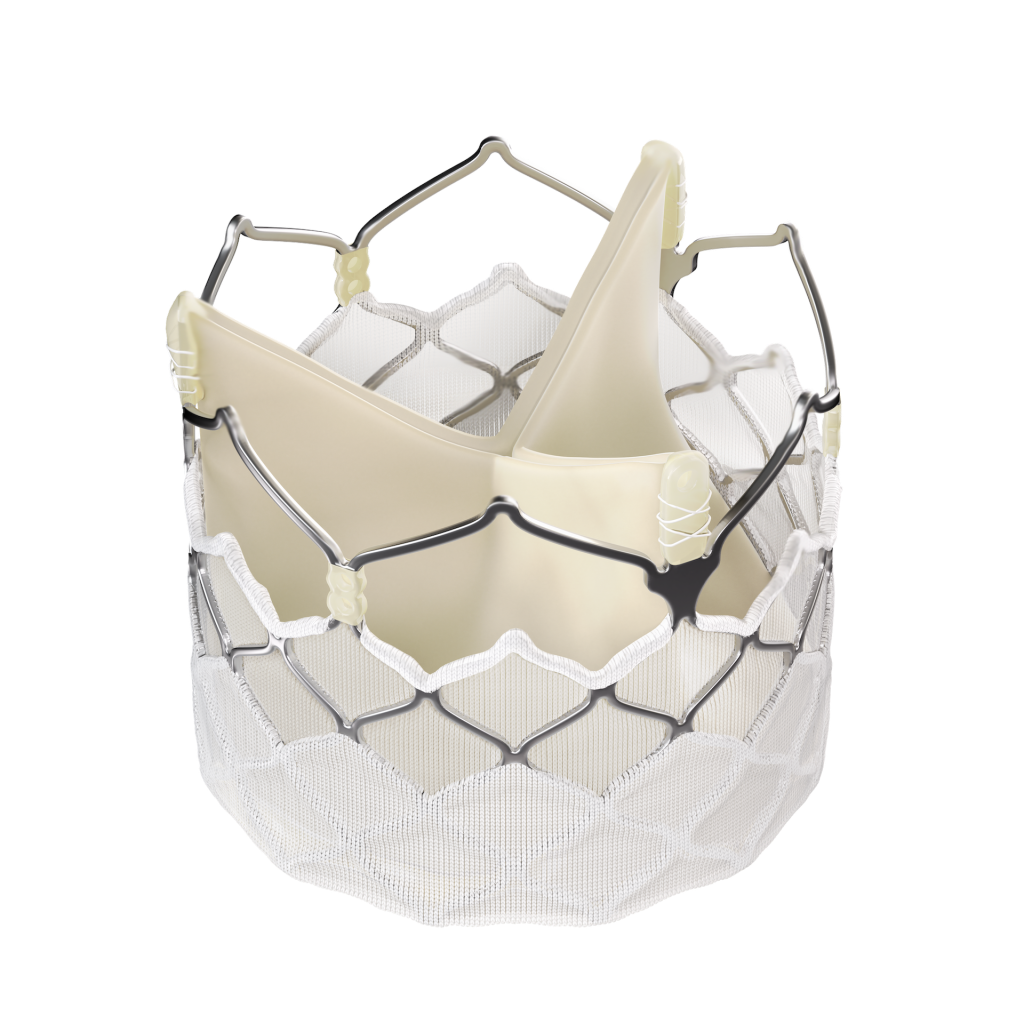
The dominant valves on the market generally use three flat pieces of animal tissue sewn into a frame, with over 800 sutures; a bioprosthetic design that works but rarely restores completely healthy haemodynamics. Paterson explains that the mean gradient is usually restored to around 20 mmHg, which is still classified as minor stenosis. Medicine, Paterson argues, has been replacing a biological structure with something that neither looks nor behaves like the original. “If you get a flat tyre,” he says, “you don’t put a square wheel on it.”
The material that made biomimetics possible
When Paterson scrapped the drug strategy, he wasn’t starting from zero. Anteris held the rights to an Australian-developed tissue technology called ADAPT, created in Perth and originally designed for surgical repair.
All tissue-based TAVR valves rely on animal collagen, typically bovine or porcine. Residual cellular material in these tissues can trigger inflammatory responses once implanted.
ADAPT, however, has been engineered to be acellular, removing cellular components that may provoke immune reactions. Anteris argues that by minimising inflammation, it reduces a pathway to calcification. This enabled it to produce a three-dimensional, single-piece valve replicating a natural aortic valve.
Paterson says that this biomimetic approach could deliver “curative” haemodynamics. He also claims laminar flow has been observed in human recipients, a significant advantage over persistent turbulence. Turbulence, he explains, accelerates valve deterioration. In bench-cycle testing, Anteris says its valve has run for the equivalent of around 20 years (1 billion cycles), while competitor valves show structural decline after around 5 years. The single-piece design also simplifies production. Anteris’ design only takes 6-8 hours to produce.
Anteris is now in the final stage of clinical studies, approved in November 2025 to begin the global pivotal PARADIGM trial. The study will compare its biomimetic valve to commercial TAVR devices, with plans to enrol approximately 1000 patients.
In recent months, Anteris has closed approximately $500 million in capital. Paterson views the raise as a signal that large incumbents recognise the potential of his company’s technology.
Want to see more Forbes articles on your feed? Tap here to make Forbes Australia a preferred source on Google.
Look back on the week that was with hand-picked articles from Australia and around the world. Sign up to the Forbes Australia newsletter here or become a member here.