How the rise of the Chief AI Officer is changing boardrooms

The rise of the chief artificial intelligence officer (CAIO) is fundamentally reshaping executive leadership worldwide. A recent survey reveals that more than half of the companies surveyed have already adopted this new C-suite role.
BRANDVOICE – PARTNER CONTENT

A powerful new C-suite role has emerged as artificial intelligence (AI) shifts from a focus on cost savings and efficiency to a driver of strategic growth. The chief AI officer (CAIO) is increasingly responsible for translating AI capabilities into tangible business outcomes.
That shift is changing accountability at the highest levels of organisations. A recent survey of 3,500 IT decision-makers and C-suite leaders found 52% now have a CAIO embedded in strategic decision-making, with 72% holding both budget authority and responsibility for return on investment.
A new ‘C’ in the suite
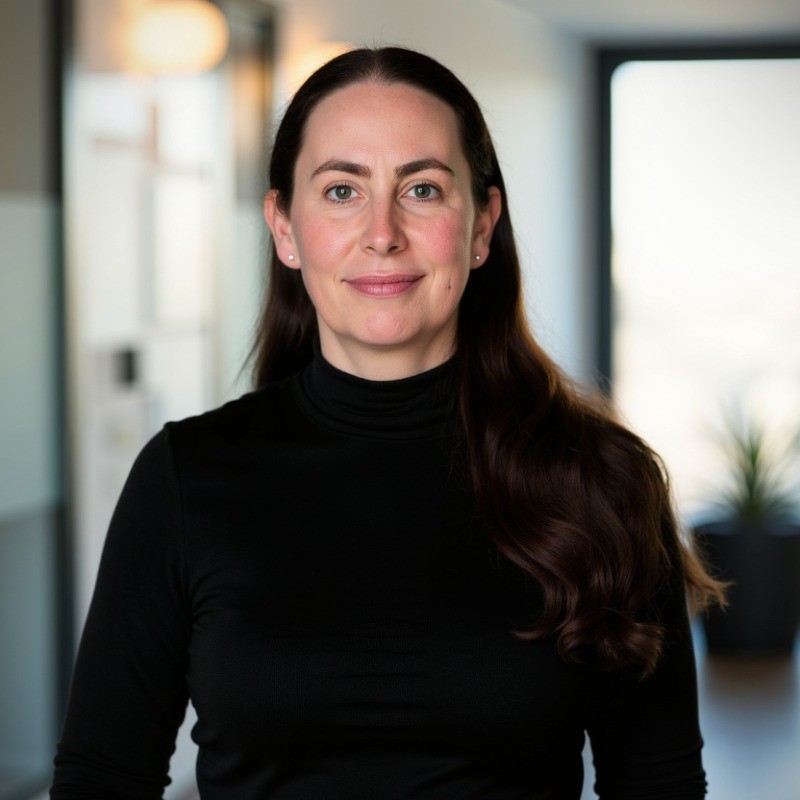
Always ahead of the trend, Rokt, a US$3.5 billion global e-commerce technology company, appointed its inaugural chief AI officer, Claire Southey, in mid-2024.
Founded in 2012 by former Jetstar CEO Bruce Buchanan, Rokt last year optimised 7.5 billion online shopping transactions for 33,000 clients, including Uber, PayPal and Hulu, driving revenue for many of the world’s leading e-commerce brands.
Southey says the rise of the CAIO reflects a deeper shift in how organisations understand AI.
“They’re starting to see how AI can create entirely new verticals, not just efficiencies,” she says. “The role of the chief AI officer is to turn data and AI into real business value.”
That responsibility spans strategy, infrastructure and execution. “It starts with setting a clear AI strategy aligned to business outcomes, then making sure we have the right data, the right systems, and the right talent to deliver on it.”
The real (data) story
Southey’s path to the C-suite is unconventional. She began her career in media, including reporting from East Timor during its war of independence, before pivoting to data through an MBA, a Master’s in IT Management, and a Master’s in Data Science.
“I moved from technical work through a media lens to technical work through a pure data lens,” she says. “I’ve always used data science to try to advance understanding of the world.”
After roles at Google and Amazon, Southey joined Rokt in May 2024 as senior vice president of Engineering and was later appointed chief AI officer. She now splits her time between New York and Australia.
At Rokt, her remit is expansive: platform, data engineering and infrastructure teams report into her, alongside science and research. She reports directly to the CEO and works closely with the board.
“The pace of technological change means we have to compress planning cycles and constantly reassess where we’re investing,” she says.
Her role also involves guiding decisions about whether to build or buy AI capabilities. “We design and train proprietary AI where it gives us a business advantage, and leverage third-party models where it doesn’t. Helping teams make those calls is a key part of the role.”
Relevance at scale
At the core of Rokt’s business, and Southey’s focus, is a deceptively simple challenge: showing the right thing to the right customer at the right moment.
“Relevance is everything,” she says. “You either show something meaningful, or you get out of the customer’s way.”
That principle becomes critical at checkout, one of the most valuable and sensitive moments in the e-commerce journey. While it presents a high-intent opportunity for additional revenue, it also carries risk.
“If you get it wrong, you introduce friction or distraction and lose the original purchase,” Southey explains. “So, the goal is to add value without undermining trust or conversion.”
“You need fluency across machine learning, statistics and emerging tools, but also the ability to connect that to business outcomes. And critically, the ability to influence.” – Claire Southey
This has led to a shift toward what she describes as “distributed commerce” – integrating complementary offers directly into the purchase flow, rather than redirecting customers elsewhere.
Achieving this requires sophisticated use of data. While early systems relied heavily on demographic signals, Southey says the industry has evolved toward a greater understanding of behaviour.
“What’s more predictive is longitudinal behaviour; what’s been in your cart, what you’ve explored, what you’ve abandoned over time,” she says. “That gives a much richer picture than static demographics.”
At Rokt’s scale, with billions of transactions per year, AI is essential to making these decisions in real time. “You’re making thousands of predictions per second, within milliseconds, without impacting page load. That’s fundamentally an AI problem.”
Trust as a design principle
As AI becomes more embedded in customer experiences, Southey sees trust as a defining constraint and opportunity.
“Consumers need three things: transparency in how their data is used, clear value in return, and the ability to unwind consent at any time,” she says.
Rokt’s model is built around a closed data network, where partner data is used only to serve that partner. “It’s effectively a one-way door. Data comes in, but it doesn’t go out,” she explains. “That’s critical to maintaining trust.”
She also emphasises restraint as part of responsible AI design. “There are times where the best decision is to show nothing,” she says. “If we can’t meet a minimum relevance threshold, we step away.”
For Southey, the CAIO role requires a blend of technical depth, commercial acumen and leadership.
“You need fluency across machine learning, statistics and emerging tools, but also the ability to connect that to business outcomes,” she says. “And critically, the ability to influence.”

That influence extends across the organisation but comes with boundaries. Southey is careful not to centralise ownership too much.
“I partner with business units to help them adapt to AI, but I don’t own their processes,” she says. “The structure has to remain theirs.”
She applies the same philosophy to ethical decision-making.
“Some questions in AI don’t have clear answers,” she says. “Those shouldn’t sit with one person. They need collective thinking across the executive team.”
Despite her optimism about AI’s potential, Southey is clear-eyed about its risks.
“What keeps me up at night is the pace,” she says. “We’re moving faster than regulation and technical literacy can keep up.”
Her focus is on ensuring AI delivers broad value, not just for businesses, but for society.
“How do we build technology that benefits everyone, not just the owners of capital?” she asks.
It’s a question that increasingly sits at the heart of the CAIO role and one that will shape how this new C-suite position evolves.
Learn more at learn more at rokt.com.
Want to see more Forbes articles on your feed? Tap here to make Forbes Australia a preferred source on Google.
Look back on the week that was with hand-picked articles from Australia and around the world. Sign up to the Forbes Australia newsletter here or become a member here.