At 90, and after more than 100 expeditions, marine biologist and oceanographer Sylvia Earle is still asking the same question. “What or who is down there?” Following a recent expedition to Koh Mak Island in the Gulf of Thailand, Earle shared her reflections on coral loss, recovery, and the limits of what science can restore.
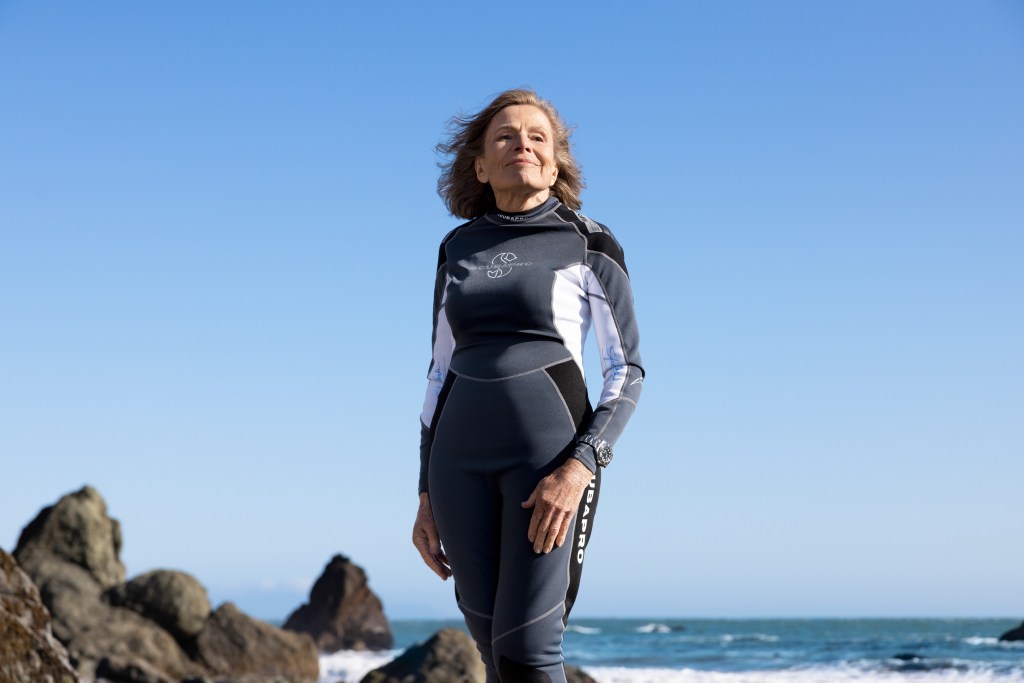
The deeper the ocean gets, Sylvia Earle says, the less we know. It’s a line of curiosity that has guided decades of exploration and still draws her back beneath the surface.
Supported by Rolex for more than four decades, she says her focus today is not on recreating the ocean of the past, but on protecting what remains functional and giving damaged systems time to recover.
Earle has been diving for most her life. The scale of change she has seen over that period is difficult to reconcile with the pace of scientific discovery that ran alongside it. “The magnitude and speed of loss are electrifying,” she says. “Since the 1950s, more has been learned about the nature of the ocean and its importance to everyone than during all preceding history. At the same time, more has been lost, from coral reefs to the abundance and diversity of ocean wildlife overall.”
Roughly half the world’s coral reef systems that existed in the mid-20th century are gone. Some reef animals have disappeared.
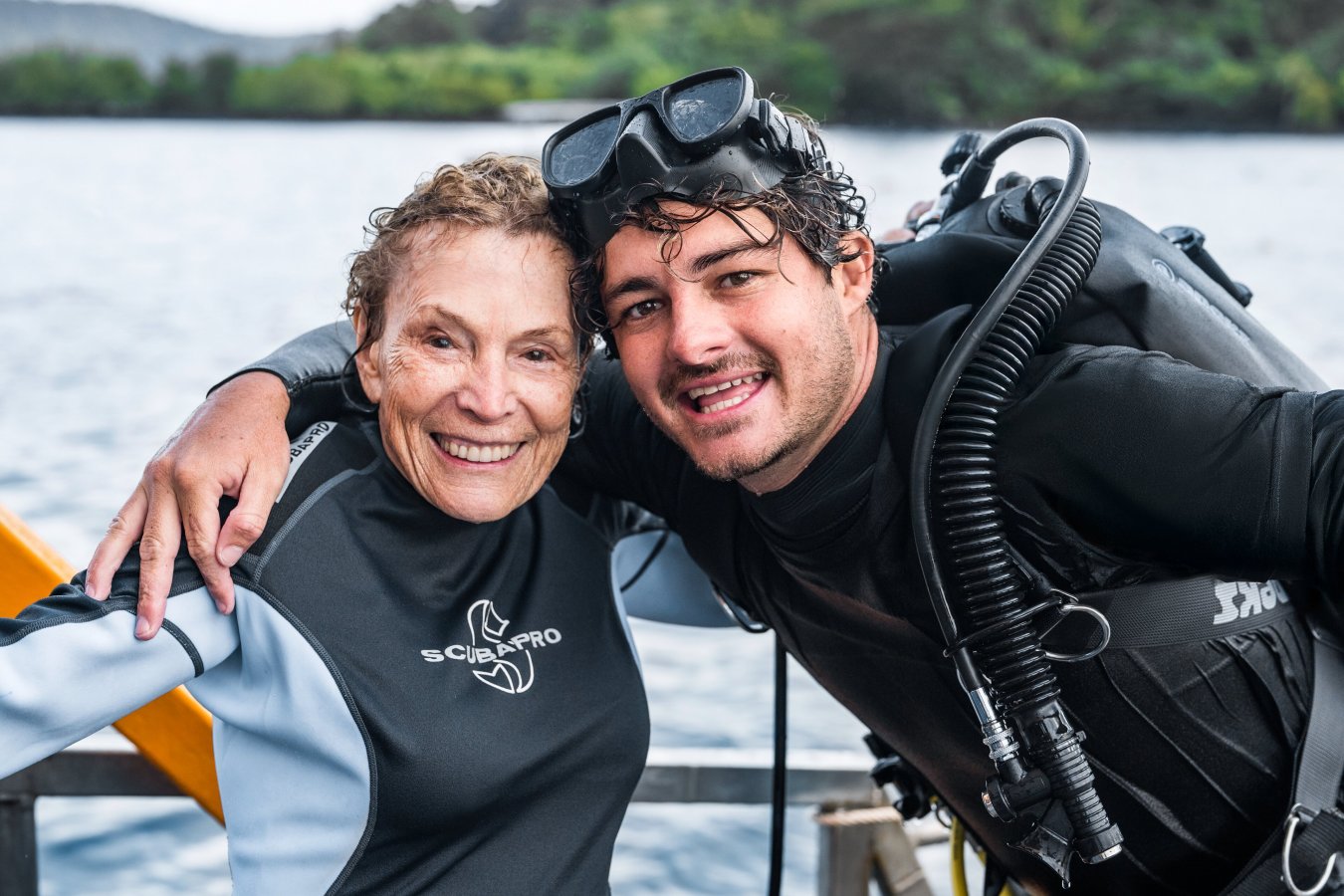
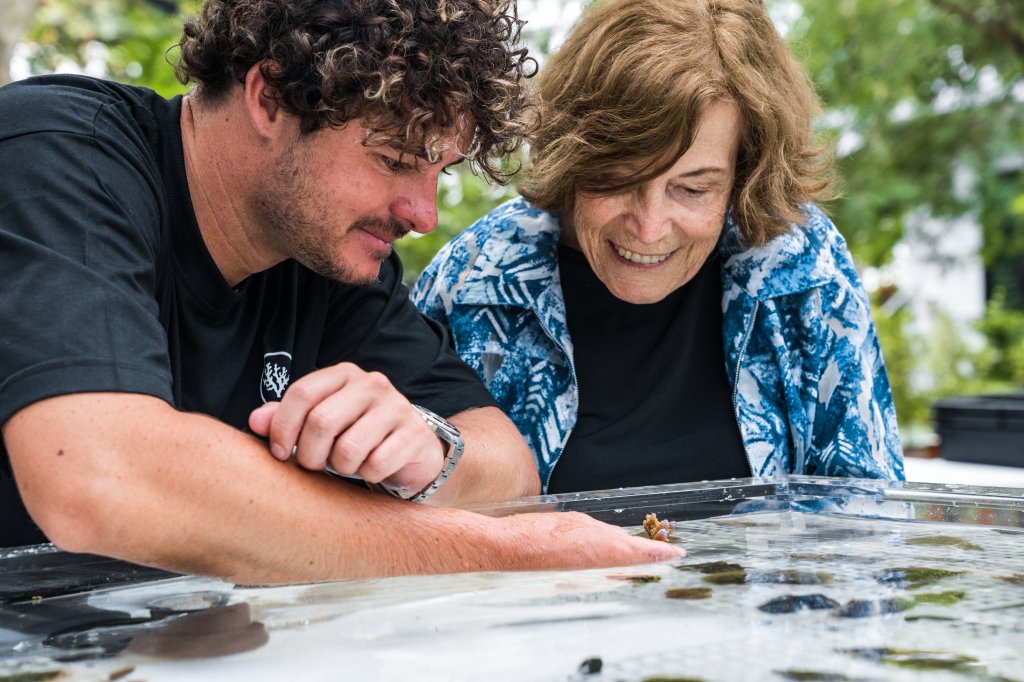
During a recent visit to the Gulf of Thailand, Earle travelled to meet local members of Coral Gardeners, led by young Polynesian explorer Titouan Bernicot. The group focuses on finding and growing coral samples that are surviving and replanting them to help restore damaged reef systems. “I am keen to witness the progress and hope what they are doing will inspire caring actions beyond Thailand,” she says.
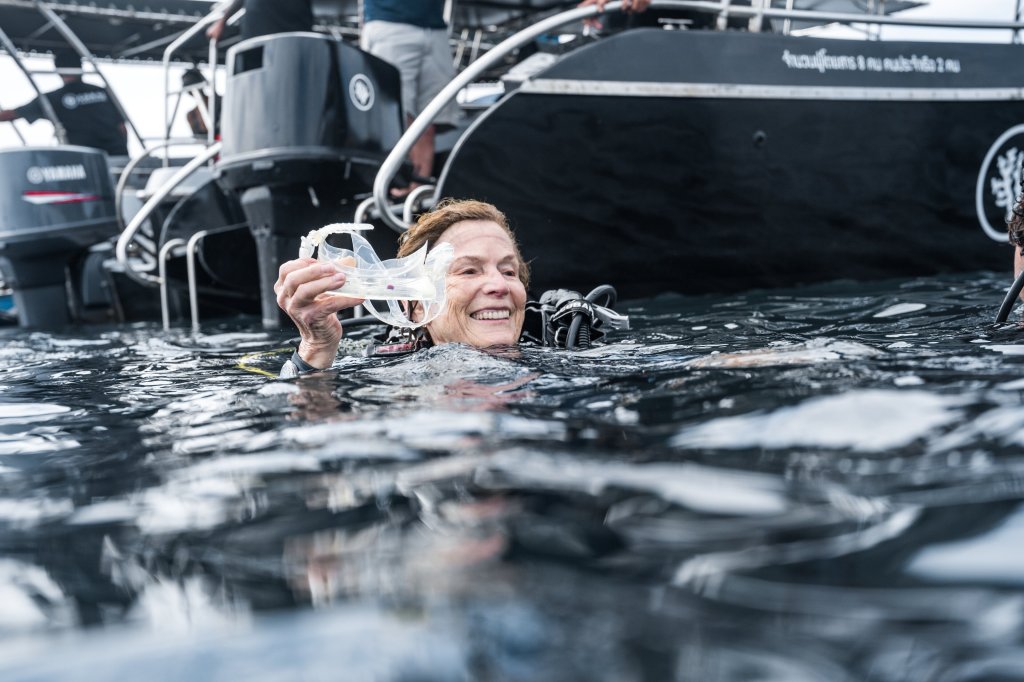
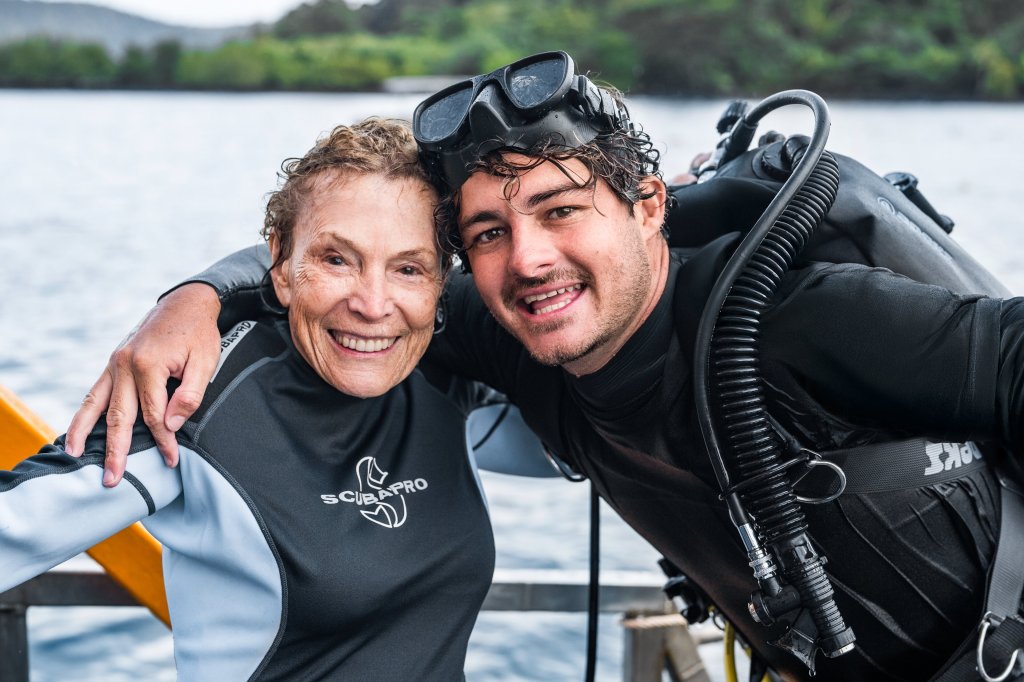
What remains, she argues, depends on protection and time. “By protecting intact systems and restoring others, coral reefs can tip in the right direction. Some already have.”
That framework sits behind Mission Blue, which Earle founded in 2009 to build a global network of marine protected areas known as Hope Spots. The program focuses on areas critical to ocean health, whether intact or degraded, with an emphasis on long-term stewardship led by local communities.
Thailand’s reefs are now part of that wider narrative. The on-water restoration work is being done by Bernicot, who grew up diving and surfing in French Polynesia.
“I spent my childhood in the water, diving and surfing,” he says. “Growing up, I’d only ever seen colourful corals surrounded by fish and all the patterns and colours you can imagine. Really like a painting underwater.”
That baseline shifted when he was 16. “I went to our regular surf spot one afternoon with my little brother and some island friends, and when we arrived, we were shocked to see that all the corals were white under our boards.”
The cause soon became clear. Corals, often mistaken for plants, are living animals, making them particularly vulnerable to changes in temperature. “After looking into it, I found out this was actually a global problem. Rising ocean temperatures are stressing the corals, turning them white, and they can eventually die, and this was not happening only on my island, but around the world.”
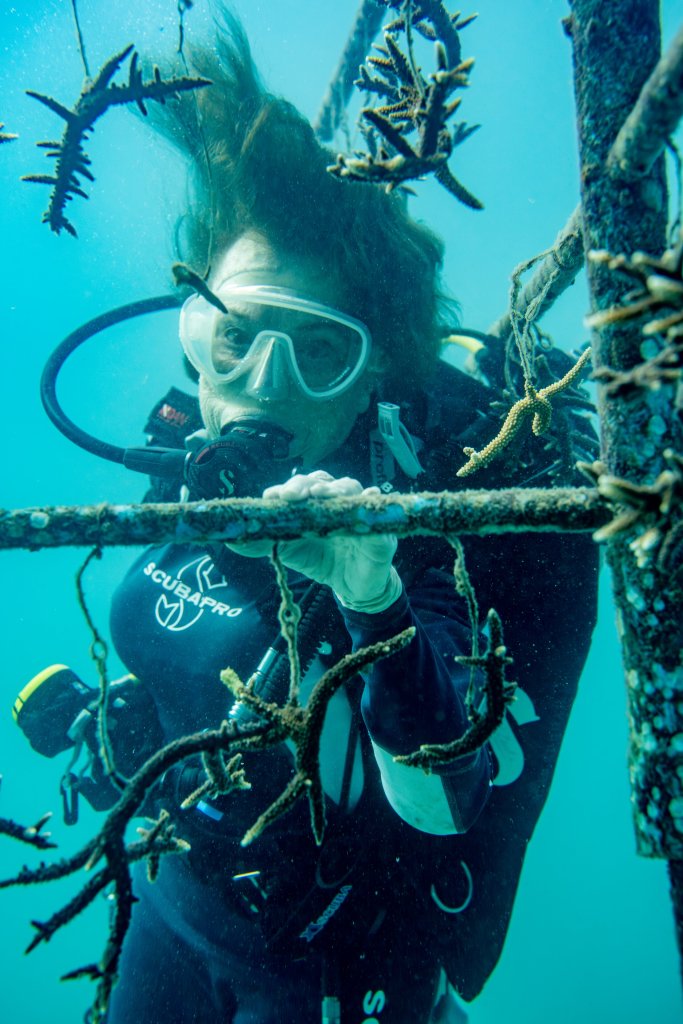
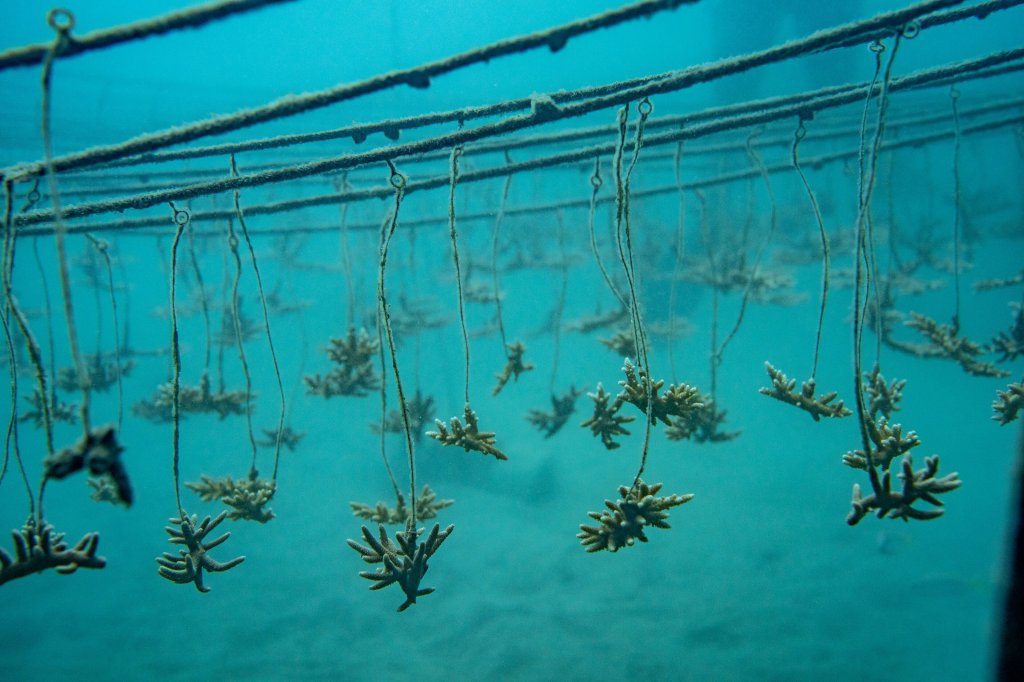
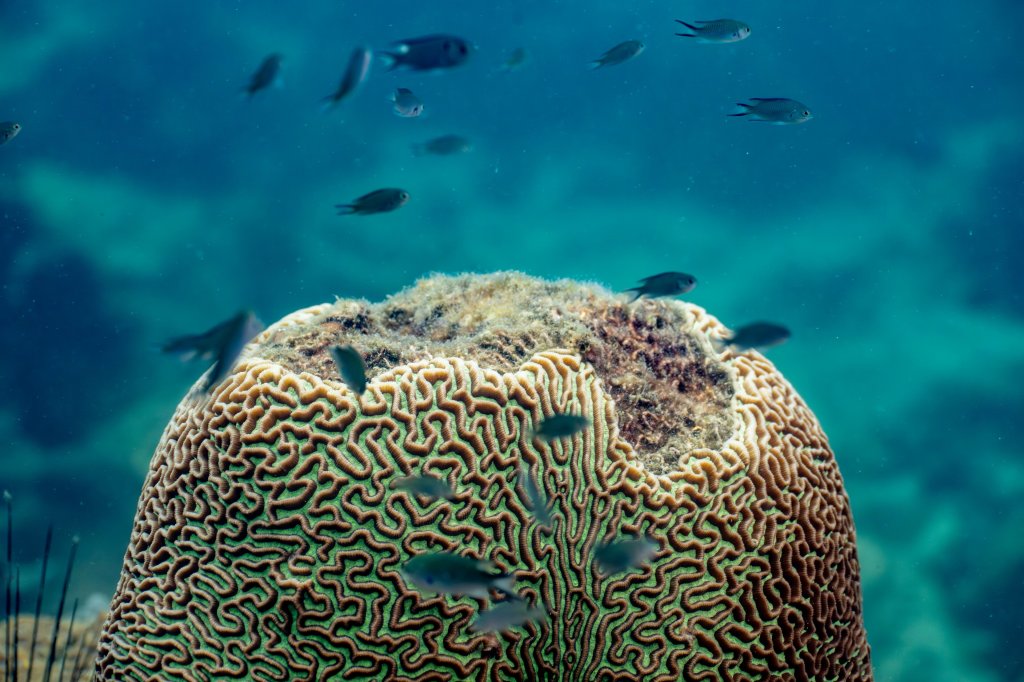
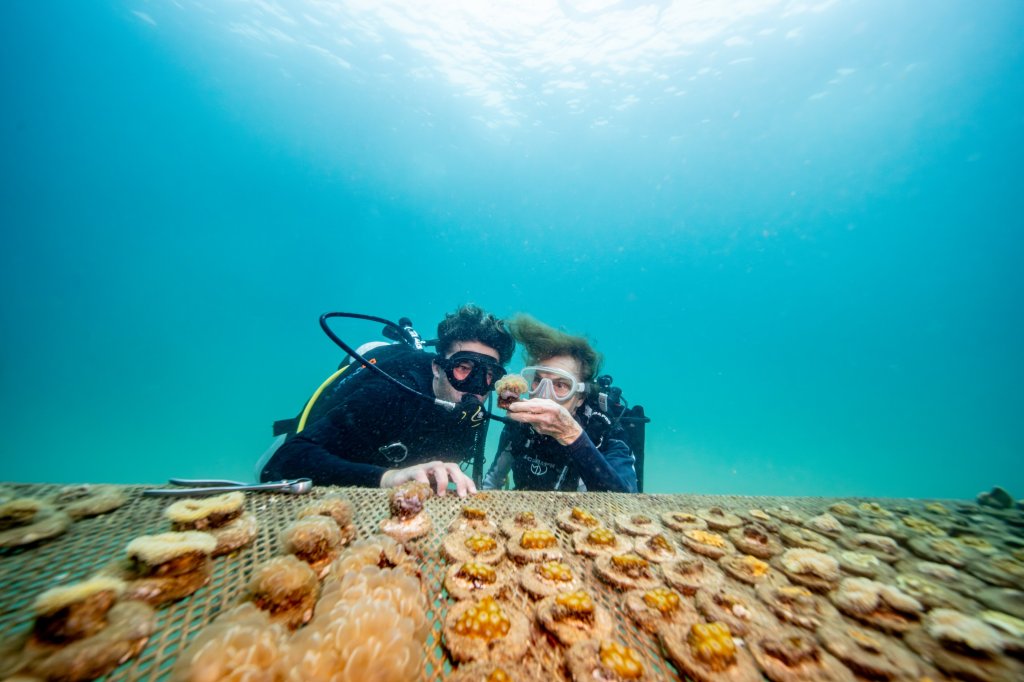
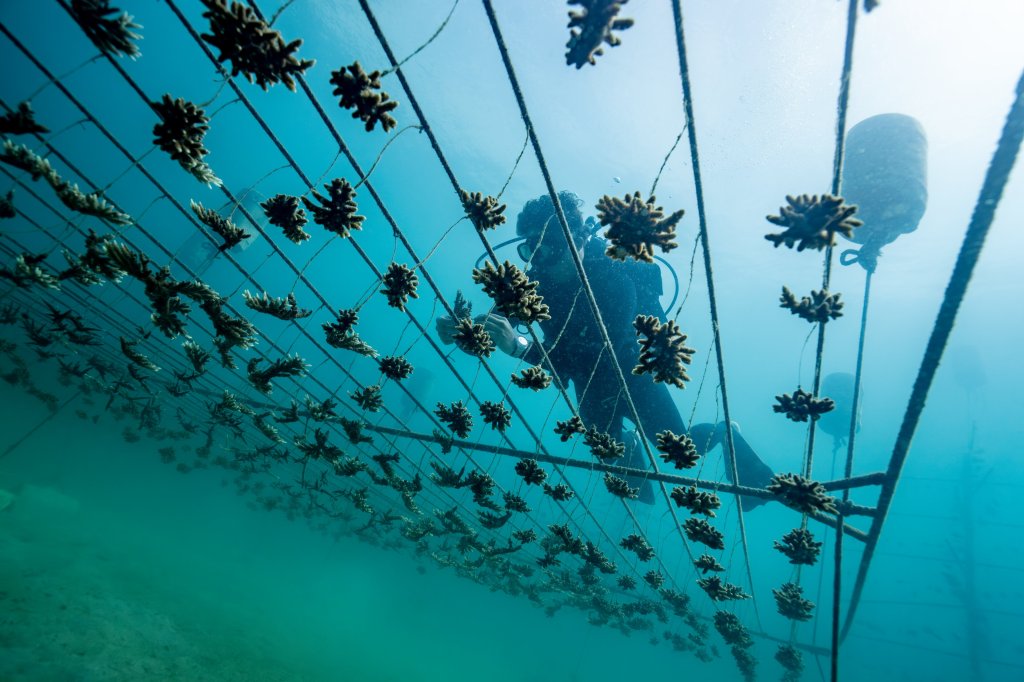
Coral Gardeners began with a small team and a narrow focus: identify coral fragments that survive heat stress, propagate them, and replant them in damaged reef systems. Over time, the organisation formalised its approach and expanded its data collection.
“We’re tracking various data to better understand corals and improve our methods,” Bernicot says. “We have developed in-house tools just for that, like our ReefAPP to ReefCAM, and we track over 40 KPIs on coral reef, from health to growth, coverage, biodiversity, survival, and so on.”
Survival is the central metric. “Beyond the number of corals planted, we’re focused on our ecological impact. That’s the most important thing as we want the corals that we plant to survive and grow into a diverse and resilient, reef ecosystem that has a better chance to withstand the future.”
The past year provided a test. “We have an average of over 80% survival rates across our gardens, even after one of the most severe global bleaching events recorded last year.”
For Earle, projects like this address what she sees as the ocean’s most persistent obstacle. “The greatest problem facing the ocean today is the magnitude of indifference most people have about changes in the ocean that impact planetary security,” she says. “We must take care of the ocean as if our lives depend on it, because they do.”
That indifference is reinforced by industrial activity that treats marine ecosystems as expendable. “Massive extraction of ocean wildlife by industrial fishing and deep sea mining, especially in the High Seas beyond national jurisdiction, a global commons, will be viewed with despair by today’s children and those of tomorrow,” she says. “It’s morally wrong and economically blind.”
Long-term conservation work depends on continuity. Earle has been a Rolex Testimonee since 1982, creating a strong long-lasting relationship to advocate and act for ocean conservation.
“Rolex not only directly supports ocean exploration, research, education and conservation, but also helps make the public aware of why care for the ocean matters to everyone, everywhere, all of the time. Knowing is the key to caring, and caring leads to action.”
Since Mission Blue’s launch, the Hope Spot network has grown from around 50 sites to more than 160. “Mission Blue began in 2009 with a wish to ignite public support for a global network of protected areas, Hope Spots, large enough to save and restore the ocean, the blue heart of the planet,” Earle says. “Consistent engagement from Rolex, notably as a part of their Perpetual Planet Initiative, has been and continues to be central to building a global network of partners, collaborators, and investors in the vision of a secure future for humankind based on caring for nature, one Hope Spot at a time.”
At 90, Earle continues to dive and observe change directly. “In the ocean, the deeper we go, the less we know, but the more new discoveries we find,” she says. “My one question is – ‘What or who is down there?’ I really, really want to know.”
Laureates can receive support beyond the initial award through funding and access to a global network connected to the Perpetual Planet Initiative.
This article is part of Forbes Australia’s editorial partnership with Rolex through the Perpetual Planet Initiative, which supports scientists and explorers working on long term