From the neuroscience of original thought to the grit of scaling empires, Alexis Fernandez-Preiska, Chloe Fisher, Kayla Itsines, and Grace Toombs reveal why creative success belongs to those who protect their cognitive edge.
“Never use AI for creative purposes. Ever. It is the biggest disservice you will ever do for your brain.” That was the directive from cognitive neuroscientist and performance coach Alexis Fernandez-Preiska who says efficiency is too often prioritised over originality and warns that outsourcing the “human” element of a business to an algorithm is a long-term liability.
“AI can only regurgitate ideas that have ever been put into it,” she says. “Every time you do that instead of using your own creativity, you are telling yourself you’re not capable.”
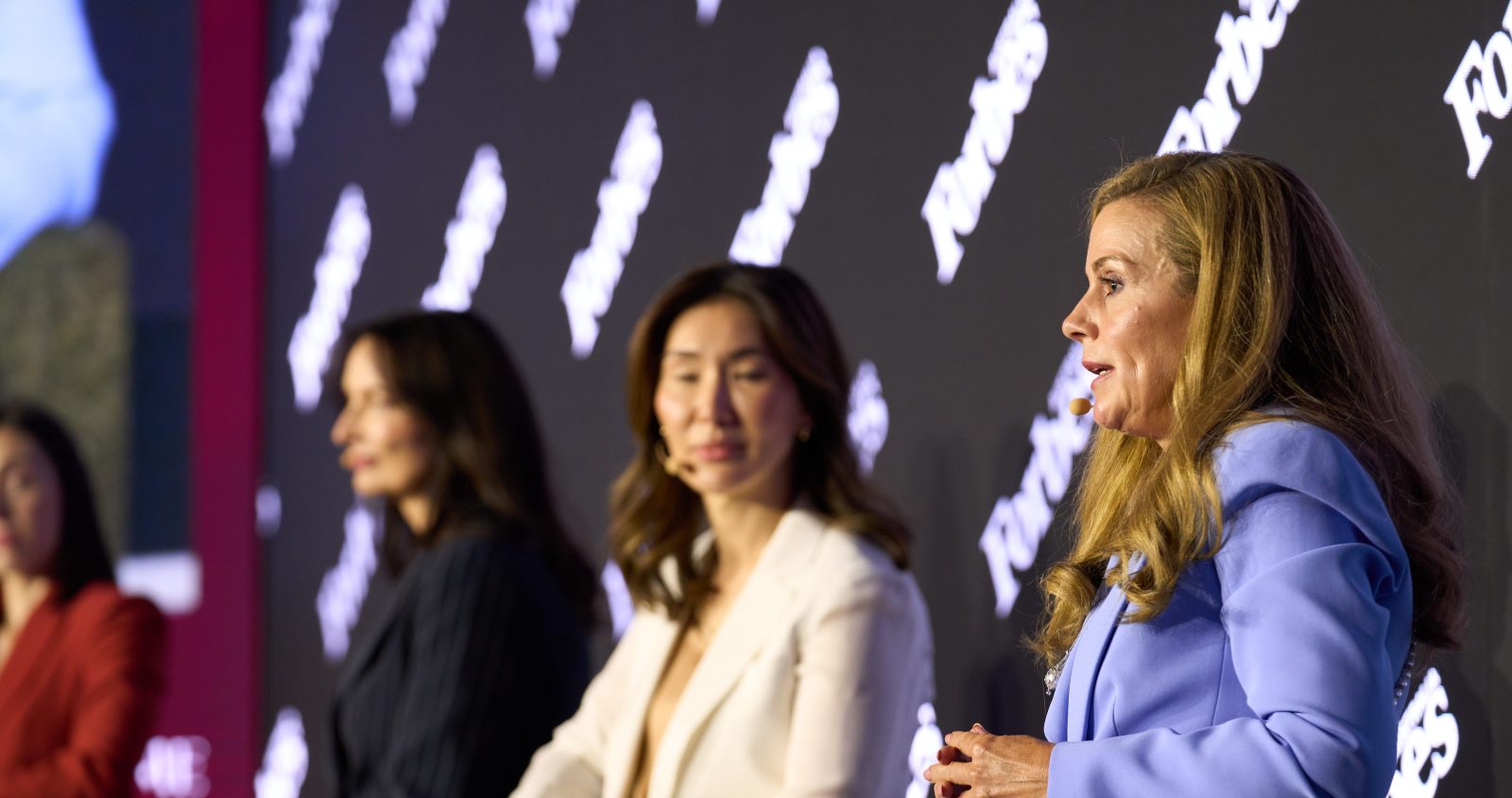
It was one of many sharp takes from the Forbes Australia Women’s Summit on Wednesday, where some of the country’s most influential minds met to dismantle the myth of the “creative spark.”
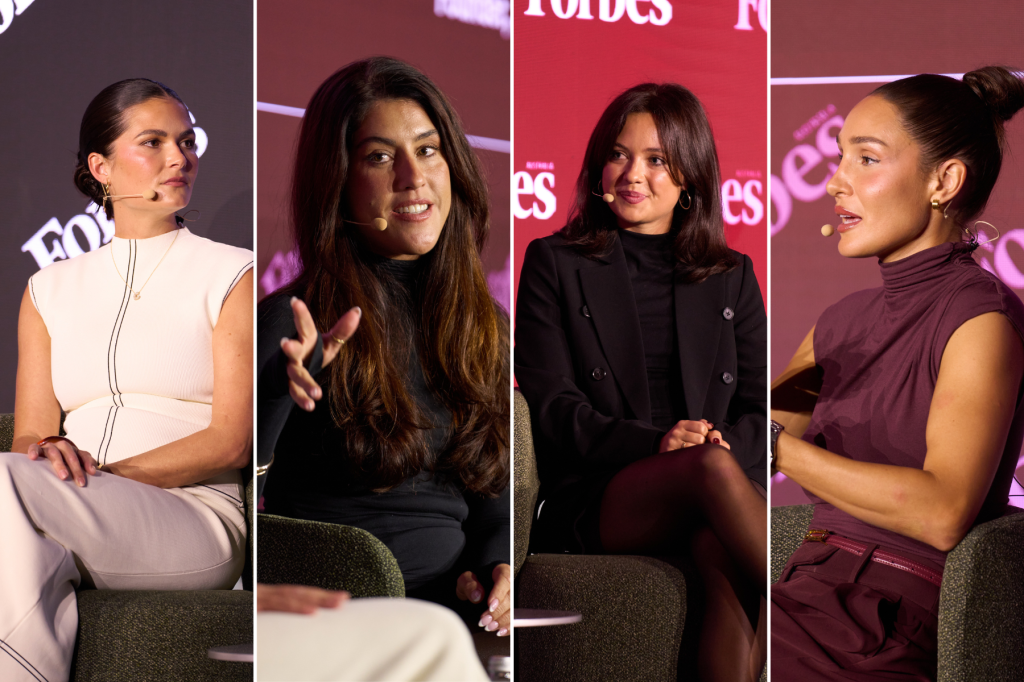
Joining Fernandez-Preiska on stage was Kayla Itsines, the powerhouse behind the 60-million-strong global fitness community Sweat; Grace Toombs, the founder of June Health – and Forbes 30 Under 30 cover star – who is redesigning the “front door” of women’s reproductive healthcare; and Chloe Fisher, the serial entrepreneur and co-host of the top-50 podcast Darling Shine.
Below, we unpack their biggest lessons (and myths) when it comes to creativity.
The ‘gym split’ for your brain
Alexis Fernandez-Preiska, who holds a Master’s in Neuroscience and hosts the massively popular Do You F*king Mind podcast, views the brain’s creative output through a clinical lens.
Known for a “tough love” approach that blends brain science with high-performance coaching, she argues that creativity should be treated with the same discipline as a physical weight-lifting routine.
“The brain is the exact same way as the gym,” she says. “Consistency over brilliance. If you walk into the gym for the first time and say, ‘I can’t lift 100 kilos,’ of course you can’t, because you haven’t started.”
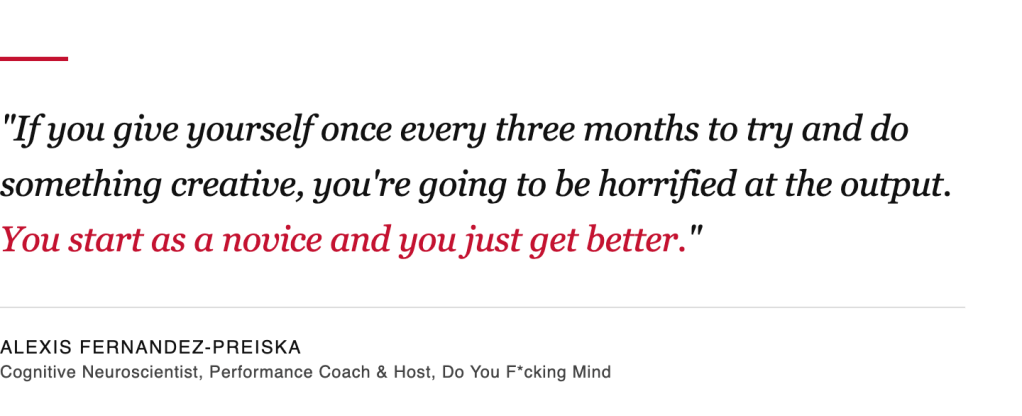
“If you give yourself once every three months to try and do something creative, you’re going to be horrified at the output. You start as a novice and you just get better.”
Chaos as a business asset
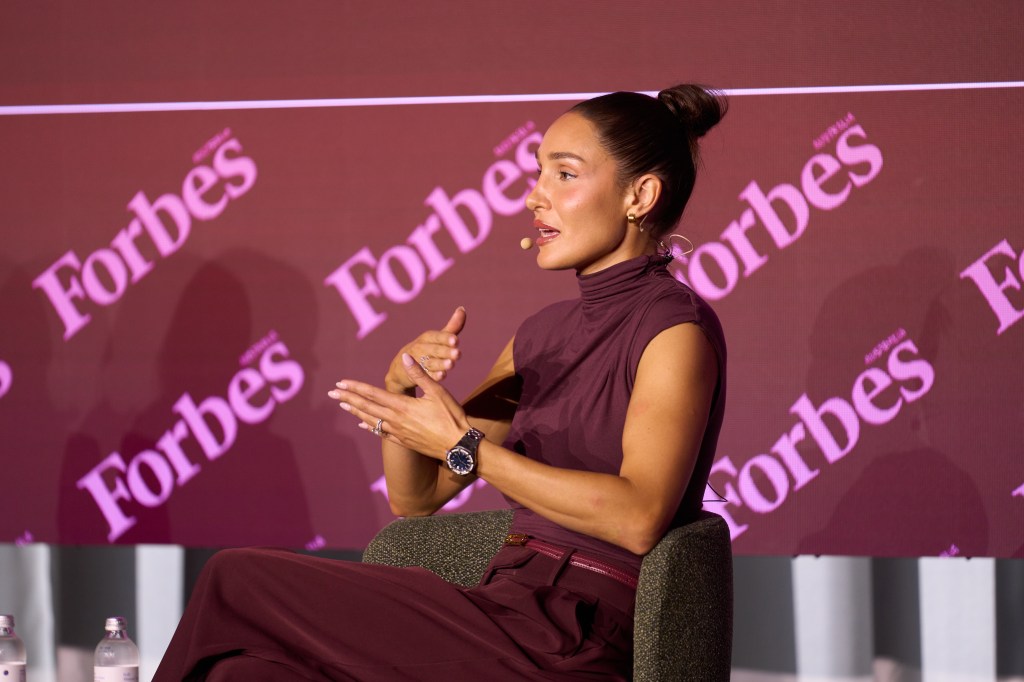
For Kayla Itsines, the co-creator of the Bikini Body Guides and Sweat app, innovation isn’t found in a quiet room – it’s found in the friction of the market. Itsines, who was previously named one of Time’s ’30 Most Influential People on the Internet’, returned to sole ownership of her empire in 2023 and views operational mess as a primary creative catalyst.
“I’m the boss now,” she told Forbes Australia at the time.
“I thrive in chaos,” Itsines says. “I throw myself into situations of absolute chaos – I’m in it with women day in, day out – I see the struggle, and I’m like, ‘Ah, they need that, I can solve that problem.'”
She emphasises that authenticity and passion are the only buffers against the burnout of high-growth leadership. “Do something that you love, for God’s sake, because if you don’t love it, you’ll go insane,” she warns.
Having navigated the “very difficult” world of American corporate executives while scaling her brand, she suggests that the hardest part of leadership is the temptation to be everything at once.
“As women, we can’t be everything at once,” she says. Her strategy: If your strength is data, find a partner for the creative, but stay close enough to the “chaos” of your customer base to identify the problems worth solving.
“I’ve worked with what I like to call ‘suits’ – and that is very difficult… I always want to fix something.”
The non-negotiable hour
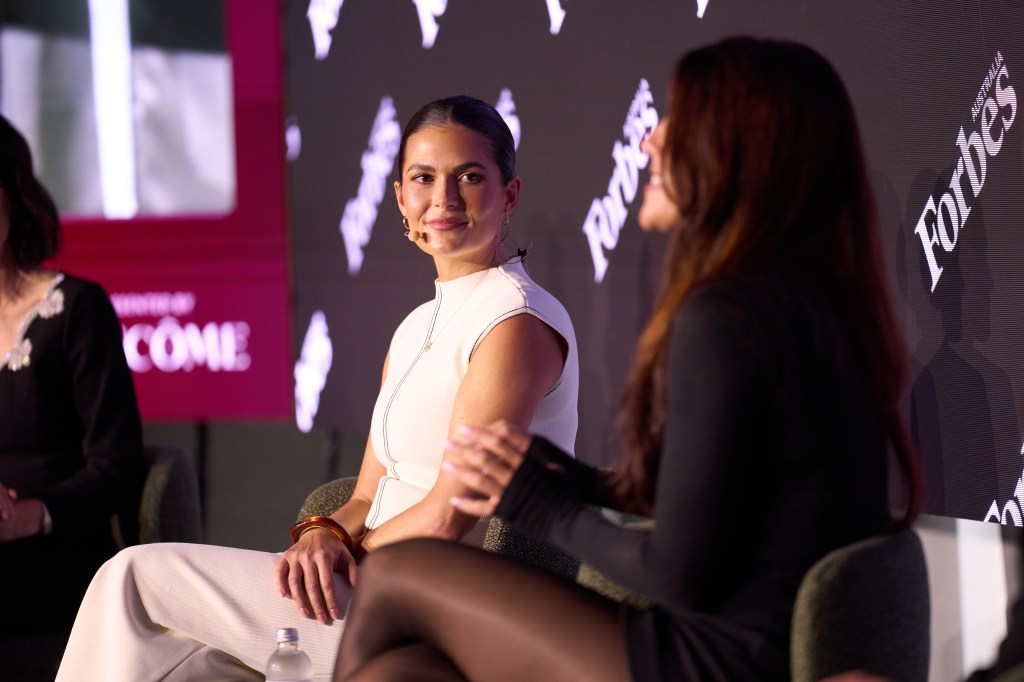
Chloe Fisher operates with a “systems” perspective. As a property developer, model, and co-founder of the seltzer brand Hard FIZZ, Fisher manages a diverse portfolio alongside the Darling Shine podcast.
The Gold Coast local notes that even in the most intense professional periods, the work must happen in “real time.”
“In the process of the podcast, it was all in absolute real time – I was having a miscarriage, going home, and recording that day,” she told the summit. “Everyone automatically assumes that to be creative you’ve got to be like an artist. I’m super data-driven, I like numbers, I’m creative at sales projects – I’m obsessed with that. You have to lean into what works for you.”
To prevent the “juggle” of global business and motherhood from stifling her output, she treats creative space as a hard line in her diary.
“This is a bit of a weird one actually. I do like to set aside one hour a week, and I put it in my diary. I call it nothing time. And that’s like, no phone, no computer. Try to have no keys. It’s not always possible. But just being alone, getting your brain to be not thinking about everything. For me, that’s sometimes almost the time when my creative ideas start. But that’s like a non-negotiable. It has to be on the diary, one hour.”
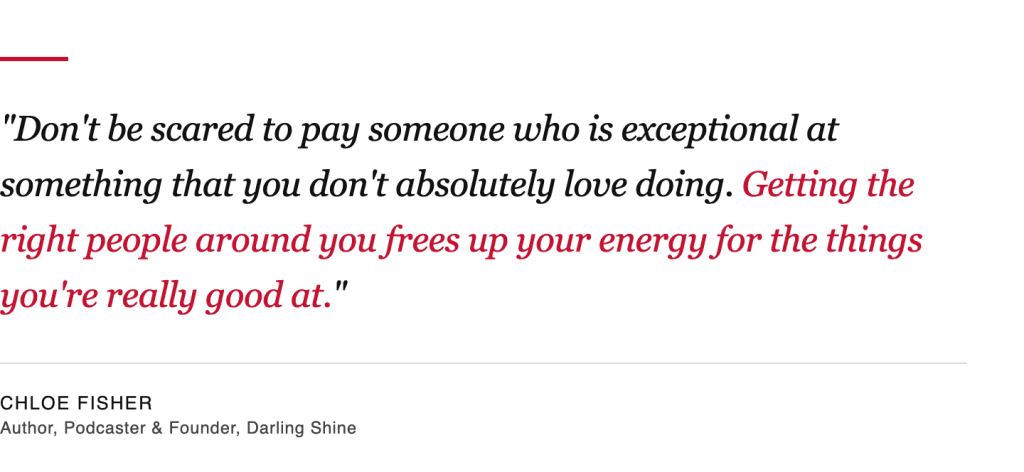
But her biggest piece of advice? Delegate.
“I’ve only recently learned to say no… I’ve come to realise I can’t do it all,” she admits.
The ‘human truth’ of disruptive tech
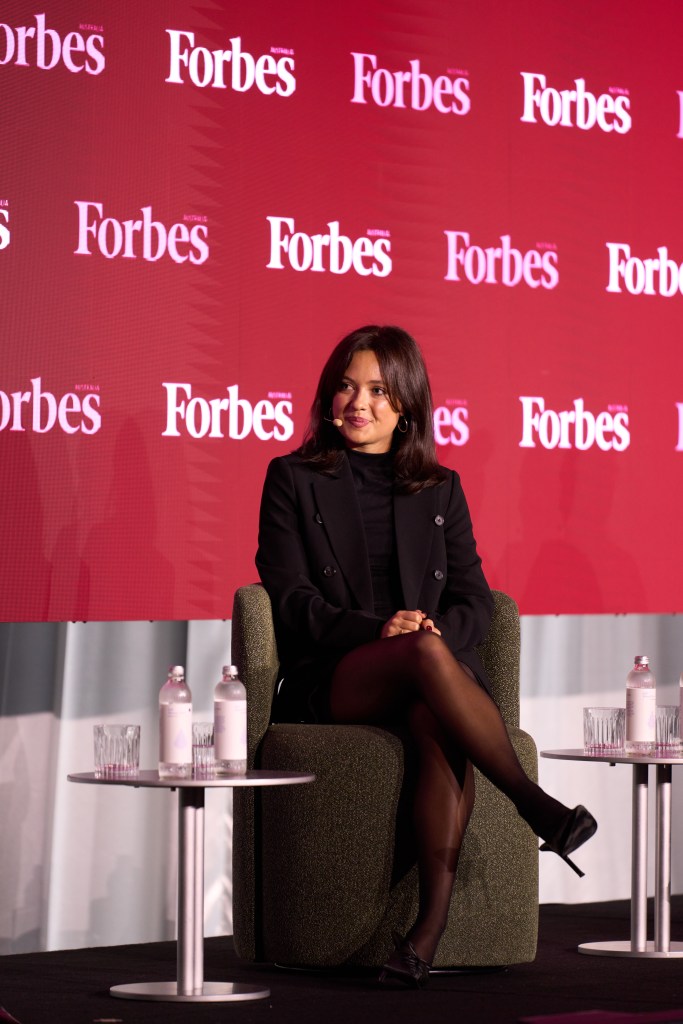
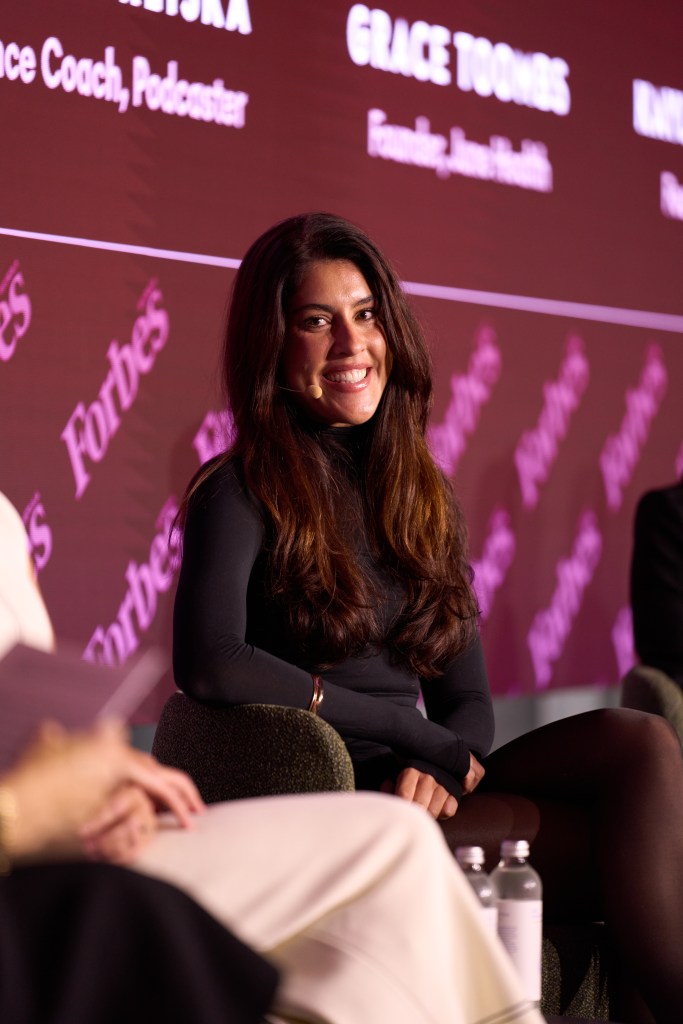
Grace Toombs launched June Health – Australia’s first at-home STI and cervical screening platform – after a personal diagnosis of pre-cancerous cells at age 21. For Toombs, the creative spark is inseparable from “human truth.”
“The founder lifestyle isn’t sexy – it’s really hard,” Toombs says. “So if you’re solving a problem that is authentic to you, then purpose can really help drive that creativity.”
“We all have a human truth as individuals. It doesn’t matter what that is… it doesn’t need to be something that is this crazy epidemic that you need to solve. But get as close as you possibly can to your human truth and go from there, and build from that.”
Toombs rejects the idea that creativity requires hours of pondering. Instead, she utilises 30-minute windows of physical activity to “untangle” complex business hurdles.
“Creative thoughts need a place to go; they need space, they need to breathe. For me, running feels like a real untangling – I’m threading those thoughts.”
Want to see more Forbes articles on your feed? Tap here to make Forbes Australia a preferred source on Google.
Look back on the week that was with hand-picked articles from Australia and around the world. Sign up to the Forbes Australia newsletter here or become a member here.