From Spreadsheets to Screen Time: Elizabeth Wong’s Career Pivot into Acting

How Elizabeth Wong went from accounting to breaking into film and television
BRANDVOICE – PARTNER CONTENT
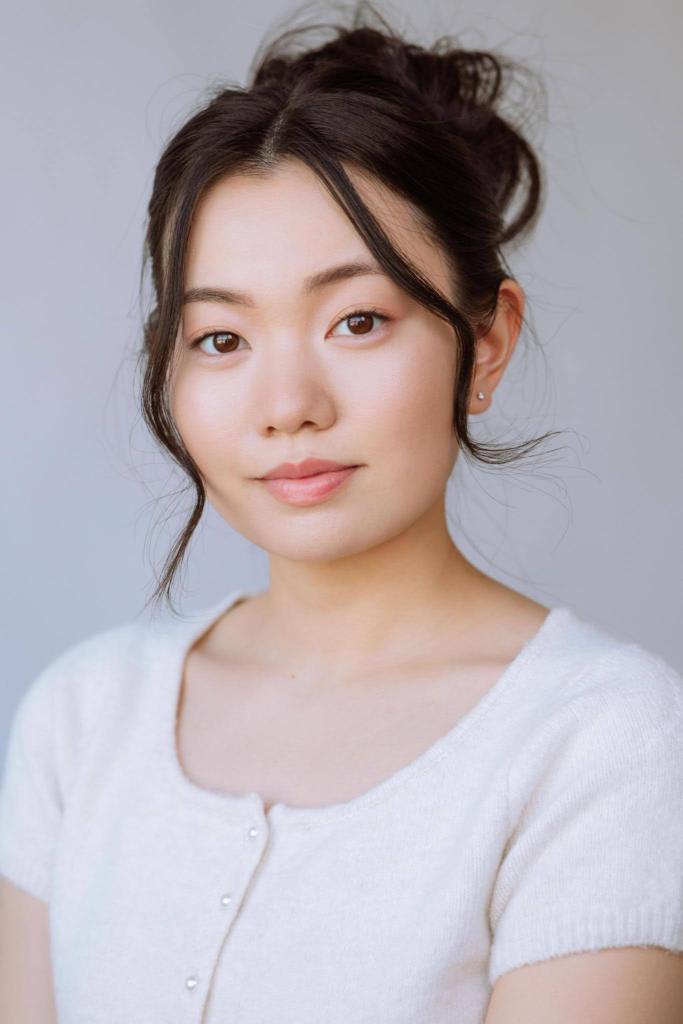
Elizabeth Wong’s route into film and television was decidedly different from that of many other actors. Wong did not grow up as a child actor or have any connections to the industry. Instead, she transitioned from a conventional professional path into the world’s most competitive creative industry, through training and a calculated pivot.
While Wong is based in Toronto, her work connects to the broader Asia-Pacific screen ecosystem, including Australia’s increasingly globalized film and television industry. Her training in wushu and weaponry, along with her bilingual performance in Cantonese and English, aligns with a growing demand for cross-cultural talent in Australian productions and international co-productions. As the industry continues to expand across borders, Wong’s trajectory reflects a shift toward actors who can move fluidly between North American, Asian, and Australian-adjacent markets, where diverse skill sets and cultural versatility are becoming central to casting and storytelling.
A Unique Approach to Entering Acting
Prior to entering the world of film and television acting, Wong worked in accounting, a profession that relies heavily on precision, structure, and analytical thinking. Many people see a strong background in finance and film as two separate worlds; however, Wong approached her transition into film and television acting with the same level of self-discipline that she had shown during her corporate career.
Instead of taking a shortcut to get noticed, Wong chose to focus on building a solid foundation of training. Wong took improv classes at The Second City Training Centre in Toronto, honing her timing and adaptability. She also enrolled in motion capture and video game performance training, further broadening her skill base in the rapidly changing entertainment industry, which continues to merge cinematic and digital storytelling.
Wong’s preparation went beyond just developing performance techniques. She trained in wushu and weaponry, including spear, straight sword and staff under Sifu Alan Tang, an action designer and cast trainer whose credits include Netflix’s Avatar: The Last Airbender and Marvel’s Shang-Chi and the Legend of the Ten Rings. Wong’s preparation makes her well-suited for acting roles that require both emotional range and action capabilities to execute choreography.
This kind of cross-disciplinary training also aligns with the needs of productions across markets like Australia, where action-driven storytelling and international co-productions increasingly require actors who can combine physical performance with emotional range.
Breaking In: Orphan Black: Echoes and Beyond
Wong’s first booking came when she was cast in a scene in Orphan Black: Echoes alongside Krysten Ritter, and directed by John Fawcett. Orphan Black: Echoes is a spin-off of the critically-acclaimed Orphan Black franchise that stars Tatiana Maslany and premiered on AMC, AMC+ and BBC America in June 2024. Getting cast in a scene of an existing franchise is a significant breakthrough for a newcomer without access to industry connections.
Wong’s early on-screen experience also includes a commercial for Le Génie Bakery & Espresso in Toronto directed by Martin Klapperbein, where she portrayed Alexa, a modern-day content creator – a nod to the social media ecosystem that often overwhelms craft in today’s entertainment landscape.
Extending Her Reach in Film: From Independent to Studio Films
Wong’s on-screen presence grew quickly. She was featured in Trap, which was directed by M. Night Shyamalan and starred Josh Hartnett, Saleka Night, and Hayley Mills. Trap was a U.S.-based thriller that was theatrically released by Warner Bros. Pictures and later streamed on Netflix.
At the same time, she continued to maintain a presence in the independent film sector. In the feature film Pandemic, which was produced by New Realm Studios, Wong portrayed Biyu, a painter and news reporter, in a three-part format that aired on New Tang Dynasty TV in Canada. The role required emotional depth, demonstrating her ability to play complex characters.
A defining performance of Wong’s early career occurred in the short film Morning Crossroads. Wong portrayed Jessie, a rebellious teen who challenges her family’s expectations. The film, directed by Diana Dai, screened internationally in film festivals such as the Kitchener-Waterloo International Film Festival, the IndieFEST Film Awards in San Diego and the South Film & Arts Academy Festival in Chile.
Wong received the Best Supporting Actress in a Short Film Award at the South Film & Arts Academy Festival for her performance. The film itself won the Best Short Film Award. Importantly, Wong acted in both Cantonese and English in the film, highlighting the growing importance of being able to speak multiple languages in global film production.
Commercial Campaigns to Principal Television Roles
In 2025, Wong appeared in Paramount+’s commercial campaign “Mean Girls Meets Gladiator: The Roman Burn Book”, produced by Droga5 and directed by Traktor. The commercial features Reneé Rapp and Daniel Franzese in a comedy-driven campaign that combined the popular culture of Mean Girls with the epic adventure of Gladiator.
Wong’s next step forward in her career was when she landed a principal role in Memory of a Killer, directed by Daniel Minahan. Wong portrays Zhang’s Daughter, a mobster’s daughter targeted by a hitman portrayed by Patrick Dempsey. The series also stars Michael Imperioli and Richard Harmon. The series had a two-night premiere on Fox and Hulu in January 2026.
In the first episode of Memory of a Killer, Wong sings a version of “Crimson and Clover” by Joan Jett & the Blackhearts for the opening action sequence that sets the tone for the rest of the series.
Switching from Spreadsheets to Scripts
Elizabeth Wong’s transition from accounting to acting illustrates another approach to creating a successful acting career: strategic training, acquiring diverse skills, and perseverance.
As film and television production becomes more interconnected across regions such as North America, Asia, and Australia, Wong’s trajectory reflects a broader shift toward globally adaptable performers who can navigate multiple markets and storytelling styles.
Wong’s acting journey suggests that reinvention can become a meaningful source of momentum in a career. Trading spreadsheets for scripts, Wong rewrites the narrative of what’s possible. Her background in her corporate career gave her the skills and backbone to support her creative risks. As she breaks into film and television, it’s evident that it’s never too late to pivot. Sometimes, some of today’s leading actresses have taken unconventional paths, including backgrounds outside the entertainment industry, before finding success on screen.
Elizabeth Wong is represented by Noble Caplan Abrams.