From a Halloween craft gimmick to a multi-million-dollar automated manufacturing gamble, Swiss sportswear giant On is using 32 robots in South Korea to challenge the traditional running status quo.
Every August, some 90,000 participants take part in one of Australia’s biggest fun runs, the 14-kilometre route from Hyde Park to Bondi Beach known as the City2Surf. In recent years, the part athletic test, part social ritual has found a new niche – functioning as a runway for the latest “super shoes”.
Among the ocean of participants tackling Heartbreak Hill, you will inevitably spot a massive contingent sporting a distinct, hollow-tubed silhouette on their feet. In less than a decade, Swiss brand On has successfully transitioned from a niche triathlete favourite to the undisputed premium uniform of the urban Australian runner.
But as the brand expands its cultural footprint locally, it is quietly orchestrating a massive manufacturing gamble behind the scenes.
Four years ago, a staff member on On’s innovation team watched a DIY video of a hot glue gun making Halloween spider webs and decided it was the future of running shoe manufacturing. Remarkably, nobody stopped them.
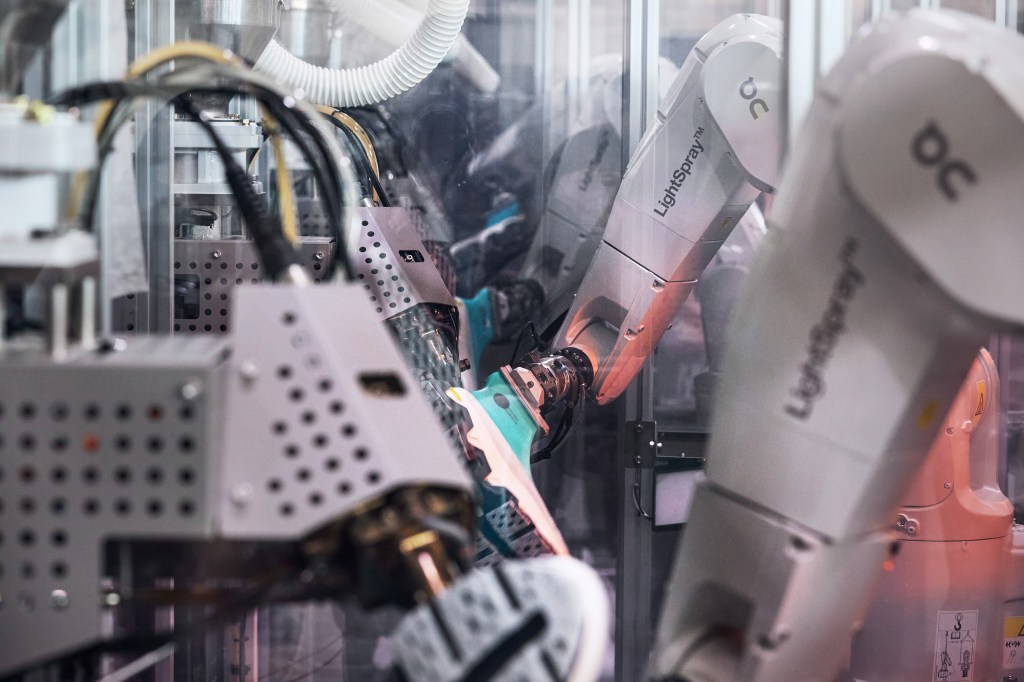
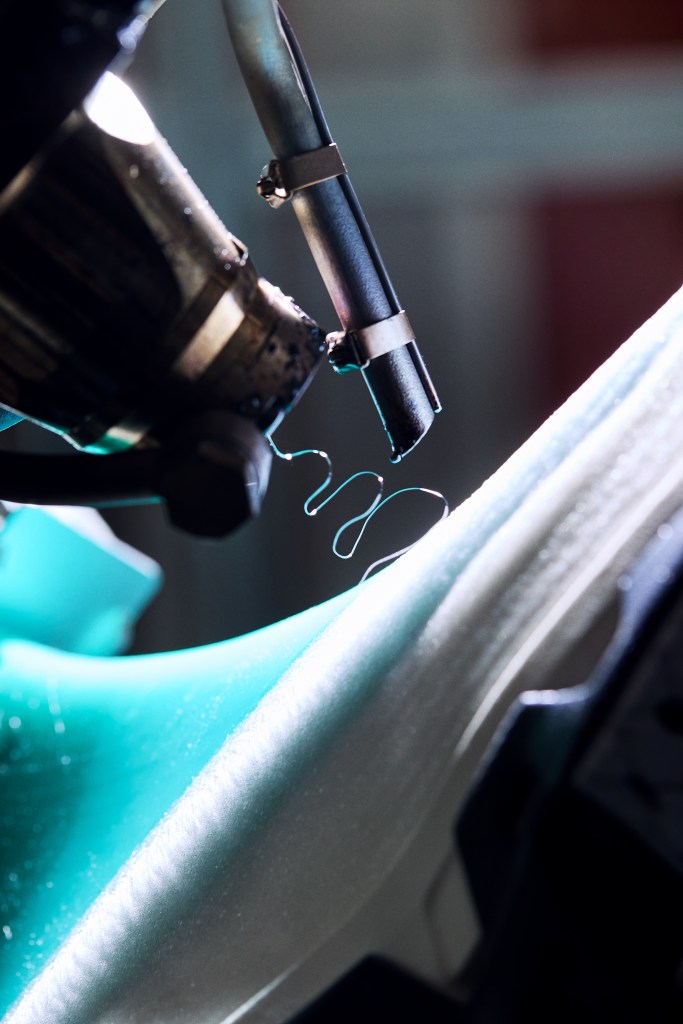
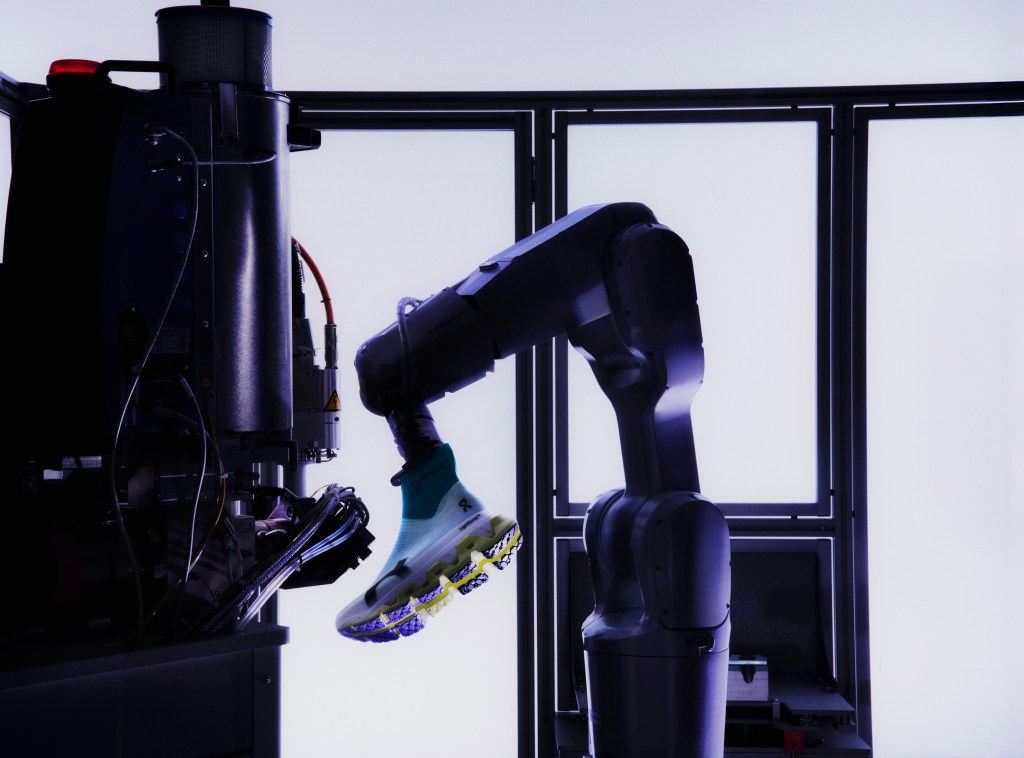
The resulting technology, dubbed LightSpray, is aiming to upend traditional shoemaking. “Traditionally, running shoe innovation has been centred on the shoe’s bottom unit,” explains Nils Altrogge, On’s Senior Director of Innovation. “We’ve decided to take up the challenge of creating a high-performance upper.”
A robotic arm sprays 1.5 kilometres of continuous, specialised filament onto a revolving last, bonding the upper to the midsole instantly without glue or stitches.
“It’s a clean, efficient process that eliminates the fluff and filler of traditional assembly lines,” Altrogge says. “You’re watching a raw idea become a high-performance tool right before your eyes.”
On introduced LightSpray in 2024 and opened its first production facility in Zurich in July 2025 with just four robots. In February, it scaled its automated production significantly, opening a second facility outside Busan, South Korea – adding 32 more automated units to its fleet in what the company calls a firm and bold commitment to the future of the technology.
The scale of that ambition is backed by the balance sheet; in March, On reported full-year 2025 net sales of CHF 3.014 billion (AU$5.1 billion) – the first time the brand has surpassed the CHF 3 billion mark, representing 30% growth year-on-year.
But On isn’t throwing robots at shoes just because it has the cash. It’s doing it because the entire high-performance running industry has gone slightly mad.
The Super Shoe Showdown
The running shoe market has morphed into an aggressive arena dominated by hyper-expensive, short-lived tech designed to shave seconds off elite times.
The arms race hit a new watermark on April 26, when Kenya’s Sabastian Sawe crossed the finish line of the London Marathon in 1:59:30 the first man to break two hours in an officially sanctioned race.
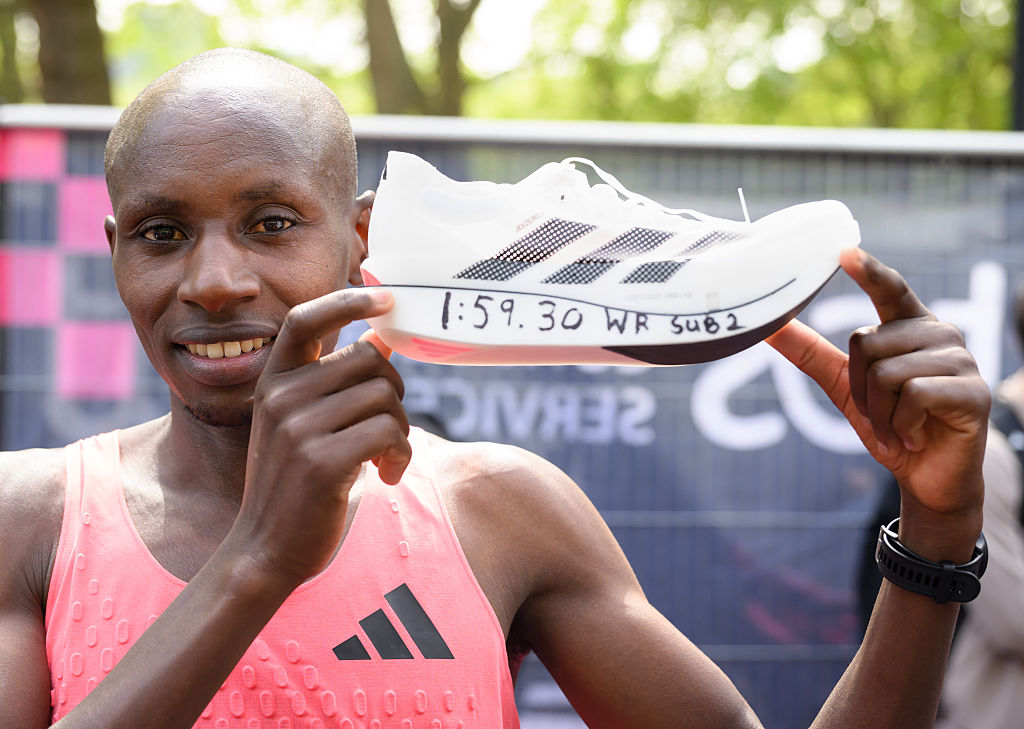
He, and the two runners directly behind him, wore the Adidas Adizero Adios Pro Evo 3, a US$500 shoe weighing less than a can of tuna that immediately hit an average StockX resale price of US$2,627.
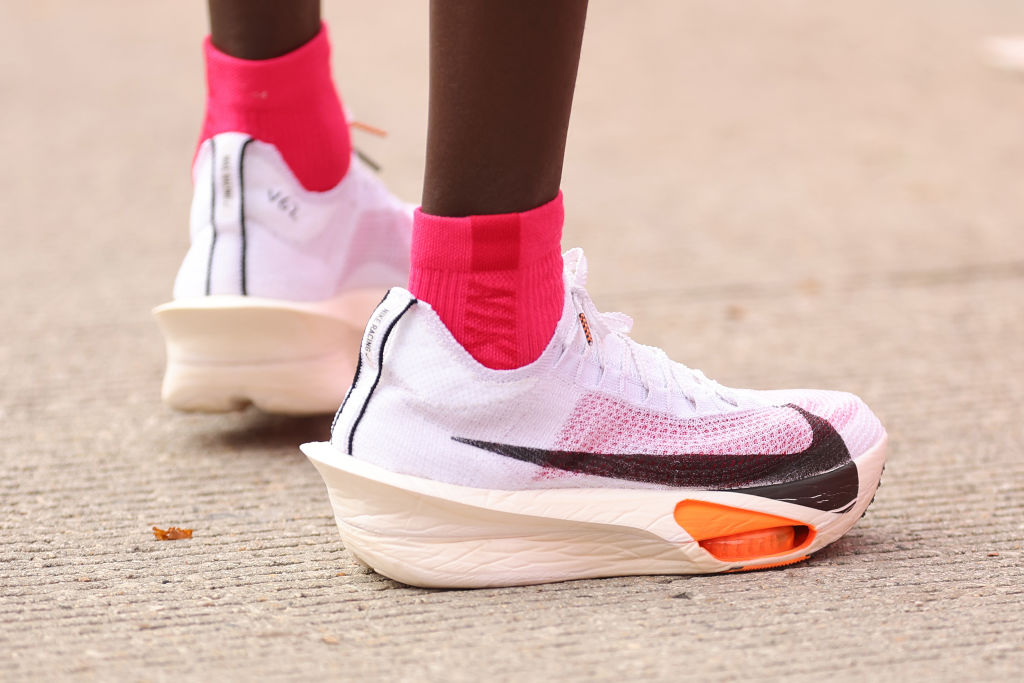
Nike’s Alphafly 3 (retailing around AU$400) offers a slightly more generous lifespan of 400 kilometres – the shoe Kelvin Kiptum wore when he set the world record in Chicago. Meanwhile, brands like Hoka play it straighter with the Rocket X3, trying to offer carbon-plated stability without the extreme, single-use fragility.
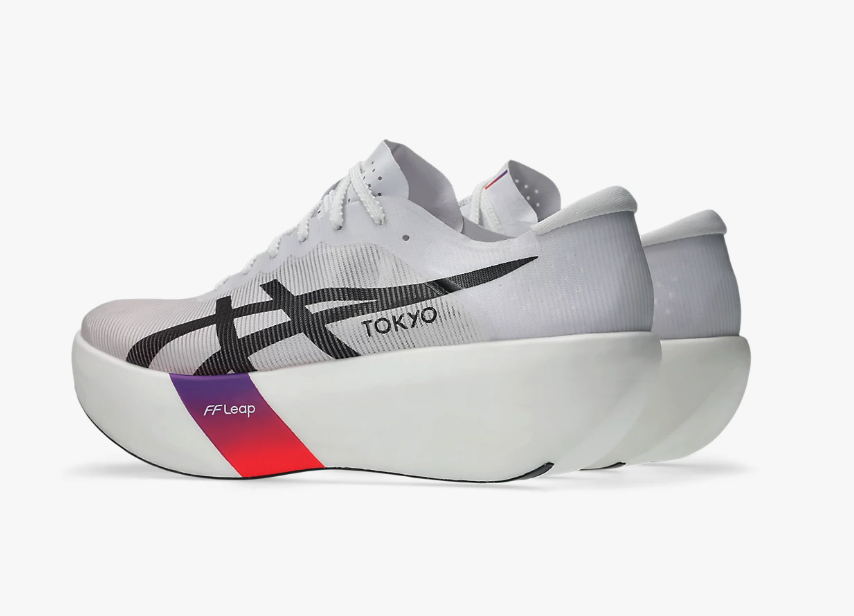
Even ASICS – which has made a name as the sensible, reliable bedrock of the suburban running boom – has pushed into the fragile, high-priced stratosphere with its $500 Metaspeed Ray Tokyo, a blistering 129-gram weapon.
This is the hyper-competitive territory On is trying to conquer. It currently has two LightSpray models on the market. The LightSpray Cloudboom Strike (AU$430) is the elite race shoe, featuring a carbon Speedboard plate beneath a 30-gram robot-spun upper that carried Hellen Obiri to wins in Boston and New York.
But the real commercial test is the LightSpray Cloudmonster 3 Hyper (AU$380). This is the training shoe – no carbon plate – built for long training blocks and daily tempo runs. According to On’s Chief Innovation and Operating Officer Scott Maguire, the objective is about “bringing championship-level innovation – validated by elite athletes – into a radically new running shoe that is now accessible to all runners.”
“Athletes tell us the fit feels like a second skin that disappears on foot. It’s a premium experience that exceeds expectations in the moments that matter,” says Nils Altrogge, Senior Director of Innovation.
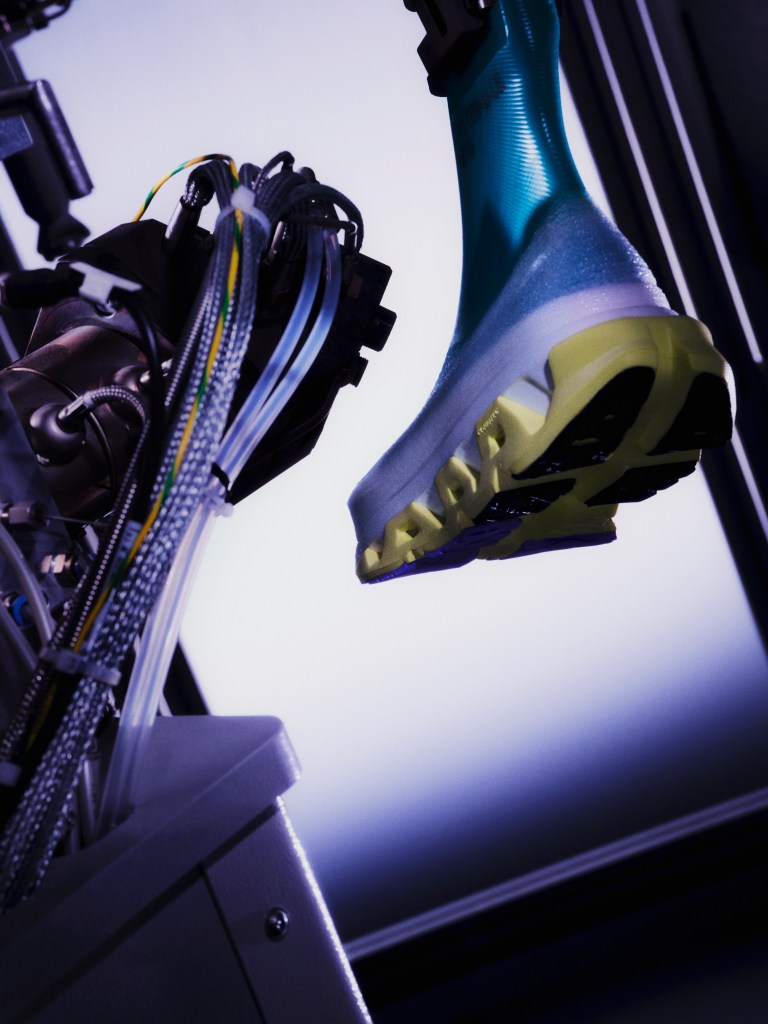
If only the masses could actually buy it. Since launch, demand for the Cloudmonster 3 Hyper has aggressively outpaced supply. The inside sole of each pair is stamped with “Sprayed in Korea,” but finding a box to open on retail shelves remains a challenge.
“Scarcity isn’t the goal,” Altrogge insists. “We’re scaling as fast as we can while keeping our premium standards. If demand is ahead of us, it’s because the community is as excited about this revolution as we are. We’re working hard to get LightSpray products onto the feet of every runner who wants to experience it.”
Want to see more Forbes articles on your feed? Tap here to make Forbes Australia a preferred source on Google.
Look back on the week that was with hand-picked articles from Australia and around the world. Sign up to the Forbes Australia newsletter here or become a member here.