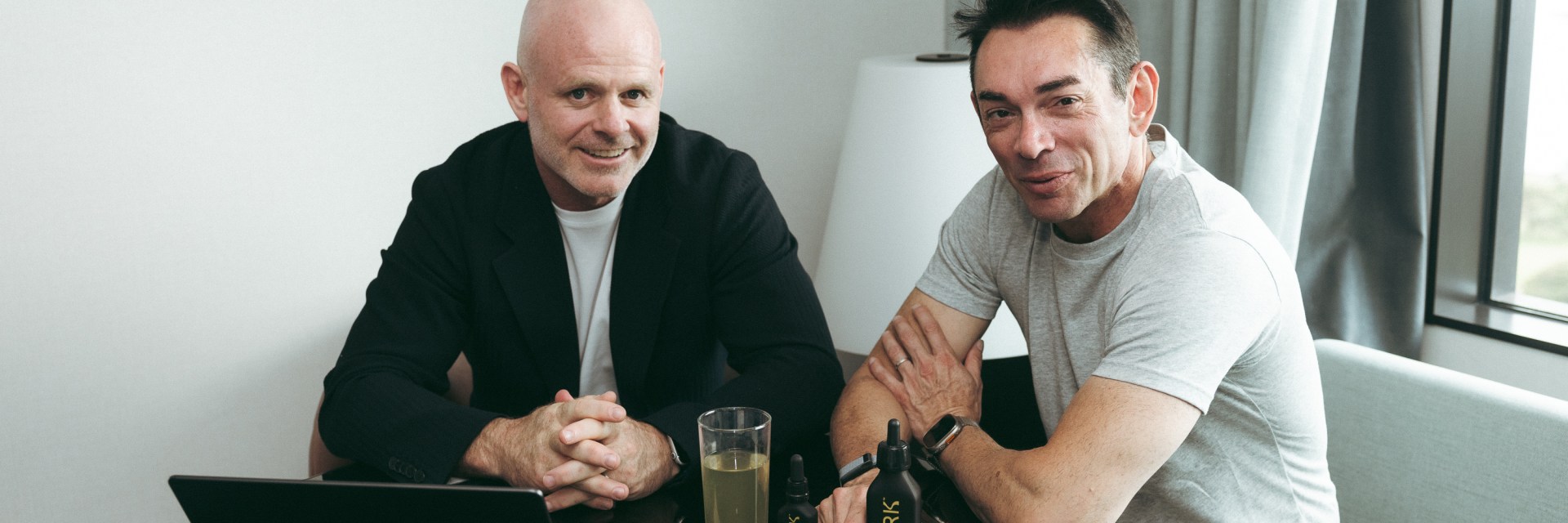

After surviving non-Hodgkin lymphoma in their 30s, Trent Scanlen and Dr Harry Weisinger turbo-charged a herbal medicine into a global brand … just don’t call it a cancer cure.
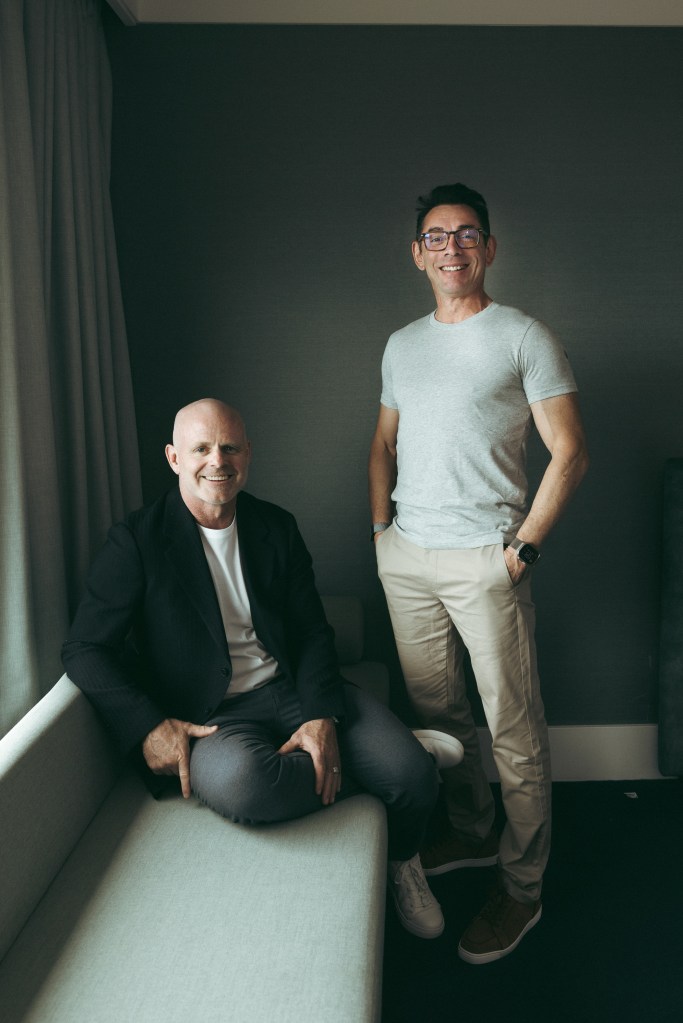
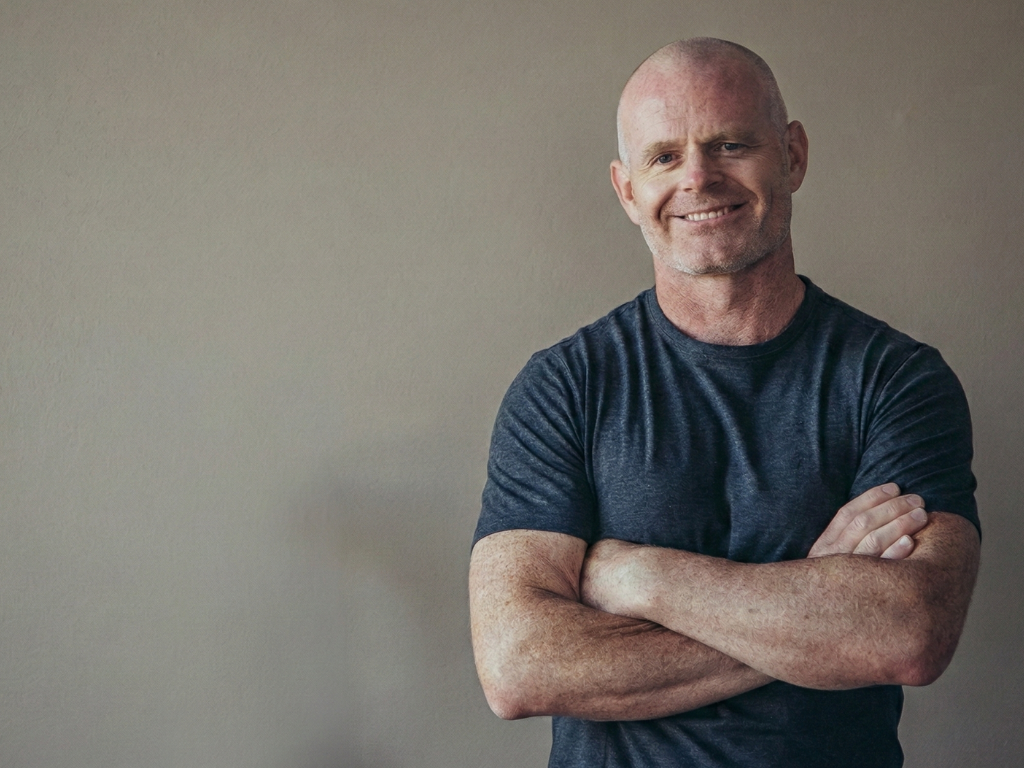
Trent Scanlen and Dr Harry Weisinger have vowed to party on Ibiza for Trent’s 100th birthday in October 2076. It’s what you’d expect the founders of a supplements company to say.
But should they get there, it would be all the more remarkable for both having survived non-Hodgkin lymphoma in their 30s. And while they started their company Kurk out of their cancer journeys, they want to make clear they are not selling a cancer treatment.
“We are pro-medicine and we are pro-pharma,” says Scanlen, a London-based Australian. “We’re not ever offering Kurk for people with cancer. We take it as part of our preventative protocol, but we never say that. If anyone gets cancer, I tell them, ‘Go to the doctor. Go to the haematologist. Do the chemo. Do what they say.’”
Having said that, they have a remarkable founders’ journey which saw them launch in the UK four years ago, Australia two years ago and now into the US, claiming total sales of $10 million globally and winning coveted research grants to look further into its efficacy.
Specsavers
Scanlen was a business grad who went to London the day he graduated from Wollongong university in 2000. He landed at Specsavers, the optometry disruptor founded by Doug and Mary Perkins in Guernsey in 1984, where he rose through the ranks and bought a few franchises.
Until one day when Doug Perkins pulled him aside. “We want to take on OPSM in Australia.”
“Man, we have to,” Scanlen recalls answering.
Five weeks later he was back in Australia, culminating in Specsavers opening 100 stores in 100 days.
Scanlen isn’t religious but he believes the universe delivers. During that period when they were flooding the zone, Perkins told Scanlen he had to go meet the “Dr Doctor”.
What’s a doctor doctor?
“He’s a PhD and a medical doctor.”
Melbourne GP Harrison Weisinger had trained as an optometrist but pivoted into medical research, doing a master’s and PhD in nutrition and neuroscience. He did three postdoctoral research fellowships, including one at the US National Institutes of Health, but found it too hard to get research grants, so he pivoted into medicine and became a GP.
“We met for a coffee,” says Scanlen, “and it’s weird, but I’ve called him my best mate ever since.”
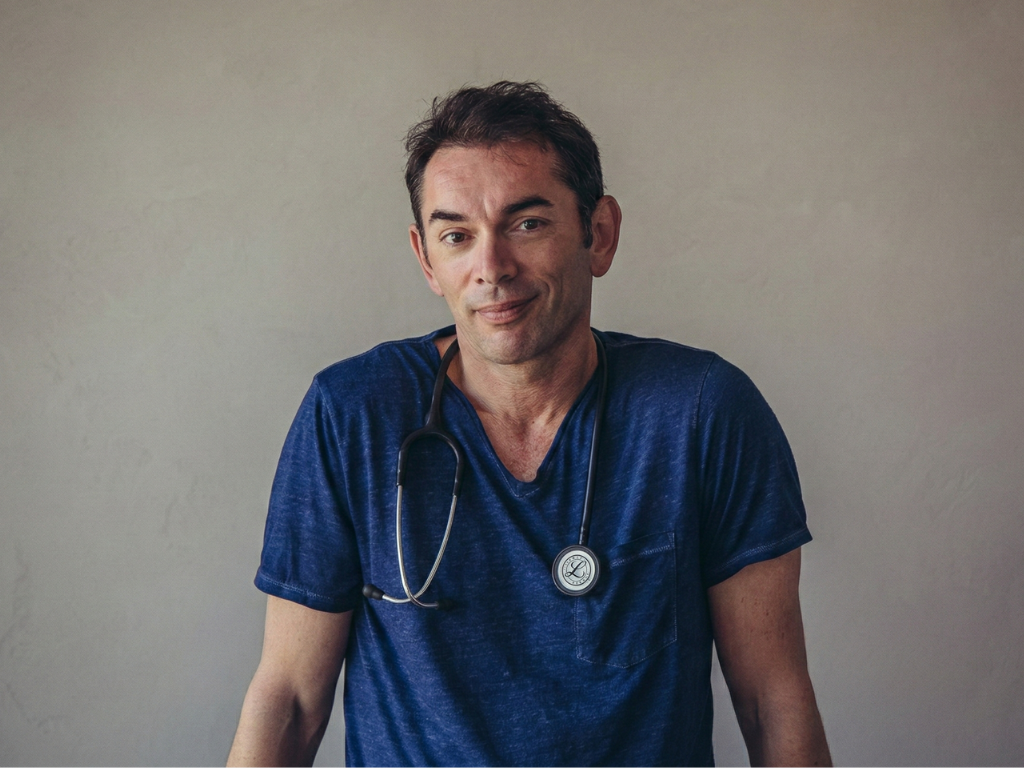
Scanlen convinced Weisinger to join Specsavers’ executive team. And along the way, the doctor told him how he had been diagnosed with non-Hodgkin lymphoma during his residency as a newly qualified medico. Weisinger had experimented with various supplements – fish oil, multivitamins, creatine and magnesium – trying to stay well enough for the formal treatment to work.
And it did work.
Denial, fear, anger, opportunity
Three years after they’d met, Scanlen was doing a lot of complaining, recalls Weisinger. “He’d let himself go, fitness wise, as an executive at Specsavers. Then all of a sudden he got serious about training and took up jujitsu. He was bitching and moaning. He was complaining of his sore back and sore everything. He just complained too much.”
Weisinger saw him smashing the painkillers one day and, after asking a few doctorly questions, sent him for a scan.
“Three hours after the scan,” recalls Scanlen, “I’m in a cancer ward, people coughing and spluttering.”
Weisinger was able to guide him through the journey, pointing him to the best doctors and giving emotional support. “You develop tunnel vision in that world. It’s very hard to think about the future when you’ve got cancer. It’s just shit scary. You feel ripped off and angry and in denial.
“I’m sore every day, I’ve got a bit of a pain problem where I had the radiation in the hip. I’ve got arthritis in the fingers.”
Trent Scanlen
“But ultimately, guys like us just get on with it, and that’s what we did,” says Weisinger. They resolved to look at it as an opportunity. “My whole practice is about preventative medicine and early detection … So I spend my whole day thinking about how to keep people healthy and keep them out of hospital.”
Scanlen was taking 14 drugs on top of his chemo – sleep tablets, anti-nausea, anti-anxiety, antidepressants – blocking side effects and fear.
It got them looking at natural compounds as alternatives.
Scanlen would bring ideas to Weisinger, some of which the doctor dismissed out of hand as unscientific. Others, he’d look into.
They wanted to do something with the cannabis derivatives CBD and THC, but the laws around them were restrictive. And neither did anything for inflammation.
They eventually landed on curcumin. “At the time, it had some 20,000 publications listed on PubMed, half of which were in cancer research,” says Weisinger. “The other half were in inflammatory pathways and inflammation research. There are now about 30,000 papers on curcumin.”
Curcumin is the active part of turmeric, which has been used in traditional Ayurvedic and Chinese medicine for thousands of years. And while it appeared to show some efficacy under scientific testing, it also had poor absorption by the human body. Only 3% of what’s consumed gets taken in, says Weisinger.
The big unlock would be in finding a way to increase that.
They set up a lab and met with former Macquarie Bank executive director Bill Moss who suffers a rare, incurable genetic disorder that causes progressive muscle wasting. Moss’s Boston Global Group devotes a lot of funding towards health research.
Moss invested and his daughter, Natalie Cooney, joined the board of the new entity, Kurk Australia Pty Ltd.
They tried ways of crushing the curcumin crystal down to the sub-micron level to make it smaller and more absorbable. They mixed it with oil and black pepper. But the needle hardly moved.
“Then a German pharmaceutical company, NovaSOL, cracked that in 2022,” says Scanlen. “Harry calls me up. ‘A paper’s just dropped. It’s incredible. We’ve got to change everything.’
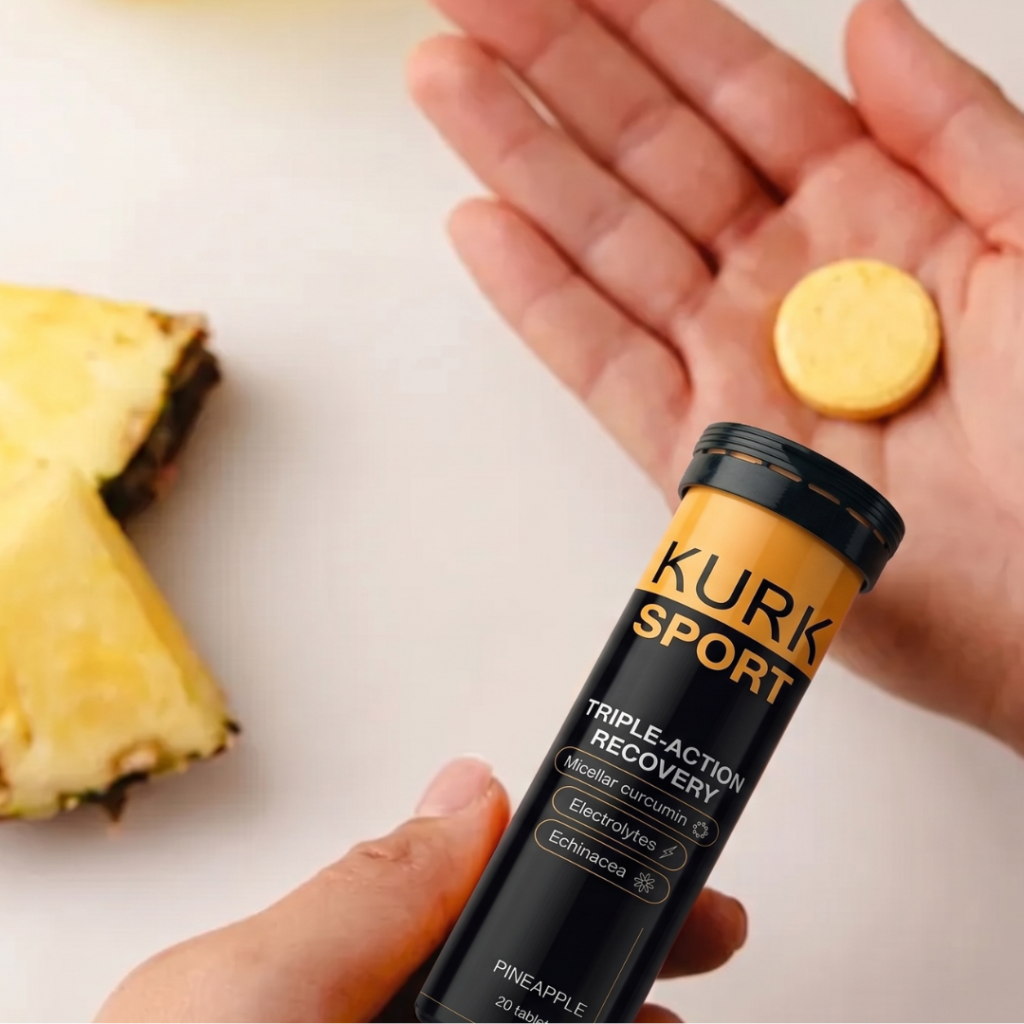
NovaSOL had figured out how to encapsulate curcumin inside microscopic, water-soluble spheres called micelles. They were claiming their product was 95% absorbable.
But they were doing it with synthetic surfactants and solvents. Weisinger and Scanlen vowed to do the same thing with plant-based ingredients.
“Trent was far more steadfast in this than me, and I’m glad we stuck to our guns,” says Weisinger, “but we committed to being completely plant-based, and that wasn’t easy.”
A US organic chemist cracked it for them, but they have not patented the process because that would involve showing how they did it, inviting imitators to copy the process with small tweaks to beat the patent.
They launched in the UK four years ago, Australia two years ago and have built out a US supply chain. “We’ve got a big study in the US due next month. Each market we’re in, we want research partnerships. We want to show safety, efficacy,” says Weisinger.
Kurk was recently awarded a research grant by the government-funded Innovate UK, in collaboration with Swansea University Medical School. It will attempt to trace what happens to Kurk’s curcumin between the bottle and the cell, generating peer-reviewed evidence on its action against age-related inflammation. It’s the second consecutive Innovate UK grant awarded to the Kurk–Swansea partnership.
“I quit science because it was so hard to get funding,” says Weisinger. “Then, lo and behold, 20 whatever years later, we are winning funding for proper science with proper people. On our advisory board, we’ve got an immunologist, we’ve got a microbiologist, we’ve got our food scientist in-house, we’ve got this savant biochemist in the US.
“We’ve assembled a crack team of scientists and we’re doing proper research, which is absolutely thrilling for me.”
As well as Moss, investors include English actor Tom Hardy, English businessmen Jim Mellon and Lyndon Lea, and French footballer Patrice Evra.
Scanlen says they’ve spent £2 million in research and development.
“I’m 50 in October, I’m still doing jujitsu and lifting weights, and it’s getting harder.
“I’m sore every day, I’ve got a bit of a pain problem where I had the radiation in the hip. I’ve got arthritis in the fingers. So I’m trying to make this work for myself. Harry’s older than me, he doesn’t look it, but he is.
“We made that pact to live to 100 when I was going through cancer treatment. He’s gonna get there first and drag me over the line, and we’re gonna have my 100th birthday in Ibiza. Maybe you can come along as well.”
Want to see more Forbes articles on your feed? Tap here to make Forbes Australia a preferred source on Google.
Look back on the week that was with hand-picked articles from Australia and around the world. Sign up to the Forbes Australia newsletter here or become a member here.