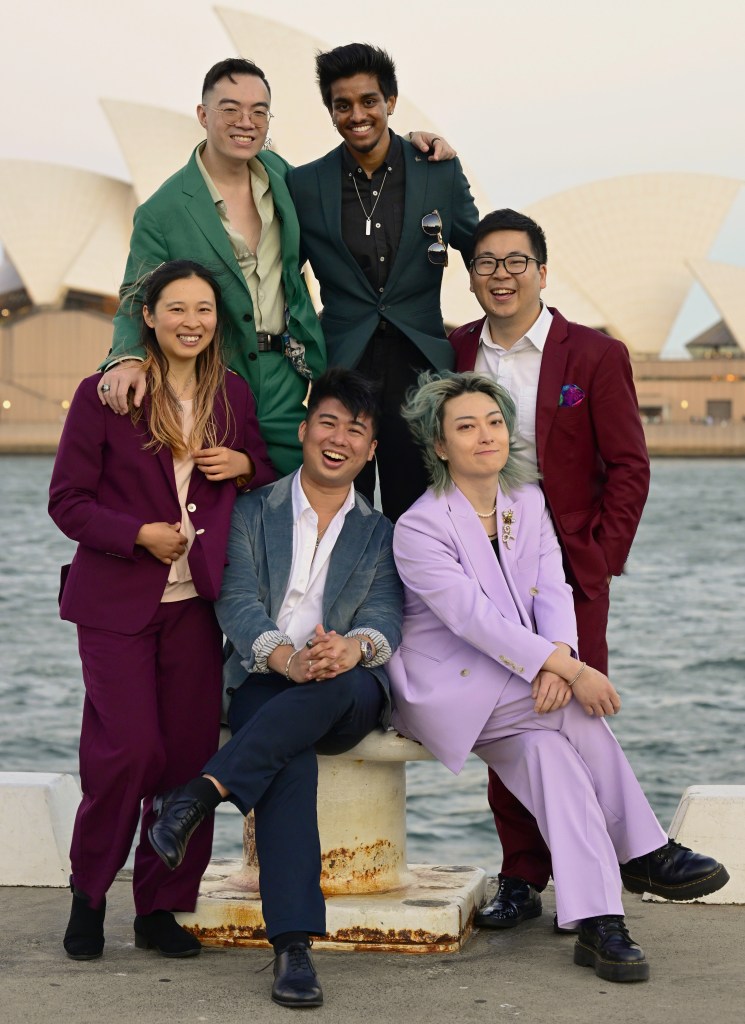
What began as a university magic club now performs 300 corporate shows a year. Its latest trick? Turning a warehouse office into a secret theatre.
There are no signs outside. No neon lights. No promises of impossible illusions.
Just an anonymous warehouse in Sydney’s inner south, where guests wait on the street until ushered into a dingy lobby and with close-up tricks – then told they’ve found one of the city’s best-kept secrets.
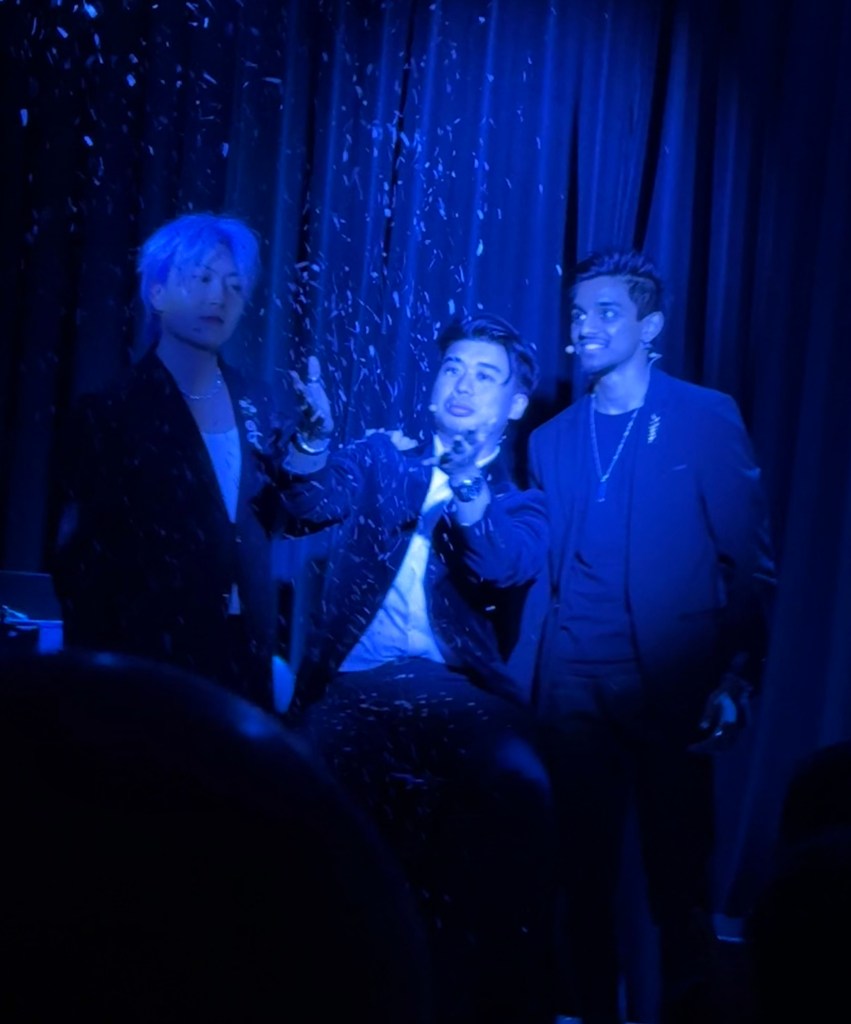
That’s how the Black Ties want it – a “speakeasy for magic” that, one day, CEO Scott Zhou hopes will become Australia’s answer to LA’s legendary Magic Castle. For now, The Wizard’s Hideout holds an audience of 40 on cheap seats being repeatedly dumbfounded with the impossible feats of team members Aadi and Clement, while CEO Zhou runs the sound and lights.
Other team members, including Zhou, perform on other nights.
“We can’t market the show itself because it’s different every time,” says Zhou, who leads the collective of six magicians. “So instead of marketing the show, why not market the place?”
And hence the underground vibe for the Black Ties’ homebase from which they spread out across Australia to perform some 300 gigs a year.
Aside from their desire to scale the business, The Black Ties share something else with a lot of high-tech startups. They spun out of a university.
Black Sheep
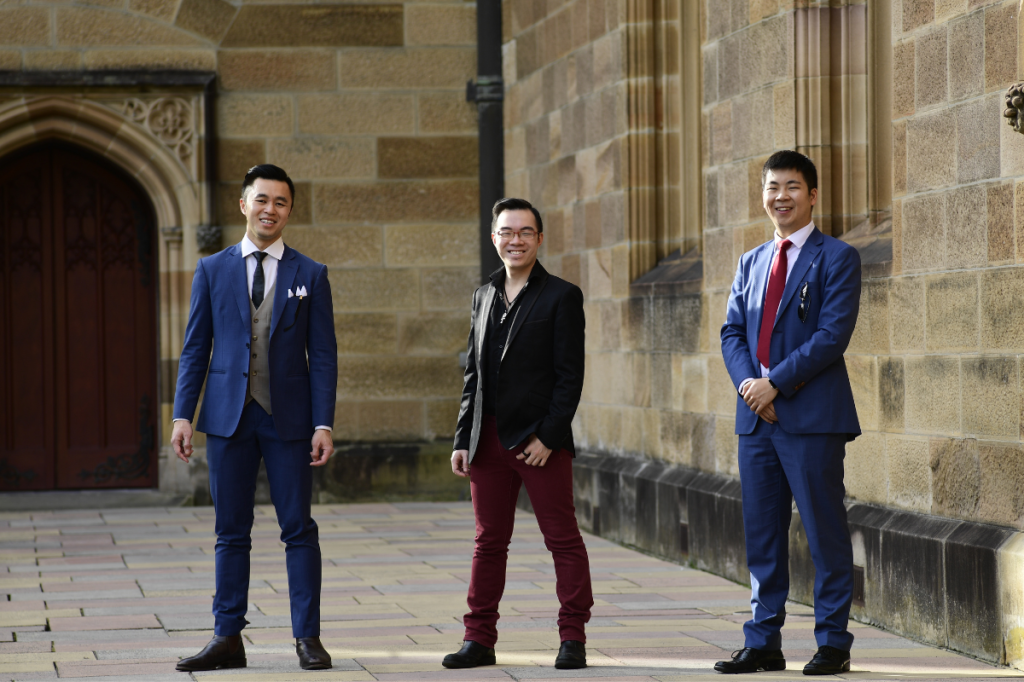
When Scott Zhou went to the University of Sydney to study commerce/law in 2013, he noticed that, unlike UNSW, the sandstone university had no magic club. “I went around the campus performing little magic tricks, just to be like, ‘Hey, are you interested in starting a Magic Society?’”
He got a few like-minded souls to join up, and the few of them who were interested in performing started volunteering at charity events, until one of the group suggested they form a separate business so they could get paid.
“We started Googling around for what magicians were out there,” recalls Zhou. “And we found their marketing was pretty poor … So we were like, ‘We can do this better’.”
“There is a saying that if you’re addicted to drugs, you can get out of it with rehabilitations and whatnot. But if you’re addicted to magic, there’s no way out.”
Julian Yu, Black Tie
The Black Ties launched in 2015 with a name that had been suggested by an Uber driver. They liked that it evoked a certain formality. They were not doing kids parties.
In 2017, as The Black Ties gained traction, Zhou dropped out of university. Another member, Julian Yu, had never even gone to tertiary education. “I have never done any paid employment in my life other than magic,” says Yu.
Born in Hong Kong, he describes himself as the black sheep of his family. When he came along to the university magic society, he was making a living busking on Sydney’s George Street. “It’s like a disgrace in my family, you know,” Yu says.
Zhou remembers him wheeling his little table in front of Hungry Jack’s and putting out a deck of cards and a tip jar.
Yu gave busking away in 2018 as the Black Ties took off. “I should keep on hustling,” he says, “but since the business is going so well, there’s not many reasons for me to keep putting myself out there for a relatively unstable income.”
A castle of their own
The Wizard’s Hideout is not the Black Ties’ first pivot. As disaster loomed in early 2020 when the COVID-19 pandemic struck, all their events got cancelled, says Zhou. “We had to refund everything … ‘We’re done for’.
“But a separate need came up,” he says. “Big companies suddenly had a big need. Their staff were feeling low morale and they had a responsibility to lift the mood.”
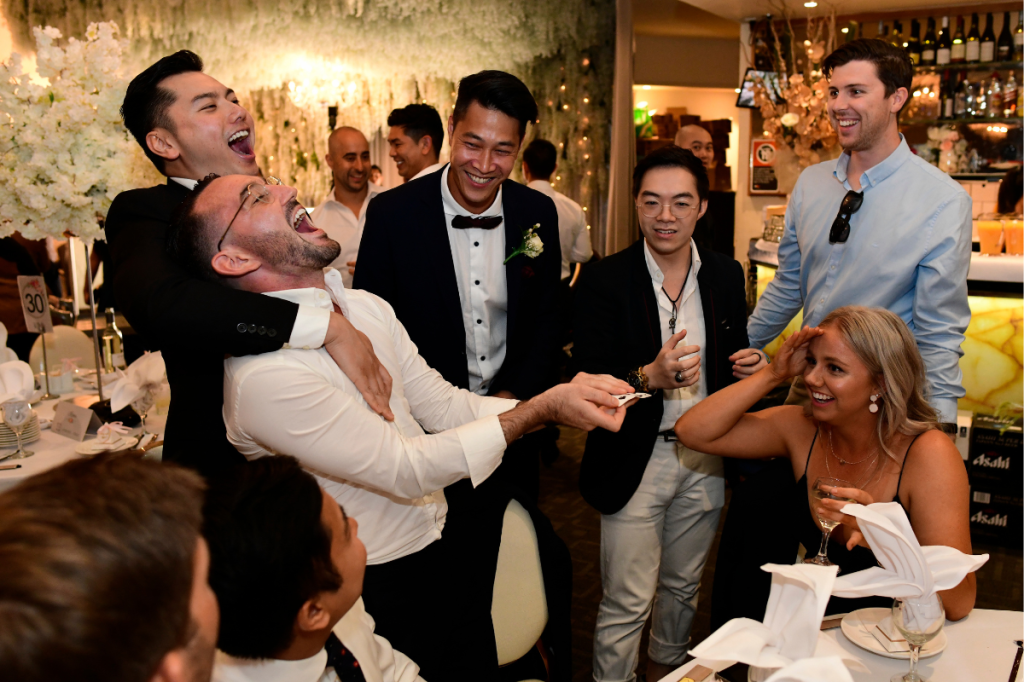
The Black Ties filmed a few tricks, pushed out some reels and an online ad. “And like, I swear, every company in Australia and New Zealand started reaching out,” says Zhou.
Business boomed. “Companies were desperate … We could charge higher prices and have four or five shows lined up every half an hour all across Australia. I could get up and do them in my underwear.”
But magic at scale waned with the virus and The Black Ties have had to find new avenues to growth.
Zhou was inspired by the Magic Castle in Hollywood. “My business coach suggested to me, ‘If you’re gonna have an office, why not make it into a theatre, or just have your office in a theatre.’ We couldn’t find any theatres to rent, but we found this space.
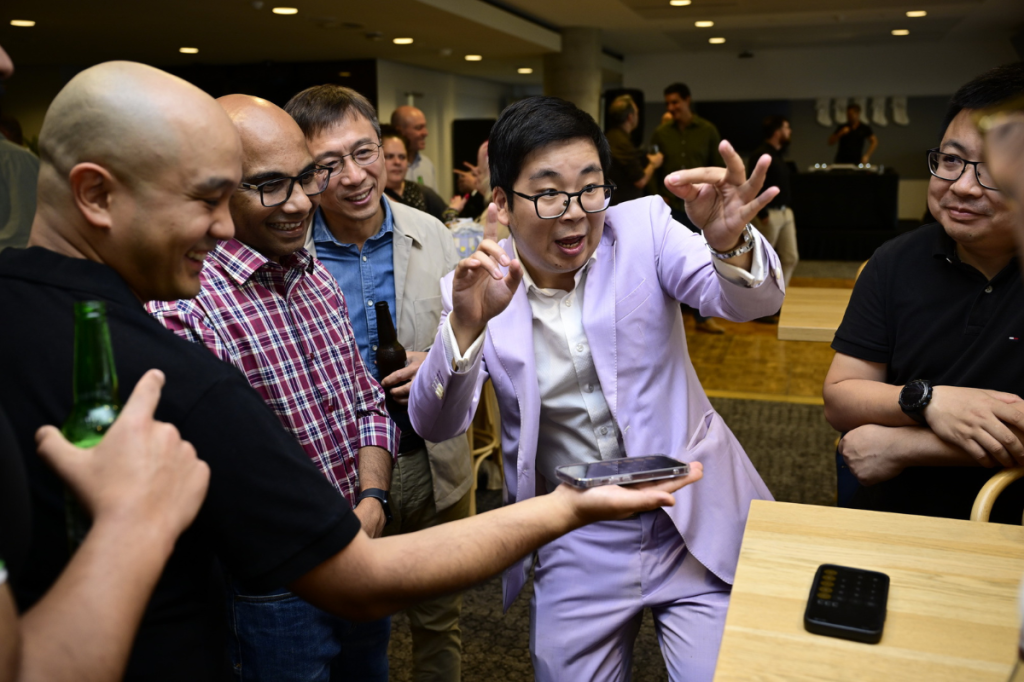
“It’s not a grand castle like the Magic Castle. It’s a little magic room, a secret place – ‘dingy’ is not the right word – but then we spin that, right? We say the Wizard’s Hideout is hidden, it’s a secret place.
“Think of it as a speakeasy,” says Yu. “You can’t find a way to get in if you’re not in the know.”
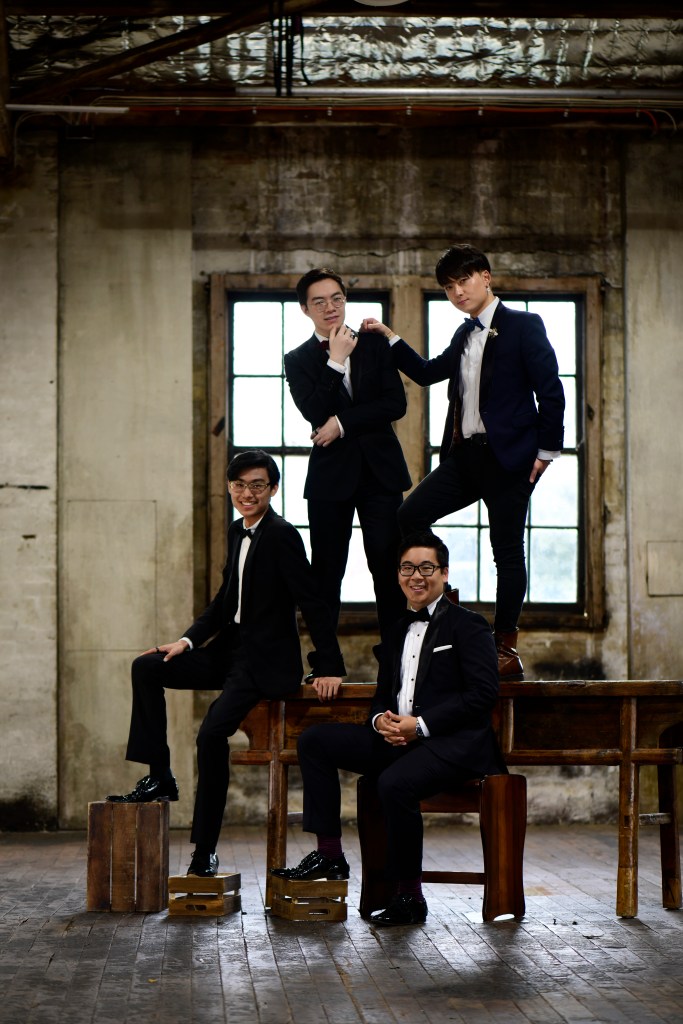
The goal is to turn it into an institution, with training and opportunities for magicians to mingle in a club-like setting. But for now, it’s more a place to practice the craft, and create some mystery.
“So everything you see about the Wizard’s Hideout is about the secret location, ‘Come discover Sydney’s best hidden secret’.”
Leading The Black Ties has required as much psychology as sleight of hand. Yu says that Zhou is the only member “on the more realistic side” of the psychological spectrum. “Whereas the rest of us are more on the Wonderland end.”
“Scott is very business-mind-heavy person. He still performs magic, but he is great to carry the whole company on his shoulders.”
To help navigate the transition from performer to CEO, Zhou enlisted a leadership coach about five years ago. “Leadership was new to me,” he says. “I was at the helm of a magic business where I had a bunch of people… but not regular people in a regular job.”
“They’re artists who crave certain weird things and aren’t motivated by normal things. None of these people want a nine-to-five job. None of these people are motivated by a contract or rules.”
The key is understanding what drives each performer, says Zhou. “I don’t mean to bash on artists, but there’s a whole different brain of people who value creativity above all else. That doesn’t really gel well with other people’s brains doing business and marketing and numbers.”
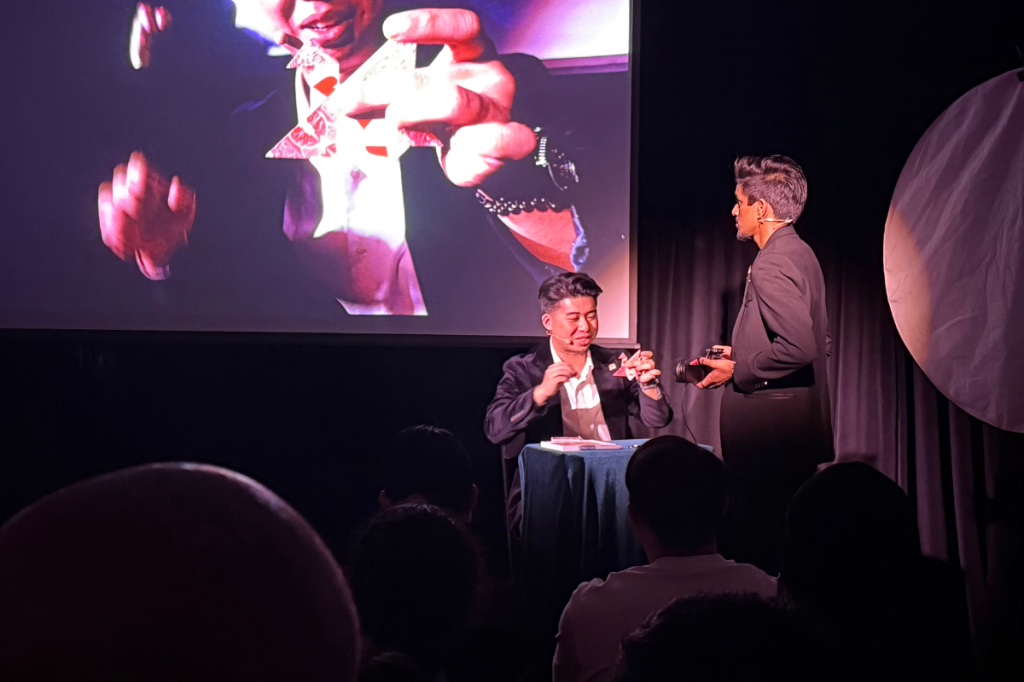
This has proven an advantage when dealing with the competition. “You’ll find these crazy good magicians, but their branding, their marketing, their website is all over the place.
“It’s not that we are experts at marketing or sales. It’s just that everyone in our industry is so crap.”
The Black Ties start at $1,300 for a one-hour, one-person show. Annual revenue is about $700,000 and growing. “That won’t sound high for Forbes readers, but we’re pretty proud of it because we are just a group of six artists and making this much revenue in magic is somewhat unheard of.”
And Yu won’t be taking any other paid employment in his life. “There is a saying that if you’re addicted to drugs, you can get out of it with rehabilitations and whatnot. But if you’re addicted to magic, there’s no way out.”
Want to see more Forbes articles on your feed? Tap here to make Forbes Australia a preferred source on Google.
Look back on the week that was with hand-picked articles from Australia and around the world. Sign up to the Forbes Australia newsletter here or become a member here.