To Hellas and back: How Paul Savvas found his way home to what ‘really matters’

Western Australian-born Paul Savvas spent years navigating high-stakes disputes as a family lawyer. Now, he leads the HCWA, one of Western Australia’s most prominent Hellenic social groups. Here is why the proud Greek-Australian traded the courtroom for community leadership.
BRANDVOICE – PARTNER CONTENT
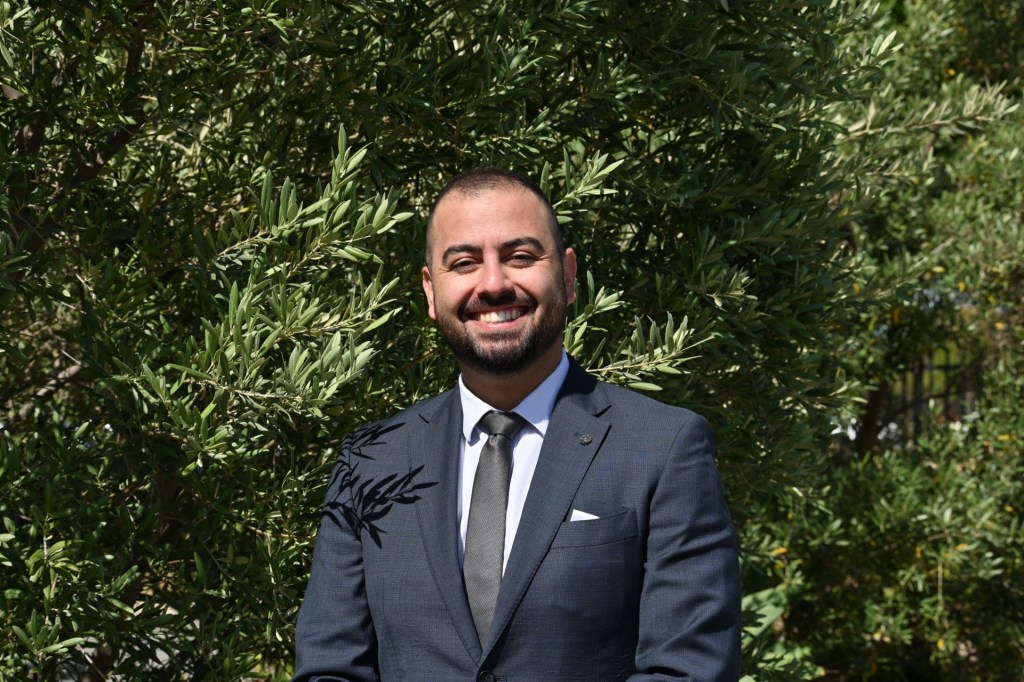
Perth’s Greek community has always been defined by strong leadership.
The local diaspora celebrated its centennial in 2024, honouring a rich cultural legacy that spans from 1920s pioneers like Anna Perivolaris, from the Greek Island of Samos, to recent Lord Mayor Basil Zempilas, whose family is from Kastellorizo.
Paul Savvas, who was raised Greek Orthodox, is adding his own chapter to that history. Savvas walked away from a successful legal career to become the Chief Executive Officer (CEO) of the Hellenic Community of Western Australia (HCWA) and its subsidiary entities.
“Law had been my ambition since I was a teenager,” says Savvas, who began his professional life as a family lawyer. “I’d invested years building that career.”
While running his legal practice, Savvas simultaneously spent more than a decade serving on the Hellenic Community Board. Over time, that volunteer commitment evolved, leading him to forgo his legal career to take on the CEO role full-time.
“Walking away wasn’t an easy decision,” he says. “But I recognised an opportunity to make an impact that extended beyond my list of clients.”
Incorporated in 1923, HCWA is one of the state’s oldest and most respected community organisations. For more than 100 years, it has preserved and celebrated Greek heritage while serving the wider Western Australian community through faith, education, aged care, and cultural programs.
Today, the organisation oversees Hellenic Community Aged Care, the Cathedral of Saints Constantine and Helene, the Centre for Hellenic Studies and St. Andrew’s Grammar School.
Raised in Perth’s Greek community, Savvas graduated from St. Andrew’s Grammar before attending Murdoch University, where he earned a double degree in Law and Commerce and more recently graduated from the Australian Institute of Company Director (AICD) course.
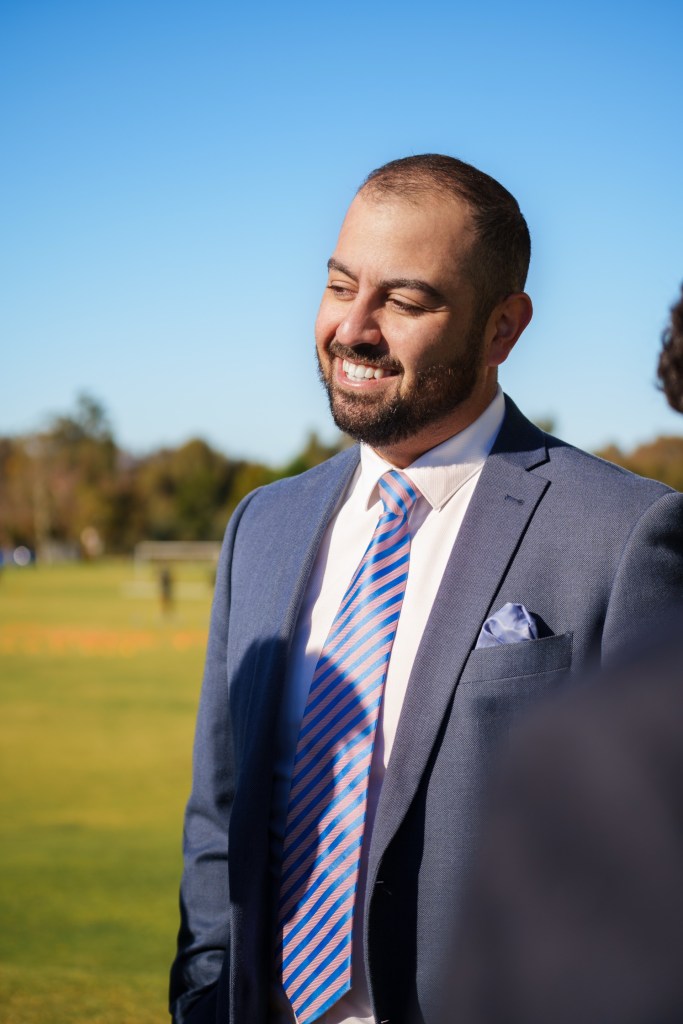
“I don’t see leadership as a position of authority,” says Savvas. “I see it as a responsibility to earn people’s trust, make difficult decisions with integrity, and leave an organisation stronger than you found it.”
Q&A
Was there a defining experience or lesson from your upbringing that still influences how you lead today?
My upbringing taught me that leadership begins with service. Growing up in the Greek community, I was surrounded by people who volunteered their time, supported one another and believed that if you benefited from a community, you had a responsibility to contribute back to it.
My family, school and faith all reinforced values such as humility, integrity and accountability. Those lessons have stayed with me throughout my career.
What’s the most decisive moment in your career so far, and how did it shape where you are today?
Leaving my legal practice to become CEO of the Hellenic Community of Western Australia was undoubtedly the biggest turning point in my career. Law had been my ambition since I was a teenager and I’d invested years building that career.
That decision was difficult. However, I saw a unique way to give to a cause that really matters to me. It is rare to get the chance to help shape a group that has been there for Western Australians for such a long time.
In your field, what major shifts or trends do you believe leaders cannot afford to ignore right now?
Community organisations are becoming increasingly complex. Strong governance, financial sustainability and commercial discipline are a must, regardless of whether you’re in the not-for-profit sector.
At the same time, people expect greater transparency, stronger engagement and higher standards of service. Leaders need to embrace technology, modernise systems and make better use of data while never losing sight of the human side of leadership.
How do you define success today, and has that definition changed over time?
Earlier in my career, success was closely linked to personal achievement and professional milestones. Today, I see it very differently. Success is about creating something that continues to benefit others long after you’ve moved on.
It’s about building capable teams, strengthening organisations and creating opportunities for future generations. Financial performance matters because it enables organisations to deliver their purpose, but people will always be the true measure of success.
What advice would you give your younger self starting out?
I would say, don’t be afraid to take opportunities that weren’t part of your initial plan. Careers rarely follow a straight line, and some of the most rewarding experiences come from saying yes to challenges that feel uncomfortable at first.
I’d also gently remind myself that relationships matter. Treat people well, listen carefully and focus on building trust. Skills and experience are important, but your character and reputation will ultimately open more doors than your resume ever will.
Want to see more Forbes articles on your feed? Tap here to make Forbes Australia a preferred source on Google.
Look back on the week that was with hand-picked articles from Australia and around the world. Sign up to the Forbes Australia newsletter here or become a member here.