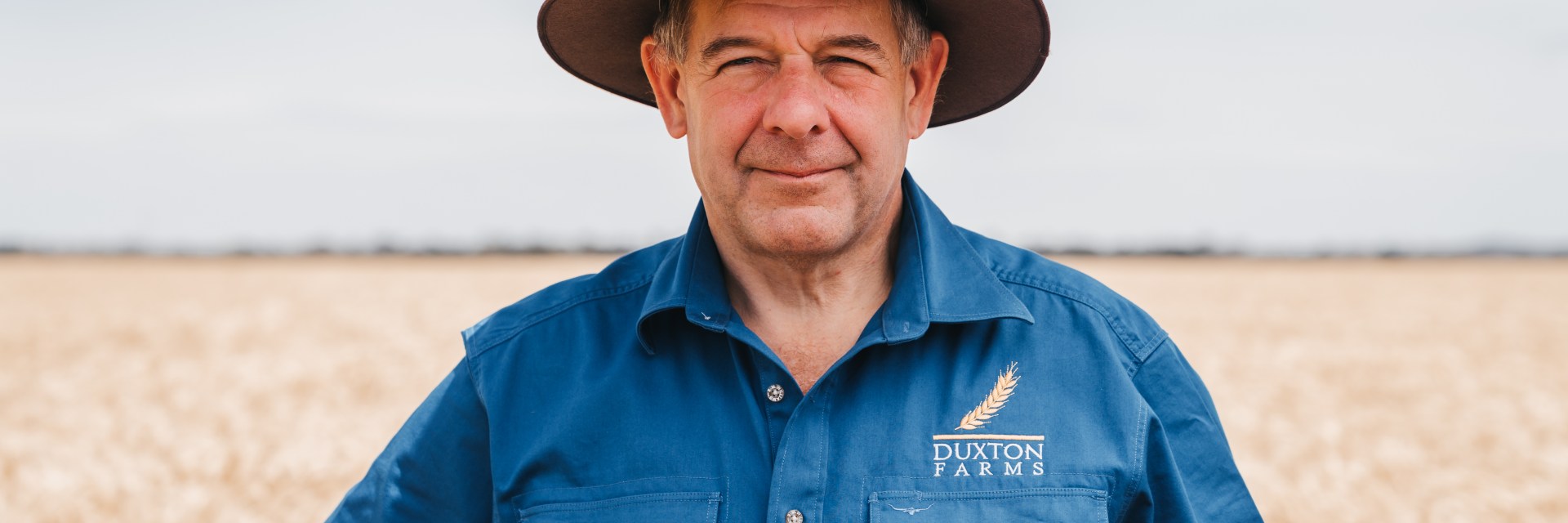

From former brothels and pubs to vineyards, apples and irrigation water, Ed Peter has made a fortune buying things other investors overlook. Now he’s preparing for the next economic reckoning.
Ed Peter was looking at a financial model of his company’s apple orchards when his eyes fell on “pollination costs”. Something was amiss. He went up to one of his young analysts and patted him on the shoulder.
“You’ve got this wrong,” Peter recalls saying. “Your model’s fucked. Pollination costs can’t have tripled in three years.”
The analyst stood his ground. That’s what beekeepers were charging these days to put their hives in your orchard to turn your blossoms to fruit.
When you grow about 10% of Australia’s apples, such things matter. So, Peter took a longer look at bees. A hive would cost him $500, and he’d make that back in just one year from honey alone. Add “pollination services”, and he’d be well ahead.
And like he’s done many times before – from buying elevator stocks when everyone else was buying dotcoms, to buying brothel buildings in Singapore when the well-heeled were still looking down their noses at the gentrifying, red-lit precinct of Duxton Hill, to then picking up art-deco granite in Adelaide for the price of just one of those former shophouses of ill repute – Peter’s value detector buzzed.
Thus was born Duxton Bees. It started as a private company but has since been bought, by his own ASX-listed Duxton Farms, which was in the process of zigging out of broadacre farming and zagging into walnuts, pistachios and dried fruit on top of its apple orchards. A chunk of that transition involved the public company buying private companies Peter had founded, like Duxton Bees and Duxton Nuts.
The market did not like that.
Its share price had been nudging $2 in mid-2022 when the transition began but fell below 50c in June and was still sinking at the time of writing. Duxton Farms owns assets worth about $300 million, but it’s market capitalisation has fallen to about $44 million, one seventh the asset value.
Duxton Farms is a separate entity to Ed Peter’s Duxton Vineyards, which makes about 6% of Australia’s wine, and Duxton Pubs [with 25 hotels], which are also separate from his Duxton Capital.
“I’m 62, and I’ve not seen a full economic cycle yet. The debt that we’ve created, mathematically, cannot be paid back. There’s only one way to get out of this …
Ed Peter
There was also Duxton Water, a successful dividend-play dealing in irrigation water rights, which he listed on the ASX in 2016. He stepped down as chair in April 2025. It was renamed Rivco Australia in October in moves designed to increase its independence from his Duxton web. The market liked that.
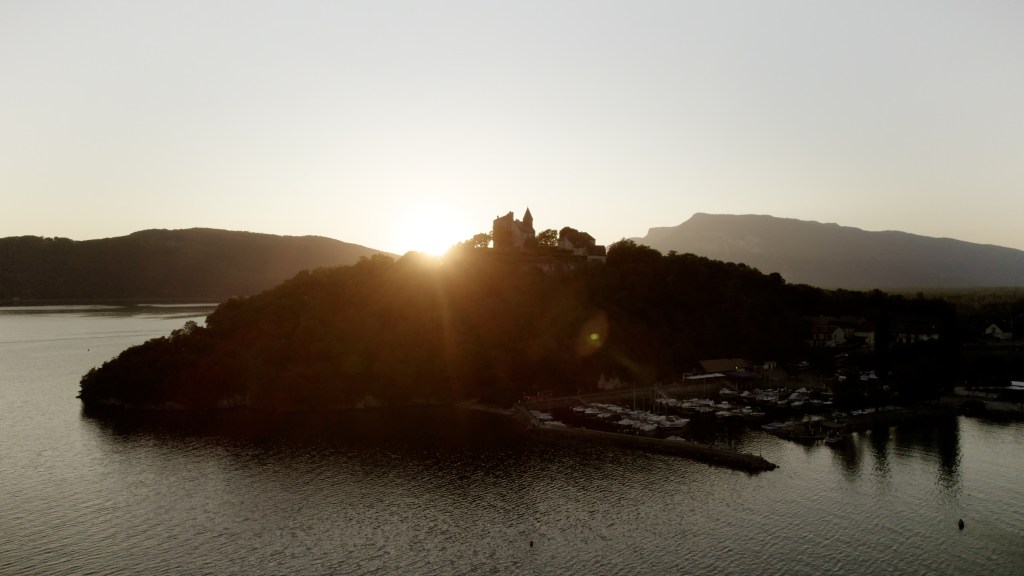
These companies are all separate from Peter’s personal holdings of two more vineyards, a couple more pubs and a castle in France.
Since being dragged to Australia in 2012 by his now ex-wife, Julie Peter, the self-made Swiss/American Ed Peter has made his presence felt, spotting assets that seem ridiculously cheap to him, getting some “friends” together and pouncing.
The pattern of buying real things has defined his investing life. Long before Duxton, Peter was learning about mobs and markets – and how much money could be made going against them. He’s just waiting for the mob to catch up to his way of thinking this time around.
Flipping burgers
Edouard “Ed” Peter spent the first three years of his life in Mexico where his Swiss father was handling the country’s tourism advertising.
His parents divorced when he was five, and his father moved back to Switzerland from the US. Dyslexic, he speaks French better than he writes it.
From age 14, he had a paper route and was flipping McDonald’s burgers in Minnesota, then in Lausanne, Switzerland. Despite often poor grades, he surprised himself by getting into Carleton College, Minnesota. He drove trucks between Switzerland and France during vacation.
Peter was at Credit Suisse in Geneva as a junior analyst. They wanted him to pick stocks. It was the mid-80s. Lots of things were going up. “Everybody was trying to push everything. But if it didn’t make sense to me, I didn’t do it. I was avoiding the things that other people were excited about. They were expensive – the foundation, though I didn’t yet know it, of what began to work for me was looking at things that looked just way too cheap.”
In 1987, he’d sold a car his grandmother had given him. “I had 10,000 Swiss francs in my pocket. I’m sitting there watching that Black Monday [the 1987 stockmarket crash] unfold.” While others were seeing the raw collapse of share prices, he was watching the rise of dividend yields.
“I bought Citicorp when it got to a 27% dividend. I bought ‘Manny Hanny’ [New York bank Manufacturers Hanover Trust], Chase Manhattan and GM [General Motors]. I sat on them for four or five months, and I more than doubled my money. That was an extremely good lesson: when things get stupidly cheap, don’t be afraid to buy.”
A decade later, he couldn’t understand the pricing of dotcoms. He was running Swiss equities at UBS, and one of the guys working for him was up US$73 million. The colleague quit and rented a yacht, but by mid-2000, was back needing a job.
“During that period, I bought Schindler, the largest lift company in the world. People were saying all these companies are going to cease to exist. Dotcoms don’t get rid of lifts. The idea of real things was very firmly etched in my mind by that time.
“It’s the same with our current economy. You can’t eat pixels.”
Honey, I bought a vineyard
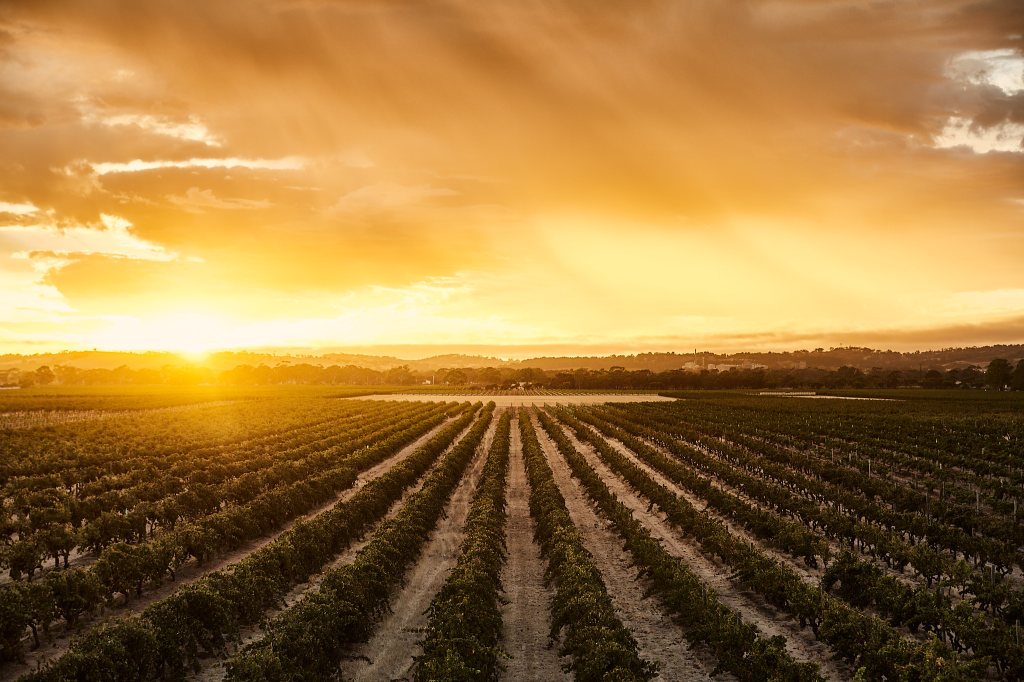
In 1997, Peter and his Australian wife, Julie, were visiting a vineyard in Bordeaux, Château Lascaux, where a friend was making wine. “I brought two friends,” says Peter. “We had a spectacular weekend, and on the Sunday night one of my friends said to Reid [Bosward], the winemaker, ‘Why don’t you have your own winery?’ And he says, ‘I can’t afford it. I’m just a winemaker.’”
Peter’s friend, full of vintage bonhomie, opened his arms: “We’re all bankers! We’ll come up with the money. You find us a winery.’”
Months later, back in Zurich, Peter’s bedside phone rang at 2 am. It was Bosward. He’d found a winery in the Barossa Valley, South Australia. The next day, Peter spoke to his banker mates. But their circumstances had changed. They’d sobered up. Started businesses.
“I called Reid and said, ‘Ah, you didn’t buy it, did you?’ ‘Yeah I got it! I quit my job!’. And I thought, ‘Okay, we’re good.’”
Peter had a new mortgage and was still years away from the plays that would make him seriously wealthy.
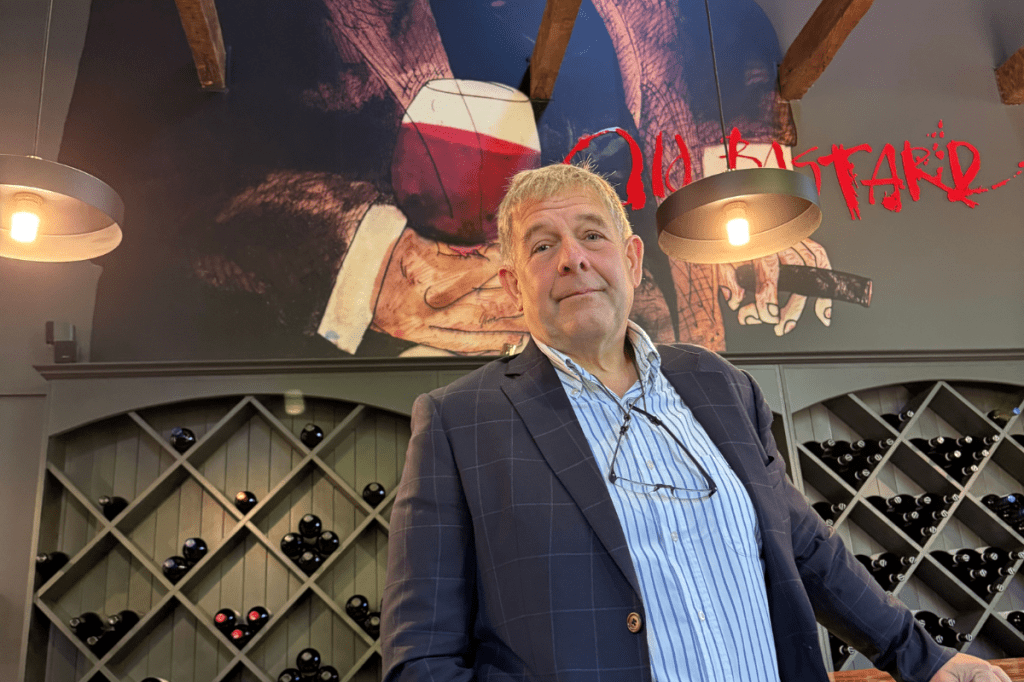
“I went home and told my ex-wife, probably one of the reasons she became my ex-wife, that I just committed our entire savings to a winery in the Barossa.”He’s telling this story in the cellar door of that winery, Kaesler, at Nuriootpa, while tasting its $300- a-bottle Old Bastard shiraz, making liberal use of the spittoon.
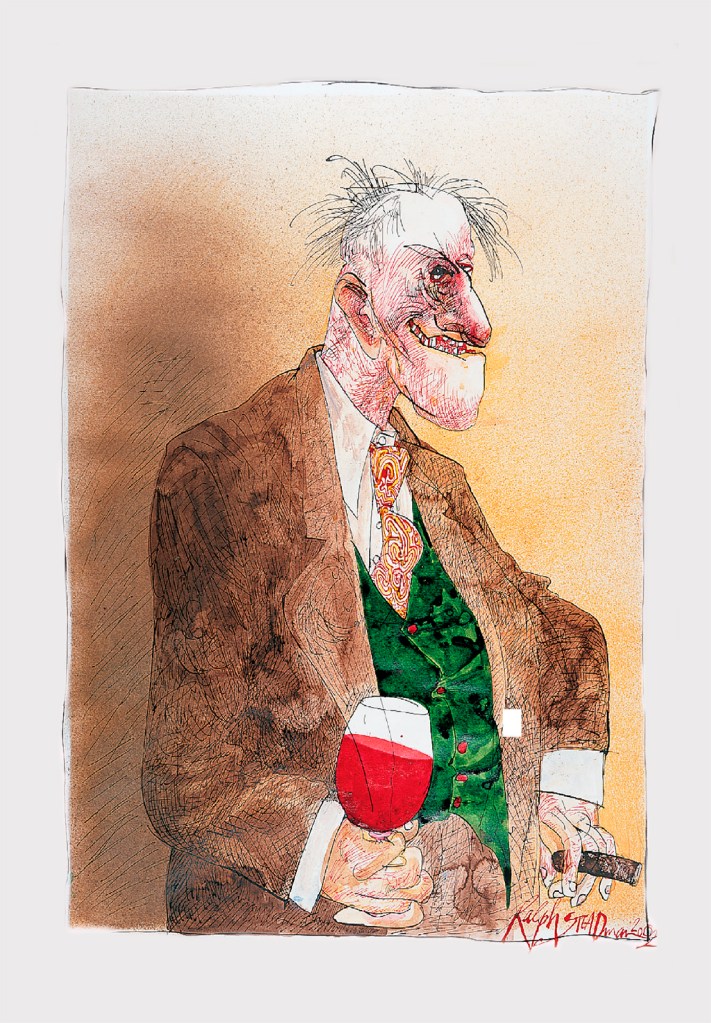
An artwork by Ralph Steadman is behind the bar. It is the Old Bastard label, which Peter got Steadman to do for the price of a case of the stuff. “His agent was furious”.
“The nice thing is, if you’re not afraid to say ‘yes’, you can do some stuff that is wonderful.”
Peter moved to Deutsche Bank in 1999 and was shipped off to Singapore, where he was head of asset management for Asia Pacific. He appears to have had some success there. Asked what he did right, he says it was being not “overly smart”.
He cut margins, and business flourished, he says. He did well enough personally that he bought the Domaine de Chatillon vineyard and castle in France in 2009.
In a van hurtling down the freeway from the Barossa to Adelaide, Peter is explaining how a colleague convinced him to invest in heritage “shophouses” in Duxton Hill, Singapore’s red-light district.
In most parts of town, heritage-protected shophouses were going for $10 million Singapore dollars. But in Duxton Hill, they were just $3 million.
“I bought three with him, then I did some other syndicates with some other mates. In the end, I either bought myself or bought 14 of them with friends. Ken ran them all for us, and we started kicking out the prostitutes and the seedy bars.”
When Peter left Deutsche and set up his own business. He needed an office.
“I was the first financial company to go into Duxton Hill. Then we thought, what are we going to call ourselves? Let’s call ourselves Duxton after Duxton Hill.”
Edgy names are a pattern for Peter. Aside from Old Bastard, one of his best wines out of Kaesler is called The Bogan. Duxton Bees’ honey is sold as Fuzzy Bum. “If you go to Duxton Hill now, it’s a thriving restaurant and hedge-fund scene – a lot of cool, fun venues. And values have gone through the roof.”
Heading for the Hills
Julie was keen to come home and give their kids a sense of Australia, so they moved to Chafers in the Adelaide Hills in 2012, with Peter figuring he’d maybe do a bit of consulting. He’d just finished building a nice home office when Julie told him her marriage vows covered sickness and health, not lunch.
So, in 2013, he bought an old, weed-strewn summer house nearby and hired a secretary for three days a week. “Then I thought, well, we’ve got room for about 20 more people.’ So, we started doing projects and we started building things.”
He was in the middle of selling his Singapore shophouses, at multiples up to sixfold, he says, when a friend connected him with some local finance types. “They took me to the Adelaide Club,” says Peter.
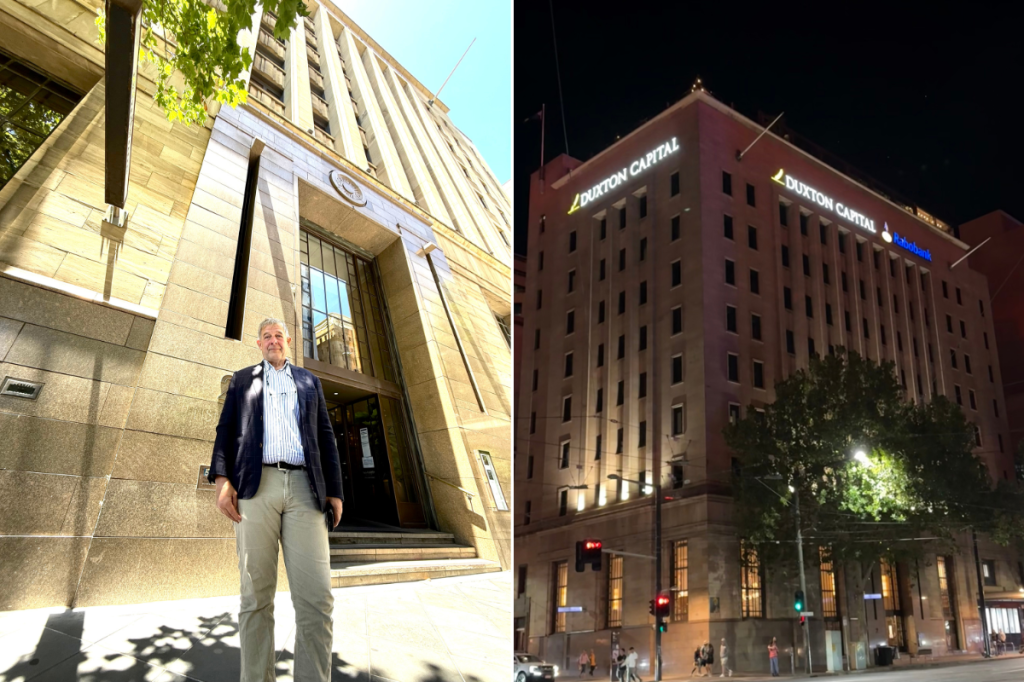
As he left the building, hoping he’d used the correct fork, he turned left on Adelaide’s King William St and saw a for-sale sign on a six-storey Art Deco edifice next door. He rang the number on the sign and asked the price. [Comfortably under $10 million, but he declines to say exactly.]
“I’m standing there talking to this guy, looking up at this big, cool building over the road from the Governor-General’s house. They’re crazy. It can’t be that price. What the heck is wrong with this place?”
He phoned a “friend”. They bought.
Peter’s first project was to bring in a Dutch pension fund to invest in apple orchards and thus was born a fund called Duxton Apples.
The wine industry was in one of its cyclical slumps, and Peter got talking to Seppeltsfield winery owner Warren Randall. They could see a bounce coming. Macquarie Bank was selling a huge vineyard near Euston, in south-western NSW and didn’t want to deal with individuals, so Peter and Randall “went halvesies”, and bought it under the Duxton umbrella.
The Littore Wine Group was in receivership and put its 739-hectare vineyard at Wentworth in south-west NSW on the market.
“Warren and I felt a little bit uncomfortable doing it ourselves. So that’s when [tech pioneer and winery owner] Pete Kite, the US billionaire, came in.”
Legendary winemaker Dave Powell also joined, “and a whole bunch of other folks put their hands up”, says Peter. “All of a sudden, we’d set up another fund.”
Around 2016, Peter was talking to a friend about agriculture. “We’re talking about how water was different from farming assets. And how farming assets would have a much higher return on capital employed if they didn’t have heavy bits alongside them. And so born out of a glass of wine on a rainy autumn afternoon came the idea of spinning the water out of the vineyards, listing it, and raising more money as a vehicle.”
Thus was born Duxton Water, which was listed in September 2016. “It’s outperformed the stock market in terms of net asset value; it’s outperformed the bond market. I’m the biggest shareholder in it. I have about 8%.
“I don’t have unlimited resources. But this is one of those things I believe in.”
Going nuts
They were still working on creating Duxton Water when Peter’s Singapore colleagues mentioned that they were looking at agricultural land in Africa and sent through land valuations.
“I was looking at that and thinking, ‘Wait a second. That’s more expensive than I’m looking at here in Australia.’ A light went on, and I made the guys look at Latin America, the US of A, and just benchmark everything.
“We [Australia] were so much cheaper than anything else. We were cheaper than Ukraine, and we had rule of law. Holy moly! Then we looked out over a 10-year cycle. What does broadacre yield here? And we came out double-digit. Which you need because in broadacre, you’ll have two years of shit, two years of okay, a year of appallingly bad, and then a year of appallingly great.
“If you put 50 million bucks into farms, you can have a year where you make $50 million, but that needs to compensate for years where it’s pretty ordinary.”
He got some investors together, bought about $70 million worth of farmland and Duxton Broadacre Farms was listed on the ASX in February 2018.
“Our thesis was absolutely correct,” says Peter. “Broadacre land… normalised with the rest of the world. So, the underlying performance was nothing short of extraordinary.” They sold.
Duxton Broadacre changed its name to Duxton Farms in 2022. The proceeds of the sales went to buy assets held by various other Duxton entities, notably Duxton Nuts, where he’s looking at pistachios and walnuts, and definitely not almonds. “With walnuts, I’ve got a 100-year tree life, as opposed to almonds where I only have 16 years. I can get a 20% to 30% free cash yield off my walnuts. Pistachios, we’ve got a 40% free cash yield.
“The good news with both pistachios and walnuts is we’re in a long-term structural shortage. If you look at where walnuts have been planted in the world, every single area is water-stressed. Pistachios… Iran is the biggest producer of pistachios. They’re in a long-term drought, and their groundwater is pretty much exhausted. So that’s going to collapse.
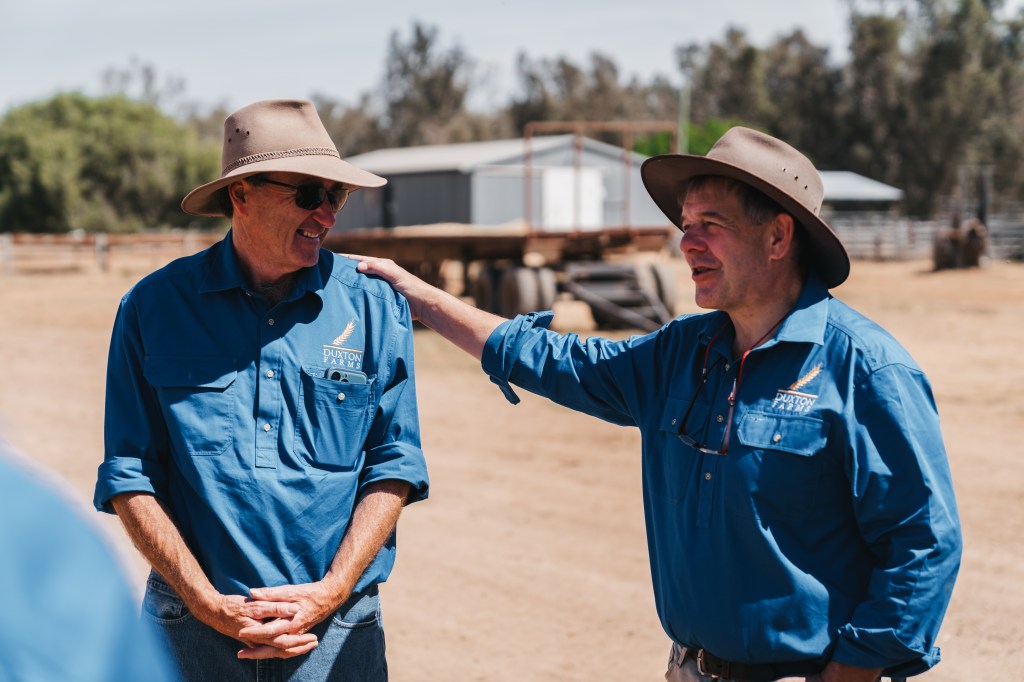
He says Duxton Farms has about 35% of Australia’s dried-fruit plantings and 40% of walnut and pistachio plantings. “Australia used to be the biggest producer of dried fruits in the world. We got gazumped by cheap labour in Turkey, but all the kids in Turkey have left the countryside and gone to the cities – and the Central Valley, California, has no more water. We thought, there’s going to be another opportunity here. We’re now the biggest dried-fruit grower in this country.”
It takes seven years for pistachios to bear cash, a little less for walnuts, says Duxton’s portfolio manager James Shopov. “We’ve spent 10 years building up a lot of assets, and those assets are now starting to mature and move through this cashflow generative cycle, which is going to be very, very exciting from a … profitability standpoint.”
Shopov is in the midst of explaining how Duxton is looking to dive into the carbon market when Peter interrupts. “Apologies for talking over you. What’s important for us is to look at how does that asset perform in an inflationary environment. We’re going to see inflation coming down the path at us. We have printed far too much money for far too long.”
Everything in the portfolio has to do well in an economic disaster, he says.
“If you put a pin in the bubble and we see the bond market go up its own backside, or the equity market revert to more normalised valuations, our assets do well. It doesn’t mean they’re going to be totally unaffected when the world goes into pain. But ours, relatively – and wealth is all relative – do extremely well.
“I’m 62, and I’ve not seen a full economic cycle yet,” says Peter. “The debt that we’ve created on this planet mathematically cannot be paid back. There’s only one way to get out of this – that’s inflation and/or economic crisis.”
Peter picks a pokie play
The Peters bought their first pub, their local at Crafers, soon after moving there in 2012, then the abandoned Uraidla Hotel, 7km to the north, in 2016. Julie took that on as her pet project, bringing it up to modern boutique brewery standards.
Having familiarised himself with South Australian hotels, Peter looked around and thought everything looked cheap. He squinted, and pubs still seemed underpriced. During COVID-19, they became irresistible.
Peter says that the influence of anti- gambling MP Nick Xenophon had caused people to see poker machines as an unsafe investment in the state. “Our pokies became the cheapest gambling in the country.”
The price of one machine dropped from more than $100,000 when he bought the Crafers Hotel, to “just over $10,000” during the pandemic.
In 2020, Peter started Duxton Pubs, an unlisted public company that now has 25 hotels in the portfolio, all in South Australia, employing some 2000 people.
“Remember, I like buying things cheap. A [pub] leasehold on the eastern seaboard would set you back between 12- and 16-times earnings. I’m buying freehold going concerns at sub-10-times earnings.”
Peter thinks the 600 poker machines that he bought for around $20,000 each have an actual economic value of $800,000.
“The flip side of that is our machines will go up. We thought they were very cheap. Now, I don’t like gambling. I think it’s a tax on the poor. The flip side of that is for my investors, we’re going to do the best we can.”
This story features in Issue 24 – out now. Tap here to secure your copy.