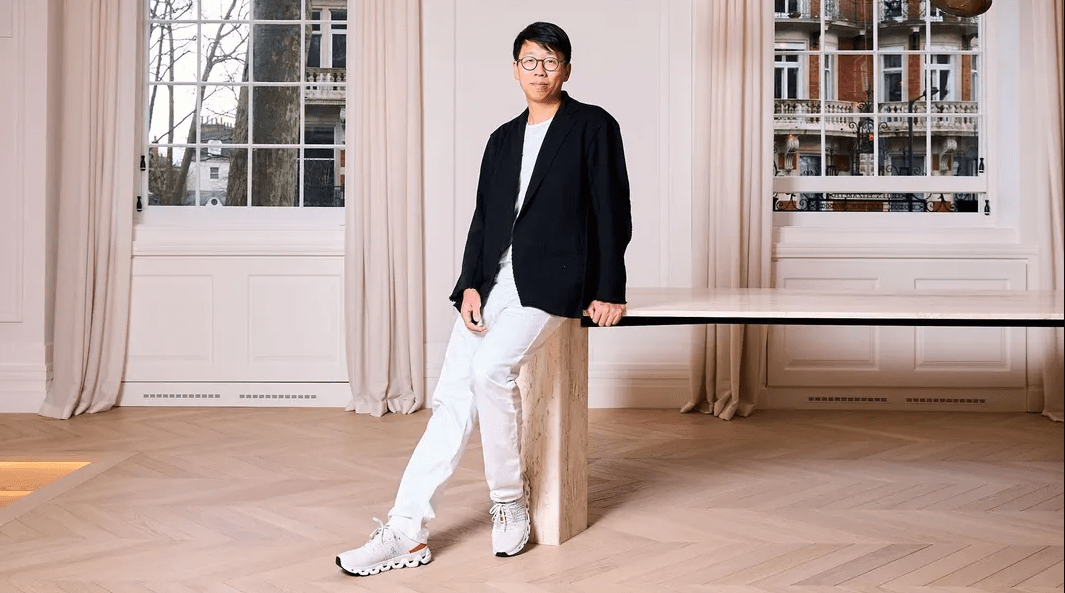
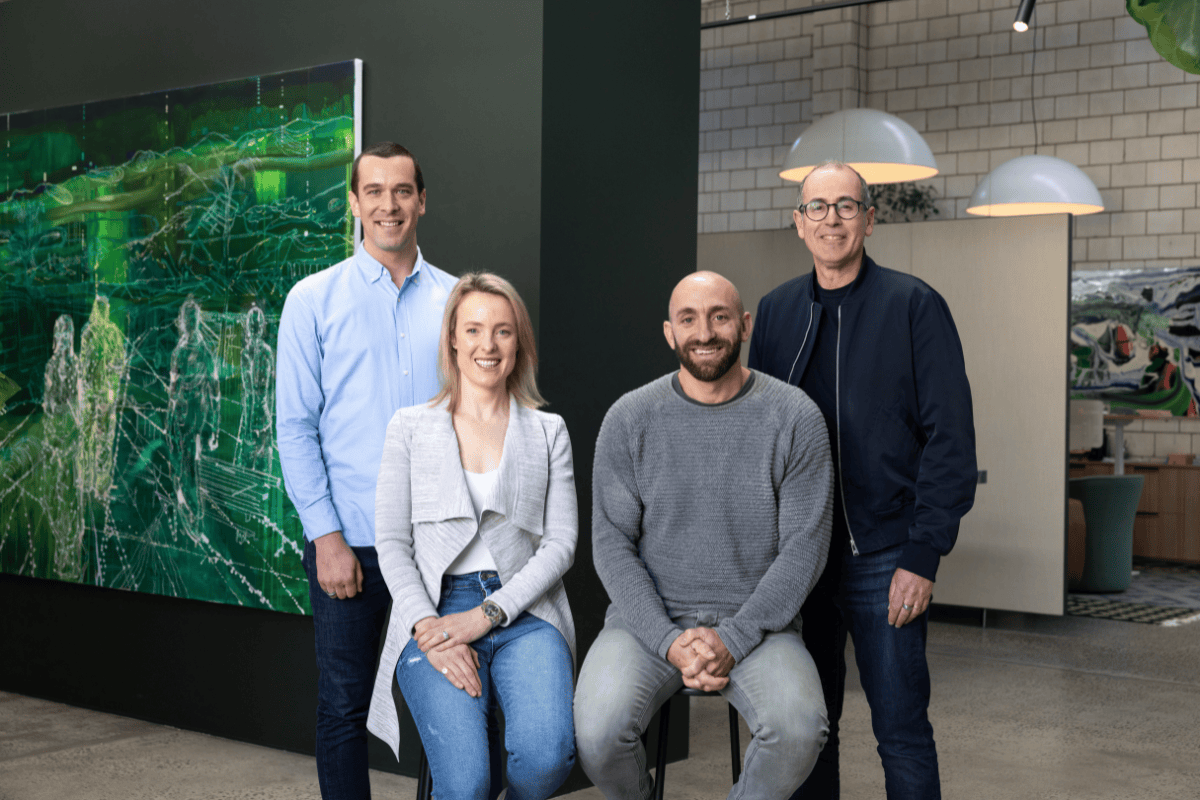
Loong Wang’s Metal is a Melbourne-San Francisco startup that raised a huge $37 million seed round. The startup was incubated by Airwallex founder Jack Zhang himself, and the fintech unicorn is its biggest backer.
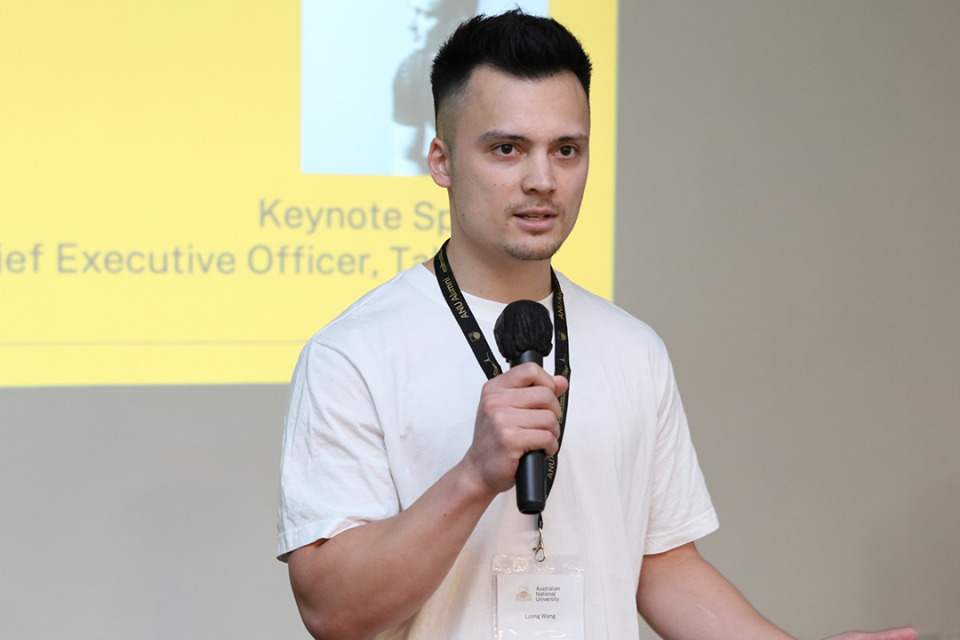
It is no secret that cryptocurrency infrastructure has issues. Consider the retail experience: You walk to your local and buy a coffee using a tiny fraction of Bitcoin. The merchant now has your digital wallet details. Because blockchains are public, they can now see exactly what’s in it – plus your complete transaction history.
This issue, troubling for everyday punters, is a non-starter for businesses and institutions. And it is one of many problems Loong Wang hopes to solve with Metal, a blockchain startup he co-founded with former Meta VP Catherine Porter.
“There’s so much inefficiency in the global financial system, and we’re big believers that blockchain is the technology to remove those inefficiencies,” Wang said. “One of the big challenges for institutions adopting this technology is that the infrastructure is not institutional.”
Metal is a “blockchain for banking.” It has started by building infrastructure for stablecoins, cryptocurrency tokens pegged to fiat currency like the US dollar, but is also working to facilitate asset tokenisation, on-chain compliance and privacy. In essence, it is hoping to create a blockchain that institutions can actually transact on.
It has raised serious cash to realise its vision of making the blockchain more accessible to institutions, drumming up over $45 million for its seed funding round. That is larger than the average Australian Series B.
“If you can improve the efficiency of the global financial system by a single percent, you’ll build a trillion dollar company,” Wang said. “When that is the size of the prize, tens of millions of dollars of investment is actually pretty conservative.”
It is chasing others who are racing for the same prize. Goldman Sachs, Microsoft and BNP Paribas were among a consortium that in 2023 partnered with New York-based Digital Asset on Canton Network, a blockchain tailored for financial institutions. Meanwhile, Stripe incubated the Tempo blockchain last year alongside crypto company Paradigm.
Metal’s biggest backer is Airwallex – which is increasingly hoping to compete with Stripe. The Australian fintech unicorn led Metal’s seed round alongside Capital49, a venture firm established by Airwallex’s co-founders. Metal was itself incubated by Airwallex co-founder and CEO Jack Zhang who, despite long-term hang-ups around cryptocurrency, by the beginning of this year was considering creating a blockchain company but was in need of someone to lead it.
“I had been introduced to Jack through a mutual friend of ours when he had been thinking about what the stablecoin space looked like,” Wang said, “so we got talking, rapidly became friends, and decided we should start something here.”
The startup and its staff of around 20 are spread across San Francisco and Melbourne. Wang, who studied at the Australian National University, splits his time between the two cities. Melbourne is where much of Metal’s R&D happens, he said.
‘Can’t take the blockchain out of the boy…’
When Wang began discussing the possibility of a crypto venture with Zhang, he was already leading a startup he had founded three years earlier. Singapore-based QDX simulates nascent quantum computing work on drug discovery.
QDX, which has ties to Wang’s alma mater, the Australian National University, develops what it calls “high performance quantum chemistry software” – and in 2024 Wang’s co-founder led a team that won the Gordon Bell Prize, known as the “Nobel Prize of supercomputing”.
One cancer treatment it helped Nasdaq-listed Prelude Therapeutics design is currently in clinical trials, and Wang remains on QDX’s board.
“You can take the boy out of the blockchain, but you can’t take the blockchain out of the boy,” Wang said of his decision to return to crypto tech.
That is where his entrepreneurialism began. In 2017 Wang founded Republic Protocol, later renamed Ren Protocol, while living in Canberra. The decentralised finance technology was centred on “wrapping” Bitcoin so that it could be used on other blockchains.
In 2021, at the height of pandemic-era crypto froth, it was bought by Sam Bankman-Fried’s Alameda Research. Wang oversaw the team’s transition into Alameda, but departed before Ren was wound down amid the collapse of FTX and Bankman-Fried’s wider crypto empire.
Wang declined to disclose the terms of the deal, saying only that Ren was a “commercially successful” venture for him. He was happy to leave the crypto industry, saying it was immature at the time. Now, with unhelpful froth flushed out of the industry, he is eager to fix thorny issues that stop banks and other institutions from jumping at the tech.
Beyond the privacy issue illustrated by the coffee merchant snooping on your transaction history, there is also the matter of compliance. Today, Wang notes, if someone has your wallet address, there’s nothing that can stop them sending you funds even if you don’t want them to.
“If you’re a sanctioned entity, I don’t want to receive money from you,” Wang explained. “Maybe I agree to do business with you, but I only want access to a certain part of your revenue. Maybe you’re an advertising platform, and I’m willing to bank your normal advertising revenue but for whatever reason I’m not willing to bank your gambling advertising revenue.”
“There are these really complex and nuanced questions that most people aren’t thinking about when it comes to how do you get institutions to adopt blockchains.”
Airwallex’s crypto U-turn
Airwallex’s involvement with Metal is part of an about-face for Zhang, who has a long history of crypto scepticism.
“After 15 years, I still haven’t seen a single use case where crypto has meaningfully helped solve a real problem,” he wrote on LinkedIn last June. As recently as March, Zhang questioned the utility of stablecoins, noting that it is both cheaper and quicker for Airwallex to move money around on the infrastructure it built than to use the blockchain.
A source inside Airwallex, granted anonymity to speak freely, said Zhang is still not a crypto convert, but with both customer demand and regulatory clarity rising he is willing to integrate the technology into Airwallex’s platform.
In July, Airwallex poached Coinbase VP Dan Kim to lead its agentic banking operation. While stablecoins are useful in countries with “unreliable banking or high inflation,” Kim wrote in August, it’s difficult for businesses to pay suppliers or staff with them. Airwallex is uniquely positioned to provide that service, Kim wrote. It will also integrate stablecoins into its agentic banking.
It is exploring both with the help of Metal.
“They have a thesis internally as to why they think this infrastructure is necessary and why they don’t think existing infrastructure is going to work for them,” Wang said. “When you want to be a customer of something that doesn’t exist, is it a very natural thing to want to invest in it because you know you’ll benefit from the upside.”
Want to see more Forbes articles on your feed? Tap here to make Forbes Australia a preferred source on Google.
Look back on the week that was with hand-picked articles from Australia and around the world. Sign up to the Forbes Australia newsletter here or become a member here.