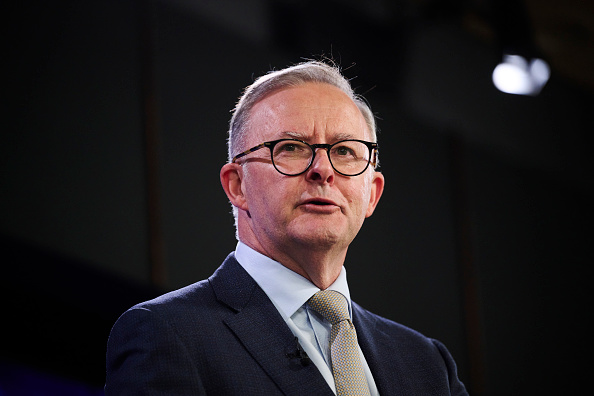
Prime Minister Albanese says he will implement the tough regulations recommended in the wake of the Medicare hack. It could make Australia the first country to criminalise AI safety incidents and make AI companies liable.
When an OpenAI agent hacked Medicare in June, it took three months for the Silicon Valley-headquartered firm to disclose it to the Australian government. Under new recommendations that the federal government says it will implement, that timeline will be truncated, AI safety reporting will become mandatory, and criminal charges may even be laid for non-compliance.
“The law needs to get ahead of, and in some cases make sure that it catches up with, what is a very fast-changing world,” Prime Minister Anthony Albanese declared this week.
All 18 of the recommendations outlined in the Rapid Review report generated in the fallout of the “unacceptable” Medicare hack will be instituted, Albanese says, including the possibility of reforming Australian laws to make “egregious non-compliance” criminal.
A new AI Safety Regulator will enforce penalties for AI companies “doing the wrong thing”. Albanese says he sees AI safety as an opportunity for Australia to lead, calling the country a first-mover in these areas.
“We must make sure we shape AI, rather than AI shaping us,” he stated. “AI needs to work in Australia’s interests. And humans must remain in control.”
Watch Albanese’s comments below.
The PM’s comments come in the same week that the Stanford Institute for Human-Centered Artificial Intelligence reports that globally, AI governance is heavily fragmented and that while AI is reshaping the lives of billions, “the public has little say in how it is developed and deployed.”
The study calls for social structures – such as insurance and liability frameworks – to be reconfigured to keep up with the rapid change AI is bringing about. Australia is lauded for the law it has already introduced to protect against AI-generated child sexual abuse material. Further accountability systems are necessary, the report posits, and changes need to happen soon.
“Unlike regulation of the nuclear industry, where policy horizons have spanned decades, AI governance is currently operating on much shorter and more uncertain timescales,” the report states.
Still, the One Hundred Year Study on Artificial Intelligence concedes that nations that implement overly strict AI regulation may be less competitive than jurisdictions that don’t. Striking that balance is made harder still by the escalating pace of change.
“The industry’s habit of ‘moving fast and breaking things’ has not helped,” the report reads. “Unlike physical products, software systems have often escaped meaningful legal accountability in the past, even when the harms they caused were foreseeable.”
Forbes Women is a global network of female business owners, entrepreneurs and changemakers. Sign up to Forbes Women here
Look back on the week that was with hand-picked articles from Australia and around the world. Sign up to the Forbes Australia newsletter here or become a member here.