Making AI Real: How IBM’s David Ellis is guiding corporate Australia into its next era

David Ellis has built a career steering organisations through waves of change. Now, as Managing Partner of IBM Consulting Australia, he’s focused on guiding corporate Australia through its next transformation: the age of AI.
BRANDVOICE – PARTNER CONTENT
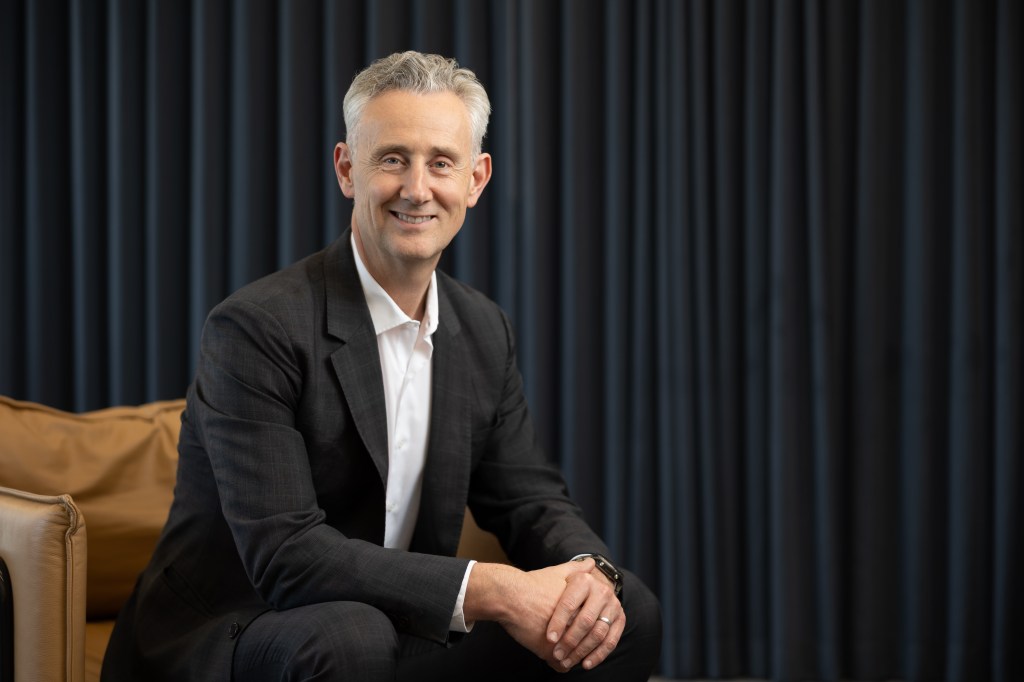
When David Ellis began studying chemical engineering at the University of Cambridge in 1993, he hadn’t sent an email or used a mobile phone. By the time he graduated, the internet had upended how the world communicated, and the idea of building oil refineries no longer appealed.
“I wanted to be part of this new wave of innovation,” he says. That decision would see him embark on a three-decade career leading transformations across various industries, including telecoms and technology, as well as global consulting.
Ellis says he’s built a career at the intersection of technology and change. At Telecom New Zealand in the mid-2000s, he found himself in the middle of what he calls, “the largest peacetime mobilisation of resources in New Zealand’s history,” overseeing a $3 billion transformation program. He was in his early thirties at the time. “It was a wild ride,” he recalls. “We had to rebuild the business and IT platforms, launch new networks and comply with new regulations all at once.”
He credits that period – and an “extraordinary” mentor, Frank Mount – with shaping his approach to leadership. “He taught me how to remain calm and maintain perspective. You can’t really rattle someone who’s been through the Vietnam War and has a Purple Heart to show for it.” The experience, he says, taught him the importance of pairing young problem-solvers with experienced and technical operators. “That combination made it work.”
After leading transformation programs at Accenture across the Asia-Pacific region and then joining Bain & Company to head its local telecommunications, technology, and media practice, Ellis received a call from IBM. “The question was, could I not only advise on transformation but actually run a business going through one? That was the appeal,” he says.
At IBM, Ellis oversees a services business that spans consulting, systems integration and outsourcing. The mandate is to help clients navigate what he calls “the next great disruption”: the rise of artificial intelligence. “I feel incredibly lucky to have lived through one of these cycles before, during the birth of the internet,” he says. “AI feels like that again, but moving faster.”
“As organisations scale AI, they face questions around trust, data sovereignty, security and cost. Every company needs to understand which models they’re using.”
David Ellis
IBM, he points out, isn’t new to AI. In fact, “We were in the room when the term ‘artificial intelligence’ was coined in the 1950s,” he says. “We’ve been involved in almost every major milestone since.” Ellis says the company’s long history underpins its message to the market: making AI real.
For Ellis, that means moving beyond experimentation to measurable business value. “A lot of organisations are stuck in proof-of-concept purgatory. They’ve run pilots, but they haven’t yet seen meaningful returns. Our role is to help them scale.”
He describes three horizons of AI maturity: personal productivity, workflow optimisation, and finally, using AI to drive innovation and growth.
Personal productivity, Ellis says, is using everyday tools like Co-pilot to draft documents or summarise meetings. “That’s useful, but it’s not a source of competitive differentiation. Everyone will have those tools, just like everyone uses email now.”
Embedding AI in workflows to improve efficiency and accuracy is next, and Ellis says IBM is the proof in the pudding. The company analysed US$20 billion in addressable costs across functions such as finance, procurement and HR, redesigning 70 workflows. “We applied a simple mantra: eliminate what we don’t need, simplify what we can, and AI-automate the rest. It’s delivered benefits of about US$4.5 billion.”
That internal program (IBM’s “Client Zero” story) is now being replicated for customers. “Having done it yourself gives you credibility. You know what works and what doesn’t,” he says.

But the third horizon is where corporations will have the opportunity to truly stand out. “That’s where businesses start rethinking their models,” Ellis says. “If you take something as simple as booking a flight, an AI agent could now handle that entire process – understanding your preferences, calendar and constraints. Suddenly, an airline isn’t just designing experiences for people but for agents talking to other agents. That changes how you design, price and deliver services.”
The challenge, Ellis says, is getting there safely: “As organisations scale AI, they face questions around trust, data sovereignty, security and cost. Every company needs to understand which models they’re using, how data is curated, and how to eliminate bias. There’s also cost and carbon footprint to consider. You don’t need a Formula One car to go to the supermarket. Sometimes a bike with a basket will do, and the AI equivalents certainly exist – although not yet widely adopted.”
Ellis sees his role as equal parts strategist and coach. “AI absolutely affects people, and every leader has to think about how to future-proof their workforce.” The qualities that matter most, he says, aren’t technical. “Learning agility and resilience are critical. You can’t know today what skills you’ll need in five years. Curiosity and adaptability are everything.”
He is also vocal about the importance of stewardship. As a father of two teenage daughters, Ellis says he’s conscious of the example today’s leaders set. “There’s a temptation to think AI means you should stop hiring graduates by automating all junior work. We’re taking the opposite approach: we’re actually hiring more. The potential of someone six months into their career, armed with these tools, is enormous. Our job is to help them become the most effective versions of themselves.”
He sees echoes of the late 1990s in the current moment: excitement, experimentation, and uncertainty about what comes next. But he says corporate Australia is only at the start of its journey, and while immediate gains might feel incremental, the long-term change will be profound.
“Every company is asking the same questions – how do we build capability, how do we scale safely, how do we create value? The ones that get it right won’t just be more efficient; they’ll be entirely different businesses.”
Learn more at ibm.com/consulting