Why biohacking is going mainstream in Australia

The next frontier of performance lies in your cells. Melrose FutureLab translates advances in longevity science into a new morning ritual for boardroom managers.
BRANDVOICE – PARTNER CONTENT

In the early 2000s, scientists studying Blue Zones – pockets of the world where people live extraordinarily long and healthy – thought they had cracked the longevity code. What emerged from their research was a simple formula for ageing well: stay active, eat less, embrace community and live with purpose.
Today, scientists are adding new findings to the list. They have looked deep inside the human body to uncover the mechanisms that may prompt our cells to rejuvenate, even as we age.
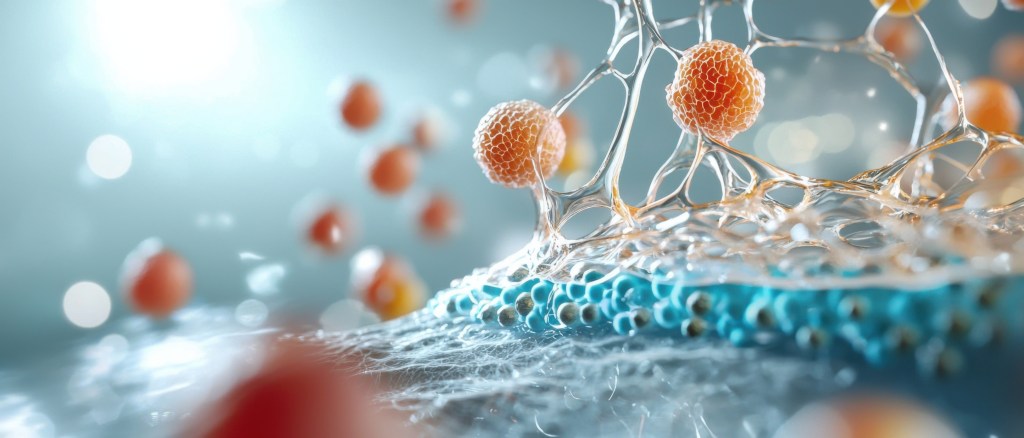
At the centre is a molecule found naturally in every cell, called nicotinamide adenine dinucleotide (NAD+). It only recently garnered attention when a flurry of new research highlighted NAD+’s role in maintaining youthful energy. The molecule is widely known as a core fuel for longevity and DNA repair.
For Melbourne-based FutureLab, these advances in bioscience have the potential to redefine our relationship with age. FutureLab and its parent company, Melrose Laboratories, are leaders in testing and developing novel nutritional supplements that may help Australians stay healthy for longer. Their goal: move longevity science from niche biohacking to mainstream business strategy.
“The science is moving very, very quickly,” says Neal Mercado, FutureLab’s chief executive and former chief science officer. He says the coenzyme NAD+ has long been known to power more than 500 reactions inside every cell. “We’ve understood its role in cellular energy for decades, but we’re just starting to grasp how central it is to longevity, cognition and optimising your health,” he says.
The human body naturally produces NAD+ all the time. As we age, this reservoir shrinks. However, scientists have found clues on what may replenish our body’s NAD+ storage.
The picture is still emerging. There is evidence that exercise can boost NAD+ levels. So can ice baths, cold ocean swims, intermittent fasting and infrared saunas.

“There’s a saying that we’re all in a car heading towards a cliff. None of us can stop death, but we can slow the car down,” says Mercado, who turned 52 this year. He has spent his entire career in the herbal medicine and health supplement industry, including as Chief Science Officer for Melrose FutureLab before becoming the company’s CEO in February.
Mercado keeps abreast of every new longevity study that emerges: “What’s gotten me interested is the promise of some of these ingredients,” he says.
“To the average consumer it all looks the same. You’ve got all these complex sounding molecules and names, but it actually matters which one you use.” – Neal Mercado
Some findings prove puzzling. Scientists know our cells make NAD+ from vitamin B3, and a healthy diet of B3-rich foods like chicken, fish and whole grains is essential to maintaining baseline levels. But research shows that simply eating more B3, or taking high-dose B3 supplements, has limits: the body tightly regulates how much it converts, and any excess can cause unwanted side effects.
“There’s a fallacy that simply taking more vitamin B3 would help your body make more NAD+,” says Mercado.
A major breakthrough in the biology of longevity was the discovery that advanced forms of vitamin B3, like nicotinamide mononucleotide (NMN) or nicotinamide riboside (NR) can be a shortcut to boost NAD+ levels in cells.
The finding caused a global hype. TikTok influencers and Hollywood celebrities began to promote NMN therapies. Online shops popped up. Various capsules and powders started flooding the market, often from dubious sources with few credentials to match their claims.
“To the average consumer, it all looks the same. You’ve got all these complex-sounding molecules and names, but it actually matters which one you use,” says Mercado. “You get many products from overseas where you really have no idea what’s in there,” he adds.
In Australia, NMN supplements are brand-new shelf items
Only in December 2025 did the country’s medicine regulator, the Therapeutic Goods Administration (TGA), add NMN to its list of permissible ingredients. This means supplements containing NMN can now be sold at chemists and health food stores, provided they pass a myriad of safety tests. Melrose FutureLab was the first to take this quality hurdle. It now ranks as Australia’s best-selling NMN supplement and brand, according to data analysis firm IQVIA.
Its new flagship product, Daily Longevity Stack, goes further. It packs 16 active ingredients with clinically demonstrated benefits for cellular energy, cognitive function, muscle strength, nervous system and healthy ageing into “one single morning ritual”.
What makes it work, according to Mercado, is that every ingredient is backed by the latest longevity science. The formula uses the same doses as in clinical trials (see box).
Typical customers of FutureLab are health practitioners. Others are people like Mercado: busy, middle-aged managers who are well-informed and health-conscious. They understand the potential and limits of longevity science.
“Supplements aren’t the only answer. They are one part,” says Mercado. “The other part is looking after yourself and your fitness.”
Melrose Health: from family business to FutureLab
Melrose began in 1979, when Australian pharmacies stocked almost no natural products. Chemist Geoff Steinicke decided to change that. He began importing flaxseed oil and other natural supplements. Today, he is known as a pioneer who introduced liquid fish oil to Australia.
Over the past 40 years, Melrose has grown from a little business to one of Australia’s largest and most trusted health food brands with over 100 employees across two Melbourne manufacturing sites. Its newest brand FutureLab translates cutting-edge longevity research into accessible, high-performance nutrition.
What’s in FutureLab’s Daily Longevity Stack?
The powder contains 15 ingredients for healthy ageing, including:
NMN – 500mg/day, clinically validated to replenish NAD+ in the body, boost energy levels, DNA repair and immune function
Creatine monohydrate – 5g/day, a clinically relevant dose to increase muscle strength
AlphaWave® L-Theanine – 200mg/day, known to reduce stress and improve focus
MenaQ7® vitamin K2 (MK-7) – 180μg/day, shown to benefit bone strength
5-MTHF (Quatrefolic®) – 500μg levomefolic acid, shown to support a healthy nervous system and cognitive function
Visit melrosefuturelab.com to learn more about FutureLab Daily Longevity Stack.
DISCLAIMER
Always read the label and follow the directions for use. Vitamins and minerals can only be of assistance if dietary intake is inadequate. If symptoms persist, talk to your health professional. FutureLab Daily Longevity Stack is a TGA-listed complementary medicine (AUST L 523527).
Want to see more Forbes articles on your feed? Tap here to make Forbes Australia a preferred source on Google.
Look back on the week that was with hand-picked articles from Australia and around the world. Sign up to the Forbes Australia newsletter here or become a member here.