Redefining fertility care in Western Australia: How Oasis Fertility Centre is building a modern, patient-centred IVF model

In a state defined by distance and uneven access to healthcare, Oasis Fertility Centre is building a new kind of IVF model.
BRANDVOICE – PARTNER CONTENT
Australia’s fertility landscape is changing rapidly. Delayed parenthood, rising infertility rates, demanding work schedules, and growing awareness of reproductive health are reshaping how Australians approach family planning.
In Western Australia, those pressures are compounded by geography, workforce mobility, and uneven access to specialist healthcare – particularly for regional communities and fly-in-fly-out workers.
It is within this environment that Oasis Fertility Centre is positioning itself as part of a new generation of fertility providers: clinics that seek to combine advanced reproductive medicine with a more holistic, accessible model of care.
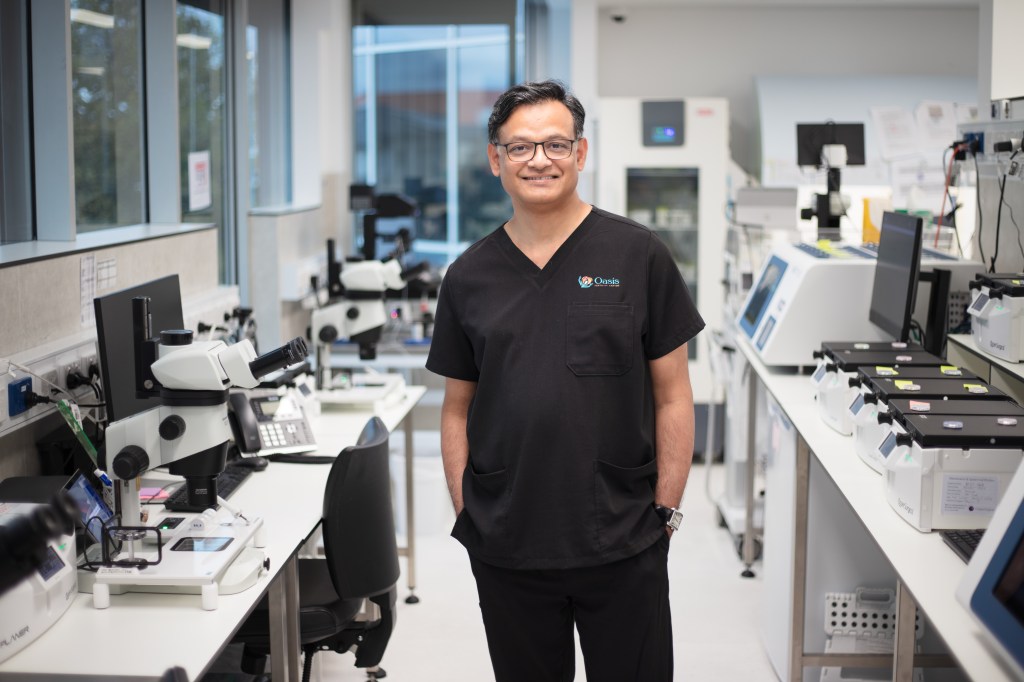
Founded by Dr Santanu Baruah alongside Scientific Director Melissa Vitorino, Lead GP Dr Jana Combrinck, and Director of Nursing Gemma Doig, the Perth-based centre has been built around a philosophy that fertility treatment should extend beyond laboratory science alone.
“Modern fertility care has to recognise the realities of modern life,” says Dr Baruah. “Patients are balancing careers, travel, financial pressures, mental health challenges, and complex medical issues – often all at once. Fertility treatment can’t operate in isolation from those realities anymore.”

That shift reflects a broader evolution taking place across healthcare. Increasingly, patients are looking for integrated models that combine clinical expertise with continuity of care, accessibility, and emotional support. In fertility medicine – where treatment can be emotionally and physically demanding – the need for that balance may be particularly acute.
Historically, IVF clinics have often been perceived primarily through a procedural lens: investigations, stimulation cycles, laboratory work, and embryo transfers. But Oasis Fertility Centre is attempting to position itself differently, with a model that incorporates counselling, mental-health support, nutrition, acupuncture, imaging services, and personalised treatment pathways into the patient journey.
A central part of that approach is the centre’s integrated fertility GP team, led by Dr Jana Combrinck. The idea is to create a more seamless experience between primary care and specialist fertility medicine – something Dr Baruah believes is increasingly important as reproductive healthcare grows more complex.
“Many patients enter fertility care after years of fragmented experiences,” he says. “They may have seen multiple providers, managed underlying health conditions, or struggled to navigate when and how to seek specialist support. An integrated GP and fertility model helps create continuity and comprehensive care from the very beginning.”
The approach also strengthens collaboration with referring GPs across Western Australia, helping patients access earlier assessment, preventative reproductive healthcare, and more coordinated treatment planning.
Fertility for a fly-in-fly-out life
Accessibility is another issue the clinic has placed at the centre of its strategy. Fertility care remains difficult to access for many Australians, particularly in geographically large states such as Western Australia. Distance, travel requirements, work commitments, and treatment complexity can all become barriers to care.
Oasis describes its mission as reducing those barriers through multiple locations in Perth, flexible scheduling pathways, and integrated service delivery.
That focus is particularly relevant to Western Australia’s FIFO workforce. The mining and resource sectors employ thousands of workers operating on irregular rosters and extended remote schedules – conditions that traditional healthcare systems are rarely designed around.
“FIFO workers face unique challenges when it comes to fertility treatment,” says Dr Baruah. “Appointments, monitoring, timing – everything becomes more difficult when patients are flying interstate or spending weeks away from home. We wanted to design systems that acknowledge those realities rather than forcing patients into rigid pathways.”
According to the clinic, this has led to the development of more flexible treatment structures aimed specifically at FIFO patients, with greater emphasis on scheduling adaptability, communication, and continuity of care.
At the same time, the organisation is attempting to balance accessibility with what it describes as an “affordable premium healthcare” model. In a healthcare environment where fertility treatment is often viewed as financially and emotionally overwhelming, Oasis says it aims to provide high clinical standards and advanced technology while maintaining a patient-centred and transparent approach.
That balance between technology and accessibility is increasingly becoming a defining theme across fertility medicine globally. IVF laboratories today operate in an environment shaped by precision monitoring systems, digital technologies, data-driven treatment planning, and increasingly personalised protocols.
Oasis has invested heavily in what it describes as a state-of-the-art laboratory ecosystem, with advanced reproductive technologies, precision-controlled environments, and digital monitoring systems designed to maximise safety and quality control.
The clinic also highlights rigorous verification and monitoring systems throughout the patient journey, from testing through to embryo transfer.
For Scientific Director Melissa Vitorino, the future of fertility care lies in combining scientific precision with individualised treatment.

“No two patients are the same,” she says. “Modern fertility care needs to be highly personalised – not just medically, but in how we communicate, support, and guide patients through treatment.”
That personalised approach reflects another emerging trend within reproductive medicine: moving away from one-size-fits-all treatment pathways toward care tailored to each patient’s biology, lifestyle, and reproductive goals.
Importantly, the clinic avoids framing fertility care around guarantees or simplified success narratives. Instead, its messaging focuses on safety systems, evidence-based care, and long-term patient relationships – an increasingly important distinction in a highly competitive IVF sector.
Community engagement also forms a significant part of the organisation’s identity. Oasis positions itself not simply as a fertility provider but as a broader healthcare partner working alongside local GPs, allied health professionals, and support networks.
That may prove particularly important as fertility awareness becomes a larger public health conversation. Male infertility, delayed parenthood, fertility preservation, and lifestyle-related reproductive issues are all receiving increasing attention, both medically and socially.
For Dr Baruah, the future of fertility care will depend as much on accessibility and education as on scientific advancement.
“Technology is transforming fertility medicine,” he says. “But equally important is creating systems that patients feel comfortable accessing – healthcare that is compassionate, collaborative, and designed around real lives.”
As Australia’s reproductive healthcare sector continues to evolve, clinics like Oasis Fertility Centre are betting that the future of IVF will not be defined solely by technology, but by the ability to combine scientific innovation with human-centred care.
Learn more at Oasis Fertility Centre
Want to see more Forbes articles on your feed? Tap here to make Forbes Australia a preferred source on Google.
Look back on the week that was with hand-picked articles from Australia and around the world. Sign up to the Forbes Australia newsletter here or become a member here.