Transforming a tech titan: Why MYOB’s betting its future on AI

MYOB revolutionised accounting for small to medium-sized businesses, but the emergence and rapid growth of AI has led the veteran start-up to radically redesign its solutions to support businesses across Australia and New Zealand.
BRANDVOICE – PARTNER CONTENT
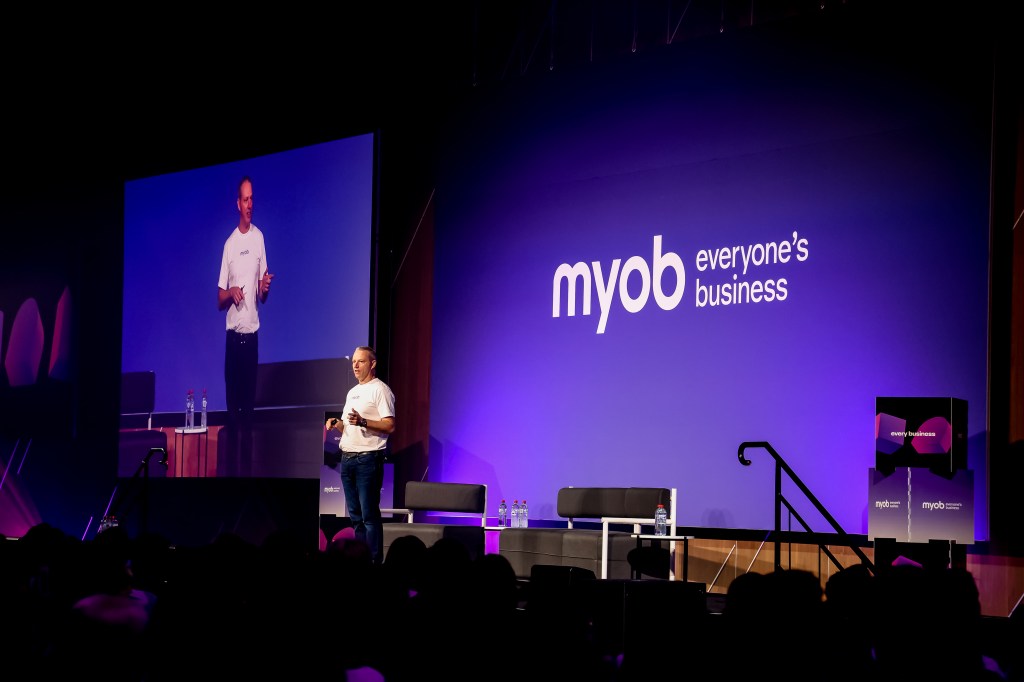
As one of Australia’s first tech unicorns, MYOB’s pedigree as a stalwart of the crowded small-to-medium enterprise (SME) market is unquestionable. But along with many other businesses across the technology spectrum, artificial intelligence (AI) has introduced an inescapable reality for the company: survival requires a new approach.
“The AI era will be unforgiving,” says the company’s chief executive, Paul Robson, who predicts AI and robotics will be the biggest business game-changers for generations. Early data backs up his point, showing how quickly SMEs have adopted the technology. By 2025, 68% of SMEs with between 20 and 199 employees were using AI in their business, according to the Department of Industry, Science and Resources’ AI Adoption Tracker. Close to a quarter of those surveyed said they were using it to drive decision-making.
As MYOB enters its 35th year, the Melbourne-headquartered firm is meeting the challenge by embarking on one of its boldest journeys yet: using AI to handle the bulk of the work the company was founded to do. AI will sit at the centre of everything from payroll processing to compliance.
Robson describes it as a bold strategy, which will allow the company to refocus its creative energy on serving its business customers in new ways.
It’s one of the company’s biggest bets yet, but its CEO is confident it will pay off.
“The future demands more than improvement. It requires reinvention,” he says. “We don’t see AI as an add-on to the way we currently do things. We see it as an opportunity to completely flip the script and re-imagine the type of technology partner SMEs really need in the future.”
The innovator’s dilemma
MYOB believes it and its software peers have been facing a phenomenon known as the “innovator’s dilemma”, first coined in the 1990s by Harvard professor and businessman Clayton Christensen.
The premise is simple: disruptive new technology enters and threatens market share, even if incumbents are essentially doing everything right.
The challenger technology incrementally lifts a product offering until it can snatch away customers and share.
According to Christensen, the large player’s opportunity to offset the threat lies in its ability to mirror the strategy with an agile approach.
“We are confronting the innovator’s dilemma head-on and rebuilding as an AI-native business platform for SMEs and mid-market businesses,” says Robson.
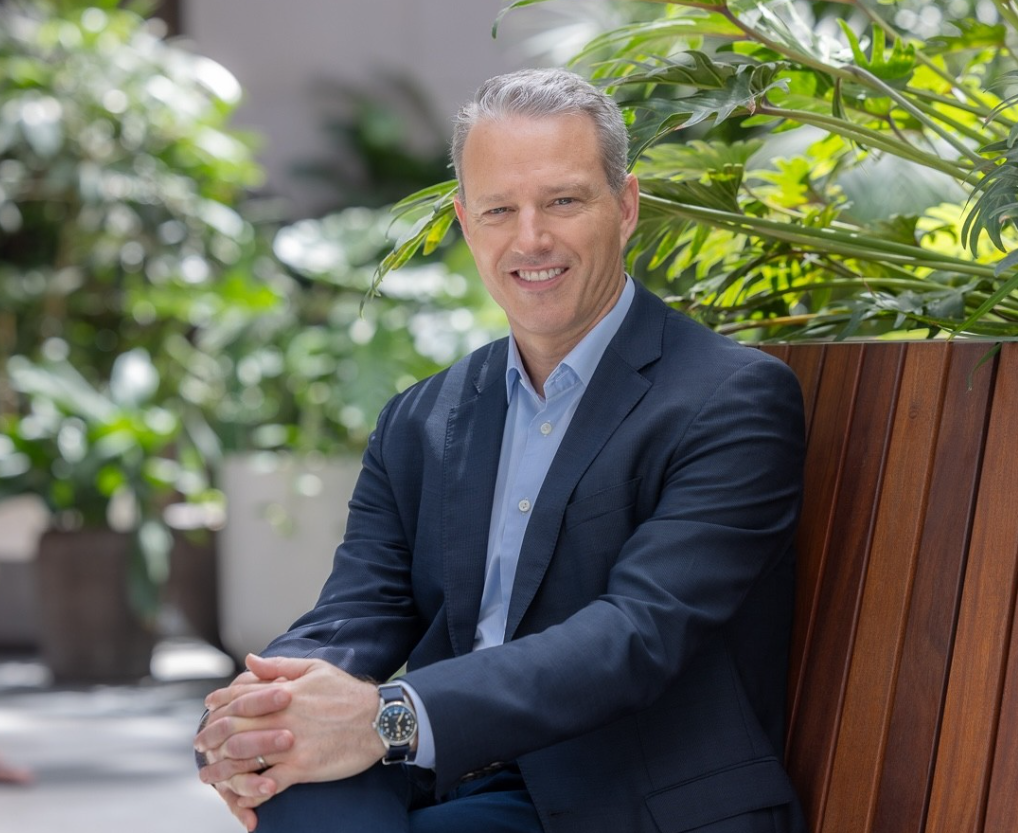
To truly tackle the threat, MYOB has acted swiftly to ensure it has the best opportunity to differentiate itself, while ts new technology challengers – under Christensen’s theory – act incrementally.
“Businesses like ours aren’t held back by our history, we’re strengthened by it. In the AI era, the real edge belongs to businesses with a long track record of success and deep customer trust.”
“In designing our business to be AI-native we’re in a unique position to leverage technology and insights to deliver an exceptional experience for our customers, completely reshaping the future direction of MYOB.”
Robson is well aware of market rhetoric suggesting “SaaS (Software as a Service) is dead” in the age of AI, but he rejects the premise as a blanket statement.
“Some SaaS businesses will face extinction; others will use AI as the catalyst for their strongest decade yet,” he says.
“Our willingness to re-architect around AI places us firmly in the latter camp.”
Self-disruption
For the Australian and New Zealand software company, the emergence of AI as either a potential competitor or an enabler required its second major mindset shift and reinvention in just a few years.
Major technology transitions aren’t just technical shifts. They require careful stewardship of customer trust.
“The shift from desktop to SaaS was MYOB’s first major reinvention, consolidating accounting, payroll, payments and operations into a single, data-rich ecosystem,” says Robson, who took the helm of MYOB in 2023 following a president role at Silicon Valley’s cloud-based research and development company Benchling.
“We learned early on that a technology transition isn’t just about shipping new software. It’s about bringing customers with you — earning their trust, supporting them through change, and making sure the new world works better than the one they’re leaving behind.”
The chief executive describes the AI challenge as the “next era” in the company’s reinvention and a major one, strengthening MYOB’s solutions with automated functionality to deliver a seamless experience for customers.
“We don’t see AI as an add-on to the way we currently do things. We see it as an opportunity to completely flip the script…” – Paul Robson
The launch of MYOB’s AI strategy has been underway for nearly two years. The company developed its AI vision in 2024 and began training the entire team to use AI through its bespoke internal program, which it calls “AI Everyday”. Over 18 months, it then began embedding intelligent agents into existing customer processes and tools.
AI is now deeply embedded across MYOB’s SME offering, freeing up the team’s capacity to think creatively and solve customers’ other problems, including how they can grow their revenue and profitability. It will also allow the company to develop more features more quickly.
One example is AI BAS – a support agent that can help automate business activity statement (BAS) administration and flag anomalies that may need closer inspection. However, for MYOB itself, Robson doesn’t see AI primarily as a profitability play. Instead, it’s a way to create greater value for customers and to remain essential in a challenging technological environment.
“We’ve taken a fundamentally different approach to our strategy; one we believe sets us apart,” he says. “It is a live case study in what it takes for an established technology player to look disruption in the eye and choose reinvention over retreat.”
For more information on MYOB’s offering for sole operators to medium-sized enterprises, visit myob.com/au
Want to see more Forbes articles on your feed? Tap here to make Forbes Australia a preferred source on Google.
Look back on the week that was with hand-picked articles from Australia and around the world. Sign up to the Forbes Australia newsletter here or become a member here.