Roborock’s Quan Gang on why smarter robots should demand less from us

Roborock president Quan Gang on the future of intelligent home robots and why the real measure of innovation is giving people back time and freedom.
BRANDVOICE – PARTNER CONTENT

A smart vacuum cleaner works quietly in the living room, easily navigating everyday clutter as it sweeps across the floor. Meanwhile, domestic robots tidy bedrooms, organise clothes and remove rubbish from the kitchen.
That’s the future Roborock president Quan Gang imagines as he works to develop intelligent home devices that improve people’s everyday lives.
Roborock was founded on one principle that continues to guide every decision: technology should support the way people live, not make people adapt to technology.
Quan focuses on creating smart home helpers that save hours every week, giving people back time for better living. Success is measured by how much complexity they can eliminate from daily life.
“We believe a truly intelligent home should make automation more natural and intuitive, without making life more mechanical or smart devices more complex,” he says.
Designing smart robots for real homes
No two households are the same. Families with children, couples with two dogs, individuals living alone, and older families all have different needs. Since its inception in 2014, Roborock has invested significant time and resources into understanding people’s lifestyles and how home devices can be useful in different environments.
With this in mind, Roborock is developing robots that adapt better to their surroundings without requiring heavy user intervention. As Quan explains, “The next stage of autonomy is not making robots run more frequently but reducing the degree to which users need to manage robots.”
As products become more autonomous, performance and reliability will also matter more. “The more responsibility consumers entrust to robots, the more trust products need to establish through long-term stable performance,” says Quan.
Artificial intelligence creates a real opportunity to reduce the burden of programming and managing home robots. “In the past, a lot of judgment work was done by users. We needed to tell the robot when to start, where to go, what mode to use and how to respond to different situations,” he says.
“The real value of AI is the ability to create robots that solve more of these problems on their own, without constantly asking users what to do next.”
Consumer-led technology
Innovation starts with the problem itself. For example, can a technology allow robots to clean places that were previously inaccessible? Can it improve reliability, lower maintenance costs or ease people’s everyday lives?
“If the answers to these questions are not clear, then the technology itself, no matter how complex or advanced, is not enough,” says Quan.
Roborock is also guided by consumers themselves, who send clear signals about which features are truly suitable for their families, and which are just gimmicks.
For example, the company is tackling one of the major challenges to robot vacuum cleaners working better in people’s homes: floor clutter.
“A chair may be moved, a child may throw toys on the ground, a pet may suddenly walk across the room, or unexpected liquid may appear at any time. AI makes it possible for robots to understand more of this environmental information and make appropriate judgments independently,” Quan says.
“If we can solve this long-standing, core challenge, it will completely change consumers’ expectations of the boundary of robotic vacuum cleaner capabilities,” he adds.
But removing something as simple as a sock requires a highly intelligent robot that can identify the object and has the mechanical means to remove it, rather than just navigate around it.
Roborock is making real progress toward creating robots with greater mobility and richer environmental understanding. Saros Z70 is the first robotic vacuum cleaner equipped with an OmniGrip robotic arm capable of tidying up small items in the home. Its Saros Rover, unveiled at CES earlier in the year, uses an AI-driven wheel-foot combination to navigate stairs.

“It’s exciting because if future robots can handle these tasks reliably, consumers will really understand why they’re valuable,” he says.
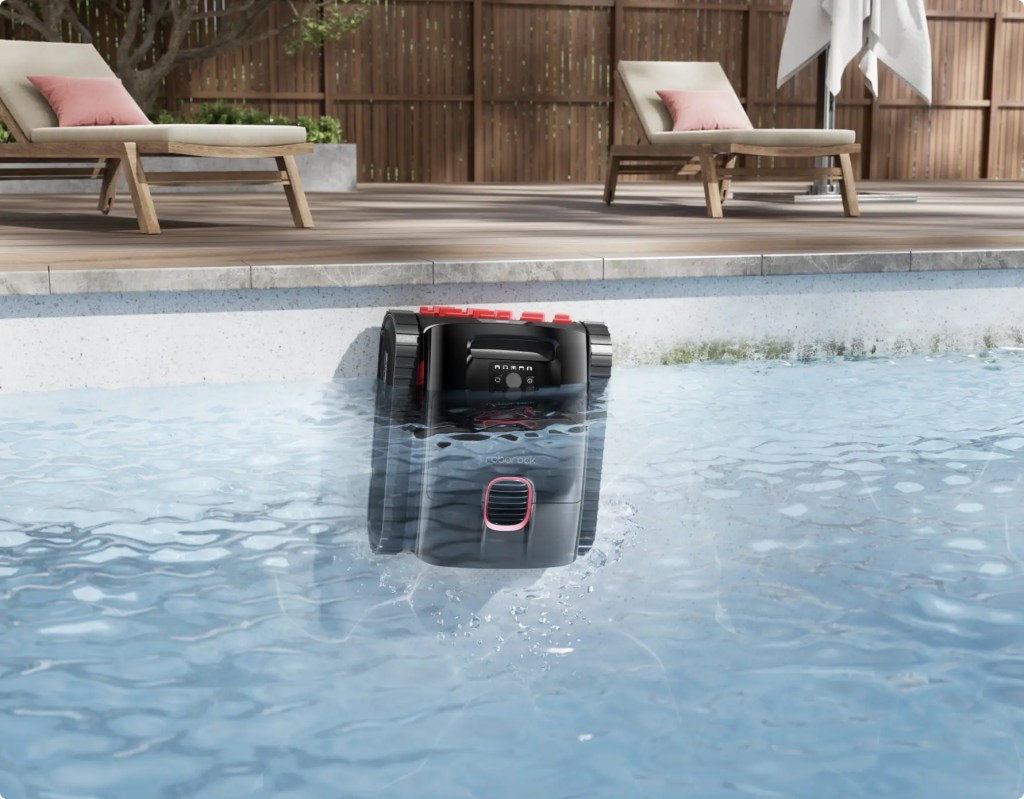
But the company isn’t satisfied with only tackling indoor challenges. It’s applying more than 10 years of AI navigation expertise to a wider range of outdoor spaces, such as the RockAqua P1 that launched at the IFA in Berlin.
“We expect that the underlying technology will become increasingly complex and advanced, but the experience users see and feel will become increasingly simple,” Quan says.
Quan sees the next leap coming from the convergence of several technologies, allowing robots to move beyond simply seeing their environment to understanding, judging and acting within it. Better perception can help them understand the space around them; AI can support decision-making; improved physical capabilities can allow them to act on their surroundings; and greater mobility can help them navigate increasingly complex environments.
The real breakthrough, says Quan, won’t be one single feature. “It’s these abilities working together reliably, allowing robots to complete complex tasks independently from start to finish and reducing human intervention to a very low level.”
The long view on innovation
At Roborock, innovation is in its DNA, and Quan takes the long view, knowing that many of the problems the company is working to solve will take patient dedication and continuous investment in research and development.
But success isn’t putting the technology at the forefront; it’s creating everyday appliances that give people back their precious time and freedom.
“I hope that one day, home robots become as ubiquitous as washing machines – an appliance that millions of people rely on because it reduces repetitive labour.”
For more information on Roborock’s latest launches, visit au.roborock.com
Want to see more Forbes articles on your feed? Tap here to make Forbes Australia a preferred source on Google.
Look back on the week that was with hand-picked articles from Australia and around the world. Sign up to the Forbes Australia newsletter here or become a member here.