The growth architects deploying AI at scale

The chief revenue officer is recognised as the architect of growth inside modern organisations. Now, AI tools are empowering them to drive exponential growth.
BRANDVOICE – PARTNER CONTENT

Organisations continue to dabble in the new breed of Artificial Intelligence (AI) tools in search of a workable use that will drive sustained growth.
But despite ambitious growth plans, many are realising that a more ubiquitous approach under the leadership of the chief revenue officer (CRO) is required.
Growth architects
Emerging as a key role within large organisations over the last decade, the CRO has a range of modern digital and AI tools at their disposal, capable of ensuring the organisation can keep pace with changing buying habits and ultimately achieve organisational growth.
Recognised as the growth architects holding the ace card, CROs have the latest digital tools at their disposal and the ability to move beyond merely forecasting growth to being capable of deploying scalable, repeatable revenue systems that align sales, customer systems and marketing to maximise every buyer interaction and strengthen client relationships.
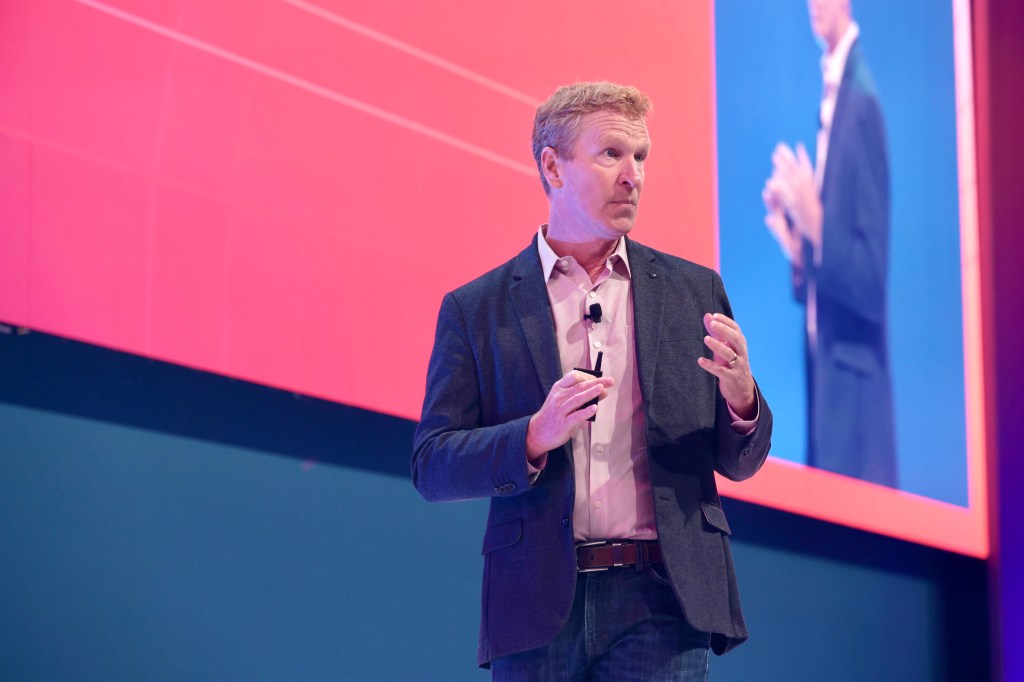
Hayden Stafford, the CRO and president of AI-powered enablement platform Seismic, says deeper customer understanding has the potential to fast-track growth, enabling organisations to bypass slower economic conditions and reach customers who need their product or service.
Seismic, which generates millions in revenue from Australian customers operating in the telco, banking, and real estate software spaces, among others, sees the broader APAC region as a huge growth opportunity.
Stafford says that too many organisations continue to embed AI across each department in silos instead of deploying a system that reaches across the entire organisation. By letting their CRO drive growth, these company specialists can align disparate systems across the organisation. “Organisations are yet to understand how to scale AI and build these modern tools into their revenue systems.”
“CROs are redefining what growth looks like by designing and continuously optimising a revenue system that turns strategy into execution, aligns teams to specific outcomes and scales performance as the business grows,” Stafford says.
“As organisations scale, alignment becomes less about intention and more about execution. Shared language, shared data model, shared accountability. It’s about thinking about every part of a business and ensuring they have their own metrics.”
The CRO role is here to stay. Charged with ensuring that sales and marketing communicate well, share information, collaborate on content creation, hit key targets, and convert leads, these growth architects unify organisations under one digital umbrella.
According to McKinsey research, Fortune 100 companies with an established CRO role had a 1.8X revenue growth over those without.
Growth drivers
Stafford says CROs have the depth of experience to set out a clearly defined revenue strategy and overall growth intent for the organisation. By embedding the best AI tools in the market to determine precisely how the growth will be unlocked in the future, CROs are fast becoming a critical team player within the management team.
“A revenue strategy defines the intent for an organisation. But it’s the revenue systems being deployed that determine the path ahead and how you get there,” according to Stafford.
Replicating star performers
The rise of the CRO comes after a growing realisation that sustainable growth no longer comes from individual brilliance or by relying on disconnected technology functions. Today, AI has the power to amplify a well-defined system, but it can’t fix a poorly designed one.
“So many companies rely on the same small group of high performers to hit their revenue targets. Whether you call them star performers or unicorns, some are realising it is possible to replicate their successes by sharing templates that others can follow,” Stafford says.
“However, behaviours only change when coaching, content, guiding and direction show up in the moments that matter during the workday. The right things happen within the daily flow of work. When our work rhythms and cadences are all tied to the same system,” Stafford says.
Organisations can’t train their way off the wrong track, either. “Training has its place, but high performers can be hard to replicate through training. It’s far more reliable to replicate their processes using AI,” Stafford says.
He adds that fearmongering around AI taking jobs is unfounded. “AI is not going to take people’s jobs, but the people who use AI are going to take people’s jobs. AI creates the most leverage and is a huge productivity scaler that enables an organisation to recreate a step one thousand times in quick succession,” he says.
Buyer behaviour
AI tools that drive strategic growth and deliver exceptional customer experience at scale come as buyer behaviours evolve. The growth of digital tools provides new revenue opportunities within the buyer’s journey to your front door, he says.
“Gone are the days of salespeople taking long client lunches to seal the deal. Customers have 80 per cent of their buying process completed simply by doing their own online research before they even engage with a salesperson, which is why the rise of the CRO has been exponential over the last decade.
“There are revenue opportunities everywhere these days. But it’s critical that organisations are deploying the right technologies.
“The key is to use AI to help understand how to get a customer completely anonymous to you, that you’ve never interacted with before, to become a loyal customer within a short space of time.
“These days, companies need to craft scalable, repeatable revenue systems that aligns sales, customer success, marketing and partnerships to provide measurable outcomes. It’s about ensuring that everyone is singing from the same hymn book,” he says.
Hayden Stafford will be in Australia on 31 March for Seismic City Tour Sydney. Hear from him in-person by registering for this free event here. Learn more about Seismic by visiting www.seismic.com.
Want to see more Forbes articles on your feed? Tap here to make Forbes Australia a preferred source on Google.
Look back on the week that was with hand-picked articles from Australia and around the world. Sign up to the Forbes Australia newsletter here or become a member here.