Anthony Osborne: Leading teams in complex, changing environments

BRANDVOICE – PARTNER CONTENT
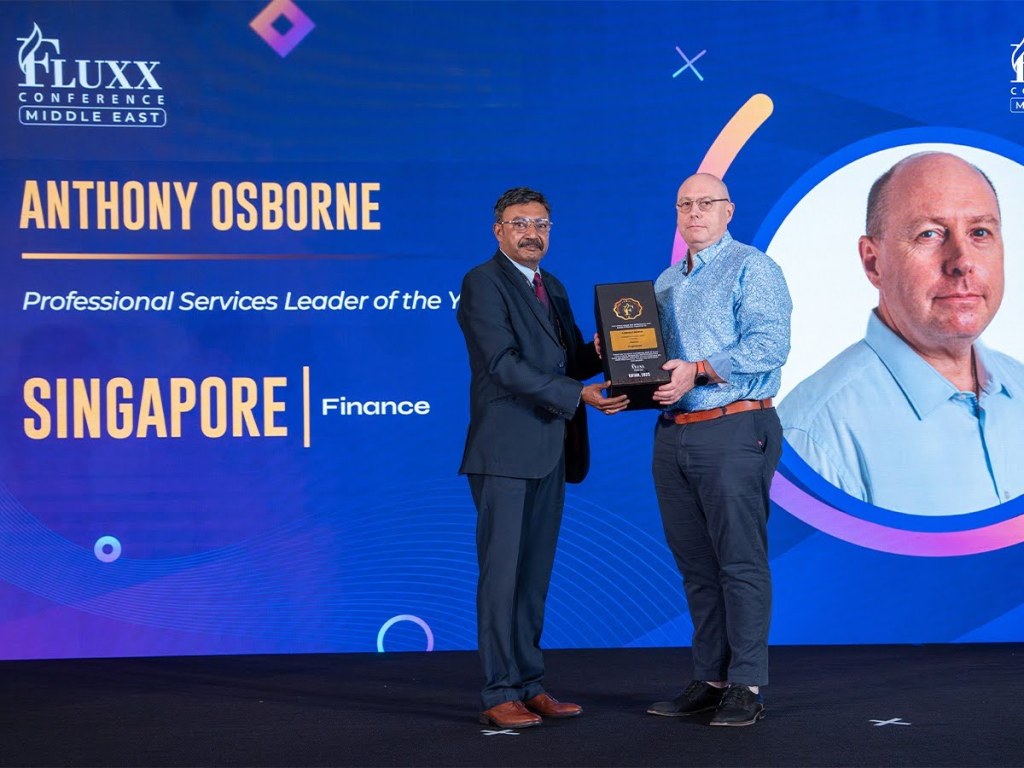
In large-scale banking transformation, the challenge is rarely technology alone. More often, the real test lies in aligning teams, timelines, and stakeholder expectations across fast-changing conditions. That is the kind of work Anthony Osborne, Regional Delivery Director at Thought Machine, has spent more than 30 years leading across defence, telecommunications, and banking, with much of that experience focused on South Asia and Australasia.
In 2025, Osborne was recognised at the Fluxx Awards as Professional Services Leader of the Year in the Finance category. The award reflects how peers view his approach to leading large programmes, particularly those that require adaptability, coordination, and disciplined execution in periods of change.
Much of Osborne’s work has centered on complex delivery environments where multiple systems, teams, and priorities overlap. In those settings, progress often depends less on rigid control and more on creating enough structure for people to move decisively.
Early Lessons From the Royal Australian Navy
Osborne did not begin his career in an office. He started as an apprentice in the Royal Australian Navy and later served as a submariner, an experience that continues to shape how he approaches leadership.
Life on a submarine leaves little room for ambiguity. Planning has to be clear, communication has to be direct, and trust has to be built into the way the team operates. Osborne has said that in such an environment, “everyone has a role, and small mistakes can have wider effects.”
Those lessons carried over into his corporate career. While the setting changed, the emphasis on responsibility, teamwork, and clear decision-making remained consistent.
Building Teams in Changing Industries
Later in his career, Osborne helped grow Thought Machine’s regional delivery team in Asia-Pacific. What began as a small team developed into a broader regional group supporting banking clients across multiple markets.
The work involved helping financial institutions introduce new core banking systems, often in highly regulated environments and across borders. That kind of delivery requires more than technical expertise. It also demands people who can adjust as client needs, systems, and delivery expectations evolve.
Osborne has explained that hiring, in this context, was not only about technical ability. He looked for people who could adapt in an environment where both the technology and the delivery approach were still developing. That focus reflects a broader shift in the industry, where teams increasingly operate across regions rather than from a single location.
Working Across Regions and Teams
In his current role as Regional Delivery Director, Osborne works with teams based in several countries. His responsibilities include overseeing delivery, engaging stakeholders, and adjusting processes when needed. No two projects look the same, which makes flexibility a core requirement.
He has also pointed to diversity as a practical advantage. Teams with different backgrounds often bring different ways of thinking, which can be especially valuable when projects involve complex problems or cross-market implementation.
At the same time, Osborne’s leadership style remains straightforward. Team members are given room to make decisions, with support available when needed. The approach is neither hands-off nor overly controlled, but built around accountability and trust.
Supporting Growth and Development
Osborne pays close attention to how teams develop over time. He has spoken about supporting access to training, certifications, and time to build new skills, arguing that these investments help teams stay effective as the nature of the work changes.
Recognition also plays a role. Acknowledging progress, even in small ways, can help sustain momentum on longer, more demanding projects.
He also values informal interaction. Team lunches and casual gatherings may seem peripheral to delivery, but they can strengthen relationships in ways that become important when pressure rises. In increasingly distributed organisations, that kind of cohesion can become a real operational advantage.
Bringing Structure to Complex Work
One of the clearest themes in Osborne’s approach is planning. Even when timelines are tight, he tends to establish expectations early by defining goals, identifying risks, and clarifying roles.
He has described this process as “creating a framework rather than a fixed plan.” That distinction is important. In large transformation projects, plans inevitably change as new information emerges. But a strong framework can make those changes easier to absorb without losing direction.
Rather than trying to control every outcome, Osborne’s approach is to create enough structure for teams to keep moving when conditions shift.
Thinking Beyond Short-Term Results
Across different roles, Osborne has consistently leaned toward long-term thinking. In delivery, that can mean favoring steady progress over rushing to produce quick wins. In business terms, it can mean building consistency rather than relying on uneven bursts of performance.
That approach was among the qualities recognised by industry peers, including through the Fluxx Awards. It is not about avoiding pressure, but about responding to it in a way that supports durable results.
Building Teams That Last
For Osborne, completing a project is only part of the job. The more lasting question is what remains after the work is done, including the team’s capability, the clarity of the processes, and the strength of the relationships built along the way.
As organisations place greater value on resilience and long-term execution, leadership is increasingly judged not only by immediate output, but also by whether teams can continue operating effectively over time.
Osborne’s career reflects that shift. Across industries and across decades, his work points to a style of leadership shaped by experience, grounded in structure, and designed for environments that continue to change.