Grape expectations: How Jade Rogge is reshaping tradition in the Barossa

At Peter Lehmann Wines, viticulturist Jade Rogge works with generations of Barossa growers to introduce more sustainable vineyard practices while preserving the traditions that have shaped the region.
BRANDVOICE – PARTNER CONTENT
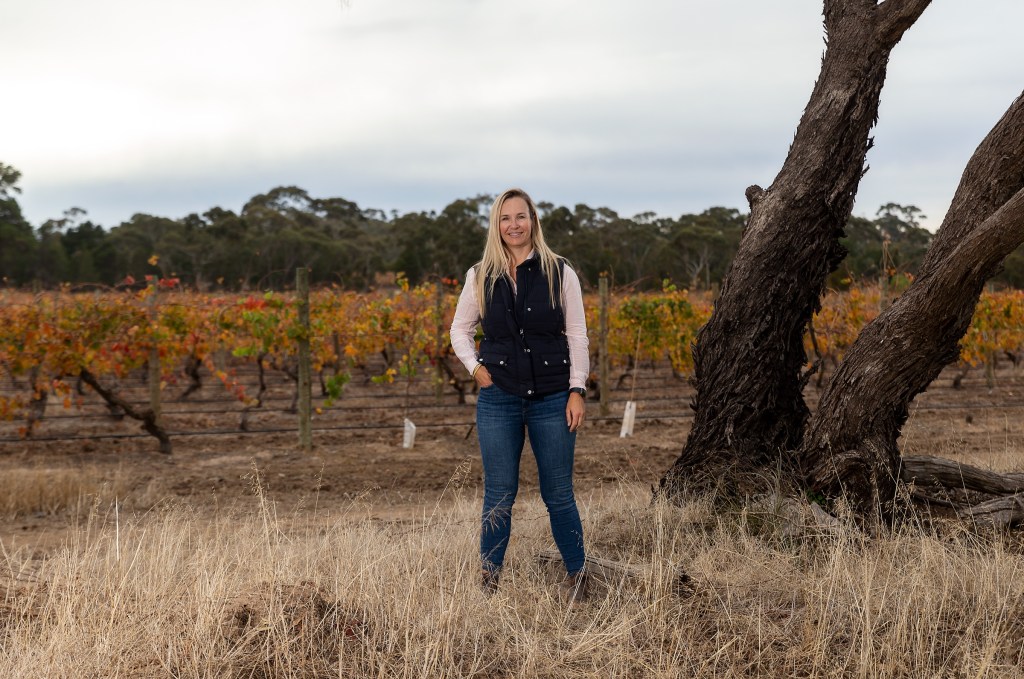
When Jade Rogge joined Peter Lehmann Wines seven years ago, she stepped into a Barossa winemaking tradition built on grower relationships stretching back almost five decades.
As the company’s viticulturist, her challenge was to build on that legacy while helping growers adapt their vineyard practices for the future. But first she had to win over a grower network spread across 16 regions of South Australia’s Barossa Valley who had never worked with a female viticulturist before.
“I think they all thought I was a male when they announced the appointment because I have a name that could be either,” says Rogge.
“And so, when I started to go out to the vineyards, I think there was a bit of surprise and a bit of shock. And of course there was a lot of chatter.”
Winning over the growers
Rogge spent her first months building trust with the company’s 79 growers. Those relationships run deep: almost 50 years ago, the late Peter Lehmann refused to renege on his word to buy grapes from Barossa growers, despite his then-employer ordering him to do so.
Lehmann set up a new winery to buy and process Barossa grapes, a huge financial gamble he acknowledged by choosing the Queen of Clubs as the company’s logo.
That history of loyalty meant relationships with growers could not be taken for granted.
Rogge says she proved herself to Peter Lehmann Wines’ growers by showing up as a calm, technically confident partner who offered practical, experience‑based advice.
“My stance has very much been: ‘You are the property owner. You are the grower. It is ultimately your vineyard. I am just here to provide advice or support where you need it’,” she says.
That approach was grounded in a career spent learning the practical realities of farming from the ground up, beginning as a teenager on her family’s New Zealand farm, before gaining formal qualifications in viticulture and winemaking and experience in New Zealand, Australia, Europe and the United States.
Along the way, Rogge also made a point of learning the jobs of the people she managed, believing she should never ask someone to do something she didn’t understand herself. That meant learning everything from how equipment worked to the legal requirements around contract labour and the realities facing farmers.
Her practical grounding helped her make inroads in the Barossa. Over time, consistent communication, quick responses and some visible wins meant the initially sceptical growers started vouching for her to others.
Moving with the times
While her arrival in the Barossa surprised the growers, Rogge was herself taken aback by how male-dominated the network was, with only a handful of wives involved in day-to-day operations and no daughters involved in succession planning.
Gender was not the only area where Rogge saw an industry steeped in tradition confronting the need for change.
She also found it odd that Peter Lehmann Wines had no sustainability certification, especially coming from New Zealand where sustainability programs were already well established.
“When I arrived, we typically had bare-earth practices under the vines,” she says. “While this once made sense, we now understand it’s no longer a sustainable practice.
“We know that for us to develop, to have better soil moisture capacity, we need organic matter. We need mid-row swards, like grasses, between the grapevines. We need it for the biological health of the soil and for soil moisture retention.”
Rogge says John Casella, managing director of Casella Family Brands, which owns Peter Lehmann Wines, was keen to attain sustainability status but waited to ensure all Sustainable Winegrowing Australia’s processes and procedures were fine-tuned.
Once the decision was made, it was all hands on deck.
“It took us probably two years to get almost all of our growers through that process,” says Rogge.
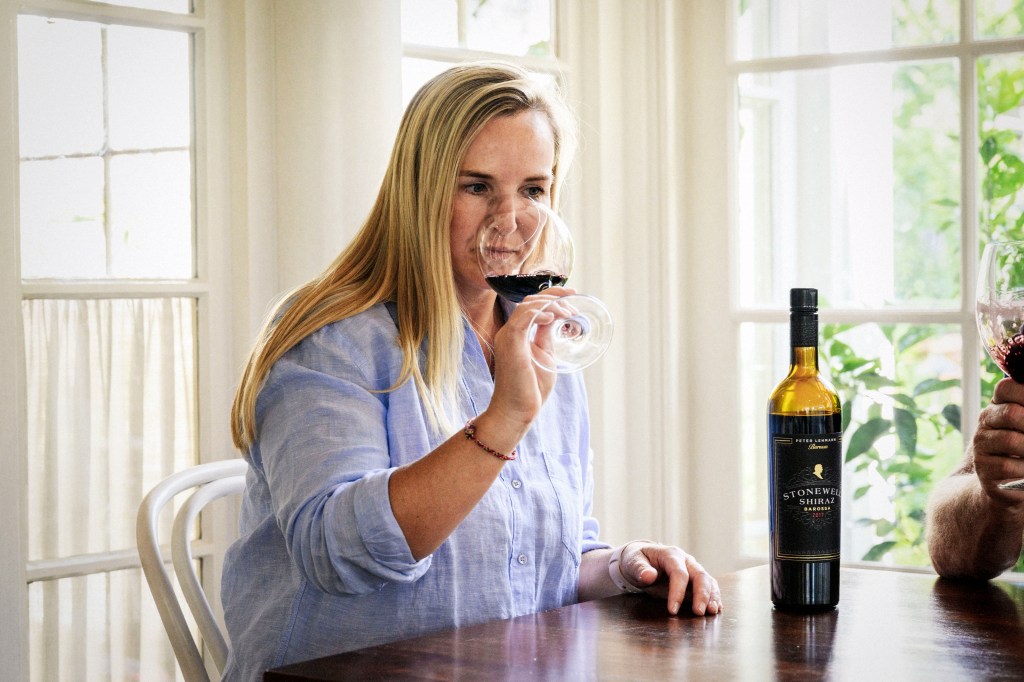
The Barossa of the future
But the work doesn’t end there.
“Sustainable viticulture is not a box‑ticking exercise. It’s a big investment financially, emotionally, physically and operationally with what you’re doing in your vineyard,” she says.
“We need to keep looking at viticultural practices like irrigation management and foliage management.”
Preparing the Barossa for the future, however, isn’t only about what happens in the vineyards. Rogge is also focused on the people who will shape the industry in the decades ahead.
She continues to mentor young viticulturists and winemakers, both women and men. Rogge takes real pride in having former colleagues discuss their career decisions because she remembers how important her own early mentors were.
Rogge’s four daughters are unlikely to follow in her footsteps, but she says she will champion them in whatever career they decide upon.
“I’m a very big believer in raising strong independent females,” she says.
The next generation
For the grower families Rogge works with across the Barossa, however, questions about the next generation have implications beyond individual career choices. Succession, or the lack of it, is likely to reshape the grower network itself.
Over the next five years, Rogge expects Peter Lehmann Wines’ grower base to shrink in number but not in scale, as some older small growers without clear succession plans retire or sell and other operators expand by buying neighbouring blocks.
She anticipates a continued push toward premiumisation, prioritising quality over tonnage to keep Barossa wines globally competitive.
One aspect that will not change is Peter Lehmann Wines’ dedication to its diverse grower network.
“Our brand has always been about diversity, not just in the type of grower but the type of vineyard and the type of vines and the age of the vines and the age of the vineyard,” Rogge says.
“We want to keep that. We don’t want to lose that for industrial uniformity.”
Visit Peter Lehmann Wines to explore its Barossa history and discover its premium wines.
Want to see more Forbes articles on your feed? Tap here to make Forbes Australia a preferred source on Google.
Look back on the week that was with hand-picked articles from Australia and around the world. Sign up to the Forbes Australia newsletter here or become a member here.