‘Moving fast mattered’: How Nook Saunas’ founder broke a sweat and scaled up

BRANDVOICE – PARTNER CONTENT
Nook Saunas founder, James Billingham, reveals the heat-fuelled strategy that sparked triple-digit revenue growth and thousands of installations nationwide: speed, narrow focus, and a sense of opportunity.
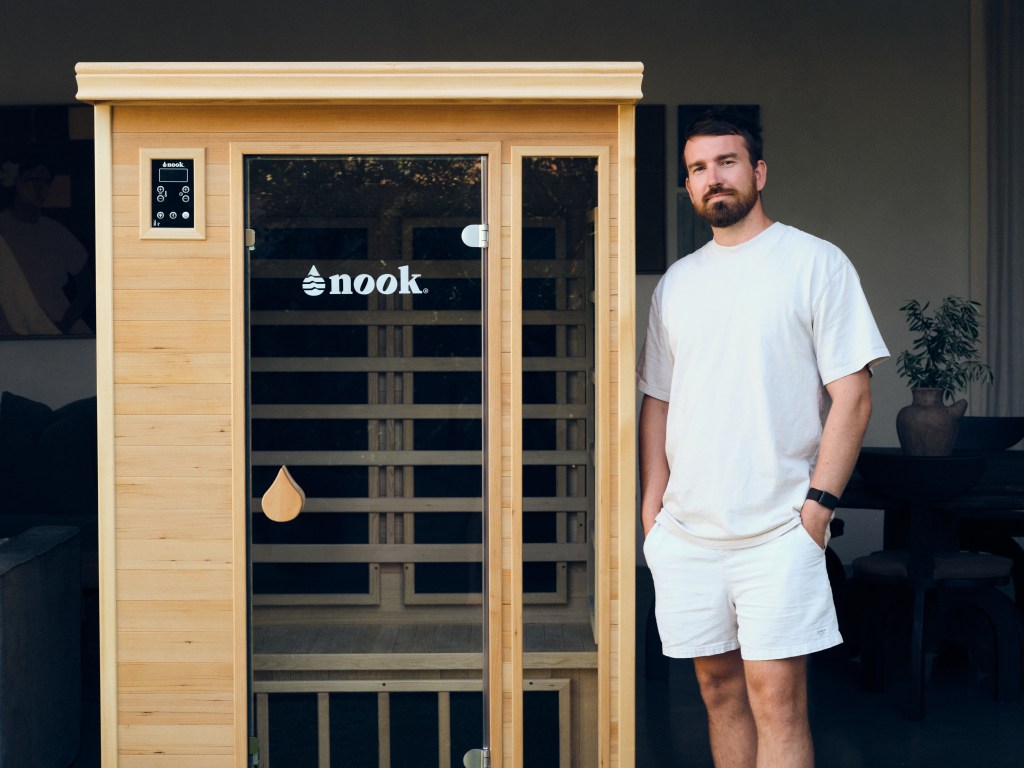
Some like it hot. Count among them Nook Saunas founder James Billingham, whose infrared epiphany led to clear-minded business success. Billingham told Forbes he has always been a regular sauna user, noting how much it helped him “decompress, sleep better, and reset”. Billingham’s not alone, with increasing research backing up his intuitions.
People who use saunas more regularly can reduce their chances of Alzheimer’s, according to a 2023 study published by the Public Library of Science (PLOS). Known specifically as “totonou” in Japan, the researchers observed post-sauna benefits of “physical relaxation” and “psychological calm”.
However, it wasn’t until Billingham experienced an infrared sauna on a retreat and its compact, convenient setup that he realised infrared units could be both accessible and practical for a standard home environment. Instead of hot rocks, these saunas use infrared panels embedded in the walls.
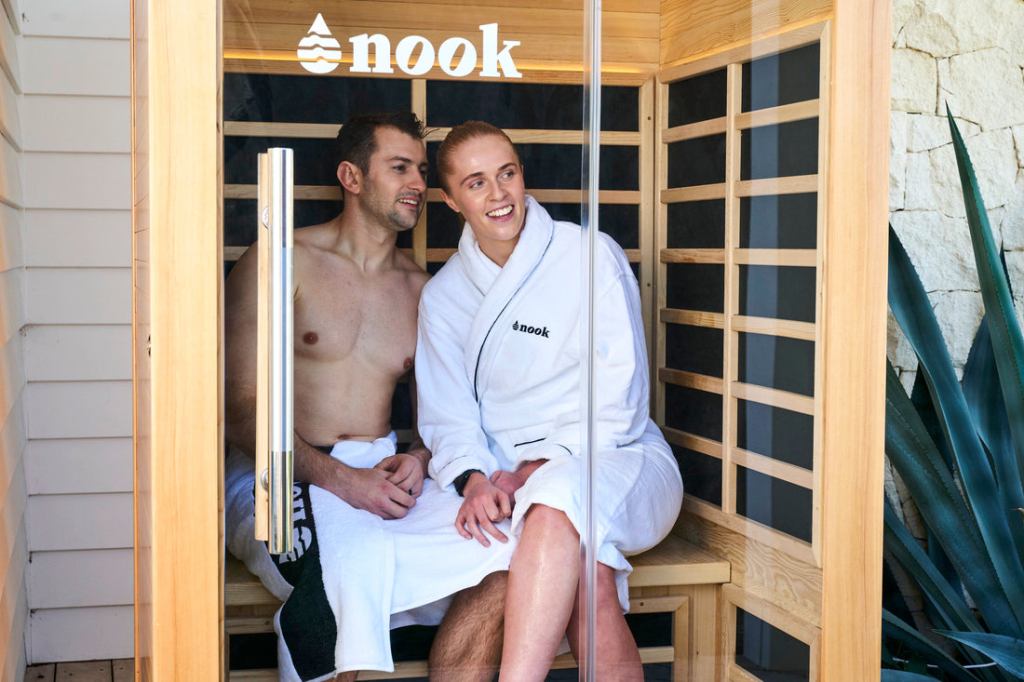
Within 24 hours of his first infrared sauna session, Billingham purchased the Rent A Sauna domain and began building a website and testing market demand. The enquiries flooded in, and Billingham established Nook Saunas, initially laying down $120,000 of his own capital to kick-start the venture, knowing that “better-funded competitors would eventually arrive”.
Billingham says the simplicity of his offering, infrared saunas and infrared saunas only, gave him a clear strategy, and it paid off: curious customers flocked to the units, first to rent and then to purchase. Speed was his greatest asset. Now, Nook Saunas is one of the fastest-growing companies in Australia. Tripling in revenue roughly since 2024, and on track to double last year’s output again in 2026. Nook Saunas now has a presence in every major Australian city and in the UK.
Q&A
Many people have great ideas on a retreat, but few turn them into companies. What was the transition like from recognising the technology to realising you needed to provide a full-service experience?
Having been a long-term sauna user at my local pool, I knew the physiological benefits firsthand. However, seeing the compact unit changed my perspective. From the beginning, I believed a product like this deserved a complete, end-to-end experience: professional delivery, proper installation, removal of packaging, and time spent educating customers on how to use it safely and confidently. That became the foundation of Nook.
The immediate traction you saw online exposed a deeper problem with the existing industry. What were those “red flags” you identified in the market?
As I dug into the market, it became clear how fragmented and underserved it was. Safety standards were inconsistent, compliance often felt like an afterthought, and many companies simply dropped large boxes at customers’ doors and disappeared. For a product positioned as premium and wellness-focused, the experience felt careless. Conversations with suppliers reinforced this; we were consistently told we cared more about compliance and safety than anyone else they worked with. That was the opportunity.
Many founders in this space eventually pivot toward being a “lifestyle” or “wellness” brand. Why have you resisted the urge to expand the product line?
One of the most deliberate decisions I’ve made is to stay narrow. We focus on saunas, not “wellness” broadly. I’ve learned the hard way that chasing too many ideas dilutes execution. By staying focused, we can keep improving the product, the installation process, and the customer experience without distraction.
Why was prioritising speed over perfect certainty so vital for Nook in the early stages?
I consciously chose not to over-analyse. In a startup, your primary advantage is speed. I didn’t waste time seeking external validation or second opinions. The early demand signals were strong enough to trust, and I felt that moving fast mattered more than waiting for a perfect track record.
Scaling a national team quickly often comes with growing pains. What was the biggest hurdle you faced as you began to expand?
Not everything was perfect early on. Hiring was a challenge, particularly as the business scaled nationally. We moved too fast, trained people on the job, and learned quickly that service quality suffers when onboarding isn’t deliberate. That mistake reshaped how we hire and train today, and it’s one of the reasons the team is now so strong.
There is often a “make or break” period for startups. When did you realise that Nook had transitioned from a successful experiment into a sustainable company?
The moment I knew Nook was more than a short-term success came after our first full year in operation. Instead of slowing down through the summer, the business kept growing. That consistency changed my view of what the company could become. I was seeing the reviews come in and how people were sticking to the habit and seeing significant benefits, which made me realise it was not just a fad.
Beyond the revenue and the global expansion, what is the personal driver that keeps you engaged with the business every day?
What ultimately keeps me building, though, isn’t growth for its own sake. It’s the feedback. Reading customer reviews and hearing how sauna use has helped people reset their sleep, mobility, energy, and even relationships is deeply motivating. A sauna often becomes the catalyst for broader positive change.
Learn more at nooksaunas.com.au