John Pithoulas: The Australian Entrepreneur Shaping the United Arab Emirates’ Vision 2030 Through Intelligent Lighting

BRANDVOICE – PARTNER CONTENT
From migrant roots to global innovation, John Pithoulas operates at the intersection of lighting, AI and architecture in the United Arab Emirates.
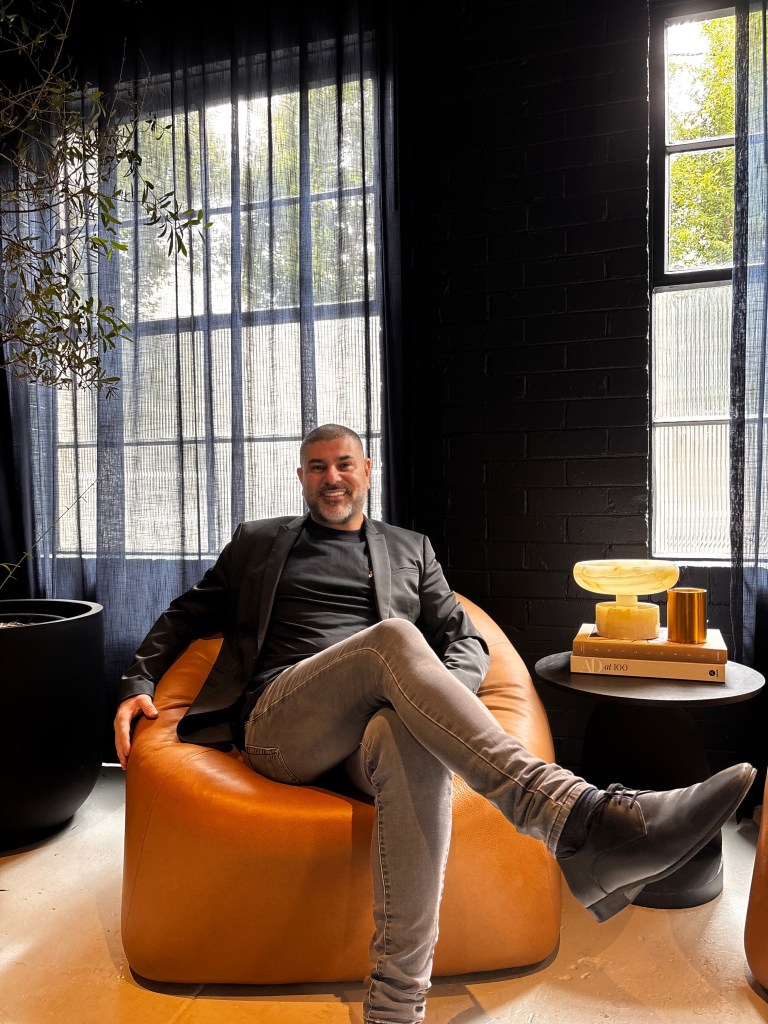
John Pithoulas almost became a John Pitt.
When his father arrived in Australia in the late 1960s as a 16-year-old from the Greek island of Evia, he anglicised his surname to make life easier in a new country. He arrived with little more than grit, pride and a conviction that he would never work for anyone but himself. Over time, the family reclaimed its name, and with it, a deeper understanding that while success is rarely inherited, determination often is.
That determination would come to define John Pithoulas’s career.
The entrepreneurial instinct emerged early. In his twenties, Pithoulas launched an import–export business supplying screws and bolts, the unglamorous but essential backbone of the construction industry. Within three years, he had captured enough market share to exit the business at just 23.
What followed was a 15-year chapter in commercial construction, sharpened by the realities of the global financial crisis. Forced to scale back, reassess, and rebuild, Pithoulas refined his focus on resilience, control, and long-term vision. From that reset emerged BeckLight, the platform that would later expand well beyond lighting alone.
Today, Pithoulas leads The Beck Lifestyle Group, a vertically integrated platform spanning construction, architectural lighting, LED technologies, intelligent systems and lifestyle brands. Beck Project Group delivers high-end commercial construction and fit-outs, forming the execution backbone of the group. BeckLight specialises in bespoke and large-scale architectural lighting solutions that blend design, engineering, and compliance. BeckLED focuses on large-format LED technology for immersive retail environments, façades, and outdoor media. Beck.Ai underpins the ecosystem, developing intuitive lighting intelligence, including adaptive, voice-responsive, and mood-based systems, designed to make buildings more human and responsive over time. Alongside the core businesses, BeckVodka exists as a founder-led passion project, reflecting Pithoulas’s interest in craftsmanship, branding, and experiential luxury.
Behind the business sits a tightly aligned leadership structure, with Pithoulas directly overseeing strategy, design direction and international expansion. His son, Jonathan, leads global sales execution, supported by a senior team operating across Australia, Asia and the Middle East. His wife serves as Global CFO for The Beck Lifestyle Group, providing financial governance across its international operations. The group is unified under the Beck name, founded in honour of his daughter, Rebecca, a legacy Pithoulas hopes she may one day choose to carry forward.
Across his career, Pithoulas has delivered lighting and construction outcomes for some of the world’s most recognisable luxury brands, including Christian Dior, Dolce & Gabbana, Paul Smith, Zegna and Swarovski-infused flagship installations. These completed projects, defined by discretion, precision and design integrity, form the foundation of his credibility as he scales internationally.

Since late 2025, that scale has been firmly rooted in the Middle East. Pithoulas has launched BeckLight across Dubai and Abu Dhabi, embedding the business within the United Arab Emirates’ most ambitious sovereign development framework, Vision 2030, led at a federal level by His Excellency Abdulla Bin Touq Al Marri, Minister of Economy.
From this base, 2026 marks the next phase of expansion, with planned launches across Egypt, Saudi Arabia, Kuwait, Lebanon and London, positioning BeckLight as a globally deployed platform operating across the Middle East, Europe and emerging growth corridors.
The Dubai launch marked more than geographic expansion. It represented deliberate alignment with a market that values scale, sustainability, precision and technological ambition. Operating within a government-approved supplier framework connected to the UAE’s economic transformation agenda, BeckLight is now positioned inside the ecosystem shaping the next phase of the nation’s built environment.
“Dubai is one of the few places in the world that truly understands what high-quality, intelligent lighting can do for the built environment,” Pithoulas says. “It’s not just about illumination, it’s about experience, efficiency, mood and identity.”
For him, the move is not purely commercial. A core motivation is exporting Australian standards, design discipline, engineering rigour and accountability, into markets that value execution over shortcuts.
“I want to take the standards we work to in Australia and apply them in markets that respect precision,” he says. “Dubai does.”
The scale already reflects that intent. Over the past 12 months, Pithoulas’s lighting operations have delivered hundreds of thousands of fittings across Australia, Hong Kong, New Zealand, Qatar and the UAE, supported by an end-to-end ecosystem spanning design, R&D;, manufacturing and deployment. An independent research and development team in Shenzhen prototypes intelligent lighting systems now specified into airports, luxury retail, commercial towers and government projects.
If lighting philosophy is the soul of the business, embedded AI is its nervous system. “Instead of talking to Alexa, you talk to a light fitting,” Pithoulas explains. The onboard chip listens, learns, and adapts, recognising patterns of movement and mood to tune ambience for work, hospitality, or rest. Over time, lighting becomes intuitive, responsive, and almost invisible in its intelligence.
“The same thinking applies whether it’s a bespoke luxury fitting or a large-scale LED façade,” he says. “Technology should always serve design intent and human experience.”
As Vision 2030 accelerates, John Pithoulas is no longer preparing to enter the UAE, he is already operating within it, armed with standards shaped in Australia and a mindset forged by migration, ambition and execution.
Luckily, he did not become John Pitt.
He became something far more consequential, an Australian entrepreneur shaping how the world’s most ambitious cities are built, experienced and remembered, using light not just to illuminate, but to define the future.