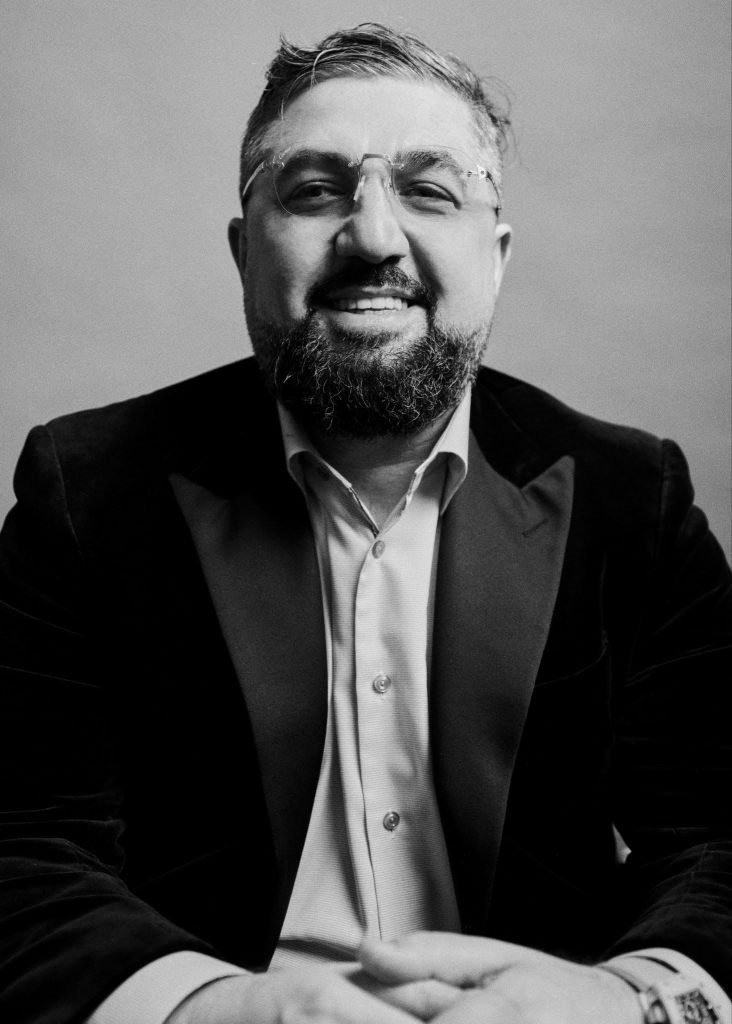
David Natroshvili admits that letting go doesn’t come naturally to founders. When he started SPRIBE in 2018 with a small team in Tbilisi, Georgia, he was involved in every decision. Product features, customer negotiations, hiring choices, operational details. Everything flowed through him because the company was small enough that it could.
By the end of 2025, SPRIBE employed hundreds of people across five countries. Natroshvili’s role looked completely different. Not because he wanted it to, but because the alternative was organisational paralysis.
“In the early days, I tried to be involved in everything,” he said. “Today, I focus on direction and people. The stronger the team, the lighter the founder’s touch should be. Leadership becomes less about control and more about creating the right environment for others to excel.”
Gaming is a global industry, and the Asia-Pacific region clearly illustrates this fact. APAC, which includes Australia’s rapidly expanding digital entertainment sector, has become one of SPRIBE’s key strategic markets. In 2024, the company saw monthly active users in the region surge by 629% compared to the previous year. Sustaining growth at this pace goes far beyond what a single founder can manage through personal outreach alone.
The transition from hands-on founder to organisational leader represents one of the most difficult challenges in scaling a company. It requires fundamentally rethinking what effective leadership means at different stages of growth.
The Control Trap
In the early stages, founders often gain advantages by being heavily involved in their business. They have a clear grasp of all operations, make swift decisions, and ensure quality through direct supervision—actions that help generate initial momentum. However, these same practices can become obstacles as the company expands.
Natroshvili recalls realizing this shift firsthand. As the business grew quickly—expanding into new markets and rolling out new products—his schedule became packed with meetings where only he could authorize next steps. Projects stalled awaiting his go-ahead, and teams couldn’t progress without his input.
“I realised I was the constraint,” he said. “Not because I was making bad decisions, but because I was making too many decisions. The organisation couldn’t move faster than I could process information and provide direction.”
The recognition didn’t make the solution easier. Letting go meant accepting that others would make decisions differently than he would. Sometimes those decisions would be wrong.
“The hardest part isn’t admitting you need to delegate. It’s accepting that delegation means accepting outcomes you wouldn’t have chosen yourself. That’s uncomfortable for founders who built something from nothing based on their own judgment.”
Hiring for Independence
The practical challenge became hiring people who didn’t need his involvement. This required a shift in hiring criteria. Early employees needed to execute well under direction. Later employees needed to set direction themselves.
“We started looking for leaders who had built things before, who had their own perspectives and approaches,” Natroshvili said. “That meant hiring people who would challenge my thinking, not just implement my ideas.”
This shift showed up in how SPRIBE structured roles and responsibilities. Rather than hiring functional specialists who executed defined tasks, the company hired leaders who owned entire domains, accountable for outcomes, not activities.
“I prioritise by impact. Every week I identify the two or three initiatives that truly move the needle for SPRIBE, and I make sure they’re on my desk daily. Everything else, I trust my team to handle. That trust isn’t passive. It’s the result of hiring people who don’t need me in the room for decisions to happen.”
The Distributed Advantage
Operating across five countries, with offices in Warsaw, Kyiv, Tallinn, Tbilisi, and the Isle of Man, forced organisational decentralisation. Natroshvili couldn’t be in every office. Time zones meant he couldn’t be in every meeting.
“Positive,” he said, when asked about having a distributed workforce. “It gives us access to global talent and lets us stay close to our markets. Having people in different time zones and cultures strengthens our products and our ability to serve operators everywhere.”
The distributed model created natural forcing functions for delegation. Regional teams needed authority to make local decisions. Product teams needed autonomy to move quickly across time zones.
“Clarity beats proximity,” Natroshvili noted. “If your teams know the goals, the priorities, and the ‘why,’ they’ll stay aligned no matter where they sit. Invest in communication, not micromanagement.”
A recent example of this model working in practice: the Aviator x AC Milan partnership required coordination across design, marketing, legal, and commercial teams spread across multiple countries, delivered on a global timeline without missing deadlines.
The Listening Discipline
One practice became essential as the company scaled: deliberate space for input from people closer to problems than Natroshvili is.
“I listen. I make space for regular one-on-one conversations where employees can voice concerns, propose ideas, and feel ownership of their work. When people know they’re heard, they’re far more engaged and motivated to perform at their best.”
As the organisation grew, Natroshvili’s distance from daily operations increased. People running product development, compliance, and regional operations understood their domains better than he did.
“The strongest insights come from people doing the work. My job isn’t to have all the answers. It’s to ask the right questions and create an environment where the people with answers feel empowered to act on them.”
When Letting Go Fails
Natroshvili is direct about the mistakes. Delegation doesn’t always work. Sometimes people aren’t ready for autonomy. Sometimes projects fail because oversight was too loose.
“Early on, we underestimated the importance of culture-building. Just handing out tasks across countries wasn’t enough. We now invest heavily in team rituals, in-person meetups, and cross-functional projects to ensure people feel part of one SPRIBE, not isolated offices.”
The lesson was that letting go doesn’t mean disconnecting. It means shifting from operational involvement to strategic oversight, maintaining visibility through different mechanisms than personal involvement in every decision.
“Tools like structured dashboards and short, focused check-ins keep me aligned without drowning in details.”
The Advice for Other Founders
For founders facing similar transitions, Natroshvili’s guidance is direct. Letting go isn’t optional at scale. The question is whether you do it intentionally or have it forced upon you through organisational dysfunction.
“Don’t treat distribution as a cost-saving tactic. Treat it as a strength. Build processes for communication and culture from day one, and hire leaders who thrive in remote collaboration. If you create trust and accountability early, a distributed team can outperform even the most centralised office.”
The practical steps involve three areas: hire people capable of operating independently; provide them with clear objectives and context; and create mechanisms for visibility that don’t require direct involvement.
“The stronger the team, the lighter the founder’s touch should be. That’s not a weakness. That’s the definition of scaling leadership.”
The Ongoing Evolution
Natroshvili acknowledges that the transition isn’t complete. As SPRIBE continues growing, including deepening its presence across Asia-Pacific, his role continues evolving. What worked at one stage may not work at the next.
“Leadership becomes less about control and more about creating the right environment for others to excel. That’s harder than it sounds. It requires constantly fighting the instinct to step in, to fix things, to maintain control. But it’s the only way to build something that can grow beyond what one person can manage.”
For founders in the middle of this transition, his experience offers validation. Letting go feels uncomfortable because it is uncomfortable. The discomfort isn’t a sign of failure. It’s a sign of growth.
Please play responsibly. If you or someone you know has a gambling problem, help is available. Call 1-800-GAMBLER. (Most states in which gambling is legal also have state-specific “Help” resource disclosure requirements.)
We use cookies to help us to deliver our services and provide personalised experiences. By using this website you agree to use our cookies.
Cookie Policy