The colleague you’re not seeing: domestic violence and the workplace’s quiet duty

Cassandra Kalpaxis has spent fifteen years watching capable, educated women silently endure coercive control. Now she’s asking employers to act.
BRANDVOICE – PARTNER CONTENT

There is a version of this story that starts with statistics. One in four women and one in fourteen men in Australia are experiencing domestic violence, according to the Federal Government report on domestic violence from 2024 . One in six women is subjected to physical or sexual violence by a partner. The total economic burden of housing, policing, hospital admissions and lost productivity runs into billions every year.
The major impact is borne by the women, 69% of whom leave behind property or assets, often resulting in long-term financial insecurity (AIHW 2026).
The numbers are staggering. They are also, lawyer Cassandra Kalpaxis would argue, part of the problem. Repeated often enough, statistics stop being people. They become background noise — acknowledged, absorbed, and ultimately unchanged.
“We know the reported statistics: one in four women experience domestic violence, one in six women experience sexual violence,” she says. “It costs our economy approximately $28 billion to be able to deal with domestic and family violence.”
Kalpaxis is the founder of Kalpaxis Legal, an award-winning family law practice, the creator of Not One More Girl, a domestic violence education program in schools and the author of Dignified Divorce: How to separate simply and stay out of court (2020). She is small in stature and carries the directness of someone who has heard too much to bother with softening.
What she has built is not small.

At the Forbes Women Soirée at Sydney’s Crown, speaking to a room full of leaders, Kalpaxis reaches for an old Greek saying she grew up with: When the money is good at home, everything is good. She lets it sit for a moment.
Kalpaxis has spent fifteen years watching what happens in the homes where the money is not good or more precisely, where the money is weaponised.
Financial abuse rarely announces itself clearly. More often it looks like not knowing where the family money is, “needing permission to go to the grocery store and buy something which isn’t traditionally on the grocery list” or “having to produce receipts or the Excel spreadsheet of expenses.” Abuse also shows up in behavioural patterns, like a disruption to the partner’s weekly catchups with friends that always arrives on cue.
“It’s the ability to know that you are being surveilled,” she says. “You need to have your location on, you need to justify where you are, you need to answer the phone. Sometimes that means FaceTime me now, I want to see where you are.”
Abuse is often framed as care, which makes it hard to recognise for what it is, even by the person living inside it.
“I often sit with women who have been in relationships that span 20 or 30 years,” Kalpaxis says, “where I’m the first person to tell them that that behaviour is not normal, that they are in fact the victim of domestic violence.”
As a society, it appears we are facing a definition problem. Domestic violence is still widely understood as something physical, visible and unambiguous, like a bruise you can point to on somebody’s face. What Kalpaxis sees in her practice is more often about coercive control, the slow, systematic dismantling of a person’s autonomy, finances and sense of reality. In 2024, coercive control became a criminal offence in New South Wales after the Domestic Violence Death Review Team found that in 97% of intimate partner homicide cases the victim had been subjected to it.
Abusive family dynamics have been destroying lives, careers and financial independence for as long as anyone can remember, but they are almost entirely invisible to the people sitting next to the domestic violence victims eight hours a day.
For many people experiencing domestic violence, the workplace is the only environment their partner does not control. It may also be the only place where anyone is legally positioned to help them. The Fair Work Act now mandates ten days of paid domestic violence leave. While the legal infrastructure now exists, the culture, in most organisations, does not.
Kalpaxis describes two women she worked with recently, both trying to find their way out of abusive family situations, organising alternative accommodation, managing arrangements for their children. Both were performance-managed by their organisations instead of supported through the process, making the workplace another place they had to survive.
“It generally takes seven goes for a victim survivor to actually leave,” Kalpaxis says. “The cycle of family violence can repeat itself on a multitude of occasions.”
And the victims’ decision to stay is rarely as simple as it looks from the outside.
“The problem with victim survivors is that more often than not, they are made to choose between poverty and safety.”
The structural nature of economic impact makes leaving feel not just difficult, but sometimes impossible. A 2025 UTS Business School report found an employment gap of up to 9.4 % between women who have experienced domestic violence and those who have not, with hundreds of thousands working fewer hours or disappearing from the workforce altogether as a result of having to navigate a way out of a violent situation.
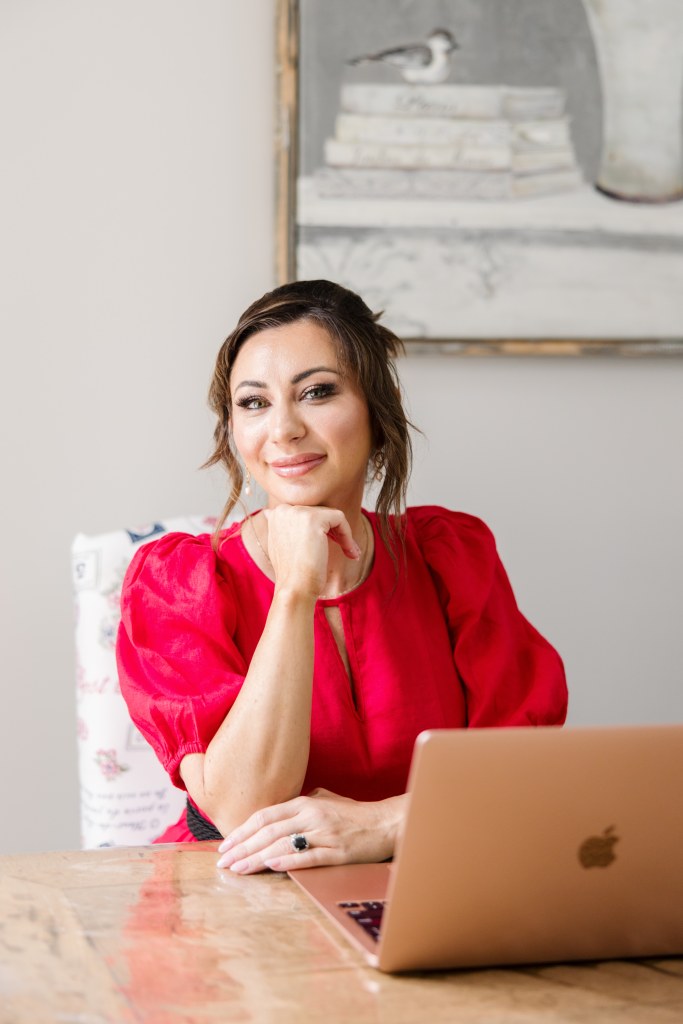
Access to resources could help, if organisations knew where to start. That’s why Kalpaxis has created a practical handbook to help business leaders have the conversation, build the awareness culture and connect colleagues to necessary support.
“For many people experiencing domestic violence, the only safe space that they may have is their workplace,” she says.
The implications are straightforward: “When we cultivate workplaces that are psychologically safe, we in turn create an opportunity for women and children to leave a systematic cycle of abuse.”
The ‘one in four’ statistic means that across every organisation, every team and every office, someone we work with is likely managing domestic coercion and violence in ways not easy to see. The question is whether, when they finally decide to say something, there is a safe harbour to hold them.
Cassandra Kalpaxis LL.B B.Soc.Sc GDLP is the Director of Kalpaxis Legal and founder of Not One More Girl. Her Workplace Handbook for leaders is available through Kalpaxis Legal.