Why Brendan Gow Built Capital Haus to Be More Than a Private Wealth Business

BRANDVOICE – PARTNER CONTENT
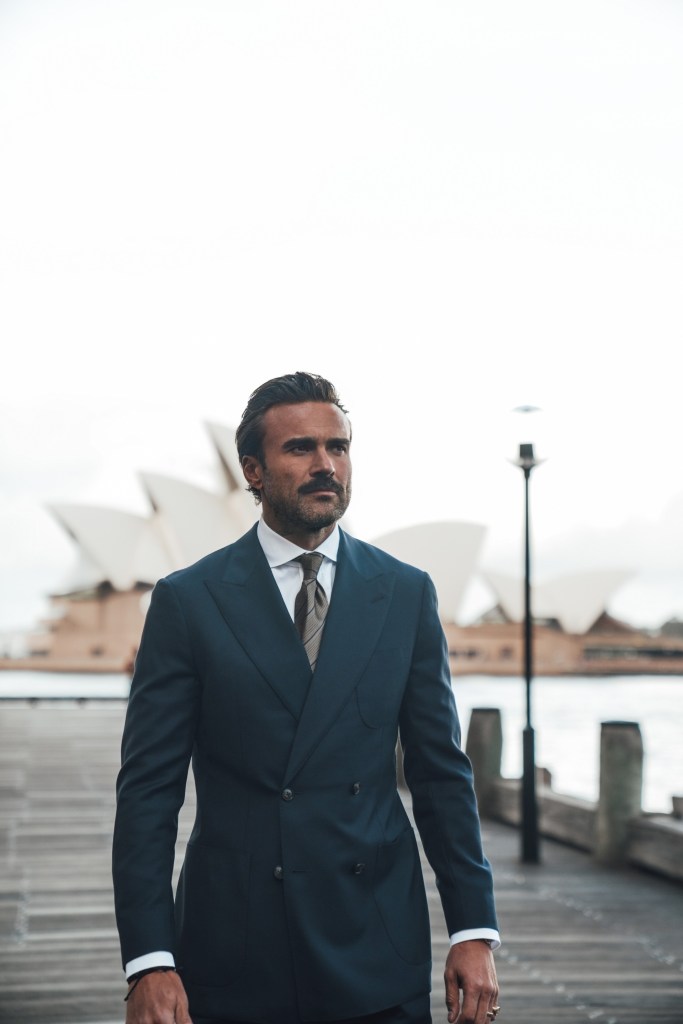
Australia has no shortage of wealth firms that can talk about markets, portfolios, and performance. The harder question is what happens when a client’s financial life becomes too complex for a traditional advice model.
Founders build companies across borders. Families think about succession, liquidity, philanthropy, and investment access across jurisdictions. Capital becomes global before many advisory firms are structured to serve it. Brendan Gow built Capital Haus around that gap.
His career before founding the business gave him a close view of where the industry often falls short. Across two decades in private wealth management, stockbroking, and investment management, including experience in Australia and Dubai, Brendan saw that clients did not only want technical advice. They wanted a closer relationship with the people managing their money, more transparency, and a sense that their advisor understood the full picture.
That observation shaped Capital Haus from the beginning. Founded in Sydney in 2019 with 15 clients and about $5 million in assets under management, the firm has since grown to approximately $1.2 billion in funds across roughly 7,000 clients and 65 staff. The scale matters, but it is not the full story. The more important question is what Brendan chose to build around that scale.
Today, Capital Haus operates as a broader financial services group, spanning stockbroking, private wealth management, financial advice, portfolio management, funds management, accounting, corporate advisory, corporate finance, research, media, and philanthropy. That breadth points to a founder who is not only trying to build a larger advisory practice. Brendan is building the infrastructure around wealth advice.
For Australian readers, the acquisition of Baker Young is one of the clearest proof points. Baker Young is a 40 year old Australian private wealth firm with a history in stockbroking and funds management. Its acquisition gave Capital Haus more than additional scale. It connected the business to Australia’s financial services history, while giving Brendan a platform to build internationally. For a founder operating out of Sydney, the move signalled credibility at home while supporting expansion beyond it.
The acquisition strategy also says something about how Brendan thinks. Capital Haus has grown through disciplined mergers and acquisitions rather than relying on outside capital. Its first acquisition was funded through existing cash flow and significantly increased the amount of client capital the firm managed. More importantly, it helped establish a repeatable model for expansion. The lesson is not simply that acquisitions can make a business bigger. The harder lesson is that growth only adds value when new teams, clients, systems, and standards are integrated without weakening the client experience.
That is where Brendan’s approach becomes more strategic than a typical founder profile. In financial services, scale can create fragmentation. More offices, clients, and services can make a firm look stronger while making the client experience less coherent. Brendan’s challenge has been to grow Capital Haus without turning it into a disconnected collection of capabilities.
Technology and media also sit inside the Capital Haus story. The firm has placed emphasis on owning or controlling key platforms rather than depending on rented infrastructure for the client experience. It has also built IHM, its in-house media division, giving the business a distribution and education capability uncommon among advisory firms. In a sector built on confidence, content is not simply marketing. It can shape trust before a meeting ever takes place.
The wider market is moving in the same direction. The next generation of private clients will not judge a wealth firm only by investment access or personal service. They will increasingly expect regulatory depth, digital capability, international reach, research, corporate insight, and a more active role in decision making. Through Capital Haus, Brendan appears to be building for that client rather than for older industry boundaries.
Its founding philosophy, Global Vision Local Insight, reflects the same point. Capital Haus operates from Australia, with offices in Luxembourg and Dubai, and Singapore and London in development. That footprint matters because wealth is no longer neatly domestic. For Australian founders, families, and investors, global access is becoming less of a luxury and more of a practical requirement.
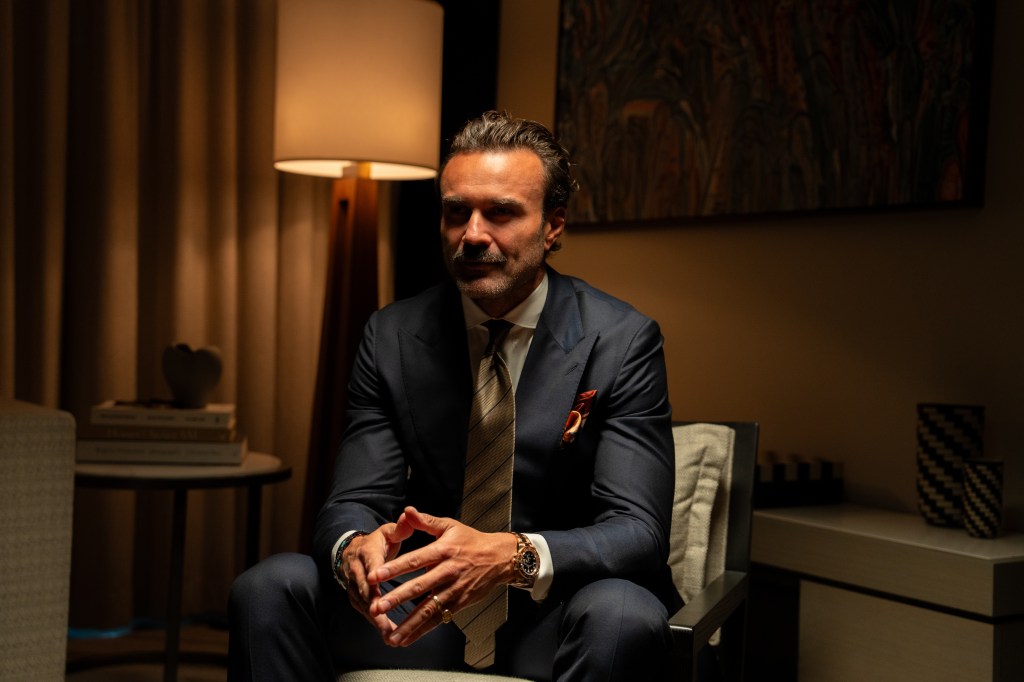
Brendan Gow’s work through private wealth management is therefore less about creating another advice brand and more about testing whether an Australian founded firm can serve the full complexity of modern wealth. Capital Haus is still being built, which makes the story more credible. It is the work of a founder trying to align scale, trust, infrastructure, regulation, and international relevance inside one financial services group.
Brendan’s real bet is not that Capital Haus can become bigger. It is that a wealth business can become broader without becoming less personal. For an industry that often separates advice, research, media, technology, and corporate capability into different rooms, that is a more interesting proposition. It gives Australian financial services a founder story that is not only about growth, but about the architecture required to make growth worth trusting.
Want to see more Forbes articles on your feed? Tap here to make Forbes Australia a preferred source on Google.
Look back on the week that was with hand-picked articles from Australia and around the world. Sign up to the Forbes Australia newsletter here or become a member here.