The $500 million offer Lorna Jane refused – and the $28 million ‘bargain’ that followed

Entrepreneurs

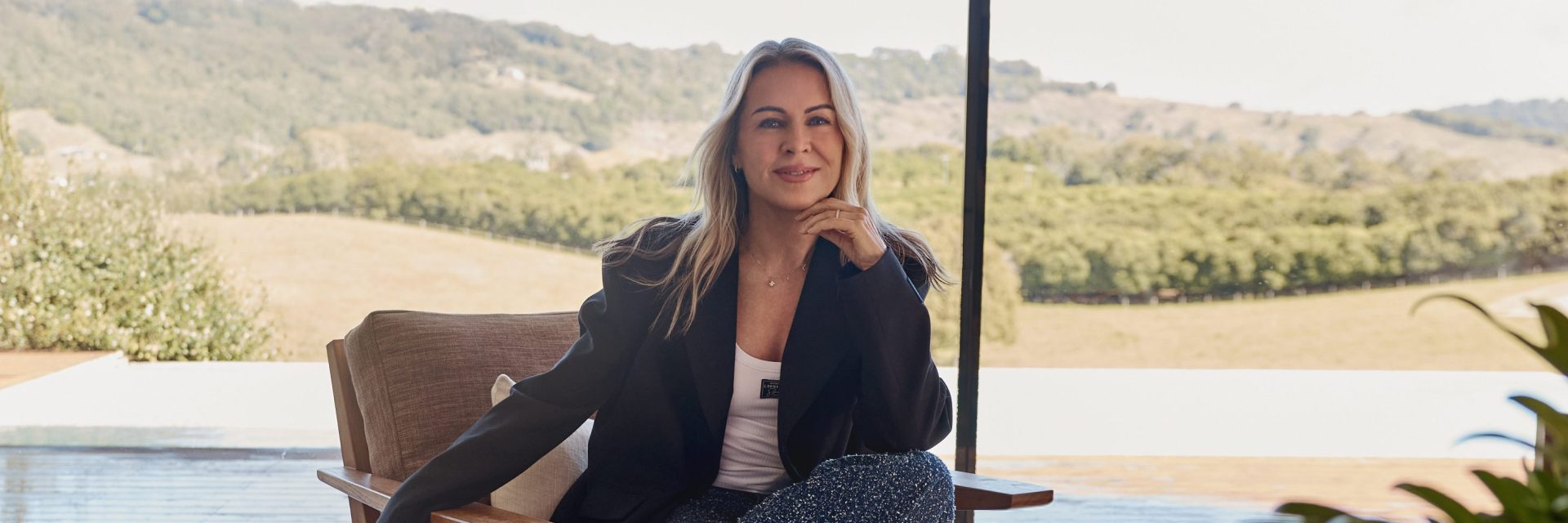
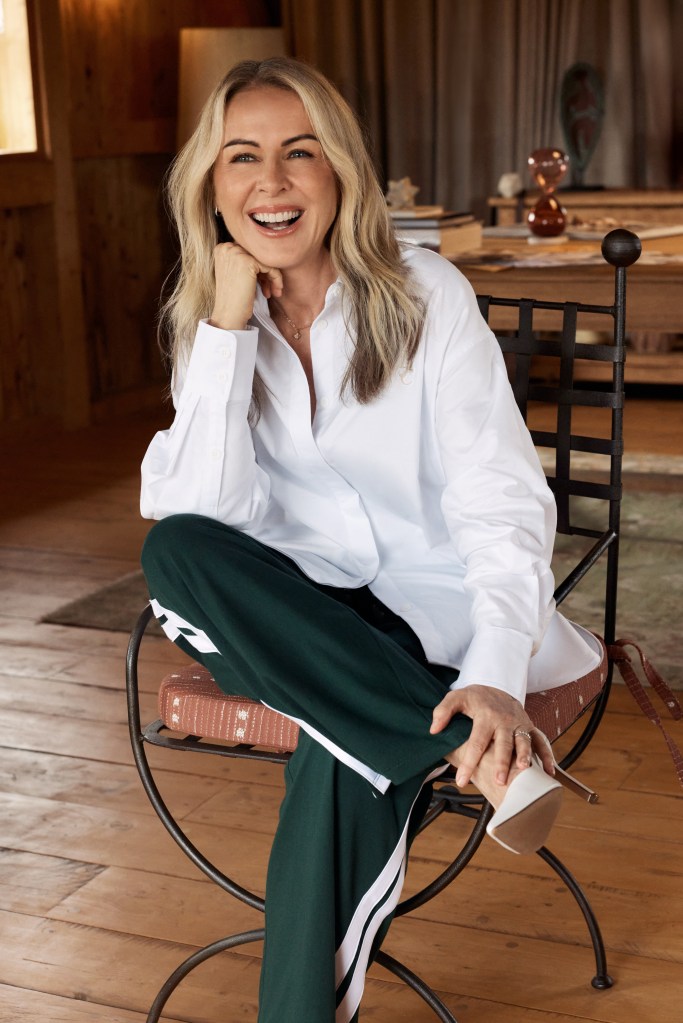
From humble beginnings to a global activewear empire, Lorna Jane built more than a fashion label – she created a movement centred on confidence, community and living well. 

This story features in Issue 23 of Forbes Australia. Tap here to secure your copy.

Image: Forbes Australia

Asked as a seven-year-old what she wanted to be when she grew up, Lorna Jane Clarkson barely hesitated  before telling her grandmother: “Rich and famous.” 

But when later in her successful career as a rich and famous activewear entrepreneur, she was offered the chance to perhaps double her money and fame, she refused. It was a real turning point in her life, yet one of Australia’s best-known female businesswomen wouldn’t change it for a second. 

Her eponymous company was suddenly valued at $500 million, expanding throughout Australia, the US, and Southeast Asia, and buyers were circling for a slice of the Lorna Jane action. “We had some huge offers around that figure to buy the business, but they always wanted a majority share,” Clarkson says today. “And those were the days when someone would come in and put so much debt in your business, which I don’t like at all. My mother taught me never to live beyond my means, and I took that belief into my business as well. 

“So maybe it was the wrong decision, but we also just didn’t feel they were the right people for our brand, and we didn’t want to give away control to them. The important thing for us has always been to stay true to our purpose and culture: to design activewear for women that makes them feel more capable, doesn’t make them compromise, helps them show up to work out, and gives them more confidence in their lives.  My belief was that women have always wanted to feel powerful in what they wear, and we wanted to give them the language and product to do it.” 

Since that landmark decision in 2014 – 24 years after Clarkson, together with her husband and business partner Bill opened their first store in the smallest space they could find in Brisbane’s Broadway on the Mall shopping centre – she’s rarely looked back. She’s faced obstacles, of course, and endured setbacks, but her philosophy has always been to pause, to consider, “pull on my big girl pants”, then power forward. 

It’s been an attitude that’s stood her in good stead ever since she first told her grandmother what she wanted out of life. That was quite different to her older sister Julie who, when asked the same question, said, “Wow, she didn’t need to do anything; with a rich and famous sibling, she’d be fine.” 

“It does sound really awful to admit what I said, but I think I was very dramatic and I was always performing with my family and wanted to be an actress,” Clarkson says, looking apologetic. “But my sister is an accountant, and these days she’s semi-retired and actually manages my personal finances.” 

Her dream has come true, though, with her company now valued at $540 million, operating 102 stores in Australia and 13 in New Zealand, and maintaining a massive online presence, selling garments around the world. In addition, she employs 1,296 people globally, has written six books, runs a regular  podcast, and is recognised as a leader in ethical manufacturing, as the first brand in Oxfam Australia’s ‘What She Makes’  campaign to give a living wage to everyone in its supply chain. 

All the way through, Clarkson, 62, often credited as the first to coin the term ‘activewear’ which has gone on to become a global phenomenon, has been giving different generations of women in her 37 years in business the means to look and feel good both in the gym and in their regular lives. 

And that’s only the start. Now she’s becoming even more involved with their health and well-being with the purchase of one of the country’s best-known luxury wellness retreats, Byron Bay’s SOMA. “It’s bringing our active living philosophy to life,” she says. “It’s going to be incredible.” 

Lorna Jane Smith was only 10 when she arrived in Australia from Lancashire in England’s North West with her sister and mother, who’d divorced four years before. The three settled in Brisbane, and Smith adjusted easily, making new friends –  “I just convinced people to love me, and often they did” – taking ballet lessons, and becoming something of a bookworm.  It was only when she turned 16 and saw her secretary mum, Jean Hale-Sanders, participating in Keep Fit classes, that  she started going to the gym and fell head over heels in love  with aerobics. 

“As a baby, Lorna had very strong lungs and would wake anyone else in the house when she cried for her 2 am feed,” says Hale. “I thought, ‘This baby is going to be an athlete, maybe a jogger, and definitely a leader!’ 

“Then, as a teenager, she was determined to be fit and healthy. She exercised every day – swimming in the pool before school, jogging home from the train station after college, refusing a lift from me, and doing aerobic classes. She decided she could plan classes more interesting than the instructor, and she did.” 

Image: Forbes Australia

It was the 1980s, and Jane Fonda was at the height of her fitness-celebrity status with her neon leotards, leg warmers, and big hair. Smith copied it all, despite being ordered by her despairing ballet mistress to jam her huge hair into a net for classes. Dazzled by the sharp intellect and fame of iconic  female journalist Jana Wendt, she decided to study journalism at university, but then deferred her course by a year. 

To earn money in her downtime, she studied, started  working as a dental therapist, and was given a job in Cairns.  “I cried the whole way there as I was so close to my family and didn’t want to leave them,” she says now. “But I bought my first place there, and had a couple of housemates to help pay the mortgage, but everything took forever to get done, and  I’d phone Mum every week and just cry.” 

But in the evenings, life was different. Smith was attending aerobics classes all over the city and then graduated to teaching them. Racing around in her leotard and realising how difficult it was to find well-fitting and comfortable gym clothes, she asked one of her housemates, a home economics teacher, to teach her how to sew. “Then I started playing around with making activewear for myself as I didn’t like what was available in the marketplace,” she says. “I still have a few of my early outfits. They have lasted, but they’re honestly not very good.” 

After four years, Smith finally returned to Brisbane, where she was taking armfuls of orders for her clothing from all her aerobics class participants. One gym owner offered her a room on the top floor of his fitness centre where she could make clothes and shifts on reception to supplement her earnings. She lasted three weeks on reception before she was absolutely overwhelmed with demand for her clothing. 

“It was so exciting,” she says. “Nike was creating sportswear, and for fashion, you went to the department stores. But I felt like I was inventing something new. I was making clothes people could actually live in. One day I looked up, and everyone in my class was wearing my outfits. 

“I could see the effect on them, too. They’d come to me and say they felt so unmotivated to go to the gym, but they’d put on a new outfit and feel so much more confident. Women were becoming so much more committed to fitness because they felt happy and comfortable in the clothes. I felt like I was making a real difference and that was really addictive.” 

Image: Forbes Australia

Her accountant, however, wasn’t happy. When she turned up one more year with a bulging manila file of receipts, he told her she could no longer run a fast-growing business in such a haphazard style. By this time, she was living with courier company owner Bill Clarkson, a man she’d met in her last week in Cairns who’d followed her south, and the pair had bought their dream ‘forever’ home together. He offered to give up work to help her. 

“At that point, it became really serious,” says Smith, who married him soon after. “We no longer had Bill’s income, and we knew we’d have to survive on the business.  So, we sold our beautiful home, which was a pretty sad moment, and bought a dilapidated old heritage-listed building in the valley [Fortitude Valley] that became our factory, and we built an apartment above it. Back then, there were a lot of prostitutes and drug dealers around there, but it all did feel like an adventure, and we opened our first store, the tiniest one you can imagine, in 1990.” 

Bill Clarkson, now the CEO of the company in charge of  operations, while Lorna Jane is the chief creative officer, says it was hard graft. “The first years were such a learning curve, and there were times when we asked ourselves if it was worth it,” he says. “But we had a belief around something that didn’t already exist that we wanted to bring into existence, and that requires the ability to think differently. 

“We both worked hard and, as the business grew, we developed the skills we needed along the way. Lorna has always had a far more optimistic outlook than me during difficult periods, and I admire that about her. I don’t know how she does it.” 

The hardest thing for her was building an activewear category when no one had ever heard of such a thing. “It’s hard to get people to take you seriously when you’re talking about a concept they don’t know,” she shrugs. “And while department stores loved my product, they didn’t know where to put it. Does it go with swimwear, lingerie or in sportswear? 

“Then landlords couldn’t understand how I could possibly pay the rent by selling something that was so fitness-led and women-only. Would women really wear gym clothes outside the gym? And, the general feeling in the business world was, ‘What does an aerobics instructor know about business?’ I just had to put my head down and do the work.” 

By 2020, Lorna Janes’s lines of activewear had become a massive market hit and, in order to fund international expansion, the company sold a 40 per cent stake for $25 million to Sydney mid-market private equity firm Champ Ventures, which specialised in partnering with entrepreneurial founders. Because the business was self-sufficient, the money became a windfall for the Clarksons. They bought a beach house in Byron Bay to escape the factory in the holidays and put money in the bank for the future. 

“It meant we just felt more empowered to keep going on the next phase of Lorna Jane,” says Clarkson. “So we did until the fund started coming to a close and they sold off nearly everything, with us one of their last brands. At that stage, in 2014, we received so many offers, but from everyone wanting a majority share. And we said no.” 

That refusal came as a shock to many onlookers. Amanda Rose, the founder and CEO of Entrepreneurial & Small Business Women Australia (ESBWA), says it was so unusual. 

Image: Forbes Australia

“In today’s world, it’s very rare to have a business survive that doesn’t have billionaire private equity backing,” Rose says. “People don’t understand that the really big companies often run at a loss, making it almost impossible for smaller businesses in competition to survive. They then have to reinvent themselves almost constantly to keep going, and have incredible agility, and most fail. 

“But when private equity offers to invest in a business, they often just want to leverage off a successful woman rather than to support her, and jump on her bandwagon. But it’s important that we have women who succeed and are seen to succeed, because it shows others that it’s possible. So I think that move was brave and smart of Lorna Jane.” 

Just six years later, however, her courage was really put to the test. In 2020, Champ Ventures said they couldn’t continue anymore, just as COVID-19 slammed the country, and the fitness industry most of all. There were extended shutdowns, difficulties with supplies from China, where their gear was produced for their 100 shops, rising operational costs and shifting consumer behaviour. In the US, they had 33 stores and a house in LA, but there was also civil unrest and their outlet in Santa Monica was looted and badly damaged. 

But Clarkson went onto the front foot and offered to buy back the 40 per cent stake – this time, with  the business then valued at $100 million – for a rock- bottom $28 million. “It was the bargain of the century,” she says. “It was still a huge risk for us, but we decided to back ourselves, as always. 

“We knew we’d have to make changes. To keep the business alive in the US, one of us would have to go there and stay there because of the quarantine. So, we made the decision to close our US operation, which was sad, as we’d put so much money and time into building that business, and we felt we’d failed. Later, though, we knew it was the best thing,  especially with the tariffs that came. But it did help us build our online business in China as so many  people there had seen our products in the US.” 

Bill Clarkson agreed that radical times demanded radical measures and that the way they were operating was no longer sustainable in such dark times. “It was an emotional period for everyone involved, and difficult decisions naturally came with disappointment and change. However, I do believe it allowed us to refocus on the strength of the Australian market and positioned the business for where it is today. In business, nothing stays the same; both the challenging and the successful moments pass, and you have to keep moving forward.” 

Yet, at times, the challenging moments really clouded the shine of the triumphs. In one instance, Clarkson was accused by a disgruntled former employee of running a bullying workplace – a case later thrown out of court – and was blasted for advertising for a size 8 receptionist that she argued was simply the creation of a job to combine a fitting model role with some admin work. In her 2015 dream profile on TV’s 60 Minutes, the show that had made her hero, Jana Wendt, famous, she broke down in tears when the accusations were put to her. Then, in 2021, the company was fined $5 million by the Federal Court for falsely advertising clothing that could  
provide protection against, or eliminate, COVID-19. 

“As soon as we found out the claims were wrong, we pulled the 10-day marketing campaign,” Clarkson says. “But I guess one of the things that comes with being the founder of a company is that when something happens in your business – that may not even have been your decision or in your control  – you still have to take it on the chin.” 

Suddenly, her voice cracks, and her eyes mist over. “I’ll probably get emotional now,” she says huskily. “It’s like you crave press coverage for your products, then it takes a mistake to get so much. But understand that I’m not defined by one mistake; I feel like I’ve done so many things that have benefited so many women. But I think it was the tall poppy syndrome and something that was happening to a lot of tall poppy females at that time. There’s always a handful of people who want to pull you down. So, when that happened, I just said, ‘You know what? I’m just going to do good work, prove them wrong.’” 

Clarkson’s been doing that ever since, and, when the 10-bedroom eco-wellness retreat SOMA came up for sale in the Byron hinterland, she snapped it up for $9.5 million.  Re-launching in September, it’s set to host a full program of retreats for women to recalibrate and learn to live by the  tenets of Clarkson’s own philosophy: Move, Nourish, Believe. 

“Now, with the company doing so well, I have the time and energy to run another aspect of it,” Clarkson says, smiling. “The whole idea is to bring our philosophy of active living to life, so women are going to feel amazing and take the lessons learned into the rest of their lives. It’s part of my genuine  desire to empower and uplift women, which is what my whole journey has been about.” 

How fit is the industry  

In 2026, the Australian fitness and athletic clothing store market was valued at $4.6 billion, with around 1,943 retailers operating nationwide, including both international and domestic brands.

The driver, according to CBRE’s latest report, Fitness As Fashion, is the growing demand for activewear as streetwear. That’s powered the market from 2019 to 2024, to a Compound Annual Growth Rate of 3%, with revenue forecast to increase by 3.4% to 2030.

All the major sportswear retailers – Accent, Super Retail, JD Sports, Lululemon Australia and Lorna Jane – have performed strongly over the last few years, recording revenue growth of up to 77% since 2019.

An IBISWorld report in April 2026, Fitness and Athletic Clothing Stores in Australia, similarly reports that strong demand for wearing activewear as casual wear has energised industry revenue growth. From 2021 to 2026, revenue increased by 3.6%, and profit hit $413.1 million, with a profit margin of 8.9%. Lorna Jane currently has 3.5% of the total market, with revenue in 2026 speculated to be $164.3 million.

“Fitness and athletic clothing stores have long been a staple of Australia’s retail footprint, but whether that growth continues depends on the industry’s ability to adapt to shifting consumer tastes,” says Mia Jeremic, the author of the IBISWorld report. “Fitness and athletic clothing has become one of Australia’s most fiercely contested retail categories and a prolonged cost-of-living squeeze means consumers are spending more selectively, trading up in categories they value and pulling back elsewhere. Retailers will need to work harder for every sale.

“That said, the fundamentals driving this industry are genuine and durable. Australians’ health consciousness isn’t reversing, and athleisure has shifted from a trend to a default way of dressing. But growth will be more measured from here. IBISWorld forecasts the industry will expand at an annualised 1.9% over the next five years, reflecting a market that is maturing rather than stalling.”


Want to see more Forbes articles on your feed? Tap here to make Forbes Australia a preferred source on Google.

Look back on the week that was with hand-picked articles from Australia and around the world. Sign up to the Forbes Australia newsletter here or become a member here.

More from Forbes

Avatar of Sue Williams
Topics: