
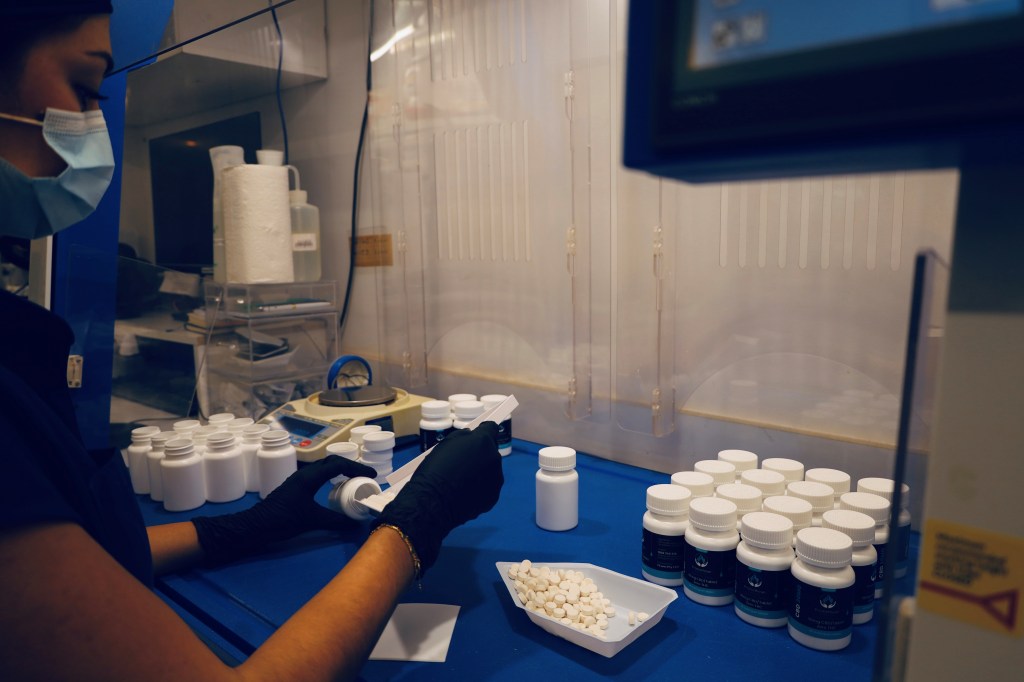
Promethean BioPharma has developed a nanotechnology-powered CBD tablet it hopes can overcome the barriers that have kept cannabis compounds from becoming mainstream medicines.
Australia legalised medicinal cannabis almost a decade ago, but the country has yet to approve a single CBD medicine for ordinary pain. Peter Comerford thinks he has found a way to change that.
His Sydney-based Promethean BioPharma has developed a THC-free CBD tablet that it says delivers far more of the cannabis compound into the bloodstream than conventional CBD oils. The company announced this week that it had completed a 155-person clinical trial and, despite underwhelming results, submitted the drug to Australia’s medicines regulator, the Therapeutic Goods Administration, seeking registration.
If approved, it could become the first CBD medicine registered in Australia for pain — gifting it a $200 million Australian market – and potentially the first prescription CBD pain tablet of its kind in the world.
Comerford thinks it marks the point where an industry obsessed with the plant itself finally starts treating its chemical components as pharmaceuticals.
A University of Sydney study this year found CBD reduced chronic pain by 14% in those suffering nerve damage. But for a wider cross section of pain, a 2022 review of the science found “minimal evidence” for CBD-only medication.
“Everybody in cannabis believes that the plant is special,” he tells Forbes Australia. “When you want something to be a medicine, you’ve got to make it a pharmaceutical. You can’t just cut the top off and squeeze oil out of it and say, that’s medicine. It’s got to grow up.”
The Australian legal cannabis market was estimated at US$877 million by Fortune Business Insights, of which 56% was CBD products. Comerford has a more conservative estimate of $400 million for the CBD market, of which half was prescribed for pain relief.
Yet the evidence for CBD products is mixed.
Promethean’s own trial data reflects this complex reality: while the tablet failed to beat a placebo overall, roughly 10% of participants emerged as “high responders,” experiencing meaningful, sustained pain relief from the first week.
Bridging this divide between scientific scepticism and patient demand falls to a man who came to the industry with an engineer’s eye for fixing bottlenecks.
Dublin to Sydney and beyond
Comerford was an engineer who fell into the business of making hospitals work better, in his native Dublin. “When you’ve got an engineer’s mind, you start at the right place, which is the doctors, and you talk to them and find out what they need and how to best present the patients in a way that they can deal with them quickly and move them on to the next stage, then figure out what the next roadblock is and get rid of that.”
He moved his family to Australia in 2011 while Ireland was suffering the ravages of the GFC.
He was director of integrated care at Sydney’s St Vincent’s Hospital when he was asked to sign off on a trial of cannabis in palliative care in 2015.
He declined to sign. The rebuffed doctor asked him if he knew anything about cannabis as a medicine. “No, except that along with the emergency department and mental health and everything else, I also run the Drug and Alcohol Addiction Centre, and don’t we try to keep drugs out of the hospital?”
“Pain is a very difficult thing to run a trial on. You always have a placebo effect in pain … but we found a very clear signal that in certain types of responder, they responded really strongly.”
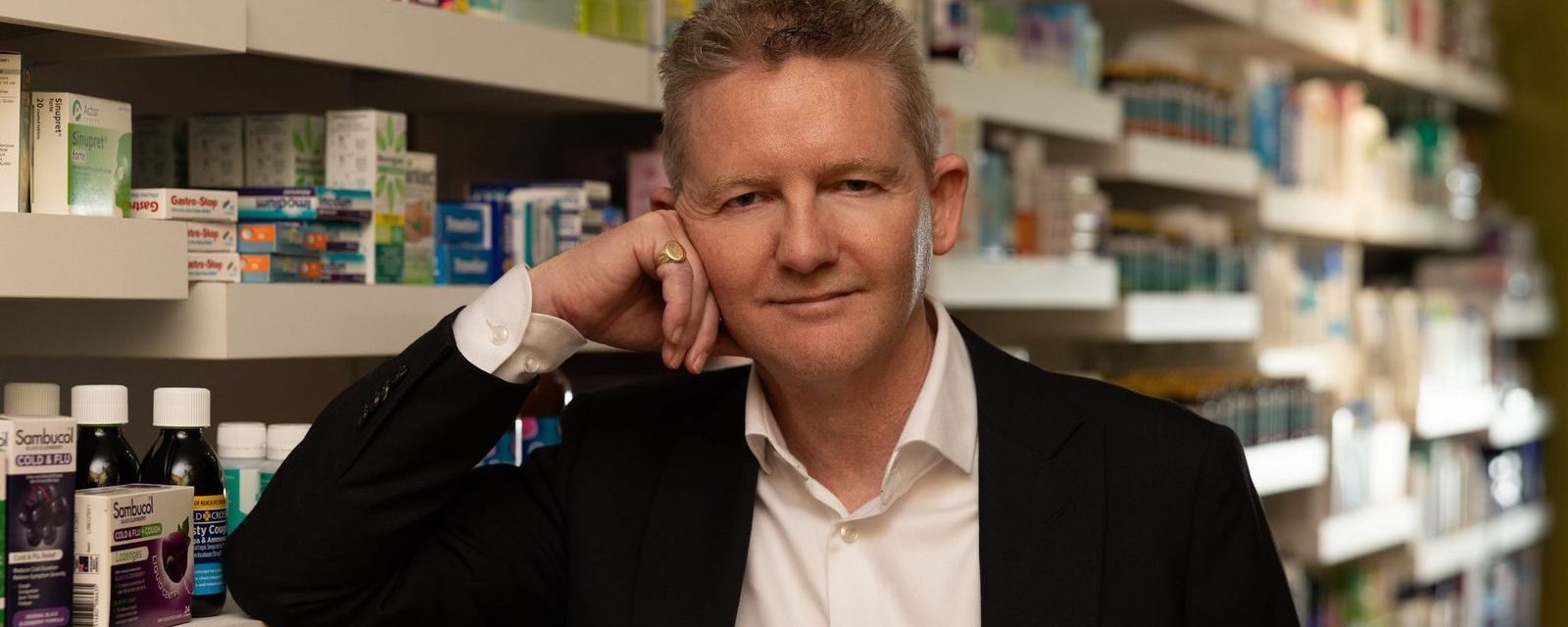
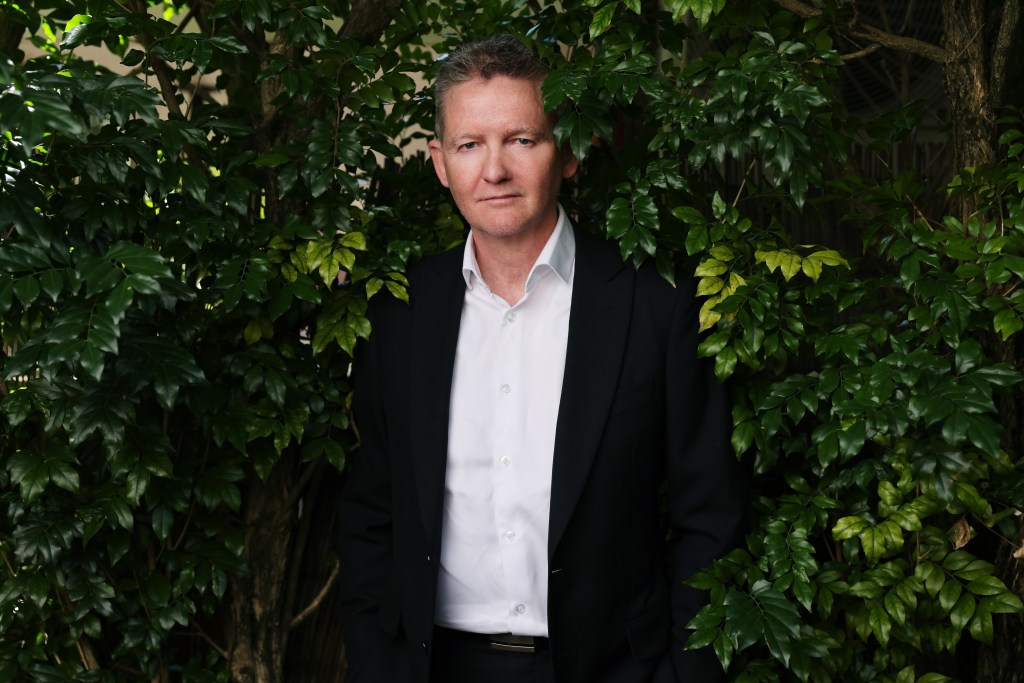
Peter Comerford of Promethean
The palliative care doctor kicked off Comerford’s education on the subject. “One of the horrible things with cancer is loss of appetite. You get thinner and thinner, and the breath starts to stink. And he was sick and tired of looking at this and said, ‘Well, THC gives you the munchies, maybe I’ll run a clinical trial where I give THC to people who are dying.’
“And the power that palliative physicians have is the patient is going to die. So nothing they can do can be any worse. So that’s what brought me over. ‘Where do I sign?’”
The rise of the cowboy
Soon after, Comerford left St Vincent’s to take over a pharmaceutical wholesaler, Anspec. “I got a call from the Department of Health to say, ‘We’ve legalised medicinal cannabis, but we’re concerned that somebody is charging very high prices, and that the supply chain will get out of control … Would you help us to try and control it?’”
“The [former federal health] minister [Greg Hunt] was determined to have medical cannabis here, but controlled for as long as he possibly could,” says Comerford. “And we helped bring the price down, and we helped control the supply chain, and develop the quality standards.”
It is estimated there are now 6,000 doctors and nurse practitioners who have qualified to dispense the drug even though it remains unapproved by the TGA, except for multiple sclerosis and certain seizure disorders.
They all witnessed the rise of cowboy telehealth outfits prescribing too freely. “So we backed away from all of that,” says Comerford.
The TGA put out new regulations in 2021 to progress towards pharmacies being able to dispense cannabis products.
But Comerford thought the new regulations set the maximum recommended daily dose of cannabidiol [CBD], too low at 150 mg. CBD interacts with the endocannabinoid system that helps regulate sleep, appetite, and mood without binding directly to the receptors that cause euphoria. So while it doesn’t get anyone high, in large doses it can cause drowsiness.
Comerford knew of four companies that had failed in clinical trials at the 150 mg level, but says he was encouraged by the TGA to take a look. “If the TGA think it can be done, there must be a technology out there somewhere. And I found a nanotechnology that’s used for antibiotics and cancer drugs and all sorts of things. And I said, ‘Well, maybe we can apply this to massively improve the bioavailability of cannabis and turn it into what the minister wanted,’ which was for Australia to be the biggest exporter of medicinal cannabis in the world.”
Only 4% of the CBD in CBD oil gets absorbed by the body.
Comerford found nanotechnology in the scientific literature going back to the 1940s, he says, that promised to break the CBD down into tiny particles that looked like a carbohydrate. “The body likes carbohydrates, so it absorbs the carbohydrates.”
The nanotechnology achieved 66% bioavailability, he says, and is the first such CBD tablet in the world.
With a new company now in place TCann Pty Ltd, they figured out a way to dry the CBD nanoparticles into a tablet, in 2022, and moved that towards a Phase-3 clinical trial, skipping earlier trials because CBD had already been proven safe.
The double-blinded randomised placebo-controlled trial enrolled 155 people suffering mild to moderate pain who received the treatment for four weeks.
The results have not been published but Comerford says that while the group receiving the CBD did do better, the benefit did not reach statistical significance.
“Pain is a very difficult thing to run a trial on. You always have a placebo effect in pain … but we found a very clear signal that in certain types of responder, they responded really strongly to the medication really quickly where the placebo in the same cohort responded very little in the first week, a tiny bit more in the second week, a bit more on the third, and a bit on the fourth.
“That curve upwards is a classic placebo curve because somebody is attending their doctor and talking about the pain and probably adhering to their medications a bit more and walking a bit more.”
“If you get it registered, it actually takes over the whole $200 million.”
Peter Comerford
When they looked for adverse effects of the drug, they found reduced anxiety, improved sleep and improved “activities of daily living”.
“So the fact that we got this signal allows us to go and say to the TGA, ‘We can’t do the over-the-counter part, schedule three. We need you to evaluate this as a provisional registration pathway.’”
The provisional pathway allows the TGA to register a promising medicine on the basis of preliminary clinical evidence, giving patients access while the company collects further data needed for full registration. But the pathway is usually reserved for medicines treating serious or life-threatening conditions.
The company plans to conduct another trial but design it to take the placebo effect into account.
Sweeping the table
Worldwide, the market for medicinal CBD was forecast to be US$24 billion this year, by Fortune Business Insights.
If Promethean can get registration in Australia, it will open huge sections of that to the company, says Comerford. “Australia has mutual recognition agreements with Europe, the UK, Canada, Asia. That gradually starts to bring in this new generation of medicines away from the centuries-old ways of taking these medicines and into, well, we can actually have these medicines in a pharmacy.
“You go to a doctor, you talk to a doctor, they prescribe it, they control it, they know the dose because it’s a tablet.”
He imagines that Promethean will bring out formulations with different percentages of THC [the ingredient that causes the high], which would open up a wider range of ailments to treat. “But remembering that the THC is powered up by nanotechnology as well. So we’d have to be very, very careful about having a lot of CBD and just a little THC to get the benefit and not the high.”
In all this, there’s a more audacious business plan. Asked what percentage of the CBD market he thinks Promethean could capture, he nominates 5%. “But there’s a barb in this for the rest of the market,” he says. “If a medicine is registered for an indication, so CBD for pain, then no unregistered medicine that is CBD can be sold for pain. So you actually immediately take over that entire market for that disease.”
“In Australia, CBD was prescribed for $200 million worth last year. So while I say 5% of the market, if you get it registered, it actually takes over the whole $200 million.”
Comerford admits, however, his moat is shallow. “The real two moats are first-mover advantage and the results of your clinical trials and the registration that you get. So registering a new medicine creates a moat for a period of time. A bit shorter in Australia than it is in the US, but that first-mover advantage and registration are the two moats.”
Brand too. “And we called it Promethean BioPharm because of that character from Greek mythology, Prometheus. He pitied humans and their suffering and stole fire from the gods to give it to the humans to ease their suffering.
“His punishment by the gods was to be chained to a rock and his liver ripped out every day by a bird and then recover overnight and it happened again the following day.”
That’s where his courage as a founder comes in, he jokes.
The TGA says:
The TGA told Forbes Australia it had not received a registration application from Promethean.
To date, two medicinal cannabis products have been evaluated by the TGA and included in its register of drugs that can be supplied in Australia by prescription only.
Sativex (nabiximols) is used to treat certain patients with multiple sclerosis
Epidyolex (cannabidiol [CBD]) is used for patients with certain seizure disorders.
Most CBD products in Australia are unapproved prescription medicines that can only be accessed through specially accredited healthcare practitioners. So most GPs cannot prescribe it.
The use of an unapproved therapeutic good for a patient is a clinical decision made at the discretion of that accredited healthcare practitioner who is responsible for assessing the benefits and risks for the individual and ensuring these risks are included as part of the informed consent process.
Want to see more Forbes articles on your feed? Tap here to make Forbes Australia a preferred source on Google.
Look back on the week that was with hand-picked articles from Australia and around the world. Sign up to the Forbes Australia newsletter here or become a member here.