
Cell Bauhaus is building computer-based replicas of living systems to accelerate bioengineering. By modelling entire cells, it aims to recast biology as a discipline of digital design, rather than trial-and-error.
This story appears in Issue 19 of Forbes Australia, out now. Tap here to secure your copy.

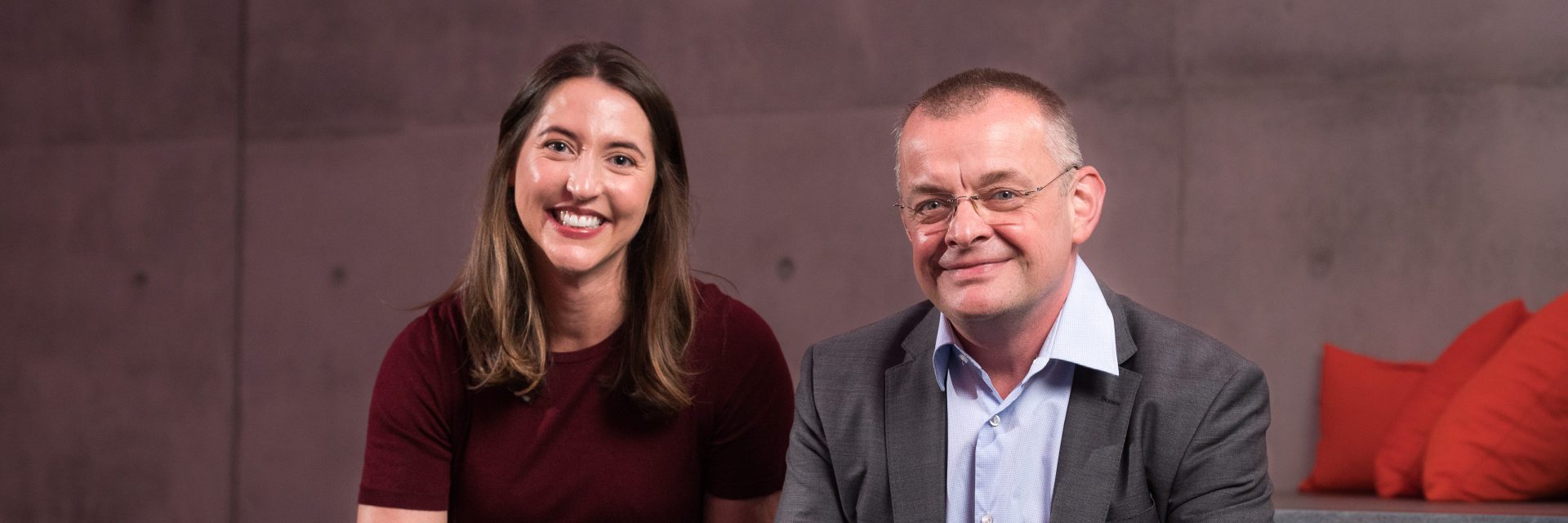
After years of watching academic breakthroughs stall before reaching industry, Cell Bauhaus’ CEO Dr Megan Coomer, became determined to make a change. Boasting a PhD in Applied Mathematics and a Master’s in Computational Biology, she has seen firsthand how biology lags behind other engineering fields.
“In other fields, from aerospace to semiconductors, they’re able to design and test their innovations digitally before they actually go and spend time and money building them,” Coomer says. “Biologists are still stuck with trial-and-error experimentation.”
Her co-founder, ARC Laureate Fellow and Professor, Michael Stumpf, lends decades of experience in theoretical systems biology. Together they seek to solve a bottleneck preventing biology from becoming a true engineering discipline. The result of their partnership is a platform for computational cell modelling. Entire cells can now be simulated in the ‘cloud’.
Coomer says this gives bioengineering companies “rational design capabilities”, allowing the simulation of 1000s of different real-world conditions before they go into the laboratory. “We really want to set experimentalists up to go into the lab with the best possible solutions that have proved viable on the computer through modelling.”
She claims that what differentiates Cell Bauhaus is its hybrid modelling approach. Instead of discarding centuries of biological knowledge in favour of ‘black-box’ AI, Cell Bauhaus “mechanistically exploits everything [they] understand already about cell biology, and then strategically uses AI and machine learning to fill in the gaps where knowledge is incomplete,” explains Megan.
Think of Lego blocks: some are well-characterised components of sub-cellular biology that can be modelled mechanistically, while others remain less understood and are instead represented using machine learning.
Once replicated, parts of these cells can be altered. Coomer describes how one can knock down genes in that organism, or sometimes even knock in genes from a completely different organism.

Coomer sees strong application in hijacking the metabolism of different micro-organisms in order to get them to produce different high-value compounds sustainably.
“This can be anything from specialty or commodity chemicals right the way through expensive pharmaceuticals or biologics. The list is endless,” she says.
“Say, we take the scent of vanillin, which predominantly comes from Madagascar’s vanilla plant. It’s very expensive, and there’s a very unstable supply chain. So, what people have done is they have knocked in the genes that produce the vanillin scent compound into yeast species, and are therefore able to create that compound without chopping down plants, but rather by growing them using precision fermentation.”
Coomer says Cell Bauhaus wants to be an enabler to the community and hopes to transform how companies engineer microbes for biomanufacturing.
The company is in the validation and early customer development phase, yet has already received strong backing from the Gates Foundation, the University of Melbourne Genesis Pre-Seed Fund, and Tin Alley Ventures.
Cell Bauhaus aims to produce models of multi-cell organisms in the future.
“Sadly, what often happens in biotechnology is people get something to work on the laboratory scale, but then as soon as they try to scale it up, they see that the organism becomes less productive in this industrial environment,” Coomer says.
“[Multi-cell modelling] is definitely what we’re aiming for, because we believe that we need to have that full solution to provide customers with something truly appealing. Australia has a really good opportunity to become a global leader in this space.”
Coomer is calling for support from the government through innovation grants and deep tech funding. “We have to stem a frustration [about] how the brilliant work being done in academia is often not translated into real-world solutions,” she says.
She also points to the strong career opportunities evolving in the sector.
“Working at the intersection of biology, maths, and computer science. Career paths like that really didn’t exist five years ago, and especially not in Australia,” she says.
Look back on the week that was with hand-picked articles from Australia and around the world. Sign up to the Forbes Australia newsletter here or become a member here.