
Inside the restless mind that created Frank Green and turned water bottles into $99.95 emotional support devices.
This story features in Issue 22 – out now. Tap here to secure your copy.
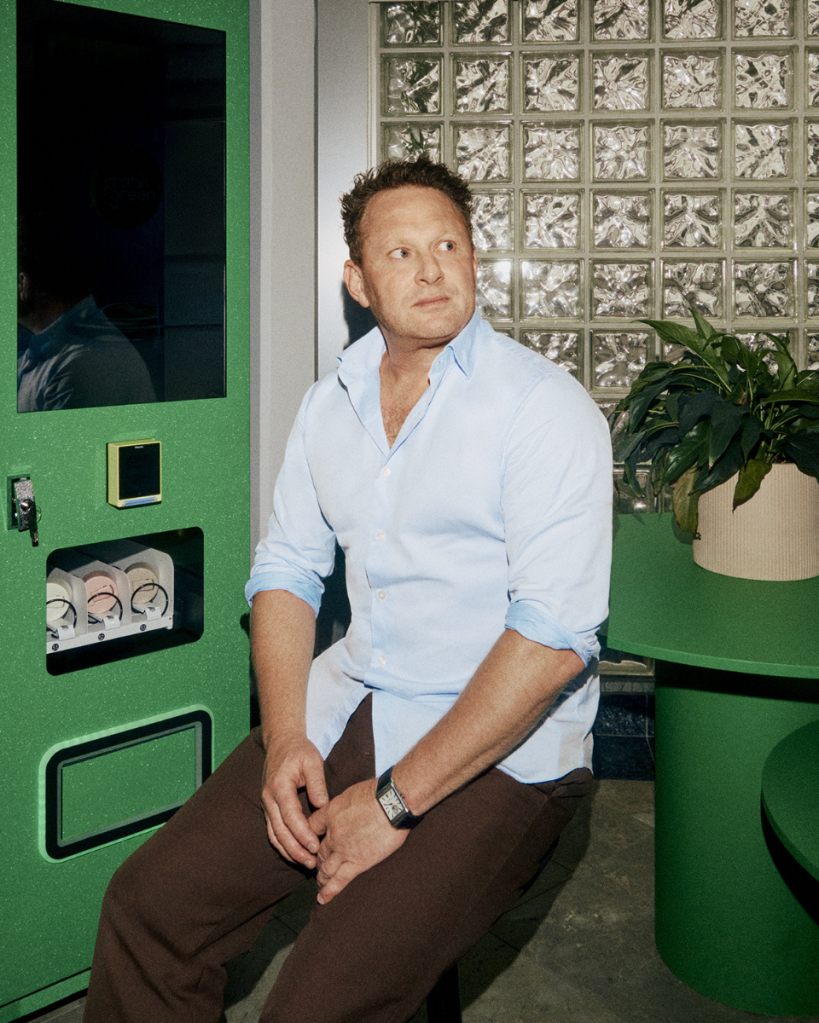
Frank Green founder Ben Young remembers his corporate baptism of fire – working mergers and acquisitions for the emerging energy giant Alinta back in the noughties.
The company had an inspirational CEO, Peter McGarry, Young recalls. “They wanted to know that this business strategy team that I was in had the lights on. We had to present an idea to him once or twice a year – any ideas.”
Ever since, Young has kept a little black book to capture his lightbulb moments. “And I presented this idea for a reusable coffee cup and water-bottle business,” he says. “They’re smart people. I was so in awe of them. I always thought I was the dumbest in the room.”
And his bosses only confirmed that opinion.
“They said to me, ‘You’re an idiot. Why would you start a reusable coffee cup business when you can just have a coffee and put it in the bin?’”
But Young wasn’t the type to back off. “As a young kid, I did things my way. Nothing got in my road. If you told me I couldn’t do it, I did it.”
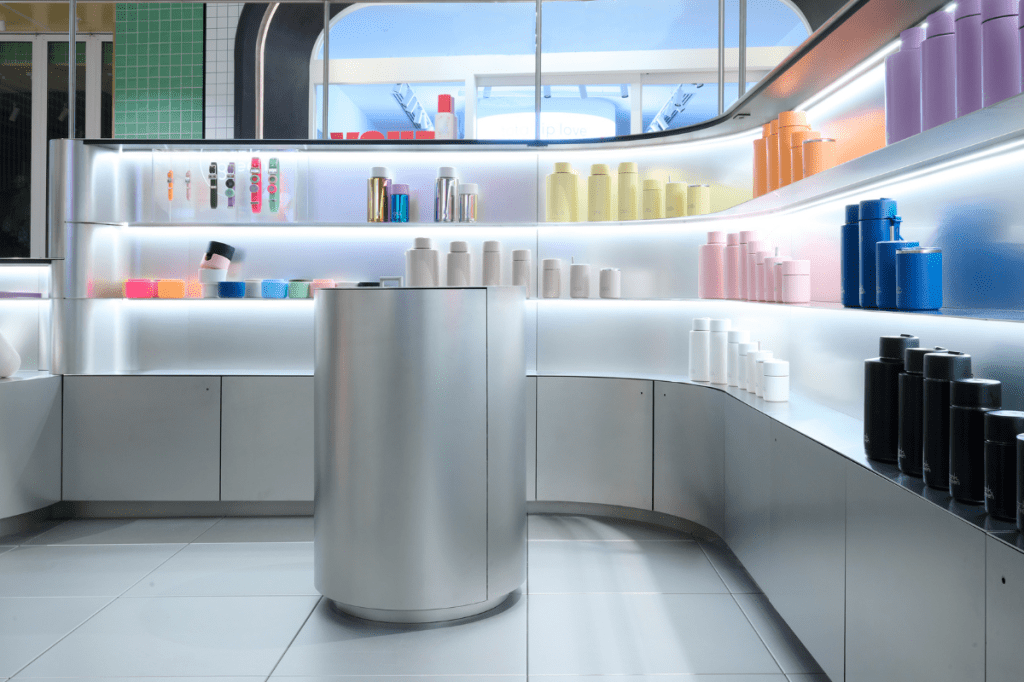
And thus began the Frank Green juggernaut that has made Young’s $60-$100 water bottles as ubiquitous in school lunch boxes as in start-up offices, dominating the local reusable cup and bottle market and, reportedly, generating sales of north of $100 million a year. But with a crowded global market estimated at US$10 billion annually, there’s a need for constant reinvention.
Frank Green
It’s Young’s oft-told origin story that, playing in a creek in Galston Gorge on Sydney’s northern fringe, he was disgusted by the amount of plastic that would wash down from the suburbs with every dump of rain.
“It haunts me – this beautiful beach was just full of plastic, and I used to walk through it as a petulant child and kick all these stupid bits of plastic off the beach. It wrecked my Huckleberry Finn, Tom Sawyer experience. I couldn’t fish on that beach anymore.”
As a young man working at healthcare provider Mayne Nickless, which was undergoing rapid expansion, Young got to see 90s business legend Peter Smedley, nicknamed “Pacman” for the way he gobbled up companies, striding through the office. You knew something was afoot when Smedley had his speechwriter with him.
Young took note when Smedley outlined a long list of goals to the media and was asked whether he was looking at his watch or his calendar for timing.
“And he says, ‘I only ever look at my watch’.
“And I saw what he did with the banks and then how he tried to do the same with doctors. It didn’t work. I learned so much, not by people teaching me what went right, but from osmosis … what you’ve got to do to make a business successful, and some of it’s not popular.”
He landed at Alinta when it was growing from a $300 million gas company to a $14 billion energy giant.
His coffee-cup research, paid for by Alinta, gave him the confidence to keep going. He concluded there were two reasons people weren’t using reusable cups and bottles. They looked naff, and they leaked.
He kept his day job, later moving to Australia’s biggest waste company, Cleanaway, where those plastic ghosts of Galston Gorge kept haunting him. He didn’t want to die wondering.
“I wasn’t a designer. I didn’t know anything about manufacturing. I didn’t know about consumer products.
“So I did a whole lot of research – who the best industrial designer was in Victoria? I went to that guy [Jon Seddon], and I pleaded my case, and no doubt he has lots of people pleading their case to him, and he said, ‘Sorry, I’d love to work with you, but I can’t because I’ve got a non-compete.’”
Young bought three sets of tools for “hundreds of thousands of dollars”, all bootstrapped solo, to make the cups, and started producing prototypes. “You never know what you’ve got until you’re manufacturing from them [the tools].
He filled the prototypes with boiling water and would throw them across the room, drop them from 10 metres. “If they failed – you knew what their tolerances were – and it just wasn’t working. The seals were swipey seals [where you slide to drink]. Not compression seals. They worked for a month, but they wouldn’t work forever.”
So, he didn’t go to market and kept his day job.
“You have to have an absolute locked-up consumer promise. If you want people to buy into a reusable, you can’t give them something horrible because they’ll never do it again.”
Three years after first approaching Seddon, desperate now, he went back to beg the designer for his services. Seddon’s non-compete was over, and he came on board.
Bottle as crutch
Frank Green, named for the adjectives for honesty and environmental friendliness, launched five years after the journey began, in December 2013, with the business owing Young about $3 million, but he owned it all.
“It really was about the design, and ticking consumers’ boxes. We were the only product that didn’t leak. We had innovative lids. Back in the day, we had a chip in our cup so you could pay for your coffee with your cup, a credit card in your cup. It blew people’s minds.”
“We’re a design organisation. When problems come to us, we try to design our way out of them.”
Ben Young
Sales doubled in 2017 when Craig Reucassel’s ABC television show War on Waste featured Frank Green while highlighting the extent of the throwaway cup problem.
Then COVID-19 knocked the stuffing out of the business when cafes stopped putting their brews in reusable cups. Coffee cups have “been slow going ever since,” says Young.
When Melbourne was in peak lockdown in 2021, Paul Troon joined the company from Mecca Brands, where he was head of design. Troon started looking harder at water bottles.
“I saw that Ben had already created the most beautiful product that you just want to take with you every day. It was, ‘Let’s turn it into this way that people can express themselves and turn it into an emotional purchase decision’ – where it becomes an extension of your personality.
“And so that’s where things like being able to pick your own base colour, your own lid colour, get your name engraved on it, have been such a cornerstone for the business.”
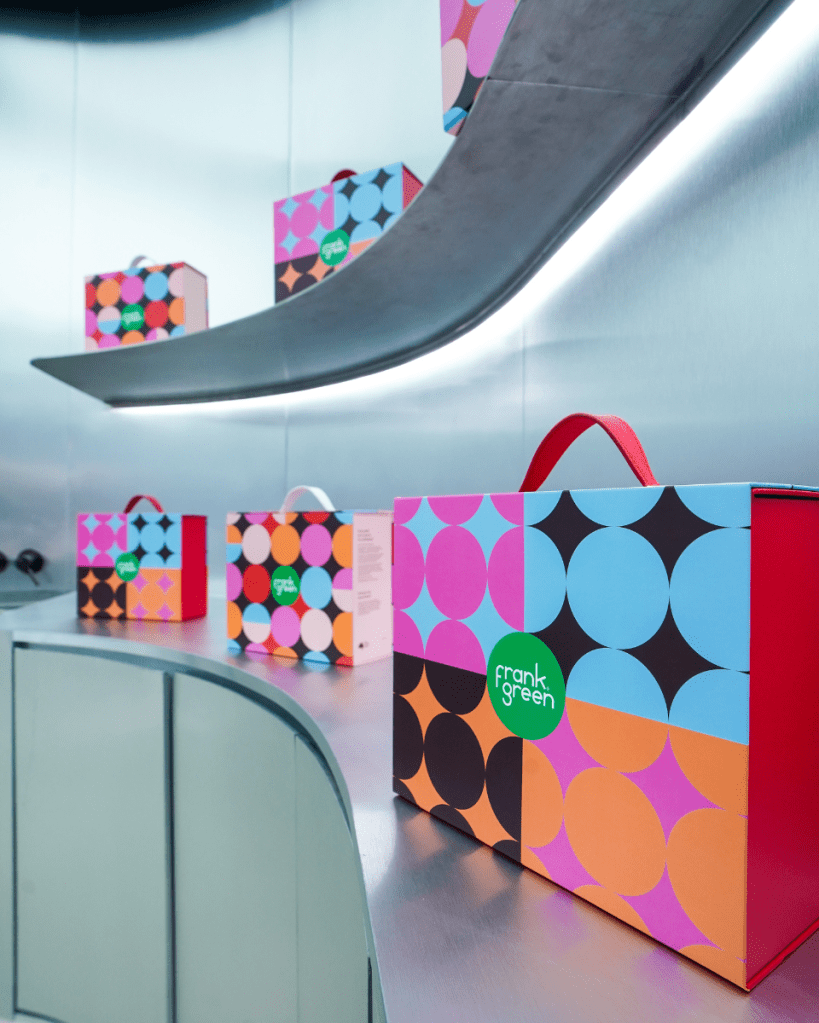
Troon, says Young, was instrumental in the campaign that created “these emotional support water bottles”. “It was high-shine, high-style, high-emotional purchases, and that’s when the business took off.”
Recent fears about microplastics from disposable water bottles and disposable coffee cups have also been good for business.
But they haven’t been alone. The reusable drinkware boom has spawned a wave of rivals, like market leader Yeti, founded in 2006 with revenues of US$1.87 billion and the new kid on the block, cultish oversized Stanley Quenchers [2016] is fast catching up. Australia’s KeepCup [2007], also predated Frank Green. They’re all chasing the same eco-conscious consumer, while cheaper imitators crowd the shelves, chasing a market predicted to grow to US$15 billion by 2032.
The hare-brained scheme department
Frank Green, with 300 employees, invests 40,000 hours a year [equivalent to 20 full-time workers] in research and development, says Young. “If there’s a thing that we can improve, we improve it. It could be the material. It could be changing the thickness of a chamfer from 0.2 millimetre to 0.3 millimetre. No one would know the difference, but we do. So, we make the change.”
He brings up the story of when they wanted to make a food container. “We spent three years developing a double-walled, vacuum-insulated lunch box that you could put curry in one side and yoghurt in the other. The curry stays hot, and the yoghurt stays cold.”
The only trouble was that it weighed three kilograms. Back to the drawing board. Two years later, they had a stainless-steel lunch box. Uninsulated, but that baby was never going to leak.
Troon says the willingness to fail has made the journey a joy.
“We’re prepared to take those risks to come up with – we call it the hare-brained scheme department – ideas for some of the things that we might bring to life.”
Young, still with his little black book, declares himself president of the hare-brained scheme department.
“Ben, being the sole founder [and still 100% owner] of this business, if he’s got a good idea, we are absolutely off. That’s so exciting.”
Frank Green has more than 50 patents and trademarks to its name, and spends a good deal of time and money defending them. “We’re victims of our own success,” says Young. “We’ve sold more water bottles than there are Australians. We’ve had a lot of copies.”
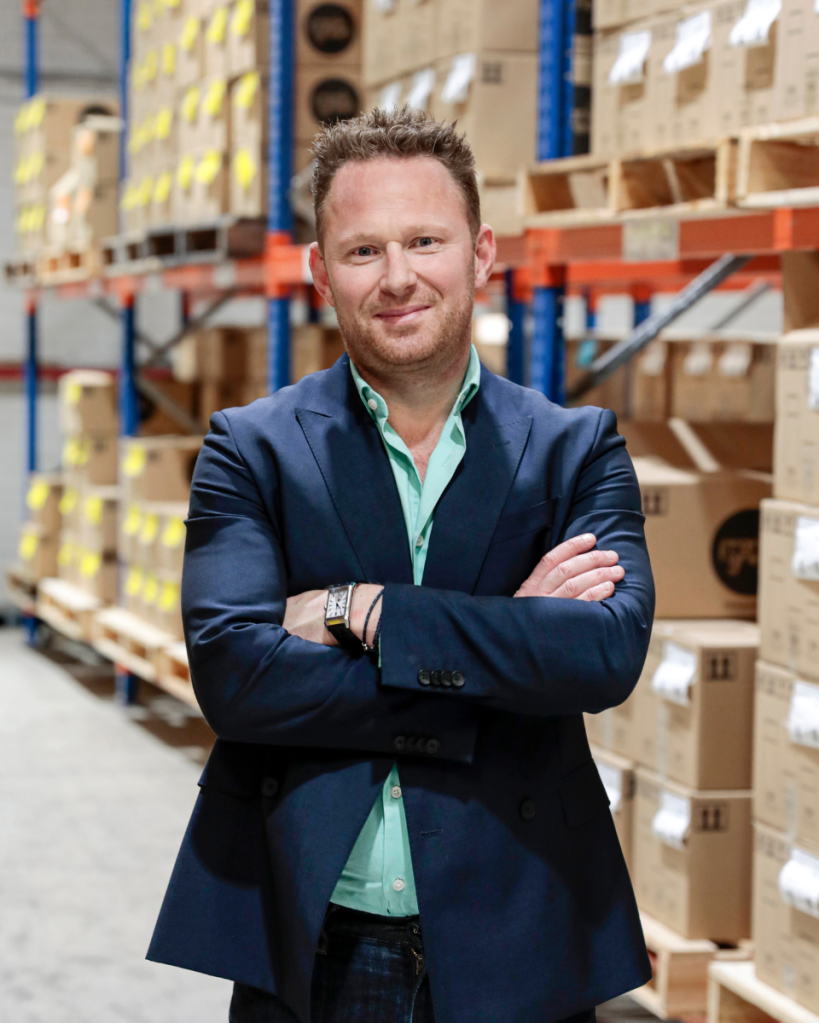
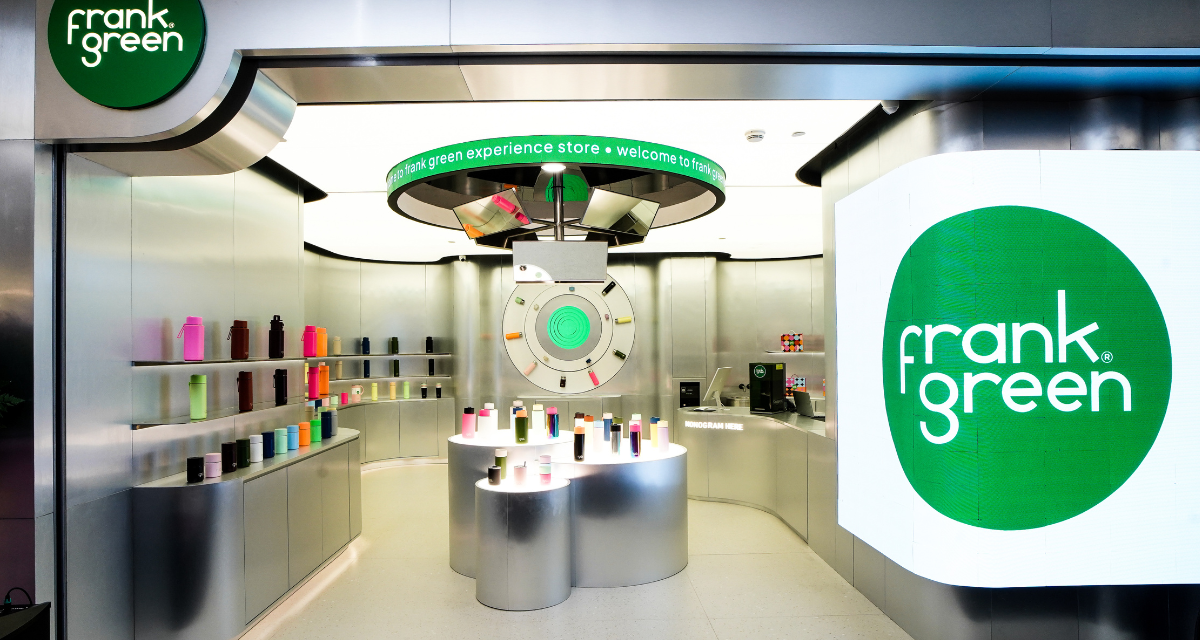
What competitors can’t copy, he says, are the brick-and-mortar shops they started opening in February 2025. “We got awarded one of the top 50 retailers in the world, against all the international brands. And that’s all the work that Paul and his team have done, making sure there’s an amazing consumer experience.”
The shops are high-gloss temples to hydration, with two opening in Sydney and Melbourne in December and the newest opening in Jakarta in February 2026.
Yet even as Frank Green leans into the polish, Young remains preoccupied with the less glamorous aspects.
“One thing that we haven’t been able to stop is people sending pallets to us wrapped in plastic.” If they’re loaded to Australian standards, each pallet has 20 metres of Glad Wrap for truckies to hold the load stable.
“We’re a design organisation. When problems come to us, we try to design our way out of them.” Young is now launching his latest business, No Wrap, which eliminates the need for pallet wrap.
It is a system of hard corners and straps made from, appropriately, recycled plastic water bottles, all being manufactured in the new Dandenong factory. [95 % of Frank Green is manufactured in China.]
Young talks about No Wrap with the same energy he once reserved for swipe seals and
ceramic linings.
But there’s more from the little black book. He pulls out a prototype of a product that came to him while walking the dog. It has consumed him and the hare-brained scheme dept for three years.
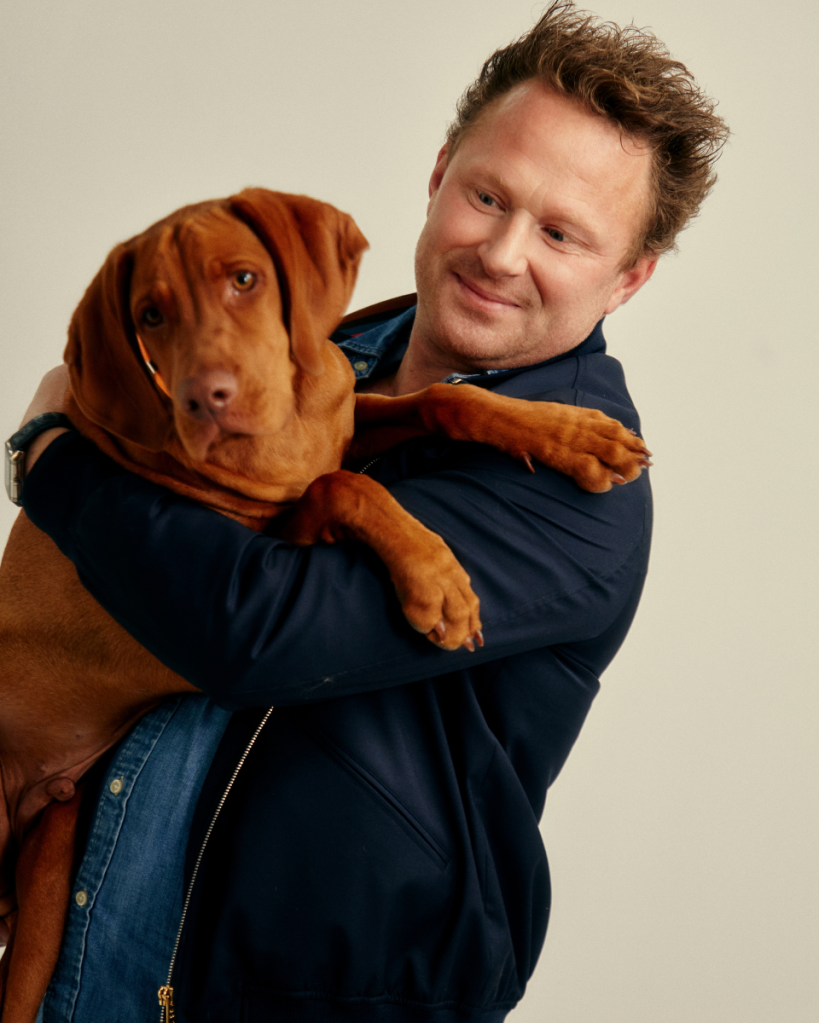
“I’m with old mate here,” he says, motioning to the sleepy red hound by his side, and we’re walking, and I have to carry a ball thrower, poo bags and a leash. I think, ‘I’m done with this’. I make a ball thrower that is also a leash, and it has a poo bag holder compartment.” He also claims it throws 10% further than other ball throwers.
“You think to yourself, ‘That’s a bit naff,’ but it’s not when you really think about it, right?”
“And this product, it’s made me mental, right. It’s taken three years to get right because it’s got an overmold, and then getting this material to fit to this one, so it’s nice in your hand, and then it’s got this living hinge, and getting that to work and making it feel weighted the right way. I’ve done so much work making it feel nice to use. I feel like I’m boring you now.”
He isn’t.
Overmolds. Living hinges. Weight distribution – marginal gains in throwing distance. It’s the hare-brained scheme department in full flight.
Want to see more Forbes articles on your feed? Tap here to make Forbes Australia a preferred source on Google.
Look back on the week that was with hand-picked articles from Australia and around the world. Sign up to the Forbes Australia newsletter here or become a member here.