
From a bruising family buyout to a sustainability revolution, Yalumba’s Hill-Smith family is playing the long game.
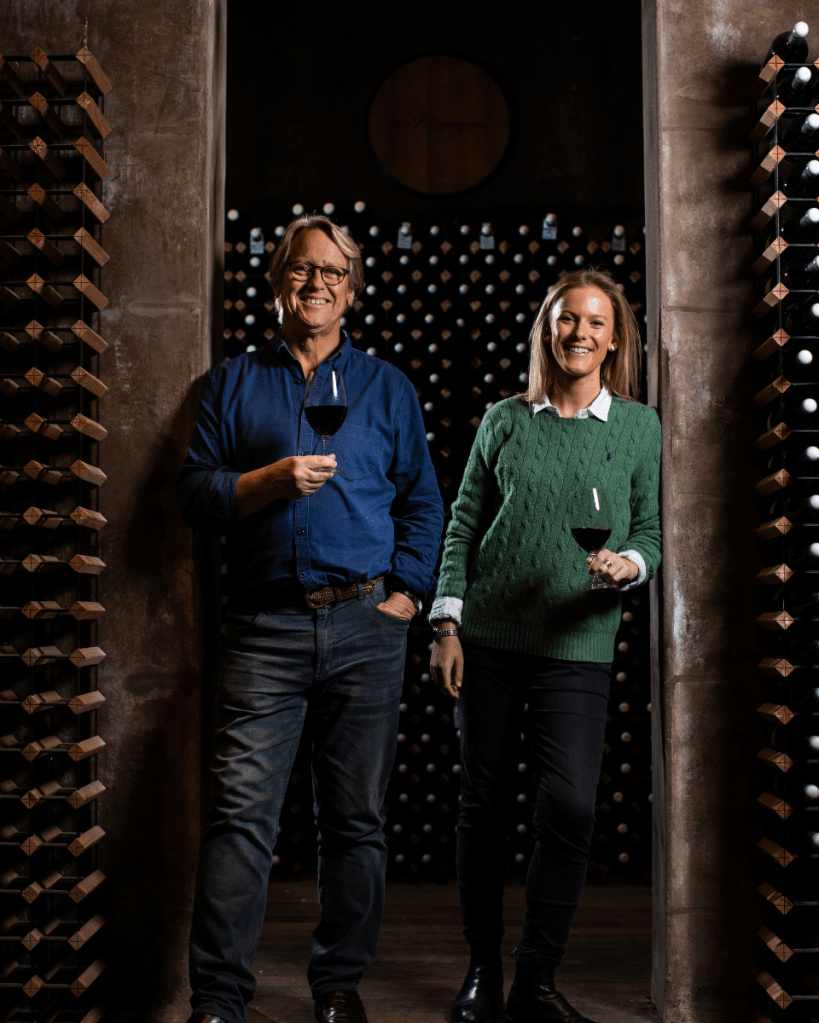
Robert Hill-Smith doesn’t shy from the word “ambush” to describe what he did with his cousins – his friends – when he gathered them at a house in the Yalumba “Compound” to tell them he wanted to buy them out of the business.
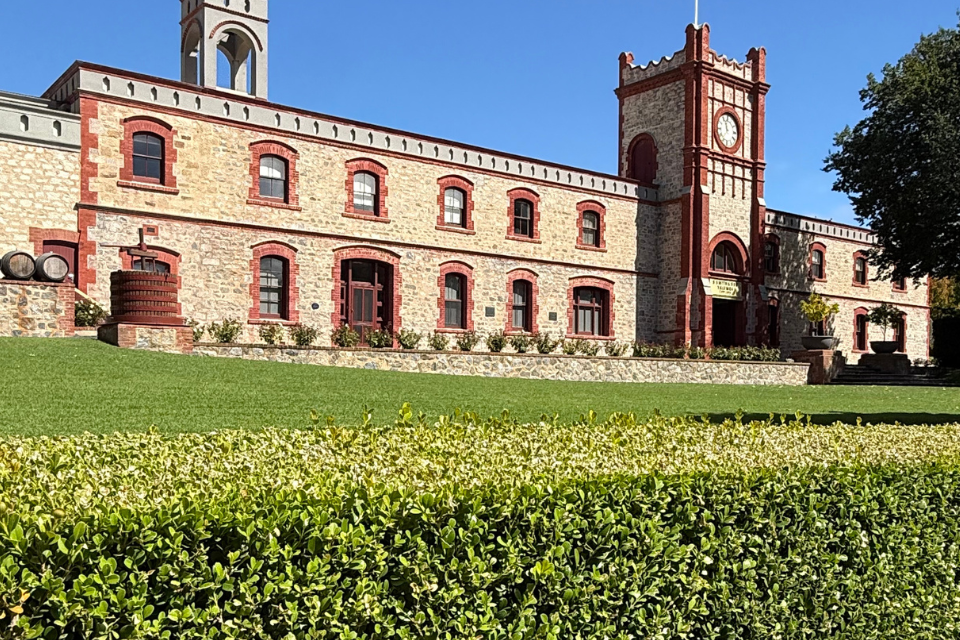
“You’d have to say it was an ambush because no-one was prepared for it,” he tells Forbes Australia at the Yalumba headquarters which bear a passing resemblance to an old university or private school amid the vines.
He’s talking about the type of upheaval that besets family businesses every generation or so and which await his and his brother Sam’s five children – the sixth generation of Hill-Smiths who will inherit the 177-year-old family business.
Back in 1989, Robert Hill-Smith had just taken over as managing director four years earlier. He was in his mid 30s. His branch of the family held about 35% of the shares. The rest was spread across 12 other relatives.
He’d grown profit 60% a year after he became marketing manager six years earlier. He was worried that he’d work his guts out to continue increasing the value of the company only to see it sold out from under him.
He found some backers, borrowed something in the order of “$30 million to $40 million” [contemporaneous media reports had it at “more than $35 million”] at a time when interest rates were heading to 18%. Success was by no means certain.
“I went with my parents’ permission … Dad was upset by it, but he supported it.”
Robert Hill-Smith
“It means I have to pull a rabbit out of a hat every 12 months,” he told a reporter at the time.
The thing was, he’d been pulling out bunnies for the previous six years. He needed to find some more?
What followed would reshape not just the ownership of Yalumba, but its strategic direction. Faced with high debt and a muddled brand, Hill-Smith set about transforming a sprawling, heritage wine business into a focused global player – riding the wave of Australia’s export boom while making a series of bets on branding that are still playing out today.
No regrets
Robert Hill-Smith reels off the date without hesitation. He and brother Sam’s takeover started at midday on October 10, 1988 and finished on June 6, 1989.
“I went with my parents’ permission … Dad was upset by it, but he supported it.”
His father, Wyndham Hill-Smith, could see Robert’s point.
And Robert had grown up with his cousins all living in the compound at a time when kids still muck about on the barrels as cows and chickens wandered the place. So he felt bad about uprooting their expectations of what their futures might look like.
Australia’s Oldest Family-Owned Wineries
- Yalumba (1849) — Barossa Valley (including Eden Valley); sixth generation of the Hill-Smith family.
- Bleasdale Vineyards (1850) — Langhorne Creek; sixth generation of the Potts family.
- Tyrrell’s Wines (1858) — Hunter Valley; fifth generation.
- Tahbilk (1860) — Goulburn Valley; owned by the Purbrick family since 1925.
- Henschke (1868) — Eden Valley; sixth generation.
- Campbells Wines (1870) — Rutherglen; fifth generation.
- Brown Brothers (1889) — Milawa, Victoria; fourth generation.
“It wasn’t meant to be disrespectful, even though it probably was perceived to be … There were other things at play in terms of estates and cousins who didn’t work here who wanted things out of the business that the business couldn’t provide them.
“The thing is, we’re still all good friends, thank God. And everyone’s done well as a consequence of that decision. I know there are no regrets.”
His cousin Michael Hill-Smith confirms this. “The whole thing was slightly bruising at the time,” Michael tells Forbes Australila. “But because there were so many other family members that were not involved in the business, there was a logic to what unfolded … Every vine needs to be pruned and I understand why Robert did what he did.”
Michael used his money from the sale to found the Shaw + Smith winery – the Adelaide Hills boutique that helped redefine Australian cool-climate wine – with his [non-Hill-Smith] cousin Martin Shaw. They later also bought the highly regarded Tolpuddle vineyard and started putting out $100+ bottles of pinot noir and chardonnay.
“It’s worked out really well because Robert’s doing what he always wanted to do, which was to run the big company … and we’ve had great success doing what we’re doing.”
“I think the cards have fallen exactly where they should have,” says Michael’s daughter Tilde, who is also in the Shaw + Smith business, and who gets on very well, she says, with her Yalumba cousins.
Riding the wave
Asked how they managed 18% interest on tens of millions in debt, Robert quips: “We used to go to church and pass the plate around …”
But Dionysus was on their side. Australia went from near zero exports of wine in the early 80s to being a large, respected player by 2000.
He pioneered the 2-litre cask, selling the more classy option for the same price as 4-litre casks which at the time accounted for 70% of table wine drunk in Australia. [You could buy Penfolds 4-litre casks then too.]
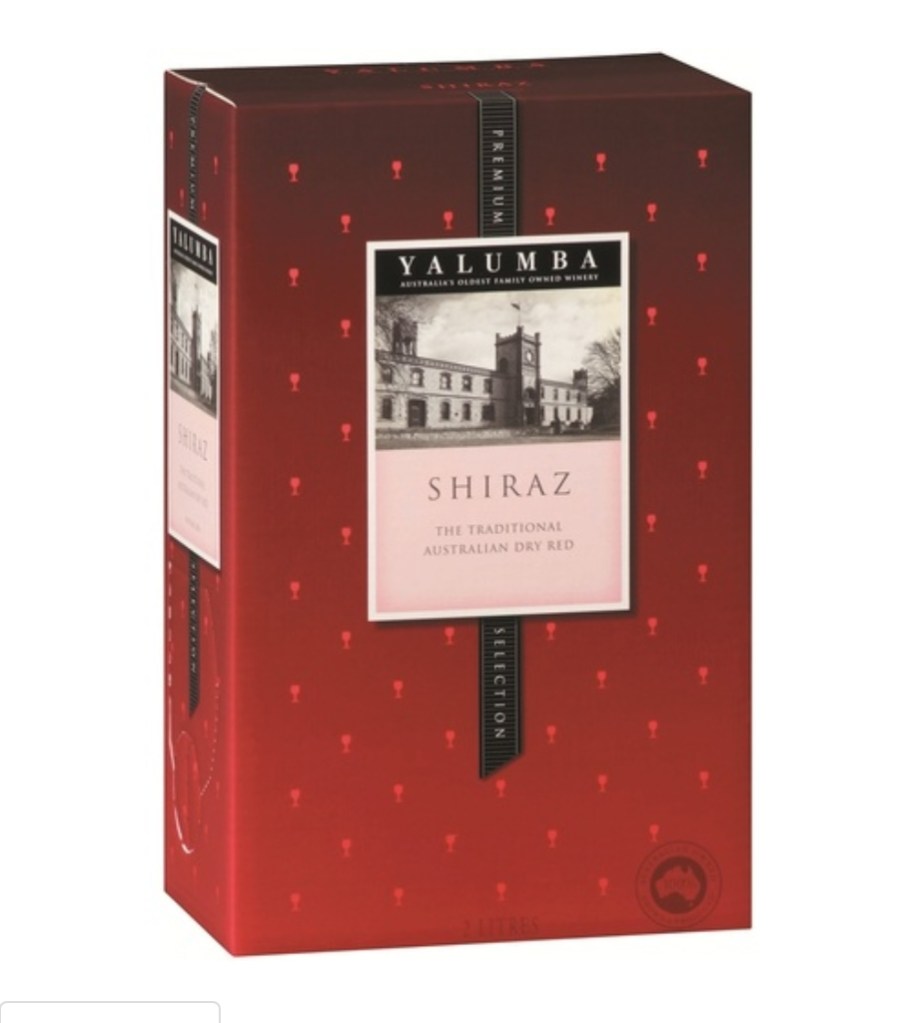
Back in 1958, Wyndham Hill-Smith, had bought a block out in the Riverland to grow grapes for sherry and port, a mainstay of the business back then.
But Robert used those irrigated acres to launch a new “entry-level” brand, Oxford Landing, in 1990, which quickly became a huge seller in the UK.
“We started Oxford Landing as an adventure brand, not the cheapest, but not super premium either,” says Robert. “So that was a door opener, and then we were able to piggyback other things into the portfolio, Yalumba being one, Hill-Smith Estate brand being another.”
They also took smaller winemakers with them, setting up a marketing arm, Negotiants International, to sell other wines overseas. “It represented some of the people we still represent today, like the Henschke family, the Barry family, Vass Felix out of Margaret River … other families we trusted and knew and liked their wines … we set up offices in London and California in the Napa Valley. We got quite aggressive riding the wave of the Australian wine discovery cycle.”
Hill-Smith also got to work cleaning up the brands. He didn’t pretend to be a marketing expert but he knew enough to know they’d been “doing it all wrong”.
“We were an incoherent legacy brand that did a bit of everything, or did a lot of everything.
“I said, to myself and to my family, ‘If the Yalumba brand is going to be taken seriously, we’ve got to divest ourselves of things that will prevent us positioning ourselves as a serious winemaker.”
To the sound of his ancestors rolling in their graves, he sold off the fortified trademarks– once household names you’ve probably never heard of, like Galway Pipe, Director’s Special, Clocktower Port, Autumn Brown Sherry – and inventory to Mildara Blass.
He used the money to buy a vineyard in Coonawarra and to upgrade the capital-starved winery. “We did a lot more downsizing to set ourselves up for the future. So this is always just a theory, by the way. It’s still a work in progress.”
The work in progress
Jess Hill-Smith’s childhood at Yalumba is steeped in the smell of fermenting grapes, the clang of the cooperage, and the hum of vintage as trucks rolled in. But just as formative were the events – driven largely by her mother – where she and her sisters polished cutlery, served guests and even ran a 50-cent lemonade stand at the Easter markets.
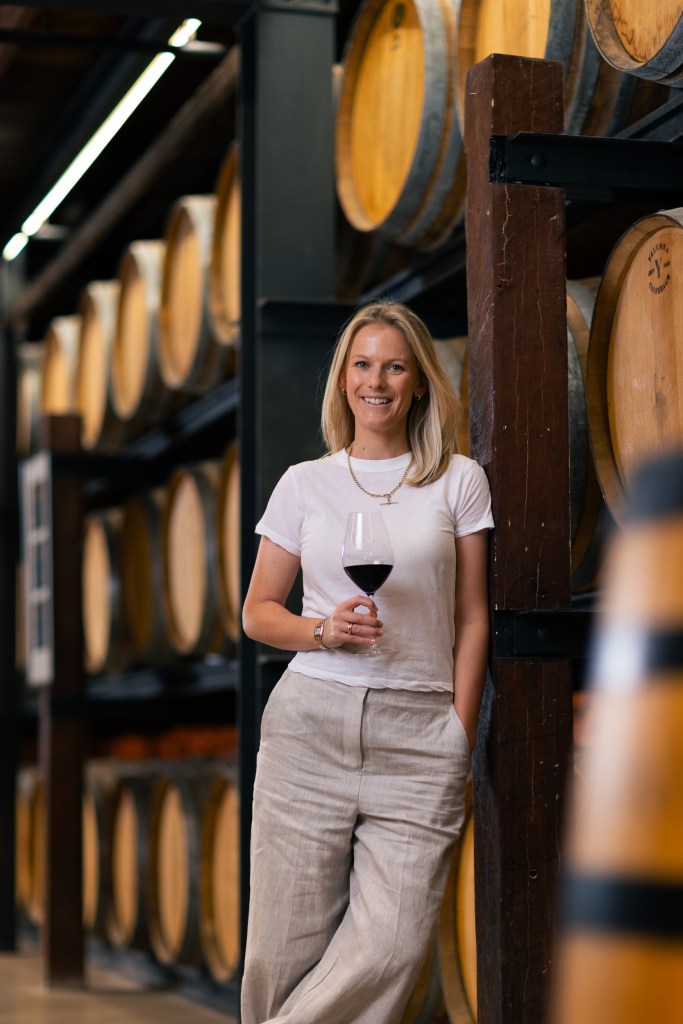
After completing a commerce degree at the University of Adelaide and working in marketing for Adelaide coffee chain Cibo Espresso, she was 50-50 on the question of whether she wanted to ever work in the family business.
Until a group called Australia’s First Families of Wine formed in 2009, bringing together 12 multi-generational winemaking families from the likes of Tyrrells, Brown Brothers, Henschke, Tahbilk and Jim Barry.
“I met all these people who were my age and had the same fears and doubts, the same challenges,” says Jess. “And it was just this huge light-bulb moment. I thought, ‘I don’t have to have my career path all figured out.’ Meeting these people just gave me, I guess, permission to do it.”
She quit her job at Cibo and her father advised her to “do a vintage”, for which she went to New Zealand, then did a gap year working for Wine Australia and for a distributor in the UK. She came home hoping her experience might count for something, but “feeling pretty lost”. “I said to Dad, ‘Please, can I work in the business?’ And he said, ‘No, you haven’t completed your five years.’
He saw that she didn’t take it well. “Don’t be upset,” he told her. “This is a gift. Go off, make your mistakes somewhere else. Go and figure out who you are and be your own person without being under the microscope of the family business.”
She went to Sydney, got her “dream job” as assistant brand manager with Moet Hennessy, then, after four years, did two years with Bollinger in London.
It was humbling to see what a small role Australia played in that great melting pot of the wine world, but she was pleasantly surprised at how well regarded the Yalumba name was at the more premium end.
She wasn’t sure about when to call time, because she was conscious that once she starting working for the family, that would be it … “Forever. I’m never going to leave.” She rang her father in 2018. “I’d love to come back.”
Robert asked her to be brand manager for Yalumba’s premium range. So when she returned in 2019, he was still in that decades-long process of getting the Yalumba name out of the lower price points.
Jessica had learnt a key lesson working with the giants of Champagne – that you couldn’t be everything to everyone. That’s what Yalumba had been doing – selling Yalumba 2-litre casks at $15 and Yalumba Signature at $400, and filling all points in between.
“When I joined seven years ago, we took the Yalumba name off the cask product and renamed it Winesmiths. But the wine market is super sensitive so we did it really slowly. Then we realised that that change wasn’t going to be as sensitive as we thought. So we accelerated the change and took Yalumba completely off that product.”
The Yalumba Y Series of wines in that $10 to $15 a bottle range was next, rebranded as The Y Series. No mention of Yalumba.
Now the cheapest Yalumba wine on the shelves is about $18 while the most expensive Signature series will go for more than $400, with the brand purely associated with premium Barossa reds.
Still, those connections in the consumer mind with the cheaper wines remains. “We recognise it’ll be a generation before the association’s completely disconnected,” says Jessica. “There hasn’t been any pushback from our customers. And when we take the time to explain the journey we’re on with Yalumba and how important that is to us, they’re all on board with it.”
The magic of wild ferments
Robert Hill-Smith does not come across as an overt environmentalist, but he started putting the company on a more sustainable track in the 1990s.
“We recognised the need for our environmental management to be pre-emptive, rather than wait for the government to start imposing all sorts of rules on us that we weren’t ready for.”
It started with managing wastewater, dealing with where they sent their wash-down acids, their stormwater. They couldn’t keep putting it in the creek and waiting for the backlash. “We had an environmental scientist, Cecil Camilleri, who developed lots of codes and charters around our behaviours here in the winery, then it migrated into our vineyard behaviours, in terms of biodiversity, looking after the soil better, looking after the plant better, looking for alternative species to act as predators rather than using chemicals.
“Even if you’re a climate change denialist, you can’t deny that everything that’s good for the earth is good for us.”
Hill-Smith’s former chief winemaker, Louisa Rose, flipped to be head of sustainability.
“If you think about the oldest family-owned winery in Australia over six generations, there’s something inherently sustainable about that,” says Rose. “Even if you don’t ever use the sustainability word. We talk about that generational sustainability and making decisions for the right reasons, not about tomorrow or the next day, but for the next generation and the generation after.
“We did our first life cycle analysis – our first carbon footprint – in the 90s. In typical Hill-Smith fashion, we often do stuff without talking much about it.
“When we started looking at using wild ferments [using yeast from the air and on the grape skins] in a large way in our wine-making, which was about 1994-1995, we could never have done that in hundred-ton ferments like we do today if we hadn’t done that very, very healthy work in our vineyards.
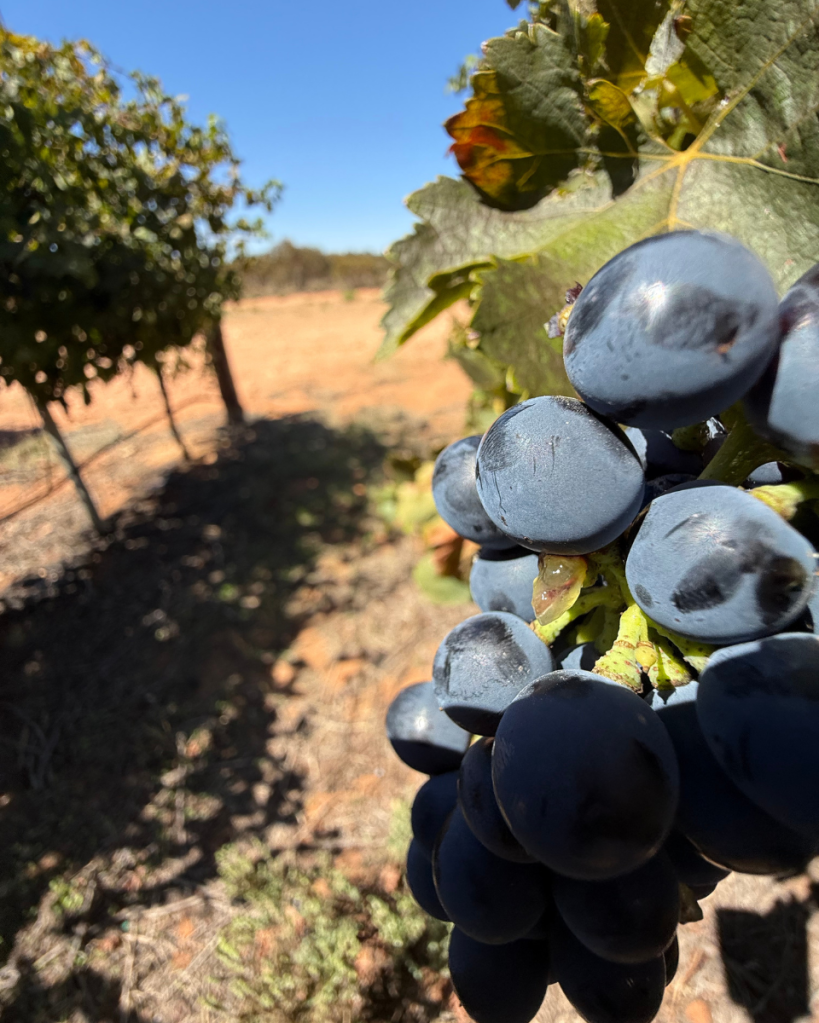
“If you say, okay, I’m not gonna use synthetic insecticides in our vineyards. We’re gonna spend more time out there counting the spiders and native wasps and caterpillars and working out whether there’s a problem rather than going, ‘I see a caterpillar, I’ve got to kill it.’”
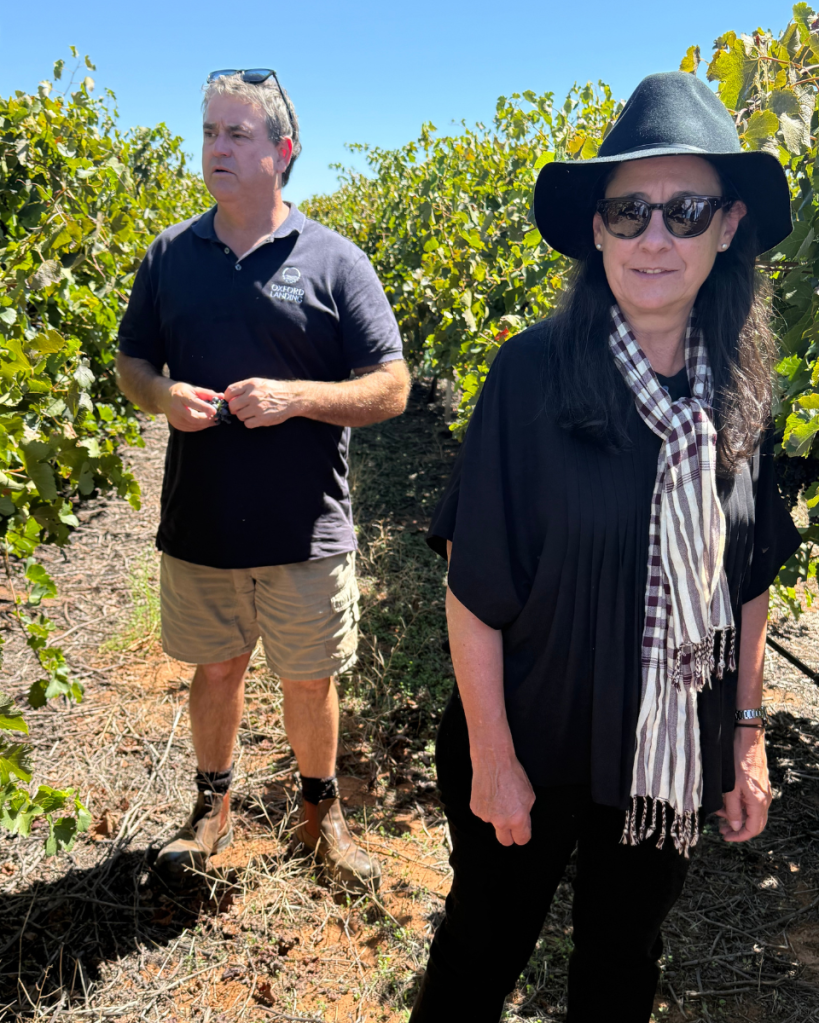
She’s explaining this while walking a block of salt-bush scrub next to Oxford Landings vines. The company bought the 600 hectares specifically to revegetate it to create the habitat for predator bugs that would eat the bad bugs, and give birds enough to eat so they wouldn’t want to come in and feast on grapes every harvest.
“We can ferment wines just with the yeast that naturally live in the vineyards because we haven’t sprayed all the chemicals that are going to kill them off,” Rose says. “It really is magic.”
Since 2007, they’ve planted 240,000 trees and shrubs across “20 to 30 species” says Oxford Landing vineyard manager Glynn Muster.
“Now, we’re about 280 hectares of vineyard, but for each hectare of vineyard and nursery we have basically two hectares of native veg, whether that’s existing native veg or re-vegetation.”
The Hill-Smith Family Estates own about 1,000 hectares under vines in South Australia and Tasmania, says Rose. “And we’ve got just over a 1,000 hectares of native vegetation within and around our vineyards … that one-to-one ratio, that’s really important for all those reasons about biodiversity, about the wild yeast.”
Messy again
But Robert Hill-Smith wanted a product in market that would prove out the business case for sustainability. So they bought three organic vineyards off Penfolds. “We came out with a small cluster of organically farmed, organically made wines to showcase our credentials and our active investment in leaving the land in a better state than we inherited it,” says Hill-Smith.
“I insisted we played with biodynamic. I said, ‘It’ll be a nuisance and it’ll be expensive, but unless we do it and we observe the outcomes, we’ll just be, spectators.’”
“We wanted to prove that it had a valued outcome.”
And did it?
“No.”
Not only could they not charge enough for each bottle to repay the huge cost increases, it turned out the vines liked it as much as the accountants. “The plants weren’t responding to it. We were actually shortening their lifespan. So not only were we getting lower yields, but the plant itself wasn’t showing any incremental health,” says Hill-Smith.
They wound it all back, stopped using the word “organic”, but continued a lot of the organic management practices. “If we have to talk about environmental management we talk about our ‘sustainable’ policies,” he says.
And in terms of keeping the family business sustainable, he is happy to let ownership diffuse again through his and brother Sam’s descendants. “It might get a bit messy. But they’ve got to sort that out. I won’t be around to direct them, but you’ve got to give them the courage to …” He pauses. “The irony of this is, the harder you work, the more valuable you make the company, the more difficult it is to be reconcentrated within the family as generations evolve. It gets too expensive.”
Jess Hill-Smith’s two sisters, Lucy and Georgia are both in London. Lucy is fine-wine ambassador for Yalumba, and Georgia is a lawyer. Robert’s brother Sam also has two children of a similar age who are not in the business.
How does Jess see ownership of the company going forward? “That’s the million-dollar question,” she says. “We don’t know. My sisters and I speak a lot about working together.”
Want to see more Forbes articles on your feed? Tap here to make Forbes Australia a preferred source on Google.
Look back on the week that was with hand-picked articles from Australia and around the world. Sign up to the Forbes Australia newsletter here or become a member here.
More from Forbes