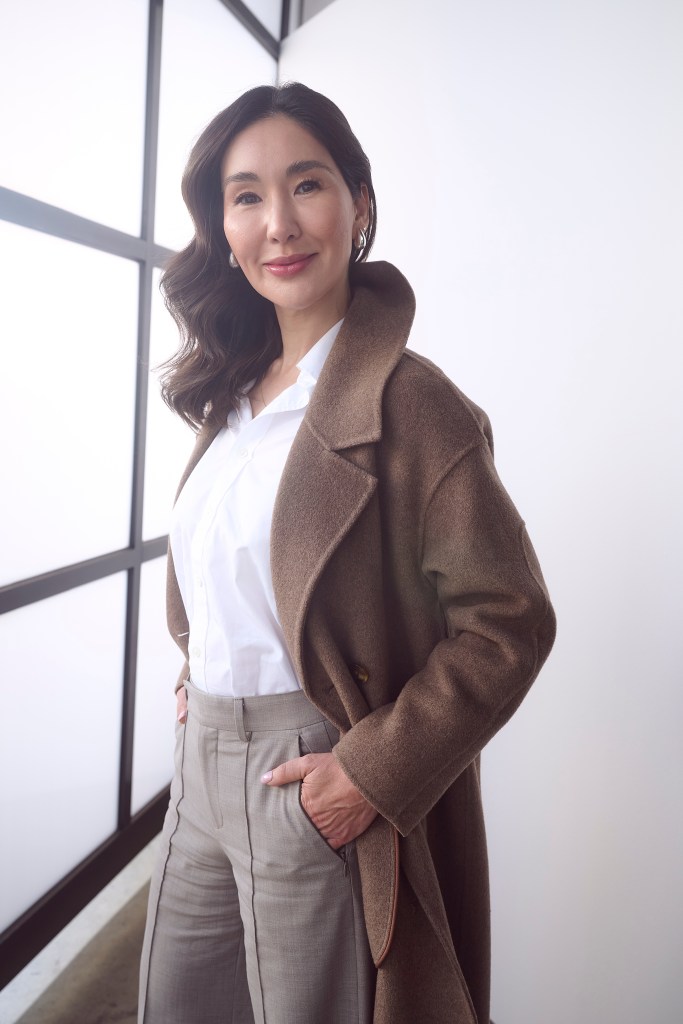
‘This is what I always say to young people’: Susie Grehl’s reality check for Gen Z investors

Magazine

Rather than worrying about markets or interest rates, CBA executive Susie Grehl  is focused on helping young Australians build wealth, breaking down barriers to investing and reshaping private banking for a new generation.  

This story features in Issue 24 – out now. Tap here to secure your copy. 

You’d think it might be the state of the economy, the likely impact of the movement of interest rates on high-net-worth customers, or the global uncertainty that’s choking consumer and business sentiment. But it’s not. It’s her concern for the future of young people, especially those who won’t share in the country’s ongoing $3.5–$5.4 trillion intergenerational wealth transfer. 

And unlike other corporate leaders who might be content with a simple spot of virtue signalling, Susie Grehl, the executive general manager, Wealth & Private, at the Commonwealth Bank of Australia (CBA), is devoting considerable time, effort and resources to the issue. 

“For entry-level customers, we’re fascinated by why young Australians are not investing in the same way that they are in the US,” says Grehl, who worked for seven years in change management in New York before coming home to Australia and joining the banking industry. “There, they are very, very engaged in investing. But here, we commissioned some research that said 70% of 18- to 24-year-olds want to start investing, but then less than half do; a wild difference from figures in the US. 

“So, the question is, why? The first response is, look, the cost of living is high, and people can’t afford to invest, which is very fair. But that’s only part of the answer. When we surveyed customers, we found that the biggest issue is the psychological aspect; they feel like they need a lot of money to start, they’re overwhelmed by the jargon – which really isn’t very inclusive – and by the plethora of options out there, and they lack the confidence to choose. As a result, we decided to do something about that.” 

In so many ways, that’s typical Grehl. The regular titans of the banking sector, who’d worked their way up through the bureaucracy, were usually content to wait for potential customers to come to them, just as they always had. But she’s cut from a different cloth. When she took charge of private banking at CBA, she wanted to completely change its focus to taking its services to the client, and to all possible clients, not just the High-Net-Worth Individuals (HNWIs) and the Ultra-HNWIs. 

“Before Susie, private banking at the CBA was a very well-kept secret,” says Rob Bransby, the chair of Commonwealth Private. “We offered a good service, but no one was sure exactly where it fitted in; it never had a very clear direction. But Susie came in with a very bold, ambitious vision for the business that was very different to what it had been, and she was determined to see those changes happen. Reaching out to young people was a part of that.” 

For Susie, now in her early 40s, it’s perhaps understandable why she adopted such a consumer-oriented approach. Intensely aware of how much of an outsider she is herself, she wanted to make sure she could take down the kind of barriers she had faced and whisk others directly into the fold. 

I think I used to be quite self-conscious about two things. The first would be just how diverse my career background was. I’ve sometimes felt like a jack of all trades, but I’ve realised that’s a strength because, fundamentally, I feel like I have the confidence to solve any problem. That’s not arrogance; I’m approaching it with real humility and trying to solve problems in a thoughtful way.

Susie Grehl
Executive General Manager, Wealth & Private, CBA

“The other thing that I was probably self-conscious of is my migrant background. That’s really sort of the traditional child-of-immigrants story where I was a little bit focused on what I didn’t have. For instance, my parents didn’t know anyone when they came here, so we didn’t have any networks, contacts, or mentors, and  I had no parental safety net. Also, I look different to everyone else. I’m a woman, I’m a person of colour, I’m relatively young, not super young, but a millennial leading quite a big business. And I think, as any immigrant kid, you feel this immense obligation to be successful because of all the sacrifices that your parents made.” 

Grehl was born in Melbourne to a Chinese Malaysian mother, who never held a formal job, and a German blue-collar worker father. She did well at school and, as the first generation of her family to go to university, naturally, when she was offered a place at Melbourne University to study commerce/law, there was no way she was going to pass up that opportunity. 

She studied law for the requisite five years and then practised as a lawyer in mergers and acquisitions at King & Wood Mallesons from 2005 to 2008, but soon realised that she’d fallen into the profession rather than proactively choosing it based on what she really wanted to do. She then moved to the law firm Allens, where she became the senior business development manager, and finally to the professional services network KPMG Australia. 

“None of those jobs was the right fit, and I felt a bit lost,” Grehl says now. “But I’d started studying my MBA part-time, so I decided I was just going to reset. I started to think about what I really wanted to do, and what energised me, and what new experiences I wanted to have. Melbourne Business School has a relationship with the NYU Stern School of Business at New York University, so I opted to finish my MBA there in the US. That just opened my eyes to so much possibility. I think Americans have such an entrepreneurial mindset. They come from a place of Yes, and it has a whole different  cadence to Australia. I loved it!” 

From there, in 2013, she joined the global business transformation company, the Boston Consulting Group (BCG), with the chance to return to the US, which she grabbed and worked her way up to principal from 2017 to 2020. It proved an invaluable experience. 

“There’s a very high bar for performance, and I think Americans are very customer -centric,” Grehl says. “And so I worked in large-scale transformation in financial services, and retail, working for the world’s largest retailer and the world’s largest hedge fund. It’s incredibly diverse. You have some amazing experiences, but also some really tough times. The discipline of landing large-scale transformation in the business with a two per cent margin. It’s incredible, and it gives you a lot of skills.” 

Working for BCG in the US at the same time was fellow Australian Ebony Booth, who was seconded to a fashion house and later founded the fashion label Eupheme back home. The two women became very close during that period, professionally and personally. 

“Susie was always so full of life, energy and passion,” Booth says. “She was rightfully outraged by many things she would see in businesses and would always take problems on as hers to solve. We both worked incredibly hard, at all hours of the night, but she never crumbled in that kind of high-pressure environment. She took everything in her stride. I remember one night she broke into song and dance – I think it was to Australian rapper Iggy Azalea’s Fancy – and it lightened the atmosphere and made it so much more enjoyable for everyone. It’s wonderful now to see her soaring through the ranks in the financial sphere. Everyone who worked with her always knew she would do well.” 

At that point, Grehl heard the call of home. She had a toddler and another baby on the way and was living in a 50sqm one-bedroom apartment in Chelsea, and, however much she was enjoying living in New York, she felt Australia was a great place to bring up a family. NAB, at the time, was leading a major transformation in their private wealth space, so Grehl joined them in 2020 as the general manager strategy and transformation NAB Private Wealth. In 2023, she moved to CBA to lead transformation in the wealth and private banking space. 

Under her watch, major changes have occurred, including CBA selling its personal advice business to LGT Crestone to sharpen its focus on private banking services. In July 2025, CBA also launched its Private Wealth Advantage partnership with J.P. Morgan Asset Management. Grehl brought in a former NAB colleague, Sarah Chadzynski, to become general manager of Commonwealth Private under her, overseeing the  national banking team supporting HNWI clients. 

“She’s just so different to the people who traditionally come up through banking,” Chadzynski says. 

“She moves at a pace that’s very different to everyone else. She wants to get stuff done quickly, and she does. But with such a diverse [career] background, she has a really good perspective on issues and likes to challenge people and the existing structures. She’s very ready to agitate for change rather than accepting the status quo and suggests people think about things differently. 

“But at the same time, she takes people on the journey with her. She really cares about her team and has been a wonderful mentor for me. She has a very different perspective on that too. She says instead of looking at what role you might want in five years, you should look at the building blocks of your career, and decide what other skills you need. That’s always really resonated with me, especially at such a time of great change. You need skills and flexibility, and she’s a great example of both.” 

Today, Grehl is exactly where she wants to be, guiding Commonwealth Private to cater for a wider range of clients, from the HNWIs to young people, and offering them all better pathways to wealth creation. With her children now ten and seven, she still works long hours, but even in her downtime when she practises yoga, she can’t resist another challenge – taking her yoga teacher training certificate. 

Meanwhile, at CBA, her customer base is now incredibly diverse, with some inheriting wealth or building it through generations, and others, like those in the tech industry, coming into wealth quickly. At the back end, there’s now a lot more automation, and AI harnessed to make everything work faster and more effectively, but at the front, everyone is offered a mixture of technology and human service: a long-term, highly personalised relationship with a banker, working on defining goals and the journey to achieve them.  A major change these days is that clients are often younger, more digitally savvy, and more frequently women. 

That’s another of Grehl’s passions: educating and inspiring women to be empowered in their financial choices. Commonwealth Private has now also partnered with financial education firm Sophia to provide courses for women  on finance. 

“I think it’s really, really exciting that we are seeing more and more women,” Grehl says. “With the intergenerational wealth transfer, 60% of that is going to women. We’re also seeing more and more business owners because the barriers to entry to start a business are as low as they’ve ever been. 

“We are seeing more young people because of that, too, and a real thoughtfulness and purpose and stewardship about wealth, rather than outsourcing it all to an advisor. That level of conversation is fantastic. So, there are a lot of changes that are going on even at that top end that are very, very interesting and that we’re trying to respond to in a really customer-centric way.” 

Bransby is delighted by how things are shaping up and admires how Grehl has managed to push such monumental changes through, despite many of the obstacles put in her way. At every stage, she didn’t deviate from her vision, he says, but remained respectful and courteous and determined to win over her opponents. Invariably, she did. 

“We didn’t make it easy for her, but she jumped every hurdle as it was placed in front of her,” Bransby says. “As a result, the business is a lot more contemporary now. Before, it was very hierarchical, structured and unscalable. I thought her vision was ambitious and risky, but she won us over every step of the way. Getting that wrong would have upset our biggest customers in the organisation, but she made sure to bring them with her, too. She was tireless, resilient and  
relentless in her execution of change, with really good leadership qualities.” 

All the way through, her background still very much fashions who she is in her life now: determined, hard-working and keen to give other young people the kind of opportunities she might sometimes have wished she had. When she embarked on her first job, for example, she had a vague idea that she should start investing. She went on to a share trading platform and just picked a few things that looked good. 

It was the worst thing that I could have done because I wasn’t diversified; it wasn’t multi-asset class. I put all my money in a few single equity stocks, and I was just quite disengaged after that because they went down as I wasn’t diversified, I wasn’t educated. Then I went to the US, where there’s no compulsory superannuation. So, I started too late, when I’d already lost 20 years. I don’t want other people to be like me.

Susie Grehl
Executive General Manager, Wealth & Private, CBA

As a result, she’s eager to educate and bring more young people on board with investing their money for the future. CBA now has bite-sized short-form videos to appeal to young customers; there’s a partnership with Friends That Invest with young people talking to young people, and there are fully diversified managed portfolios on offer, with Grehl using the investment capability from Commonwealth Private. It’s designed to be very low-cost and easy to access, with payments linked to an everyday transaction account. 

“That whole goal has sort of stemmed from my passion around young Australians and wealth creation,” she says. “The reality is you’re an 18-year-old new investor, and, with $100 a week, you’ll be a millionaire when you retire. We need to get more young Australians investing, even if it’s small right now. 

“This is what I always say to young people: you may not  be the beneficiary of a huge intergenerational wealth transfer – I won’t be either – but if you can make investing a habit, a small habit you do every week or every fortnight, you’ll have the benefit of time and of compounding interest. What we’re trying to do in wealth at CBA is really meet our customers where they are. 

“The thing that I’m very passionate about is there’s a lot of conversation about intergenerational wealth transfer, and  I think the thing that really keeps me up at night is, what if you are not a beneficiary of that $3.5 trillion? I’m not. But I’ve benefited a lot from social and economic mobility in this country, and I want to make sure young people can do that as well. That has really shaped a core part of our strategy, around helping young Australians build wealth.” 


Forbes Australia female CEOs of the ASX 200

Wealth

Female CEOs of the ASX 200

Ranked by market cap


Forbes Australia the world's most powerful women in finance

Wealth

The world’s most powerful women in finance

Forbes’ 2025 world’s most powerful women

Want to see more Forbes articles on your feed? Tap here to make Forbes Australia a preferred source on Google.

Look back on the week that was with hand-picked articles from Australia and around the world. Sign up to the Forbes Australia newsletter here or become a member here.

More from Forbes

Avatar of Sue Williams
Topics: