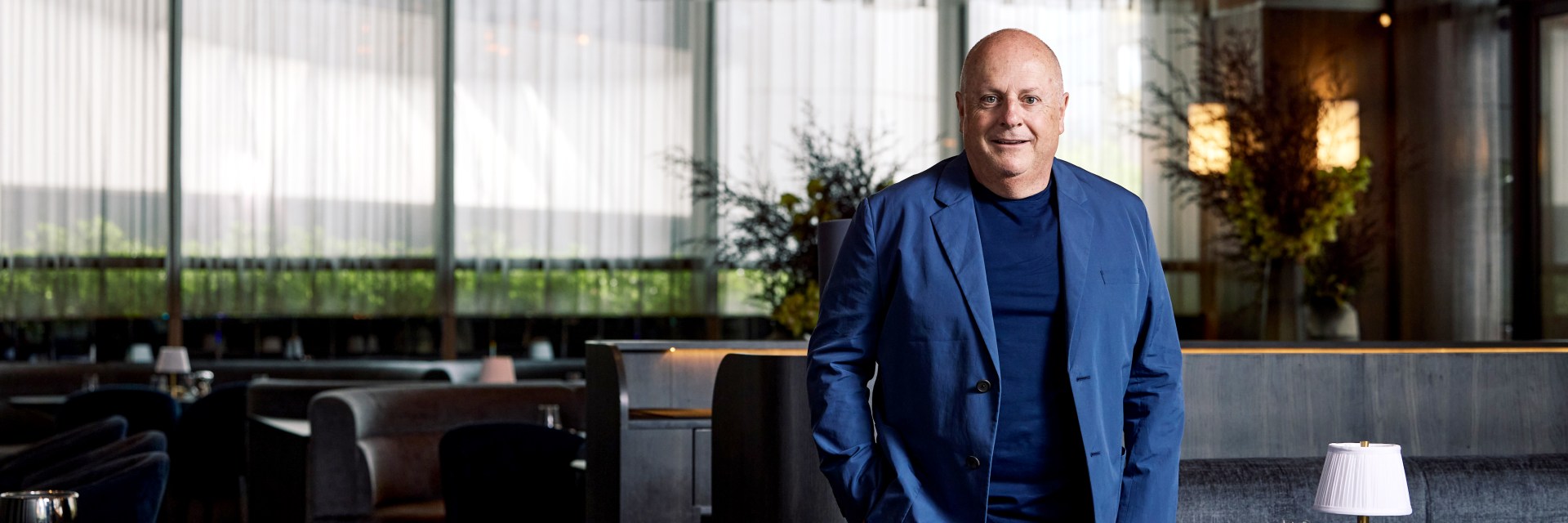

The founder of Chin Chin and Grill Americano has spent decades turning overlooked buildings into some of Australia’s most successful restaurants.
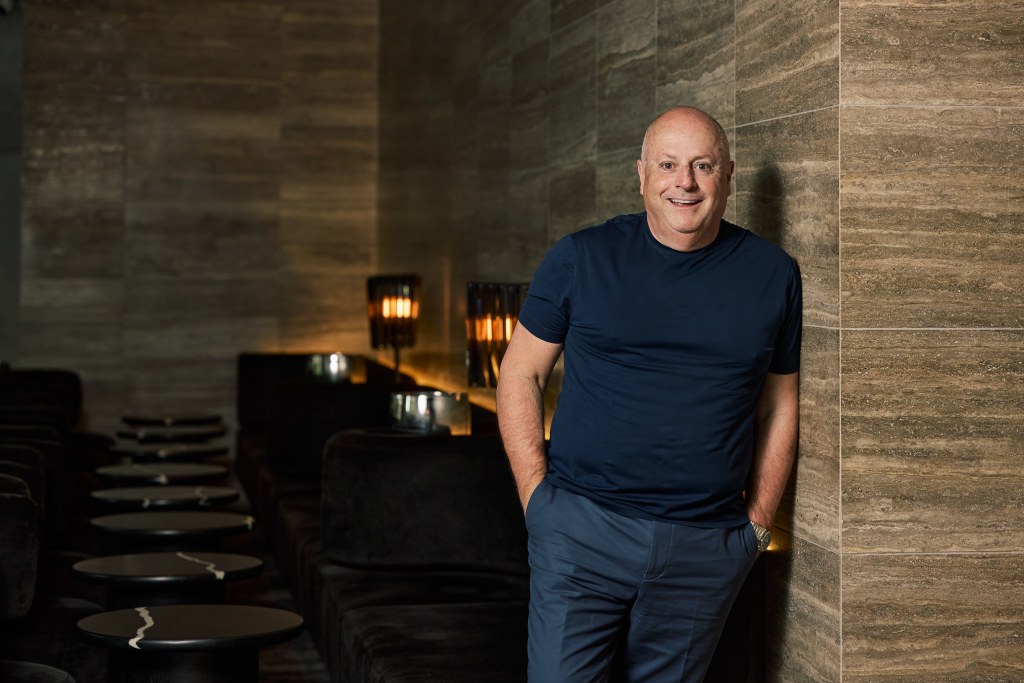
Chris Lucas has built some of Australia’s most successful restaurants. But his real talent may be seeing what a building, and a city, could become.
Lucas swears he never overtly harboured a dream to become a restaurateur.
He had just sold his telco disruptor, AxiCorp, to Primus in 1995. So, he bought a building on the St Kilda waterfront and figured it would be worth more if it had a going concern on the first floor.
And how about doing it properly? How about a New York-style restaurant like he’d dined in many times in his career as an IBM sales guy and executive? The then 35-year-old spent $1.2 million on the renovation. “In the early 90s, the average fit-out would have been $100,000 to $200,000,” says Lucas.
This was just a side hustle. He’d already started another software business. He remembers, however, that as the first customers came in the door of One Fitzroy Street, in early 1996, he felt a sense of belonging. “Having spent years as a young executive, flying all over the world, I never felt at peace. I never felt that I’d found my calling until I opened the doors to that restaurant.”
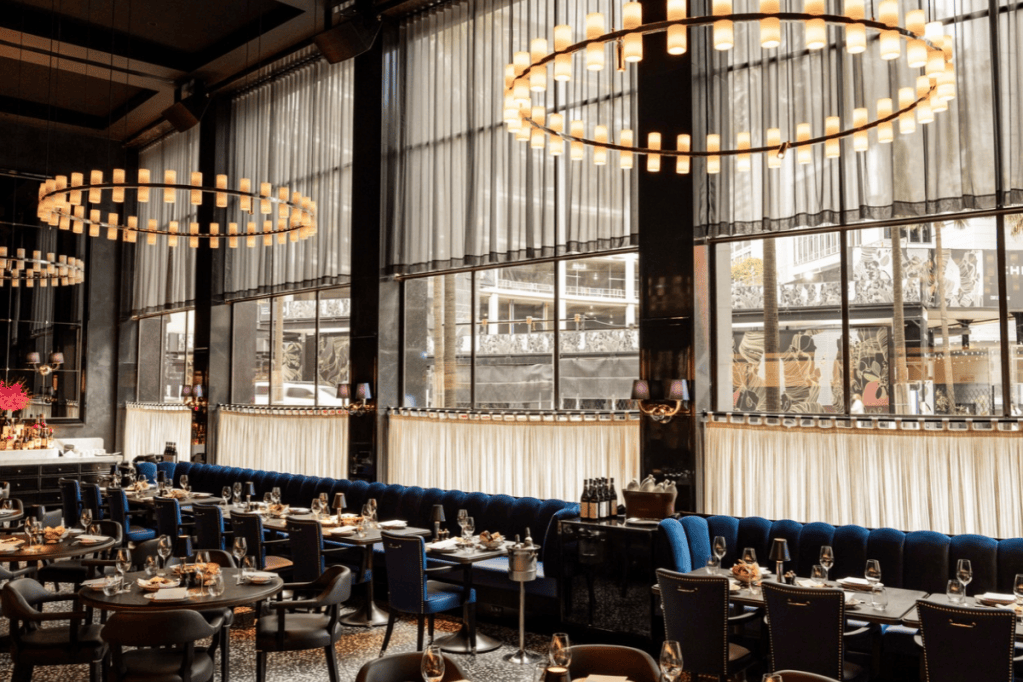
The man who has made himself a Melbourne institution is saying this in Grill Americano Sydney, pointing out the chandeliers above that he designed “to bring the ceiling lower”, the “royal blue” leather of the upholstered chairs that he selected to “cocoon” a frazzled exec. And the playlist on which he approved every song.
“You can’t tell from a spreadsheet if a restaurant is going to be a success,” he says, over Sarah Vaughan’s Whatever Lola Wants in the background. It’s his eye for vibe, he says.
“Most restaurants have seats that are too hard. See that handle?” He points at a chair. “I put that there so when people move them they don’t dirty them with their greasy hands.”
He unleashed his inner furniture designer during COVID-19 when they couldn’t get anything in from Europe. He also unleashed on the Andrews Government at the same time for its lockdowns, as he let loose with the purse strings. He bought $70.1 million worth of property in Melbourne’s CBD between 2021 and 2024, The Age reported.
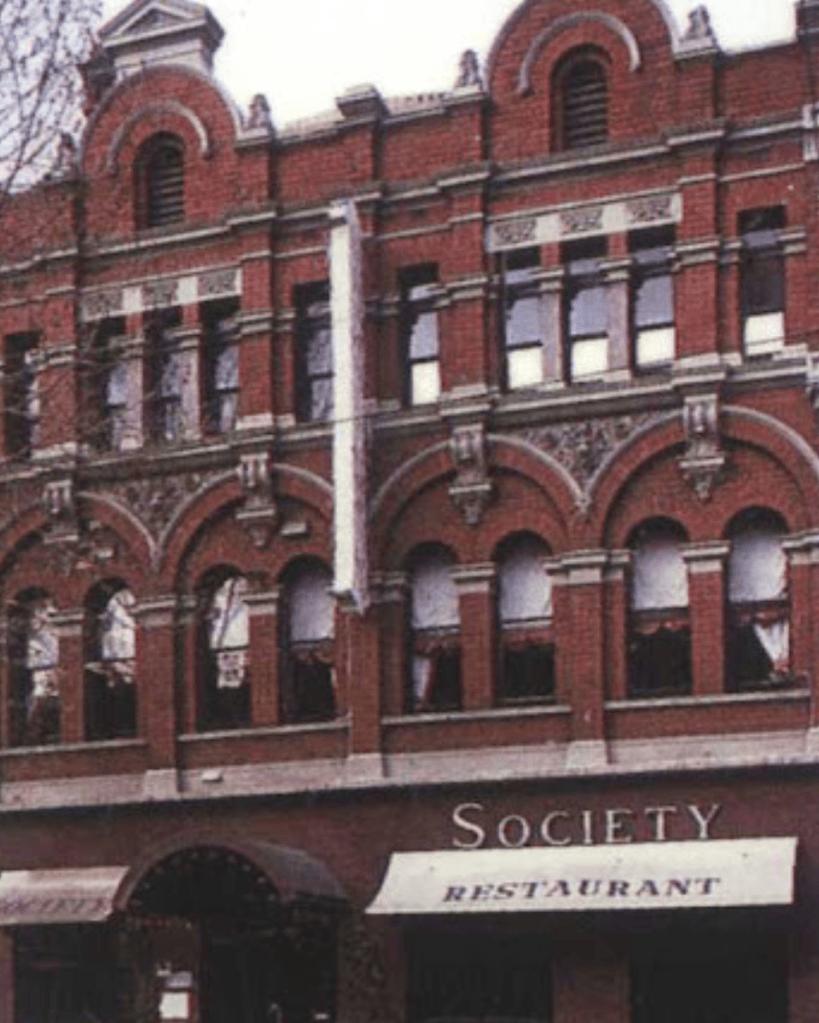
In that time, he opened seven new venues and the restaurant empire became something of a property play as he started looking to create legacies, seeing himself as someone who finds great buildings, works out what they could become, then creates a reason for people to walk through the door.
Jackets and ties
Lucas’s father, Peter Loukas, arrived in Australia in 1923 from Constantinople [now Istanbul], where his parents had died in the massacre of Greeks during the Greco-Turkish war. Peter learned to cook in a Sydney orphanage and ended up buying a wharfies’ pub in Geelong, where Chris grew up.
At his second pub, The Continental, Peter did up the Ladies’ Bar and started serving European dishes. He put the waiters in jackets and bow ties and put a few cents extra on each pot of beer. When Lucas was 15, Peter died, and his mum had to sell the pub to cover his gambling debts.
“From 15, I was working two jobs at night and on the weekends as well as going to school. I’m not trying to make out that I was any worse off than anyone else, but it was a slog.”
He studied to become a pharmacist, and even though he got honours, he says, the dean of the faculty told him he wasn’t cut out for the job and suggested he go along to an employment seminar IBM was holding on campus.
“I’m like, ‘What’s IBM?’ And he said, ‘It’s the world’s biggest computer company.’”
“If I’m good at anything, I’ve honed my skills when it comes to property – looking at beautiful buildings and seeing what they could become.”
Chris Lucas
Lucas got the job and turned up for his first training day in 1981, proud of his new checked trousers and a brown jacket, only to be told that wasn’t a suit. At IBM, you wore navy suits and white shirts.
“They were the best training company in the world, and it really opened my eyes,” says Lucas.
He rose through the ranks, and had lengthy stints in Tokyo and New York. He recalls being flown to the world launch of a personal computer in 1982 and seeing a young Bill Gates on stage. He asked the old hand sitting next to him why a software guy was up there.
“Don’t know. No one makes money out of software.”
Every time he tried to sell a computer system to a big company, he had to go in and understand the minutiae of the business. It was a yearly MBA. “By the time I decided to go into business myself, I was ten years ahead of my contemporaries.”
Telecommunications was deregulating, and it just so happened he’d been deep in the guts of multiple telcos. He and other ex-IBM guys set up AxiCorp, which quickly grew to be Australia’s fourth-largest telco. That’s when Primus bought them out.
Primus chief operating officer Ravi Bhatia remembers paying Lucas and his four cofounders “about $40 million in cash and stock” to buy their customer base.
“He was a great guy,” recalls Bhatia. “He had this capacity to do multiple things equally successfully. He used to drive past my house in the mornings after dropping the kids off to school, and he would stop and ring my doorbell and say, ‘How’s the stock doing?’ He was a total livewire.”
Indeed, the stock did well. The dotcom bubble was growing and Lucas had the wherewithal to buy the building facing the beach at 1 Fitzroy Street, St Kilda, and drop $1.2 million into the fit-out.
Café and bar downstairs, seafood restaurant upstairs.
“I was able to apply my global perspective of what a restaurant could look like,” says Lucas, explaining that while dining hadn’t been his profession, it had been his hobby. Not to mention those nights in the dying days of disco at Studio 54.
“I spend my whole life trying to entice you to come into my restaurant. And architecture has a lot to do with that.”
Chris Lucas
Others in the food business saw him as some tech upstart, but there was still a part of him that recalled being sent into the bar by his father with a plate full of moussaka or vine leaves to give away to dubious wharfie patrons.
“That humbling experience, then combined with the modern global marketing and business know-how, was unusual at the time. One Fitzroy just went nuts, and I thought to myself, ‘Well, I might as well have another go. It wasn’t too hard.’” When a Melbourne institution, The Botanical Hotel in South Yarra, came up for sale in 2002, he went for it.
“Gastropubs” were taking off overseas. He hated the word, loved the concept. “I gutted the whole hotel, right back to its bare bones, put the bar down the back, the restaurant at the front, much to the chagrin of the beer company and a couple of QCs who’d been drinking there since probably the 50s. They hated it. Until we opened.
“The place was full of glamorous young women, and they suddenly thought it wasn’t too bad.”
The champagne bar out the back, the Bubble Bar, became media personality Derryn Hinch’s second home. “And the place exploded.” It would want to. He’d spent “nearly $10 million” on it.
People used to comment that his places were “like Sydney restaurants”, which is an insult in Melbourne. But he refused to take it as such. He started to feel he’d got the property-and-entertainment model down. “It’s been my calling card,” he says. “Rather than pursue expansion for expansion’s sake, I only do a project if there is a genuine reason for it, like refurbishment of a really important building.”
Chin Chin
“Despite the fact that the restaurants I’d opened were super successful, I was never satisfied. I was always thinking, ‘What’s the next innovation? How do we create something that’s as good as anywhere in the world?’”
He was deep into the GFC (the Good Food Crisis) when he was offered a failed nightclub in Flinders Lane. “People had stopped going to top-end restaurants. The market was difficult. Good restaurants were closing.”
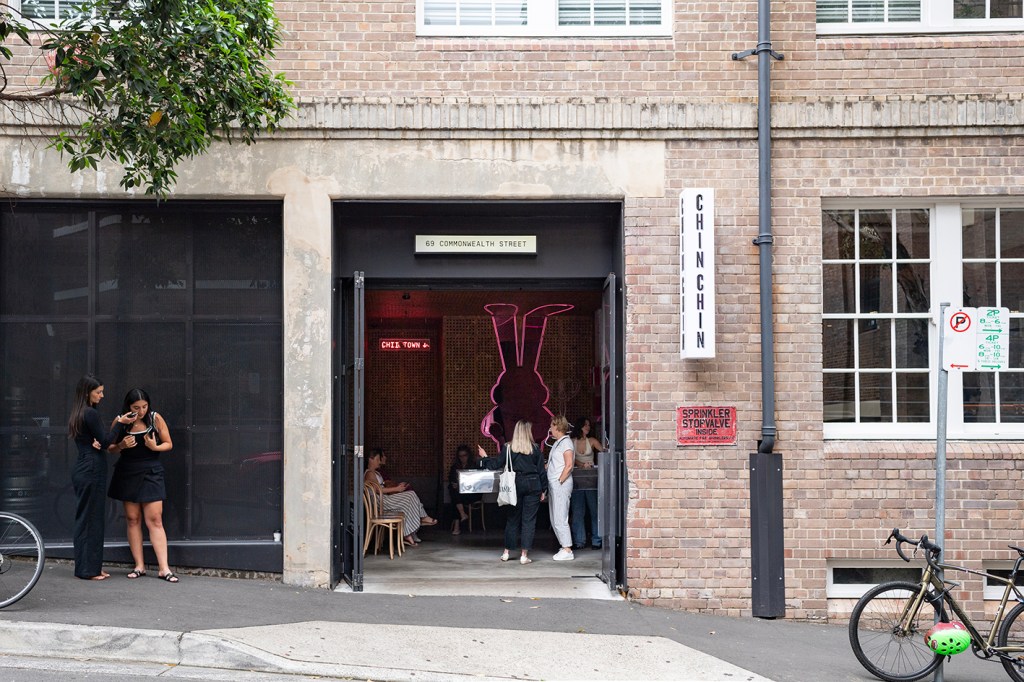
The nightclub was in an old schmutter [Yiddish for rag trade] building. He saw the “power tower” 101 Collins St and the Grand Hyatt just metres away. The stock market had bottomed, but the $60 steak hadn’t yet rebounded.
“Why don’t we create a casual restaurant, small dishes, all shared, and take away the reservation system? It is a very costly exercise. You’ve got to have people answering the phones and software. We needed to move from a one-sitting model to a high-volume model because
I wanted to drop the prices.
“In my dad’s pub, people didn’t make bookings. If it was full, you waited in the bar. That’s a really efficient model.”
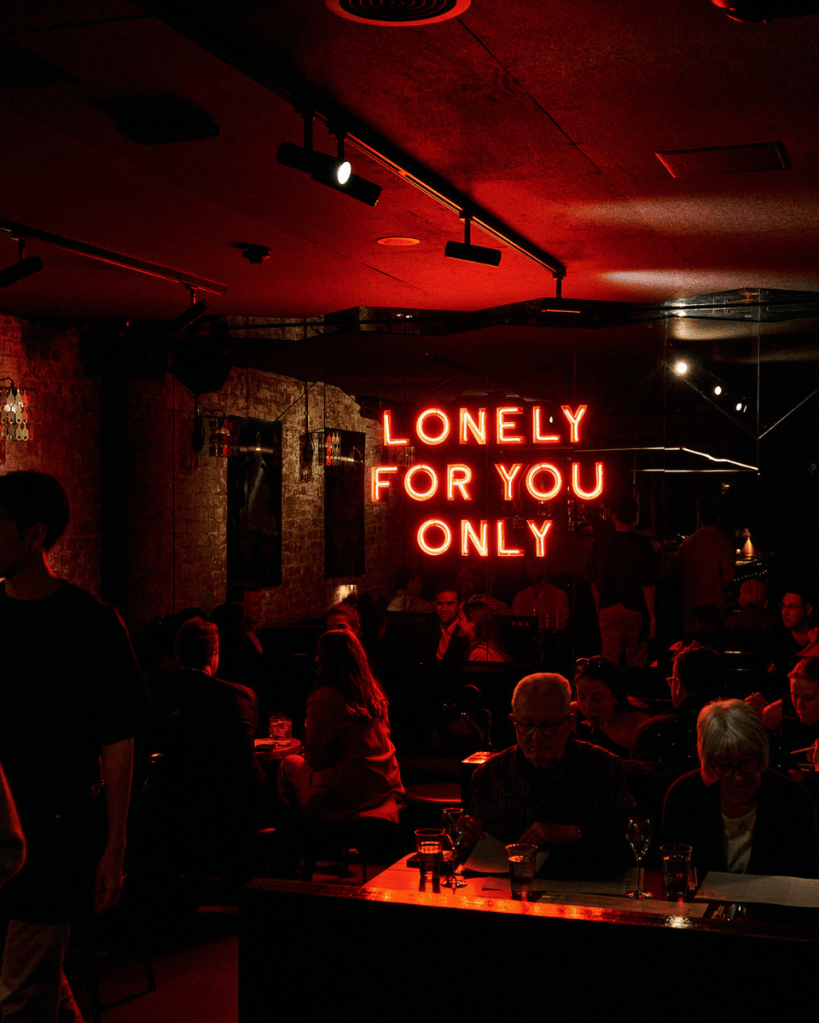
And he wanted edginess. He loved neon from his time in Japan. He called the bar downstairs the Go Go Bar, evoking something of Thailand. “When you walked in, you were taken into this experiential, rollicking restaurant.”
He spent “only a million” on the fit-out, which remains his cheapest renovation. There was no money to advertise, but social media was taking off. “We opened around mid-May. It had been raining for a week. I thought that I’ve really pushed it out too far this time.
“I look out the door, there’s 500 people there. They just started pouring in because they’d seen some pictures of the food.”
That queue has become standard. Chin Chin has been described as the most successful and impactful restaurant Melbourne has seen. But it also saw the Lucas Collective become a real estate play as much as a restaurant business.
The Lucas stories
Year | Restaurant | Location |
|---|---|---|
1995 | One Fitzroy Street | St Kilda, Melbourne |
2003 | The Botanical | South Yarra |
2009 | Pearl | Richmond |
2011 | Chin Chin | Flinders Lane, Melbourne |
2013 | Baby Pizza | Richmond |
2014 | Kong BBQ | Richmond |
2015 | Hawker Hall | Windsor |
2017 | Kisumé | Flinders Lane, Melbourne |
2017 | Chin Chin Sydney | Surry Hills, Sydney |
2021 | Society | 80 Collins St, Melbourne |
2021 | Yakimono | 80 Collins St, Melbourne |
2022 | Grill Americano | Melbourne CBD |
2024 | Club Chin Chin | Geelong |
2024 | Tombo Den | Windsor |
2024 | Carlotta | Canberra |
2024 | Bourke Street, Melbourne | |
2025 | Grill Americano Sydney | Chifley Square, Sydney |
2026 | Wishbone | 435 Bourke St, Melbourne |
2026 | Noẽma | 435 Bourke St, Melbourne |
2027 | Chin Chin Manly | Manly, Sydney |
2028 | Unnamed restaurant | Orchard Piper, Toorak |
2028 | Unnamed restaurant | Orchard Piper, Toorak |
Clear-sighted
Things were going well. In 2014, Lucas and wife, Sarah Lucas, with whom he shares design efforts, bought their 22-room mansion in Toorak for $18.55 million.
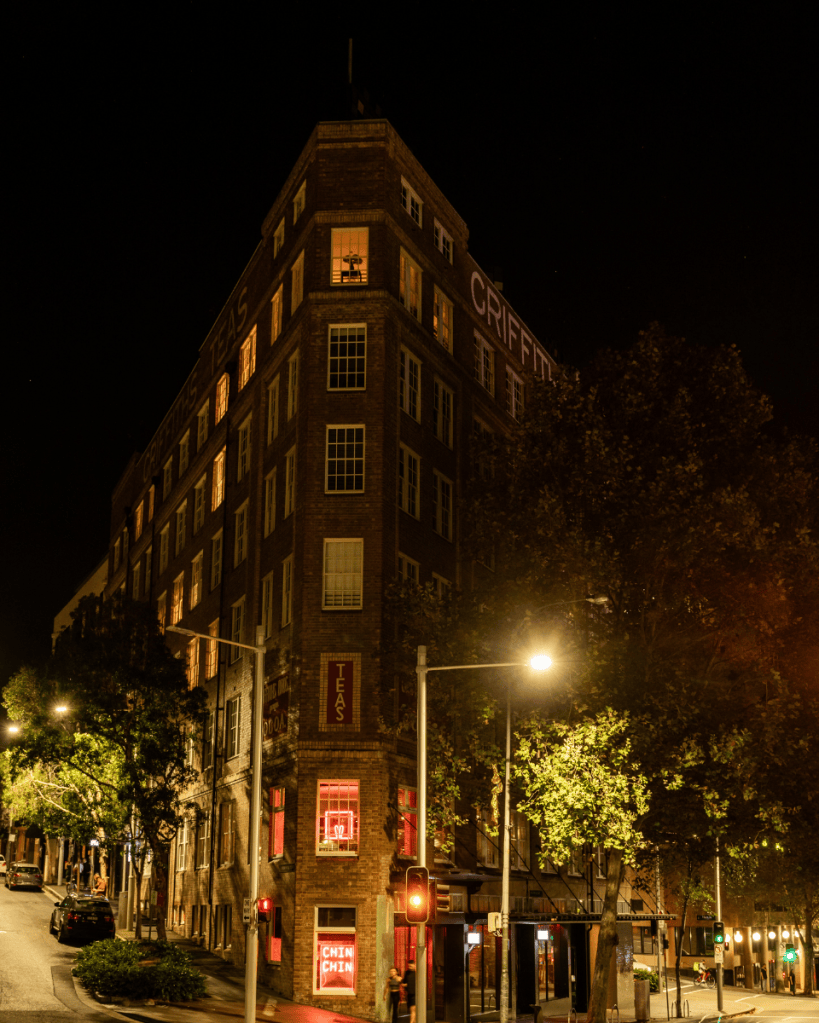
His expansion into Sydney began when he tracked down the owner of the old Griffiths Teas building in Surry Hills which had been vacant for 40 years. He bought it, then spent $12 million turning it into Chin Chin Sydney.
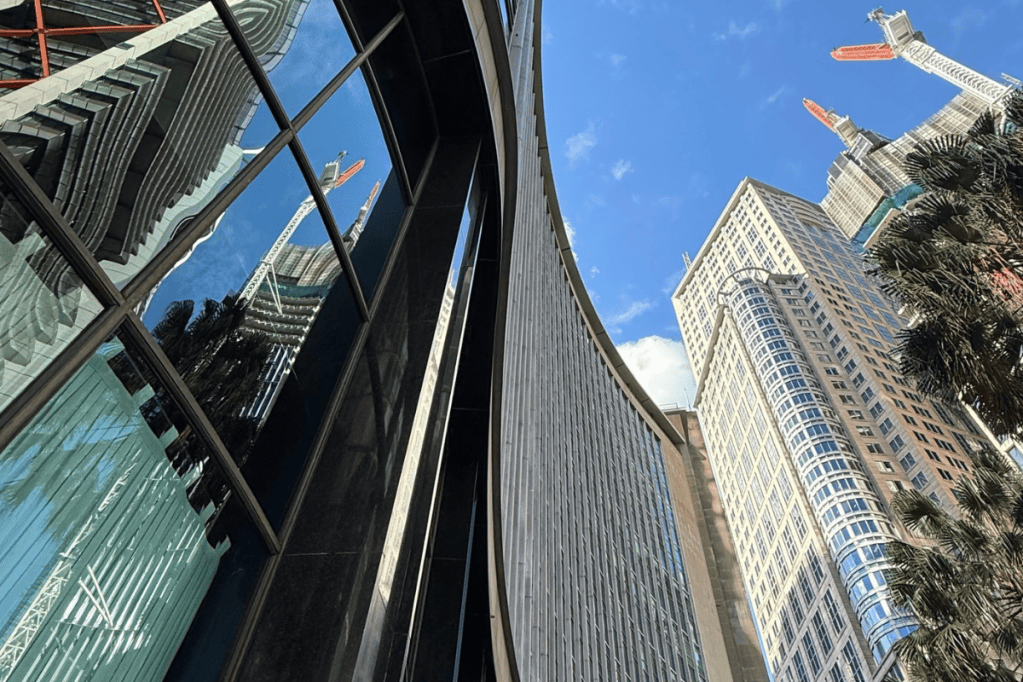
Working there one day, he broke his glasses and wandered into a Specsavers in a curved modernist building in the heart of the Sydney CBD. Aside from the optometrist in the corner, the ground floor was empty.
“How is this not a restaurant?” he wondered.
And so, the downstairs section of the former Qantas building became Grill Americano Sydney in 2025.
“I haven’t been driven by the economics of running a restaurant. It’s a pretty tough business. I’ve been driven more by the compelling reason – that what we do is changing the face of cities that we’re in. If I’m good at anything, I’ve honed my skills when it comes to property – looking at beautiful buildings and seeing what they could become.”
Enticing
When CBUS Super came to Lucas about occupying the restaurant spaces at the bottom of a 48-storey office tower it was developing – 435 Bourke Street, Melbourne – he took a look at the designs.
He told them that if he was going to be involved, they’d have to change everything about the street level.
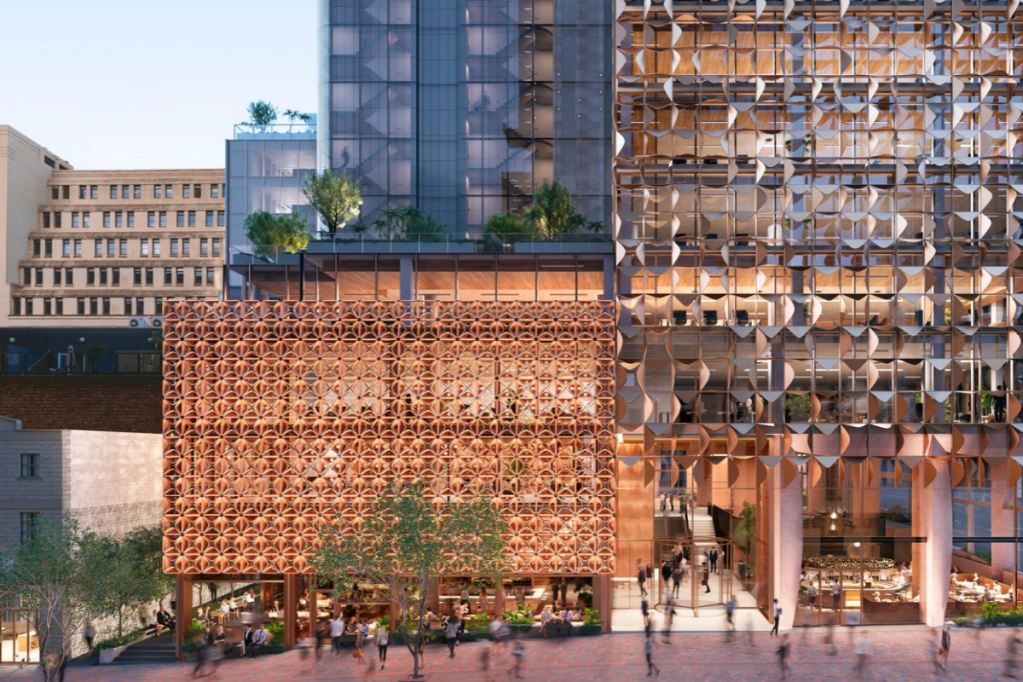
“They said, ‘We’ve already spent millions of dollars. It’s all approved.’ I said, ‘Well, you’re going to have to dismantle it. Have [architects] Bates Smart come and sit with me, and I’m going to be presumptuous and redesign their building for them.’ I was expecting them to say no, because I would have said no.” But CBUS said yes.
Bates Smart design director Cian Davis says he spent a lot of time with Lucas thinking about the front door. “It’s always great when you have someone who has a very clear vision of what they’re trying to do,” says Davis.
Lucas wanted no connection between the tower’s lobby and the restaurant. And he wanted the restaurant to have two levels. “I spend my whole life trying to entice you to come into my restaurant. And architecture has a lot to do with that – you want it to be exciting. You don’t want to have dinner in the place you work.”
His ideas led Bates Smart to raise the front door off the street, says Davis. “You come up through this garden landscape into the upper level of the restaurant, which then gives him private dining rooms and bar space downstairs.”
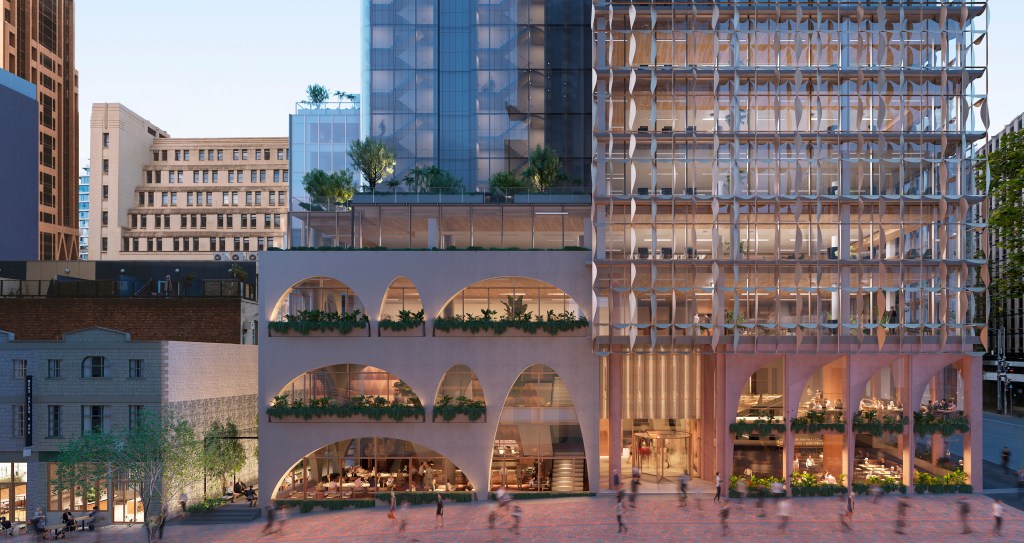
Lucas was talking about making one of the restaurants Mediterranean and so wanted arches on the façade.
But that didn’t work with Davis’s asymmetrical vision of the building. “We came back and said, ‘What if it was a half arc?’ … He gave us a strong personality that he wanted to achieve. We saw it through the lens of the overall vision for the project and then gave him something back that he really responded well to.”
His two new eateries in 435 Bourke are due to open this month. Noẽma [opening November 19] is the first Greek restaurant the Greek-Australian has opened. “I never wanted to do the obvious thing.” The other, Wishbone [opening November 24], is Hong Kong-inspired.
Lucas is confident his changes to the streetscape, and the role it plays in reactivating that end of town, will outlast him and his restaurants. “I’m at that stage in my life where you look back upon your life, and you think to yourself, well hopefully I’m going to leave a legacy.”
Want to see more Forbes articles on your feed? Tap here to make Forbes Australia a preferred source on Google.
Look back on the week that was with hand-picked articles from Australia and around the world. Sign up to the Forbes Australia newsletter here or become a member here.