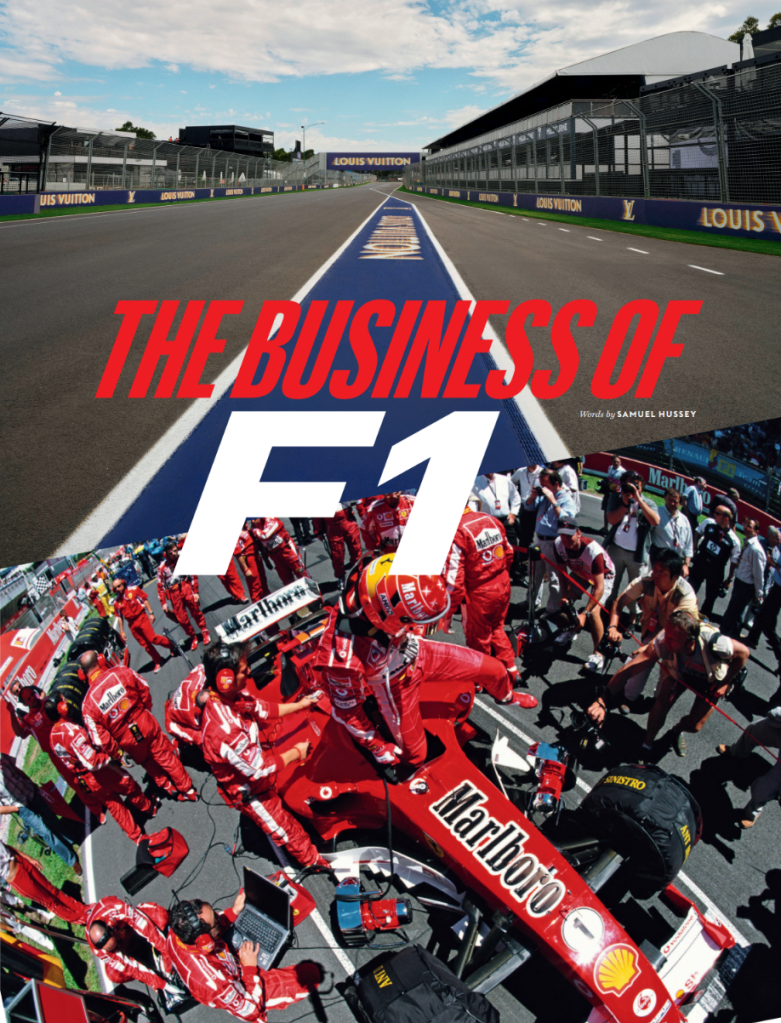
When Albert Park opens its gates for the 2026 season opener in Melbourne this weekend, it signals a new era of Formula 1, with new engines, new teams, new drivers, new sponsors and billion-dollar revenue opportunities for a sport that has evolved into a US$21.2 billion entertainment giant.
Long before the days of Netflix’s Drive to Survive, Louis Vuitton trophy cases and million-dollar trackside hospitality suites, the business of F1 was a very different operation from the one before you today. What’s changed and how did it become a calendar staple for some of the world’s richest and most influential powerbrokers?
Subscribe to Forbes Australia for full access to this and all articles today
We use cookies to help us to deliver our services and provide personalised experiences. By using this website you agree to use our cookies.
Cookie Policy