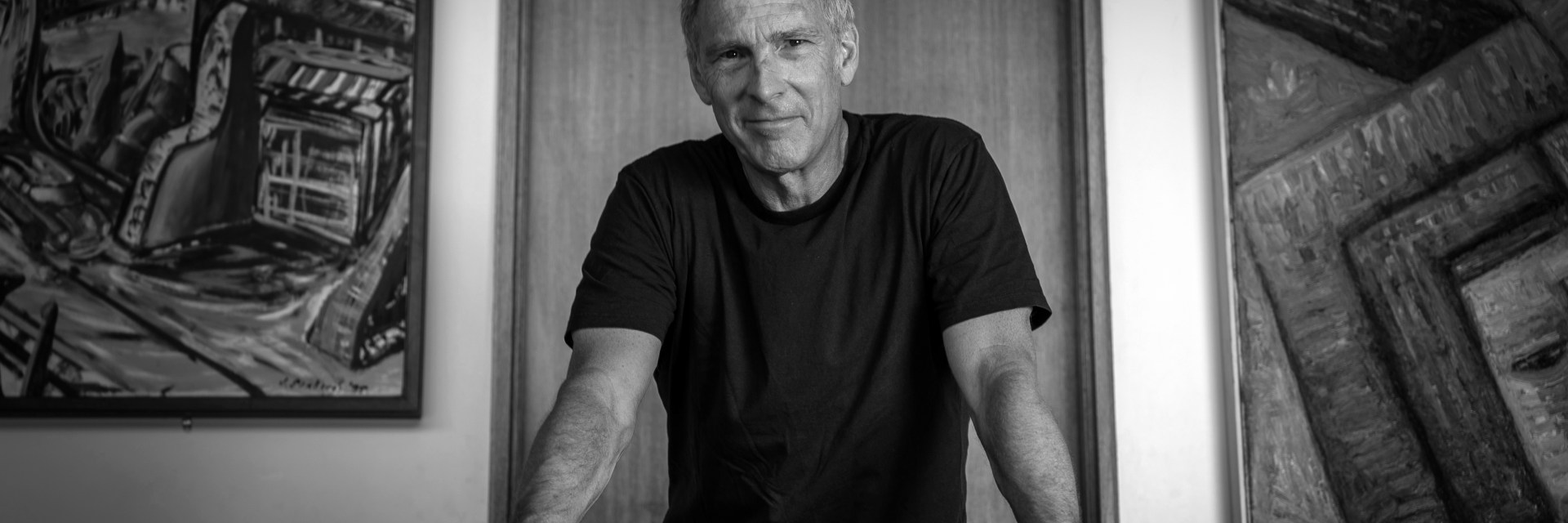

Hayden Stephens walked away from big law and risked financial ruin to reshape Australia’s class-action system – and win back hundreds of millions for underpaid workers.
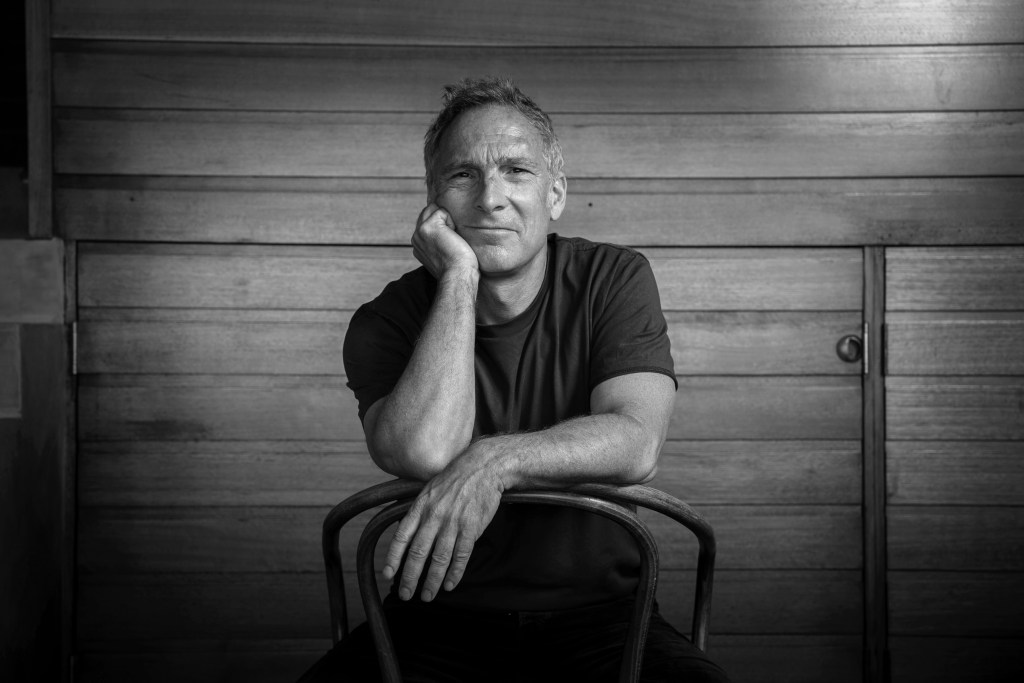
Before he ever stood in a courtroom, Hayden Stephens was pulling beers in a pub he had no business owning and interviewing survivors of childhood sexual abuse he was barely old enough to comprehend.
Both experiences broke something open in him and put him on a path that would lead to Australia’s largest underpayment settlements.
The class action market in Australia is massive and growing. Law firms, often backed by litigation funders, secured settlements worth more than $1.3 billion last financial year.
After leaving Slater and Gordon as a disgruntled, razor-wielding CEO in 2019, Stephens found a way to weaponise the class-action system, risking his own financial ruin to win back $435 million (and counting) for underpaid junior doctors.
Wanna buy a pub?
Stephens grew up the son of a real estate agent in Melbourne’s working-class Footscray. At 22, on the cusp of graduating in law, and having just scored a job at the increasingly famous Slater and Gordon legal practice, Stephens and a mate were having a beer at The Napier hotel, in Fitzroy, in 1992.
The publican told them he was about to walk away from the lease because he couldn’t make a go of the rough little backstreet boozer. Nobody wanted to buy it at the $30,000 asking price. “We’ll buy it,” they said.
“You are sitting in a room with your suit on, and as each man came in, it was almost as though they would assume childlike behaviours in recalling the horrific events of the day.”
“We both went to our different banks and pretended we needed loans to buy a car,” says Stephens. “And we both put $15,000 in each.”
Stephens worked the bar on weekends while flying to Sydney every week to work on a class-action settlement with victims of medically acquired HIV. The case was already won, but the complexities of who got what among the many victims needed to be thrashed out.
He’d come from an entrepreneurial, conservative background, but was finding himself fighting for the rights of the little guy with the left-leaning law firm. “It was a sliding door moment,” he says. “To be surrounded by really smart people who have a real desire to serve social justice was such a huge influence on me.”
In 1992, Slater and Gordon had taken on Dow Corning for 2,800 women over faulty breast implants, winning $32 million. It later forced BHP to pay $110 million to 30,000 Papua New Guinea villagers over toxic waste dumped from the OK Tedi mine.
But back in 1993, fresh from winning a string of asbestos cases against CSR and James Hardie related to the Wittenoom asbestos mine in Western Australia, Slater and Gordon took on the Catholic Church over historical abuse cases. Stephens was sent to interview victims in Perth. It changed his life.
“Suddenly your eyes are open to people in disadvantaged positions, who cannot access the law, and who have had horrific luck.”
“You are sitting in a room with your suit on, and as each man came in, it was almost as though they would assume childlike behaviours in recalling the horrific events of the day.
“When you’re hearing that as a young lawyer, there are a couple of ways you can go. You can go to a more orthodox, transactional law firm. Or you can dig down and fight. And we did.
“Suddenly your eyes are open to people in disadvantaged positions, who cannot access the law, and who have had horrific luck. Fortune favours the bold, but it’s easier to be bold from a position of privilege.”
In 2007, Slater and Gordon had become the first law firm in the world to float on a stock exchange, but after some disastrous corporate plays, it was taken private in 2017 by a consortium of hedge funds, which appointed Stephens CEO. He was tasked with managing “transformation”.
“It was code for shutting down what they considered to be the non-profitable areas. It wasn’t fun – different to the Slaters I knew and loved – there was no longer an appetite for risk or innovation. You were having conversations with colleagues and friends whose careers at Slaters were coming to an end because their area was seen as not profitable.”
It wasn’t what he wanted to do with his life. He left in 2019, thinking he’d quit the law, and spent a year figuring out what he could do, but was persuaded to stick with what he was good at. He began thinking about flaws in the legal system and how the class-action mechanism might be used to solve them.
“While there are firms like Slater and Gordon who champion being the employment law specialists, the truth is they don’t really do much contested underpayment work,” says Stephens.
The problem is that a wrongful dismissal case or an underpayment claim only results in small payouts, so legal fees gobble up most of the money. But a string of high-profile underpayment cases were hitting the news. Celebrity chef George Calombaris’s MAdE Establishment had just admitted underpaying $7.83 million to 524 workers. Woolworths, 7-Eleven, Suncorp and the Commonwealth Bank had all endured underpayment scandals.
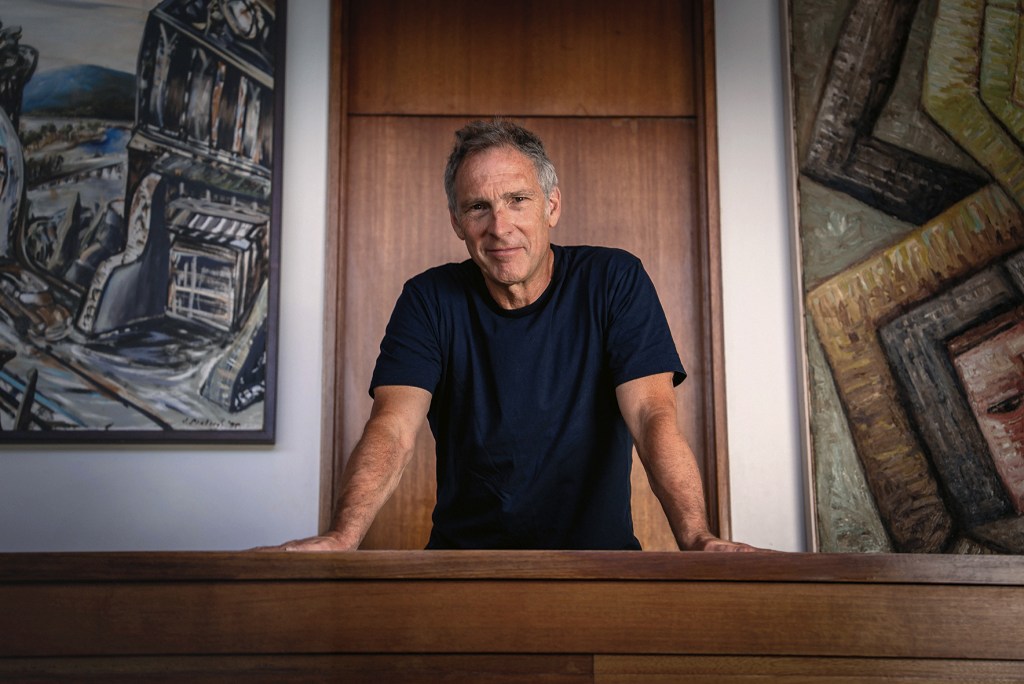
“Wage theft was the new black,” says Stephens. But these cases had all been brought by the Fair Work Ombudsman. Stephens thought the blanket anonymity of class actions was perfect for such cases.
“A light bulb moment was that for many of these employees, they didn’t want to put their hand up because it would jeopardise their careers. But under the class-action regime, when a lead applicant brings a class action in the interests of class members, those class members don’t need to do anything at first. They don’t need to opt in or register their grievance. They are assumed in the class until they choose to opt out.”
“She was this tenacious, smart, courageous young woman.”
The economics worked because, if you won, you could spread the cost across a wide number of claimants.
“I began to research hospo. I talked to a number of colleagues who work in class actions, and I began to read about the predicament of junior doctors and, in particular, the high incidence of mental illness, suicide, and stress.
“You speak to doctors, you realise that it’s real … It is remarkable that after a double shift they can stand on their feet, let alone treat a patient.”
Risking it all
He started his own practice, Hayden Stephens & Associates, in 2020, and he began searching for a lead applicant to launch a case in NSW. He spoke to “70 to 100 doctors”. Most didn’t want to stick their heads up, and some who did were not the archetypal case he was looking for.
While still searching in NSW, he started to research whether Victoria had the same conditions. It did. And while discussing the state of affairs with the Victorian AMA (Australian Medical Association), he came across a doctor living in Victoria who’d been trained in NSW, Amireh Fakhouri. She fitted the bill and, since she worked in Victoria, didn’t need to worry about alienating NSW Health. In Victoria, they found an intern, Gaby Bolton. “She was this tenacious, smart, courageous young woman.”
He enlisted Maurice Blackburn lawyers to help. And took on Gordon Legal as a joint venture partner. “And it might not surprise you that the Gordon in that was my first mentor being Peter Gordon’s own firm. And so it was like full circle partnering with him and his staff in the prosecution of the Victorian cases.”
There are litigation funders in Australia who will cover the cost of legal action. Because risk is high, they demand a large chunk if the case is successful.
He decided to fund it himself. He thought that if they won, the courts would have less appetite to pay litigation funders these huge returns when it was coming out of people’s wages.
If they won, he’d get a 25 percent loading on his fees. If they lost, he’d get nothing. He mortgaged his house to fund it.
And each step of the way, as the cashed-up defences – “big law”, he calls it – tried to have the cases thrown out on jurisdictional technicalities, there were a few heart-in-mouth moments. “Each of those were knockout punches. We felt confident, but you never know.”
In August 2022, the Victorian case was the first case to go to trial. It ended in a $175 million settlement to compensate 12,846 Victorian doctors for years of unpaid overtime.
Armed with that judgment, the NSW case settled for $229.8 million – the largest underpayment case in Australian legal history, says Stephens – with 16,000 NSW doctors.
“During that storm of litigation, I also launched the ACT action.” And after the NSW result, the ACT folded too, for $31 million going to about 1,500 doctors.
Other professions started to take notice.
“The phone rings,” says Stephens. “They can see the success you’re having.”
Launceston-trained doctor Dr Eibhlinn Cassidy is the lead claimant in a current action against the Tasmanian Health Service. The Northern Territory is coming. South Australia and Western Australia, however, are immune because their industrial laws prohibit wage-related class actions.

The rewards might be large, but the pay is slow. The Victorian matter was only finally settled on October 31, 2025.
Even if he knew it was going to take this long, he would have done it all the same, he says.
“Work begets work. By concentrating on what’s in front of you and doing it really well, I’m already seeing the fruits of that in opportunities that are coming. We’ve built a terrific team, and we’re doing good work.
“There’s an emerging area around AI and breach of copyright and privacy of artists as these machines scoop up and use their material. We’re also looking at compensation for people impacted by anticompetitive commercial behaviour, as well as investigating reports of wrongdoing in the superannuation sector. And of course, no surprise, but we keep getting approached to take on more underpayment cases.”
Sloppy bosses be warned.
Timesheet of shame
Year | Organisation | Details | Amount |
|---|---|---|---|
2015 | 7-Eleven | ABC’s Four Corners exposed systematic underpayments and falsified records across many franchises. | $173 million in back payments |
2018 | Caltex | Fair Work Ombudsman found 76% of audited service stations underpaying staff. | $5.8 million repaid |
2019 | George Calombaris – MAdE Establishment | Admitted underpaying 515 employees. Company made repayments and entered voluntary administration. Other venues including Dinner by Heston Blumenthal and Rockpool Dining Group were also subject to wage theft allegations. | $7.83 million repaid |
2019 | Woolworths | Self-reported underpaying 5,700 salaried managers by failing to track overtime. Later fined. | $390 million underpayment; total compensation exceeded $486 million |
2021 | Coles | Fair Work Ombudsman launched action against supermarket chains for failing to track hours worked. | Combined bill reportedly in excess of $1 billion |
2020–2025 | Universities (28 institutions) | $218 million repaid (University of Melbourne $72m; UNSW $70.8m) | |
2026 | St Vincent’s Hospital (Sydney) | Class action launched by Stephens with 2,500 doctors expected to claim underpayment since January 2020. | Ongoing |
Want to see more Forbes articles on your feed? Tap here to make Forbes Australia a preferred source on Google.
Look back on the week that was with hand-picked articles from Australia and around the world. Sign up to the Forbes Australia newsletter here or become a member here.