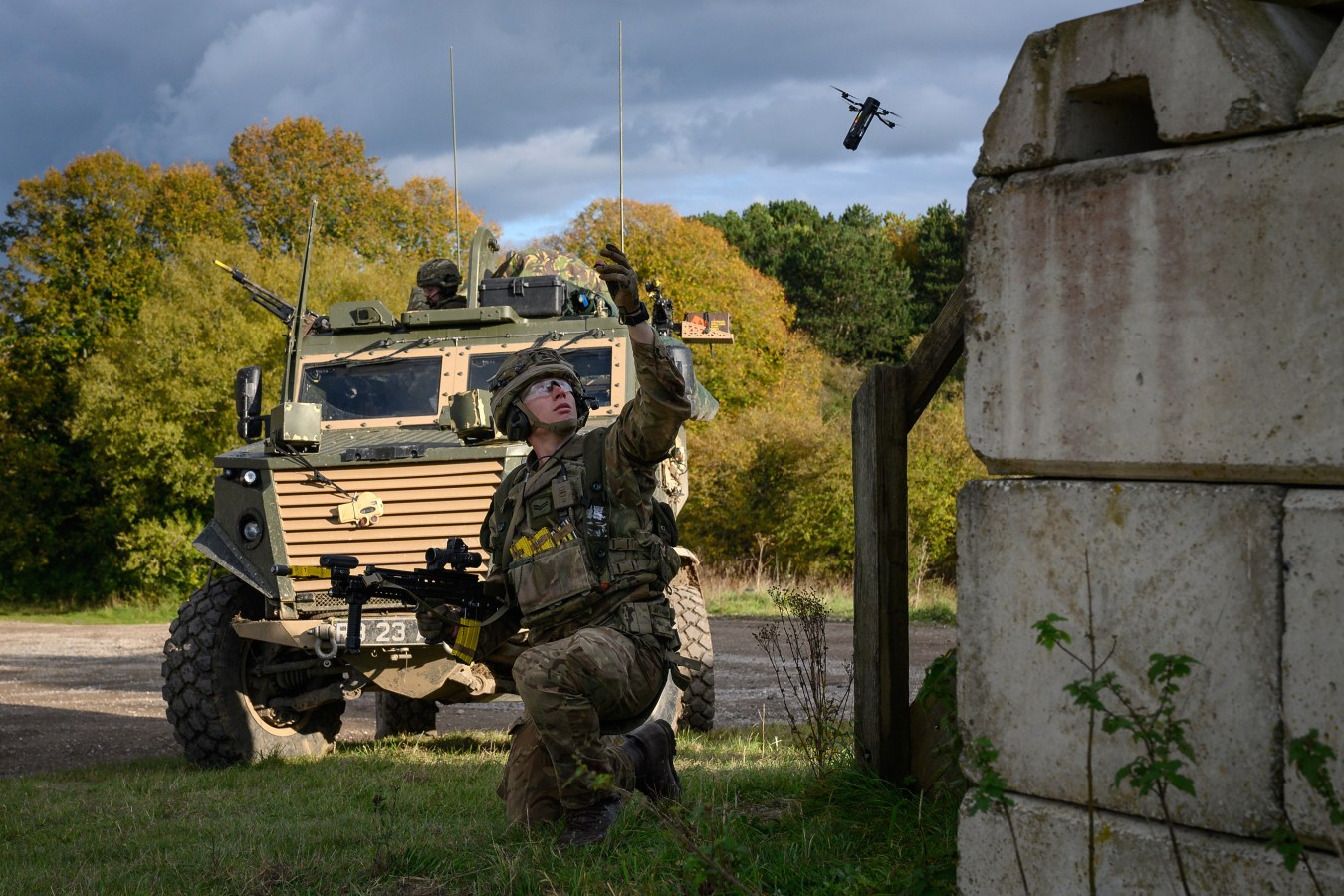

After 20 years of lab work, a Queensland start-up has been delayed another day on the launch pad as it aims to launch its hypersonic scramjet, to finish a job NASA started – and to take on SpaceX in the process.
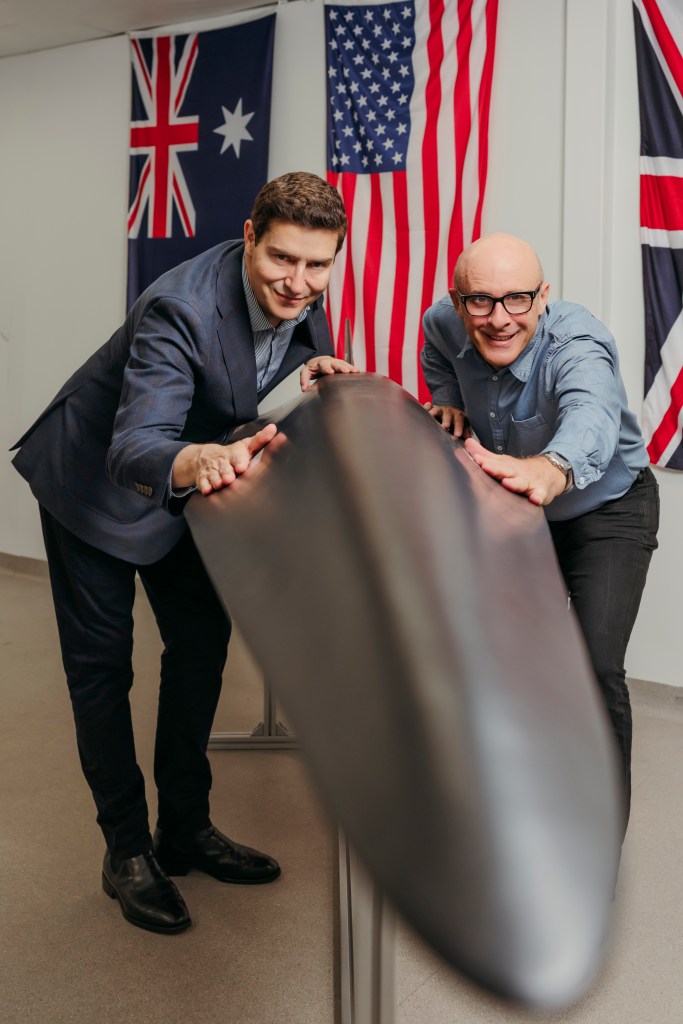
The last time NASA flew a scramjet – the fastest flight ever, at 9.6 times the speed of sound, in 2004 – Michael Smart was there working on it.
His group was trying to build a craft to supersede the space shuttle and make space travel as routine as hopping on a jumbo.
But right at the moment of their triumph, the Bush administration lost interest in near earth. “There wasn’t a lot of fun things going on,” he says of his hypersonic field. Not in Virginia, anyway.
There was, however, plenty going on back home in Queensland.
That’s how, 20 years later, Smart’s Brisbane start-up, Hypersonix Launch Systems, has come to be sitting on a launch pad awaiting its maiden test flight in Wallops Virginia.
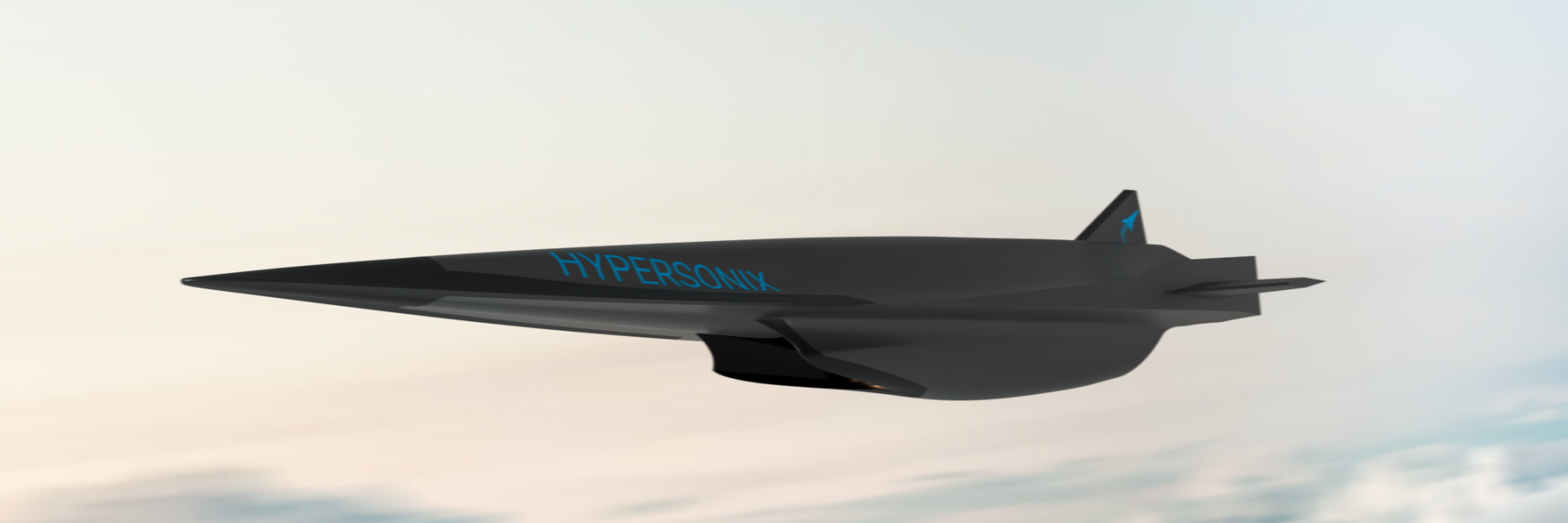
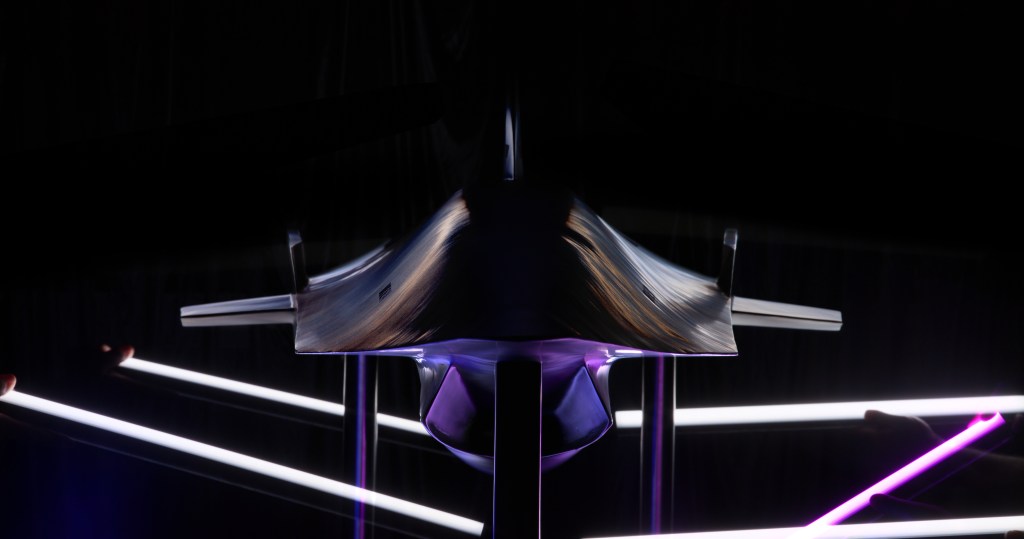
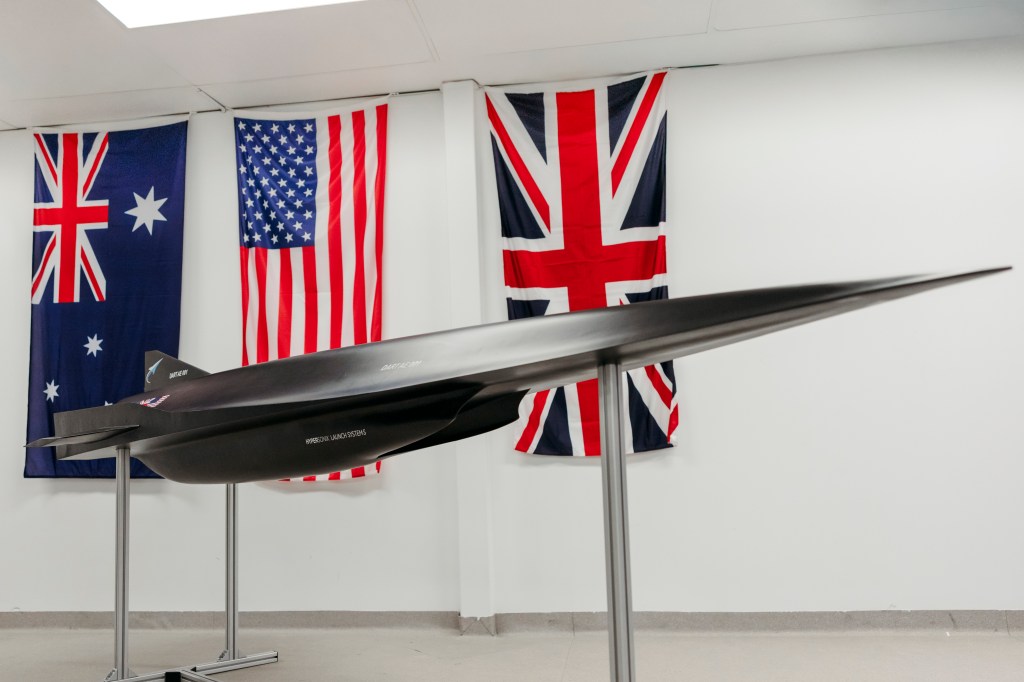
This is no small matter. A single test flight costs about $20 million. That bill is being picked up by the US Department of Defense. For that, Hypersonix’s 3.5-metre autonomous hypersonic aircraft, the DART AE, will be carried into the upper atmosphere aboard New Zealand start-up Rocket Lab’s HASTE rocket, purpose-built for such test missions.
But with the flight window opening at 8am [AEDT] on Thursday, Rocket Lab issued a statement: “We are standing down from a launch attempt today due to out-of-bounds launch commit criteria. Our next launch window will be shared shortly.” In English, that means something outside their control, probably weather, has delayed the flight.
The plan is that once Rocket Lab’s rocket is travelling at multiple times the speed of sound, way out over the Atlantic Ocean, the Hypersonix DART AE will separate from the rocket and ignite its Spartan scramjet system that will take it to Mach 7, 8,643 km/h. Hopefully.
Its launch window opens at 8am AEDT on Thursday, February 26th.
The mission is being conducted on behalf of the US Department of War’s Defense Innovation Unit (DIU). The DIU has named the mission Cassowary Vex, after a Queensland flightless bird, while Rocket Lab is calling it “That’s Not A Knife”.
While scramjet technology was a product of the Cold War, it has been largely ignored over the last two decades because of difficulties in making it practical.
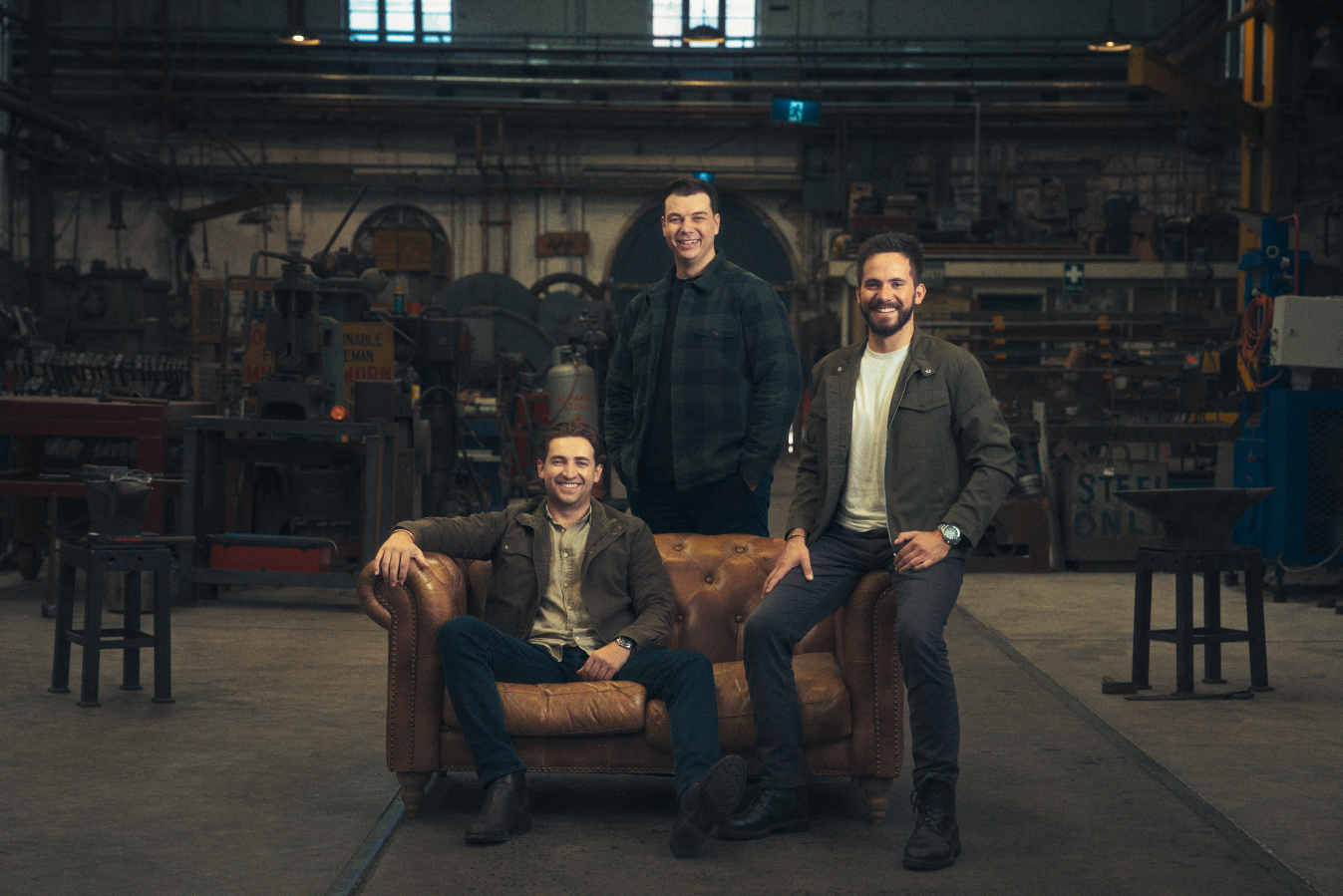
But Smart never gave up. He spun Hypersonix out of a deep University of Queensland hypersonic ecosystem, raised $46 million, and built a scramjet with an engine 3D-printed near Melbourne Airport.
Smart’s ultimate goal is to fly a craft at Mach 25. And while a one-hour Sydney-London flight is a fun media hook, the more realistic, immediate target is to outcompete Elon Musk’s SpaceX as space’s bus service.
It’s the continuation of a story that began with a kid in the Brisbane suburbs who dared to dream.
Hypersonic flow
Smart, 61, was wowed as a boy in the 1970s by stories of America’s “X Planes”, the experimental US military craft pushing the edge of the “flight envelope”, and coining that very expression.
“I realised that these beautiful aircraft weren’t just created by drawing on a board … that it was all dependent on maths and physics.” So that’s what he set out to do. No one in his Brisbane family had gone to uni, but he was good at maths, so he set his mind to it.
“Universities don’t just give you money to do research. You’ve gotta go and get it.”
He got into mechanical engineering at the University of Queensland, where Australia’s first professor of space engineering, Ray Stalker, presided, and was working on making space planes a thing. His target was “scramjets”, which is a contraction of “supersonic combustion ramjet”, a type of jet engine with no turbines that uses the aircraft’s own incredible speed to compress incoming air. Fuel is then injected and burned in this high-speed airflow, generating thrust.
Because they only work at very high speeds, scramjets can’t take off on their own, but once moving fast enough, they offer an efficient way to reach hypersonic speeds – more than five times the speed of sound, or Mach 5.
Smart did a thesis under Stalker on “hypersonic flow”, the very high-speed dynamics that such craft have to operate in. “Air-breathing engines like jet engines just don’t work at hypersonic speed,” Smart says. “All the fins and the turbo machinery just melt.”

Stalker encouraged him to do a PhD in hypersonics at Brooklyn Polytechnic, which led to a postdoc, at Stalker’s urging, and a job at NASA’s Langley Research Center, in Virginia, working on scramjets, indeed, on X Planes.
“I spent 10 years there doing really cool research, understanding these scramjet engines,” says Smart. “The aim was to have a plane that could take off from a runway, fly all the way to space, drop off a satellite, whatever it needed to do, fly back to the ground, just like you were flying to Sydney on Qantas.”
Secret sauce
But after their November 2004 triumph with the X-43 hitting 11,000 km/h, when NASA’s priorities shifted back to the Moon and Mars, Smart started seeing what was happening back home.
Stalker’s legacy lived on in the Centre for Hypersonics at the University of Queensland. He was semi-retired, but one of his postdocs, the now Professor Allan Paul, had found a cheap way to test scramjet engines in flight, by putting them on top of a small rocket, and validating Stalker’s key breakthrough – a way to test scramjets in a lab with his “shock tunnel”.
Since 2005, Smart and his team have run 6,000 tests in the shock tunnel, he says, figuring out how to solve one of scramjets’ key problems: burning fuel fast.
“Air passes so quickly through the engine that you have to be able to burn it extremely quickly, otherwise it’s already passed out the back before you get anything,” he says.
“That’s the secret sauce of scramjets – to inject and mix and burn all this hydrogen very, very quickly. There are certain parts of our scramjet that we never show anybody. They are quite secret.”
In order to get to low-earth orbit, you need to get to Mach 25, about 8km per second.
The UQ scramjets had been shown in the lab to perform well between Mach 5 and Mach 12. But scramjets don’t work below Mach 5, so that was a major problem to solve.
“The simplest way to get to Mach 5 is to use a rocket,” says Smart. “Then to go from Mach 12 to low-Earth orbit, [Mach 25] you just need a small kick stage – another rocket. So to fly into space, you need three stages: a booster rocket, this hypersonic aircraft we’re developing in our company, and a little kick stage.
“Interestingly, getting from Mach 0 to Mach 5 is the most complicated part. We have aircraft that can take off on a runway and fly to Mach 3. But getting up to Mach 5 where scramjets start to work, no one’s cracked it. We were trying to crack it back in the 90s at NASA. The US government has spent billions on it.
“So rather than trying to crack that really difficult problem, let’s use rockets. They’re ubiquitous nowadays. We have people banging down our door to provide booster rockets for our plane.
“And the cost has dropped considerably. If we want to fly to space, it’s gotta make sense economically.”
By 2017, Smart knew how to build it. “I didn’t need to do more research. I wanted to give it a go commercially. It was pretty speculative. There was no company in the world doing just that.”
Start-ups like New Zealand’s Rocket Lab were inspiring: reaching space with a rocket in 2009.
Smart possessed no business skills but realised that academia had trained him to raise money. “Universities don’t just give you money to do research. You’ve gotta go and get it.”
He teamed up with an old university colleague, David Waterhouse, to start Hypersonix in 2019 with backing from a Melbourne family office and a grant from the federal Department of Industry.
It began with three people in a room, Smart, Waterhouse and a PhD student “spitballing” for a year on how to produce engines that were cheap, quick and repeatable. They hit upon the new technology of 3D printing with metal.
At Mach 5 and beyond, the air hitting the craft is hot enough to soften stainless steel. Hypersonix needed high-temperature alloys that could survive 800°C.
They found a willing collaborator in Amiga Engineering, a Victorian firm just entering the metal-3D-printing game.
More radical was what wasn’t inside their plane. “One aspect of our scramjet that is different from others is that it has no moving parts,” Smart says. “And it doesn’t have an igniter or spark plug either.” The engine lights itself, using aerodynamics and compression alone.
It’s a company philosophy, he says. Complex solutions are easy. Simple, elegant solutions are hard.
The investors who gathered around Hypersonix started demanding proof of concept.
“They really wanted us to show that as a small company, we could actually fly,” says Smart. He resisted at first. Flight tests, in his experience, were 10% engine and 90% paperwork.
“The logistics, the flight-safety templates, the negotiations with the range – it’s bloody hard.”
Eventually, he caved. Smart and one of his former PhD students, Alex Ward, sat down with a blank sheet. “We said: what is the smallest, cheapest, simplest plane we could design that had a scramjet?”
It needed to fly. And it needed to manoeuvre in flight to differentiate it from a rocket.
The pared-back aircraft they came up with became DART – not much bigger than a kayak. Smart tapped old friends in the US hypersonics community for advice. One introduction led to another, and eventually to the Defence Innovation Unit, or DIU – the Pentagon’s attempt at a Silicon Valley disruptor inside the bureaucracy.
The DIU works by putting out challenges, receiving dozens of proposals, and then funding a single team to try something bold. Its new program, HyCAT – Hypersonic High Cadence Testing – was looking to break Boeing-Lockheed hegemony and get smaller, faster companies into the pipeline.
Historically, a hypersonic flight campaign might cost US$300 million, take five years of work, and end with no aircraft flying. DIU wanted flights within 12 to 18 months, at a fraction of the cost, from companies that didn’t think in geologic timescales.
“They really liked what we were doing with our little tech demo,” Smart says. Sixty to seventy companies applied. In March 2023, Hypersonix won. The brief required a vehicle that could fly above Mach 5 with a payload bay so the military could test next-gen flight electronics – including radiation-tolerant comms gear and navigation-grade quantum devices – in the brutal hypersonic environment.
The cap table
The win gave Hypersonix instant credibility in the US – and interest from investors.
Soon after, Matt Hill – who’d had a diverse career across multiple tech companies – was brought in to replace Waterhouse as CEO, and to get on with raising the big money. He recalls a road trip with Smart and North Ridge Partners’ managing partner Christin Burns in April and May, 2025. “He took us all across the US and UK and touched on various funds from Europe.”
UK defence venture fund High Tor Capital led the October $46 million raise, with European defence company Saab and Polish family office RKKVC also involved. The federal government’s National Reconstruction Fund [NRF] chipped in $10 million, and Queensland Investment Corporation put in an unstated amount.
“When we set out to do this Series A, I had no idea we’d come back with such a glorious cap table,” says Hill. “It’s got the strategic component, the defence component, the sovereign wealth fund, the Queensland wealth fund.”
High Tor’s James Chiswell says Hypersonix’s technology was “transforming how we think about access to the edge of space.”
NRF CEO David Gall calls the company “an opportunity to boost Australia’s aerospace capabilities by creating highly skilled design, engineering and manufacturing jobs in regional Queensland.”
Queensland Investment Corporation’s Nicholas Guest frames it as backing a Queensland firm “at the forefront of globally significant hypersonic technology.”
Smart’s view is more modest. To him, DART is another X-plane, the kind he grew up reading about – ruthless and smoking hot. Each flight answers a handful of questions and poses a handful more.
The craft NASA couldn’t justify in the 2000s, the big one that will fly to space, has already been sketched out in Smart’s brain and on his computer. He’s done the maths and the physics. If it works, Australia will be building the bus.
Want to see more Forbes articles on your feed? Tap here to make Forbes Australia a preferred source on Google.
Look back on the week that was with hand-picked articles from Australia and around the world. Sign up to the Forbes Australia newsletter here or become a member here.