
As wine tastes shift and female consumers take the lead, Brown Brothers is being reshaped by a generation that doesn’t quite match the name on the bottle.
This story features in Issue 23 – out now. Tap here to secure your copy.
Patricia Brown had a little corporate culture hack. She’d heat the teacups in the oven so hot that the brew would be too scalding for her sons – the eponymous Brown Brothers – to gulp down in their daily meeting.
Patricia might not have appeared in any corporate chart, but she was the cultural glue of the company for two generations, says Emma Brown, the daughter of one of those brothers.
“She knew that she had to get those boys sitting at a table for longer, otherwise they would have just got up, had their tea and gone out to the vineyard like farmers would.”
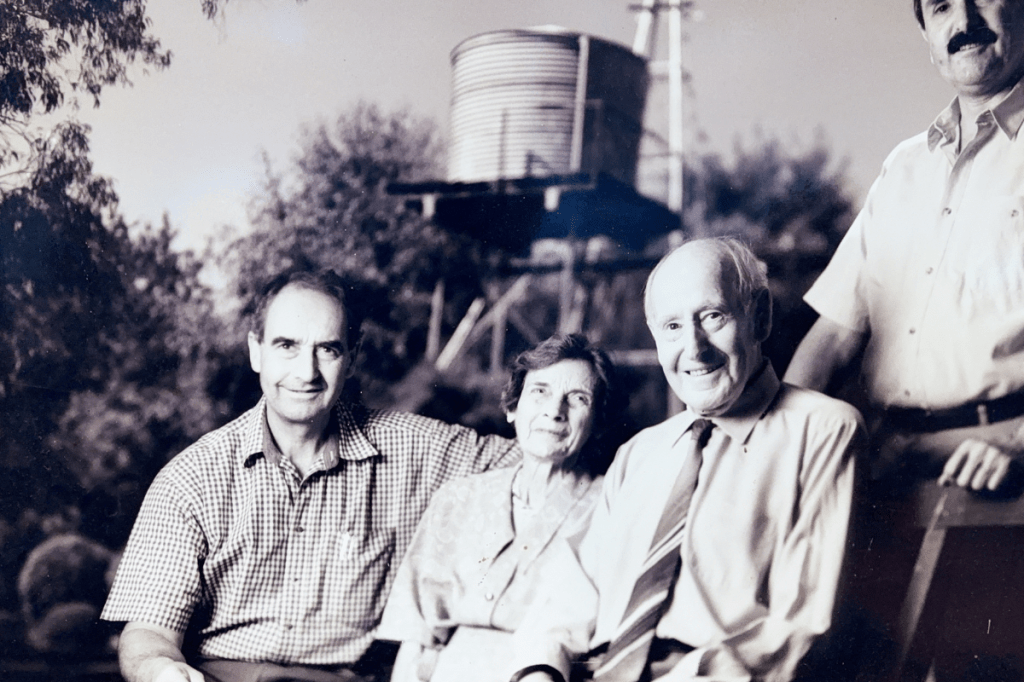
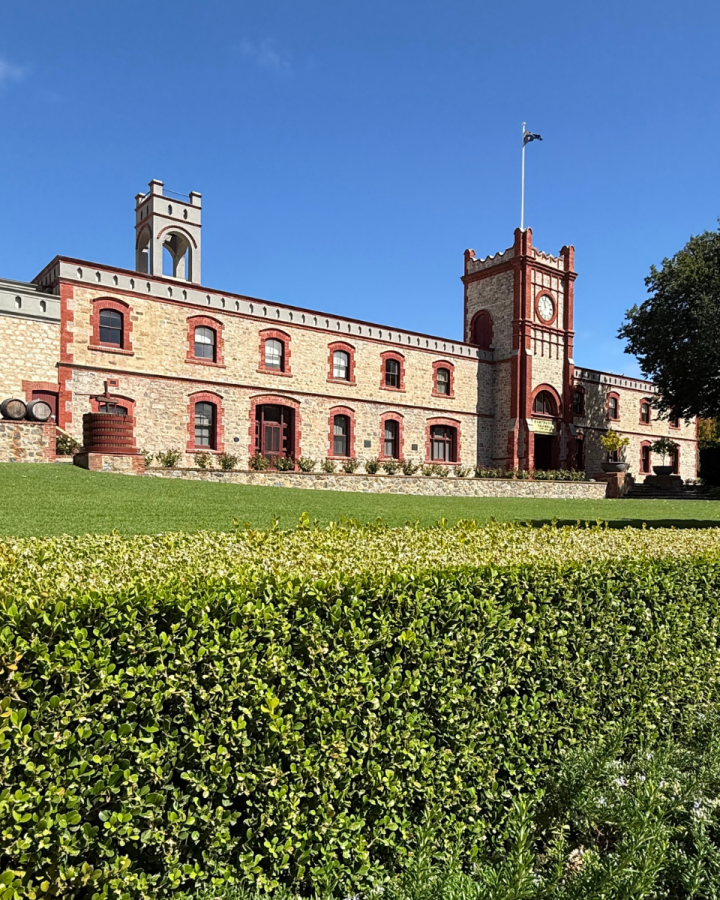
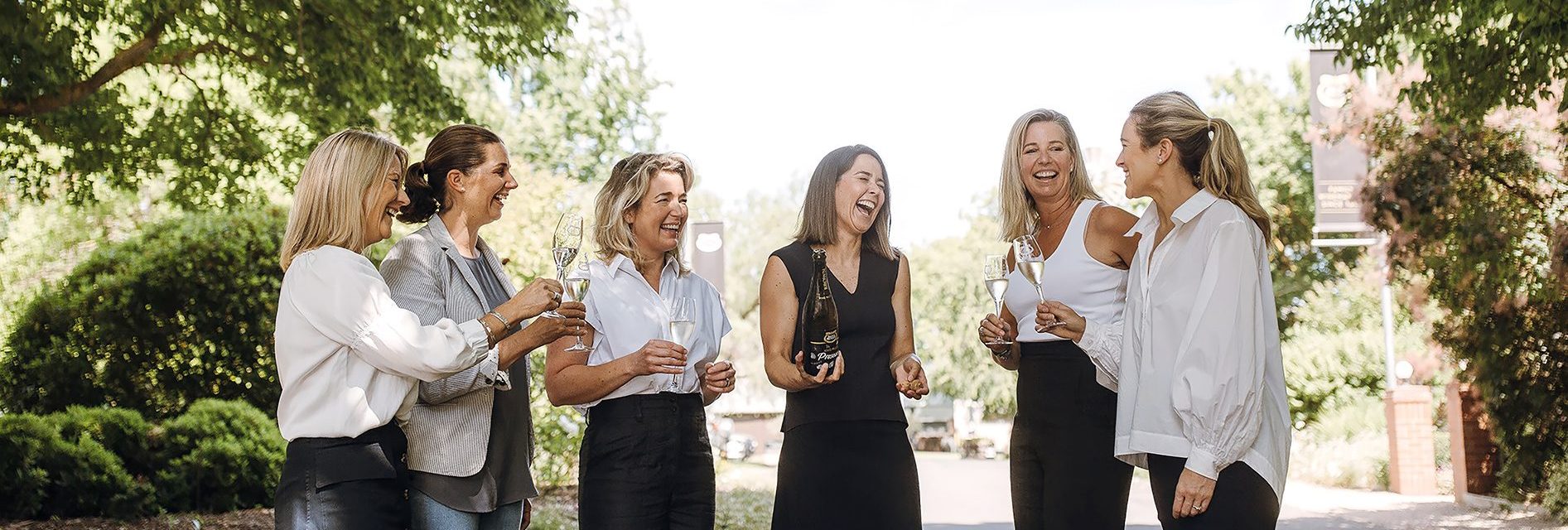
Emma is part of the fourth generation of Browns taking senior positions at the 137-year-old winery at Milawa in north-east Victoria – a generation with a notable absence of brothers. Eight of ten fourth-generation family members are female.
It is timely. As female consumers become the most important purchasers of wine, Brown Brothers is increasingly run by women, including three Brown sisters.
As the market shifted away from traditional reds this century, Brown Brothers was ready with a portfolio of approachable sparkling varieties and “lifestyle reds”.
“Some businesses go out and have to find gender balance,” says Brown Brothers head winemaker Cate Looney. “We’ve always just had that based on merit.”
That has gone well. As the wine industry has struggled through a phase of consolidation, the family-owned business has leapt from number 14 on Australia’s wine volume charts in 2022 to number seven, last year.
Early education
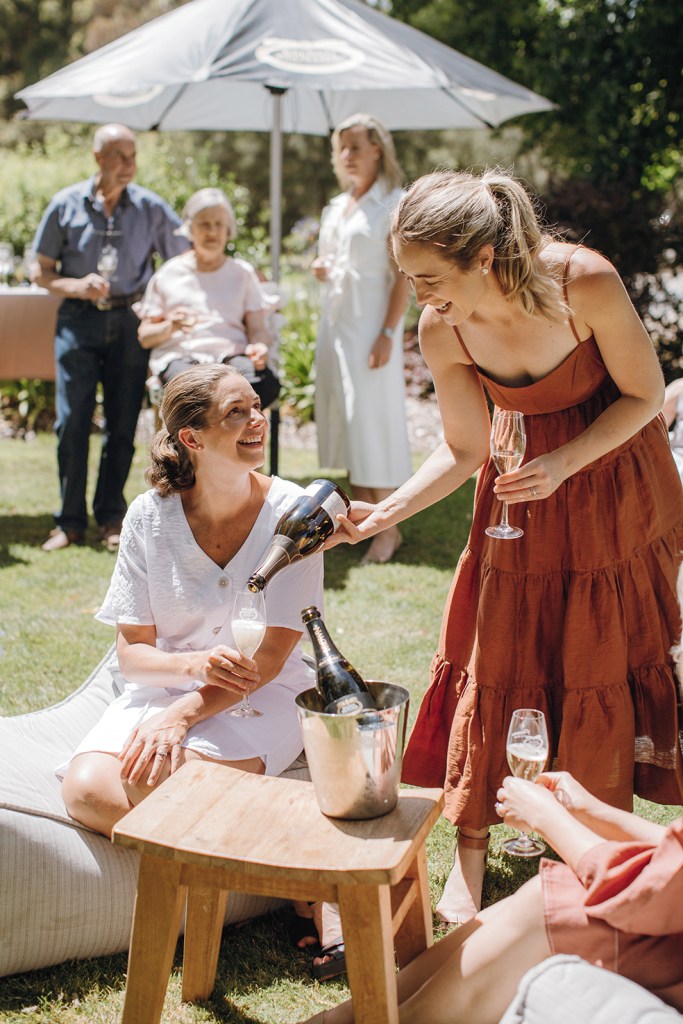
Katherine Brown leads the way into the “Kindergarten” – row upon row of about 40 identical small wine fermenting tanks. “It’s called the Kindergarten,” she says, “because little ideas come in here to grow into something big.”
The identical tanks allow winemakers to play around with fermenting the same juice at different temperatures with different yeasts.
And play around they have.
“This is where Prosecco started,” says Katherine. “This is where we made our first Moscato [a sparkling, sweeter, lower-alcohol white], where we made our first Cienna.”
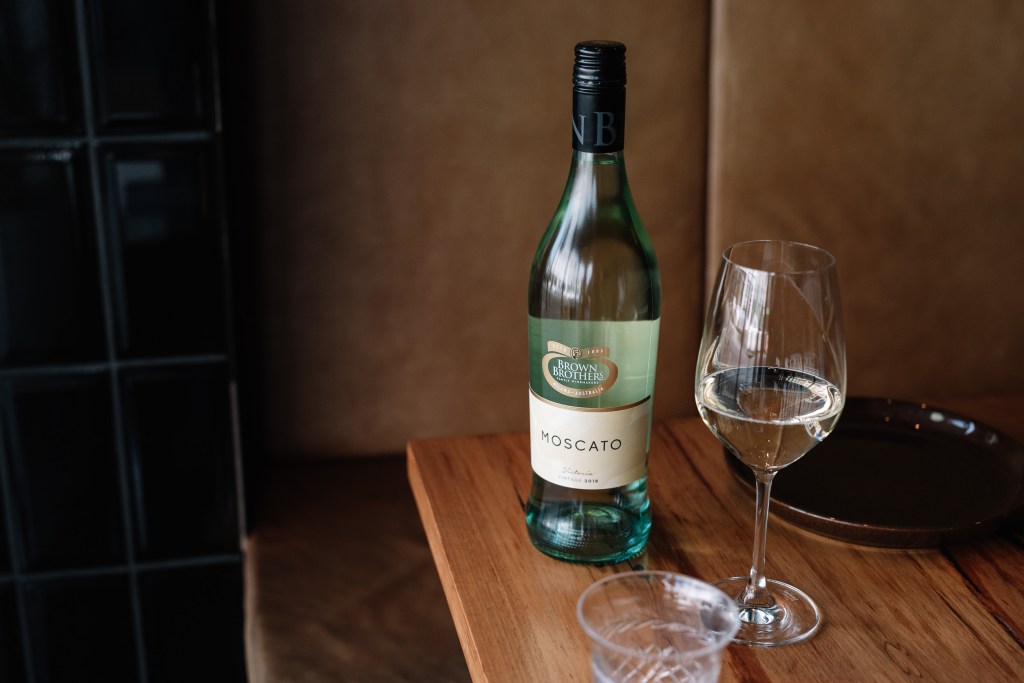
When Katherine Brown started as a junior winemaker 11 years ago, traditional reds were still the focus. But head winemaker Looney was already hard at work in the Kindergarten, taking the company towards its perception of the modern market, building on the work of her predecessor Wendy Cameron.
It has proved prescient. “This year we’ll bring in about 18,000 tonnes of fruit from our Victorian vineyards,” says Katherine. “About 6,000 of that is fruit for Moscato and about 6,000 for Prosecco. So, if you’re looking at where the trends are in wine, we’re seeing that it is about sparkling wines, fruity wines, the wines that bring people into wine.”
“And, the reds we’re focusing on are styles such as Pinot Noir and Cienna, which is a fruity style red – so lifestyle reds.”
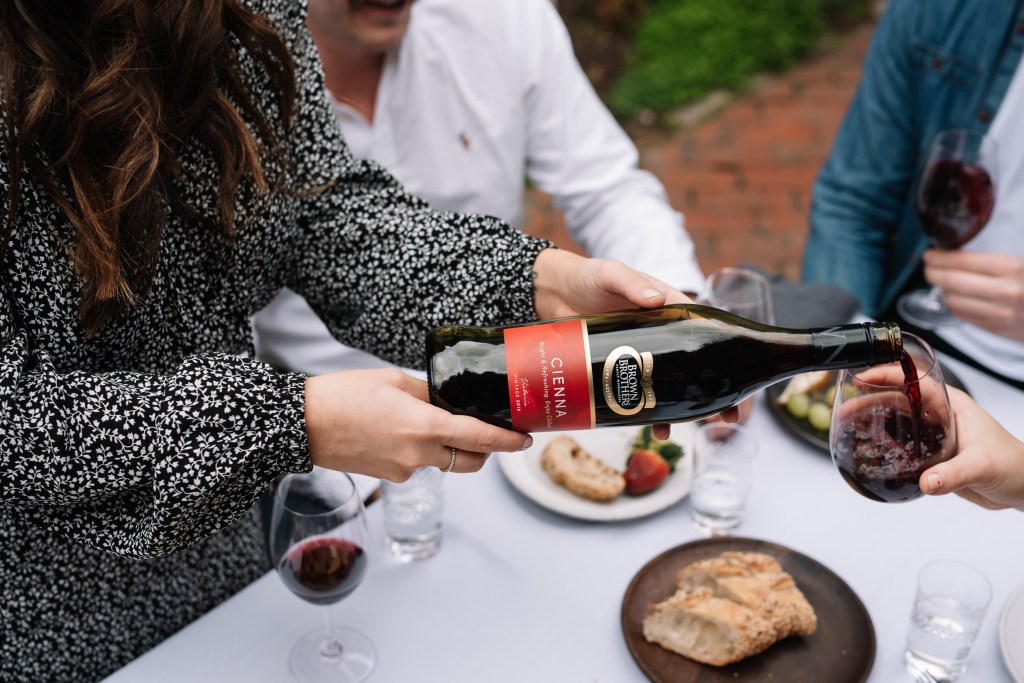
Cienna was developed by the CSIRO in 1972 as a cross between the Spanish variety Sumoll and Cabernet Sauvignon, and was championed by her uncle, John G Brown, during his tenure as head of the company. He was talking about this culture of experimentation back in the 1990s.
It’s one thing to develop a new variety, but it’s another to get people to pick up the bottle with the funny name in the bottleshop.
Cienna, the sparkling red, best served chilled, does better at the cellar door, where people try before they buy, than in shops. Despite this, it’s still the biggest-selling “off-dry red” wine in Australia, says Katherine.
“And it’s one of these sorts of cult wines that once you taste it, you fall in love with it.”
And while women consume 51% of wine in Australia – having only recently overtaken men – their influence on purchase decisions is much greater, says Emma.
She declines to call it a feminine range, more “gender neutral”. “You think about the Prosecco and sparkling wines and our fruity wine portfolio. We certainly have a more approachable portfolio which allows women and men who are just starting their wine journey to come in in an approachable way.”
They know that people who start by trying heavy Cabernets or Shiraz don’t tend to stick with wine, waiting for their palates to mature.
So Brown Brothers have produced wines flavoured by lychees and mango, Prosecco in an aluminium bottle, all trying to hit that moving target of the new wine consumer.
“Each year we try and have maybe one or two NPDs, new product developments,” says Katherine. If they graduate Kindergarten, they get trialled at the cellar door, where staff are trained to record feedback on what’s working to help decide whether it should be sent out into the wider world.
What’s in a name?
“This is our family cellar,” says Katherine, leading the way into the depths, as she discusses the recent victory in the EU trade negotiations, which will mean they can continue calling their Prosecco, Prosecco.
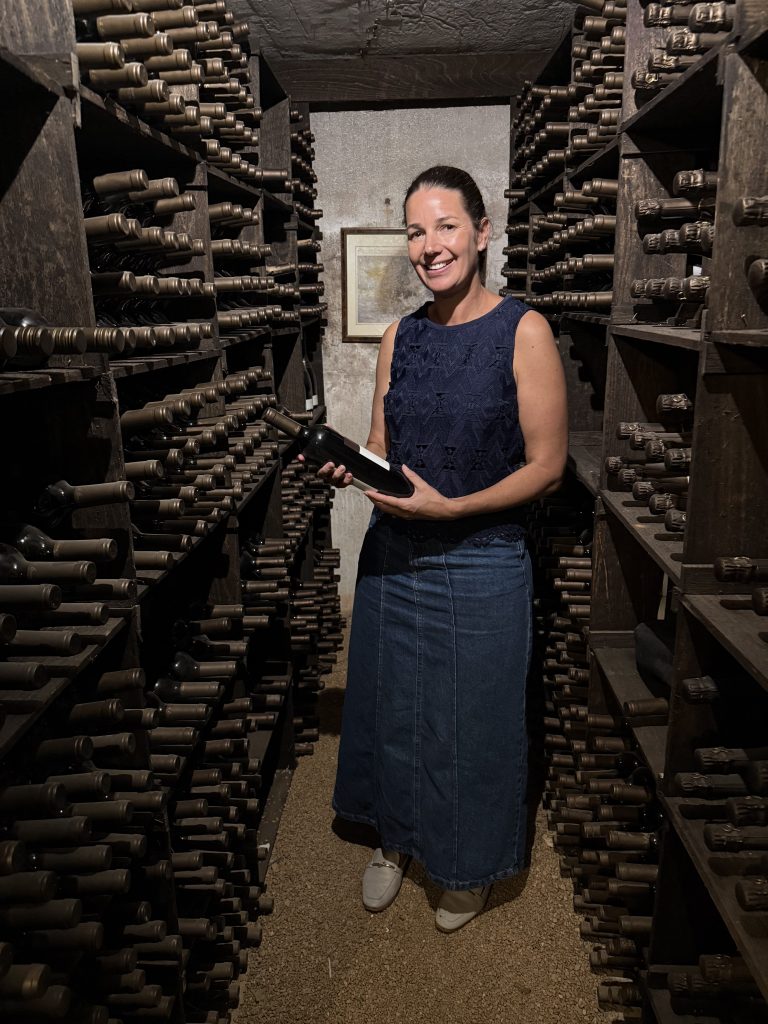
Katherine is a former ski instructor who studied business with a master’s in wine marketing.
She switched to making wine in 2015, the first female Brown family member to tackle winemaking and is all in on the project of reinvention.
The cellar she is leading us into stores two types of legacy. We’re looking at big old family photos on the way to dust-covered bottles dating back to 1956. “That’s Uncle Roger, Dad’s youngest brother. Unfortunately, he died when he was 32, so I didn’t get to spend much time with Roger. This is Patricia with my grandfather John, when they were first dating.”
Emma recalls an idyllic childhood, playing with their cousins, all of whom carried the Brown name.
Katherine wonders how the fifth generation, including her own children, will view their relationships now that many don’t carry the Brown name. “We’re very attached to our name and our connection to the brand and the sense of place. It will be interesting to see how all our offspring go in that sense of connection.”
Someone asked Emma recently at an industry function what her husband thought about her keeping her last name, as if it were 1970 or something. “And I thought, ‘He understands that it’s such a part of me’.
“And presenting at a business leaders’ forum as ‘Emma Kay from Brown Brothers’ doesn’t quite demand the same attention as Emma Brown.”
And while the holding company has changed its name to Brown Family Wine Group, there’s no chance of them changing the wine brand to more accurately reflect the demographic. It’s hard enough to change the font on the label, let alone the name. And that’s an area where it blurs between a family decision and a business decision, says Katherine. And no chance it will ever be called “Brown Sisters”.
“Normally on April Fool’s Day, we float the idea,” says Katherine.
“It always makes Dad feel a little uncomfortable,” says Emma. “It’s funny, a lot of people say, ‘What’s it like being a female in a masculine business, because it’s called Brown Brothers?’ And I don’t think we’ve ever thought about it being masculine.
“Generation three was the first that had any brothers, but also the influence that Nana has had has made it never feel like it’s a boys club or that it’s just about the first-born son or anything like that.”
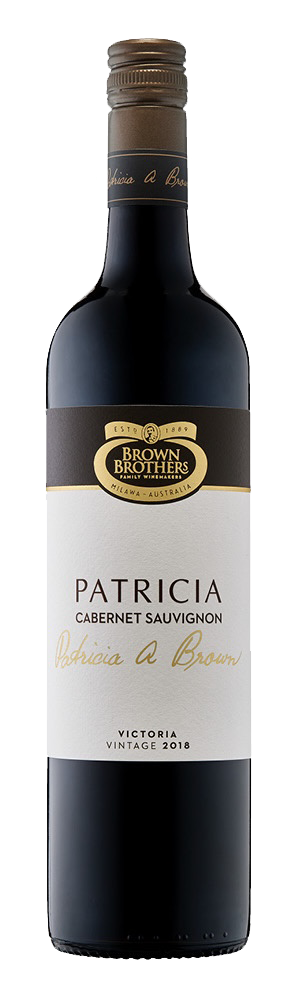
And when, 20 years ago, they were searching for a name for their high-end range, the choice seemed obvious. They called it Patricia.
Brotherhood
In all of Brown Brothers’ 137-year history spanning four generations, the third generation was the only one that ever had any brothers in it.
The name was coined as a victory of hope over reality. When John Francis Brown made his first wine in 1889, at Milawa, north-east Victoria, he put the word “Brothers” into the name, thinking it might attract his siblings to come work with him. It didn’t.
He then had only one son, John Charles Brown. John Charles was at last able to give the business some eponymous truth by having four sons, all of whom joined the business and ran it between them from the 1970s into this century.
They were John Graham, Ross, Peter and Roger. John Graham took over winemaking in the 1970s, then the “head of family” and CEO role from 1988. Under his leadership, the company was already comfortable with diversity. It had 45 grape varieties growing in a multitude of microclimates within an hour of the Milawa base, and a female head winemaker, Wendy Cameron.
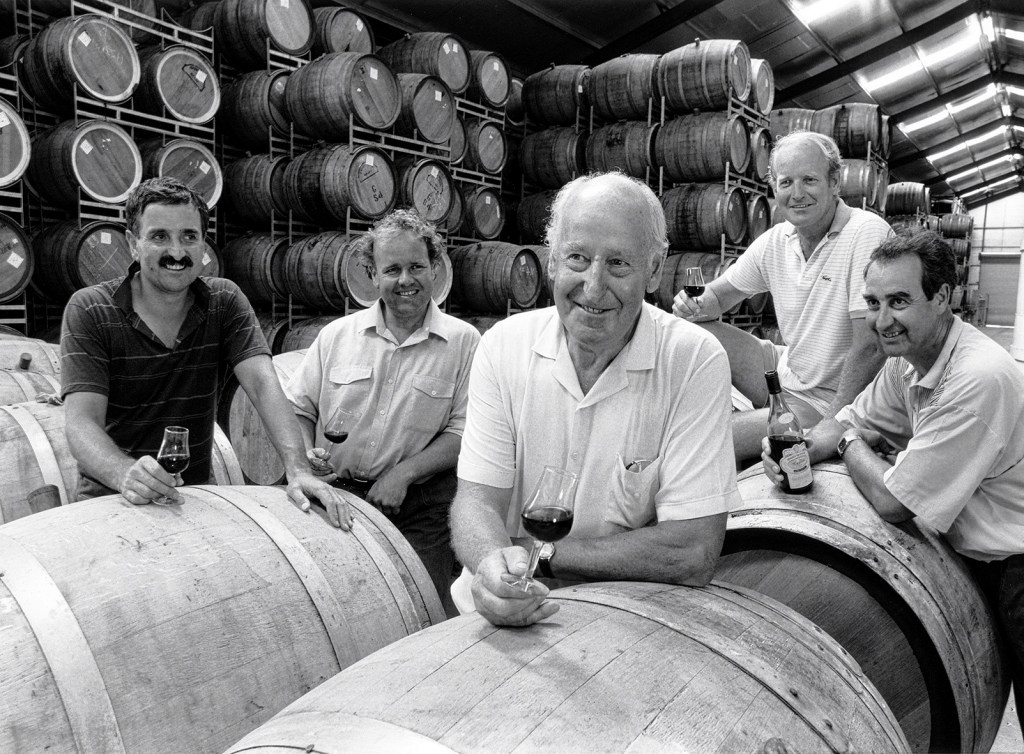
Their younger brother, Roger, died in 1990, and the three remaining brothers bought his share.
Another brother, Peter, had sold down some of his equity in Brown Brothers to spin the historic All Saints vineyard at Rutherglen – complete with a castle and a proverbial dungeon full of wine medals – out of the Brown Brothers portfolio.
When he died suddenly in 2004, his children – Nick, Eliza and Angela – kept their interest in Brown Brothers and continued to play an active role in its boards while running All Saints to considerable acclaim.
Ross’s daughters – Katherine, Caroline and Emma – work in Brown Brothers day-to-day, which, under family rules, disqualifies them from sitting on the board, avoiding the problem that other family businesses can face, whereby a family member working in the company can be the boss of their boss.
Their father, Ross, was CEO from 2001 to 2011, before he made way for the first non-family CEO. Ross continues to sit on the board.
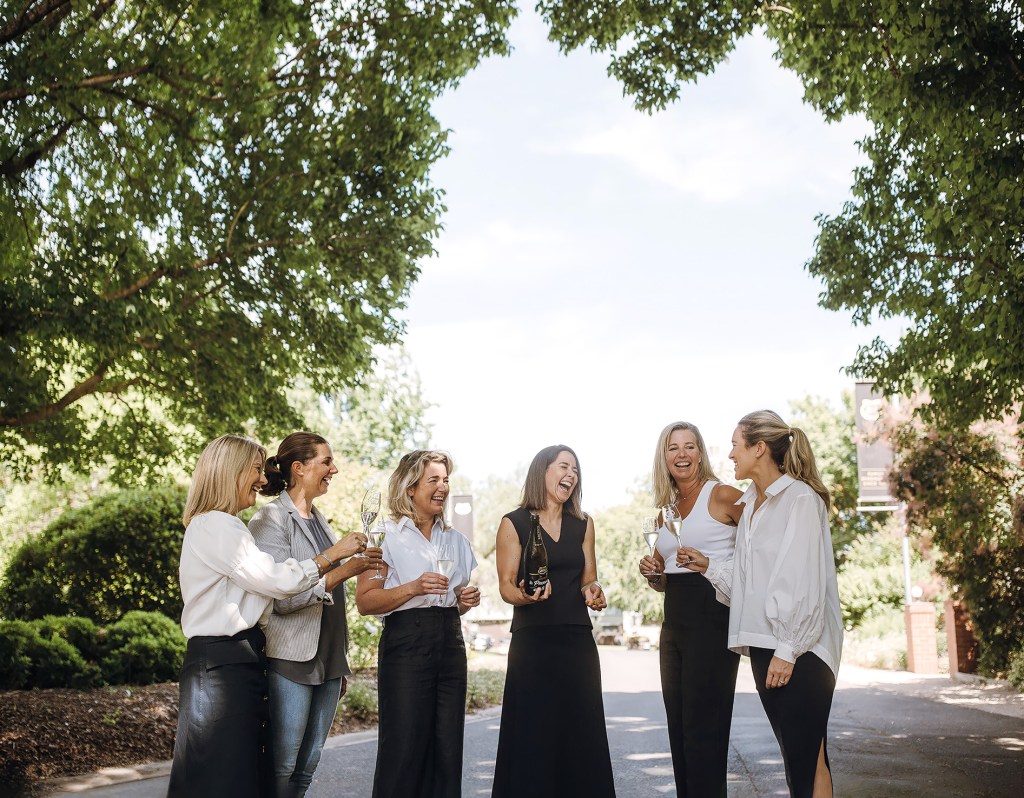
Their cousin Angela sits on the business board, on which their other cousins, Eliza, Cynthia, and John Andrew, have all had spells.
The company also has a Family Council and Shareholder Board to keep everyone in the loop.
In 2010, Brown Brothers reportedly paid $32.5 million for Gunns Limited’s Tasmanian wine assets, including the Tamar Ridge, Devil’s Corner and Pirie labels, coming with 400 hectares of vineyards to boost its Pinot Noir and sparkling wine production.
The last three CEOs have been from outside the family. Current CEO Cameron MacFarlane has been in charge since 2023 and is maintaining the experimental culture that precedes him.
“With more choice than ever, consumers are seeking products that reflect their values and occasions, so we see a strong opportunity in lighter styles, new formats and experiences that bring people into the category.
“Our priority is to meet them where they are, through flavour, format and storytelling that feels genuine, contemporary and easy to engage with.”
Want to see more Forbes articles on your feed? Tap here to make Forbes Australia a preferred source on Google.
Look back on the week that was with hand-picked articles from Australia and around the world. Sign up to the Forbes Australia newsletter here or become a member here.