What a pop-up, garden party and massive out-of-home advertising tell us about the famed outerwear firm’s plans to tackle luxury in the Asia-Pacific.
It’s late afternoon, and I’m standing atop a tri-deck vessel as it plies its way down the waterways of Shanghai. The boat charts a course that will take it through a stretch of the Huangpu River that sits knife-edge between the city’s past and future. On one side, the historic Bund, with its gilded European architecture. On the other, Lujiazui – probably the most photographed urban skyline in China, and the centrepiece of Shanghai’s ’90s-era economic reform.
Several minutes later, as the sun begins to dip beneath the horizon, the canopy of skyscrapers comes alive in a kaleidoscope of light and video projection. Notably, two words soar across the span of Citigroup Tower, emblazoned in bone-white serifs against a cool blue backdrop: “Canada Goose”.
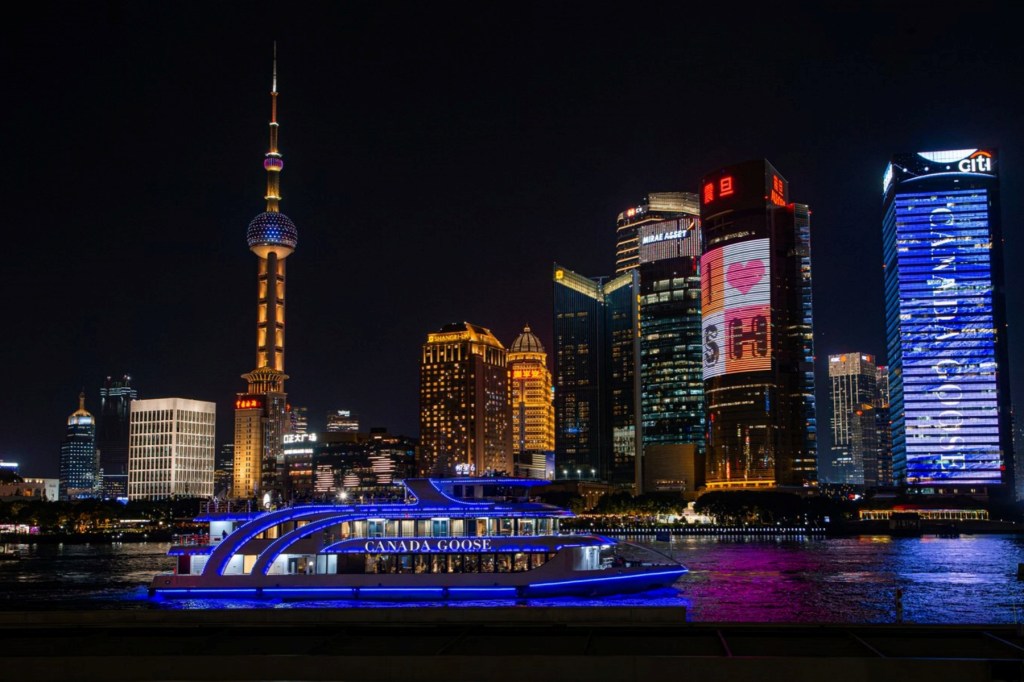
The Canadian outerwear marque is the reason why I’m amidships, in the heart of China’s most cosmopolitan megacity, in the first place. Surrounded by a contingent of style editors from Hong Kong, Singapore and Australia, Forbes has been invited to take part in Canada Goose’s inaugural ‘Expedition’ to Mainland China.
Globally, the brand is known for its emphasis on exploration and spirit of “Great Northern” adventure. In the past, Canada Goose expeditions have taken guests to pristine natural environs at the far-flung edges of the world – think Lapland or Chile’s Paine mountain range.
That makes Shanghai a slightly curious follow-up setting: especially for the brand’s most significant moment, in its single biggest market in the Asia-Pacific, for 2026.
The decision, predictably, was a very deliberate one. In the two days Western media spend on the ground with Canada Goose, brand executives keep alluding to the way in which Shanghai’s cityscape is “shaped by contrast”.
There is, of course, the thematic dimension – a bustling port city where ancient traditions intersect daily with cutting-edge ideas and technology – yet the brand’s interest has almost as much to do with Shanghai’s literal geography. It is currently home to 1,000 parks and public spaces with “accessible greenery”, while just under 20 per cent of the Shanghai ‘municipality’ (ergo, its developed urban core) is covered by forestry.
For Canada Goose, the setting embodies the best of both worlds: contrasting intricate cultural landmarks with walkable, outdoor spaces. Marketers also seemed eager to gauge how ‘Natural Intelligence’ could adapt itself for such an urbanised scenario: Canada Goose brand-speak for an internal philosophy positing the “spirit of exploration exists everywhere”.
1:10PM, Kerry Centre Pop-up
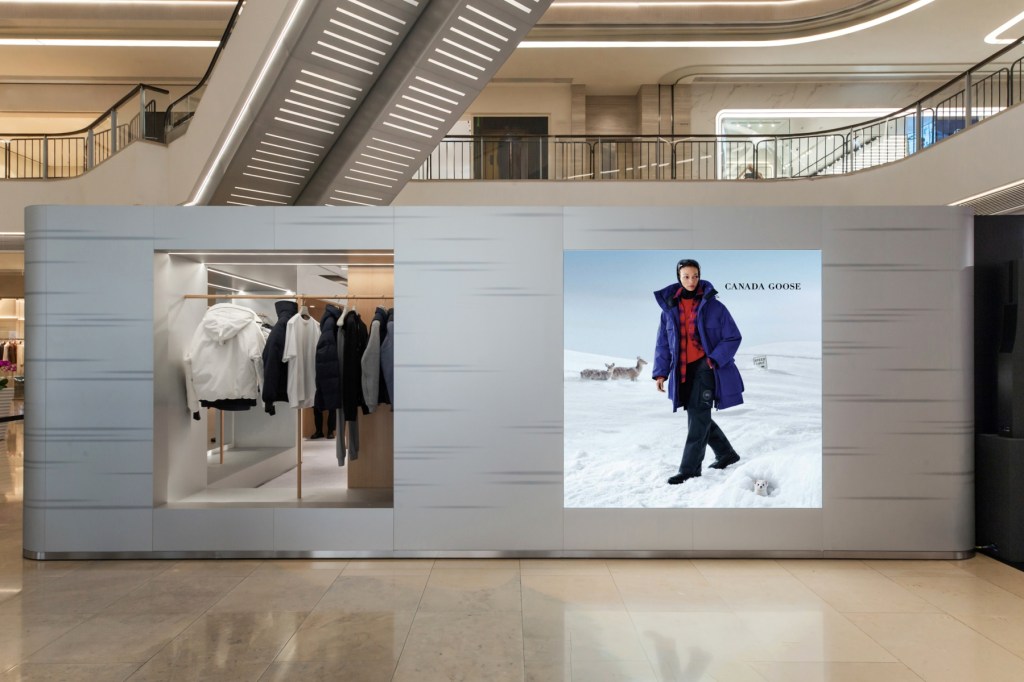
Our expedition proper begins at JingAn Kerry Centre: one of Shanghai’s premier commercial destinations. It seems odd to assert that the centrepiece of any press trip might take place on the ground floor of a shopping mall, yet that’s precisely the case here.
Canada Goose already fields a substantial presence in Shanghai, with three stores serving a potential half-million customers across the bustling district of Huangpu. But the pop-up we’ve been invited to is much more instructive in a number of ways, especially if its eventised opening is any indication.
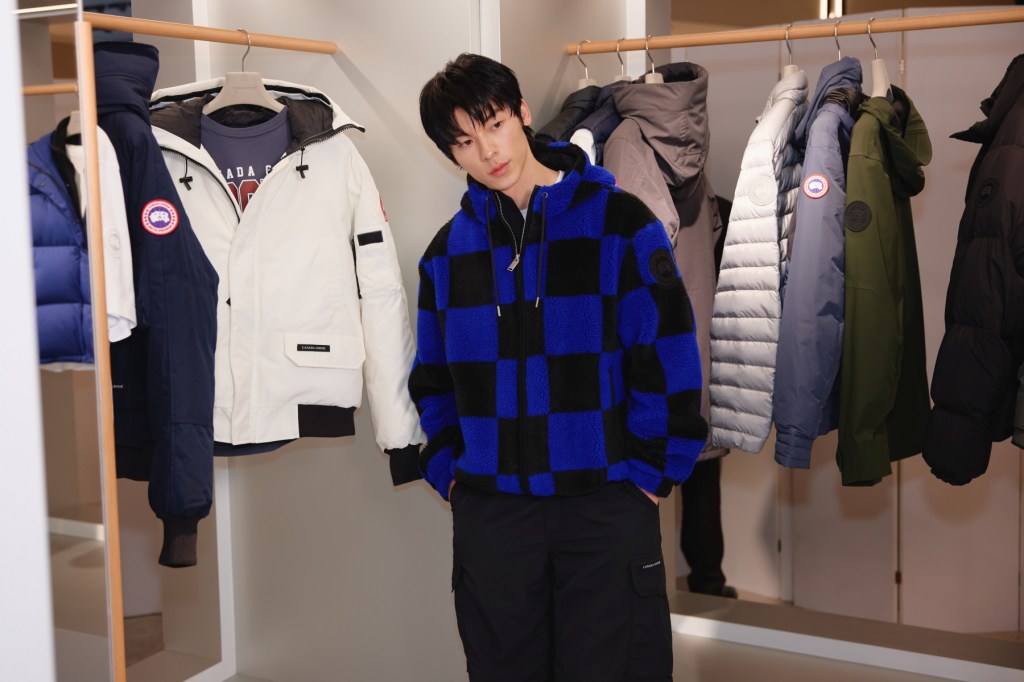
On hand to cut the ceremonial ribbon is Hsu Kuang-han, the Taiwanese heartthrob who has been Canada Goose’s global ambassador since 2025. Instead of the baffled parkas and puffy vests you’d expect such a public ‘friend of the brand’ to be wearing, Hsu makes his entrance in the ‘Harrier’.
A $1,600 hoodie faced in Italian wool fleece, it’s one of the latest pieces from the Apres 2026 collection – presided over by Haider Ackermann (of Tom Ford fame) who, in addition to designing the fashion-forward Snow Goose diffusion, also contributes to Canada Goose’s mainline.
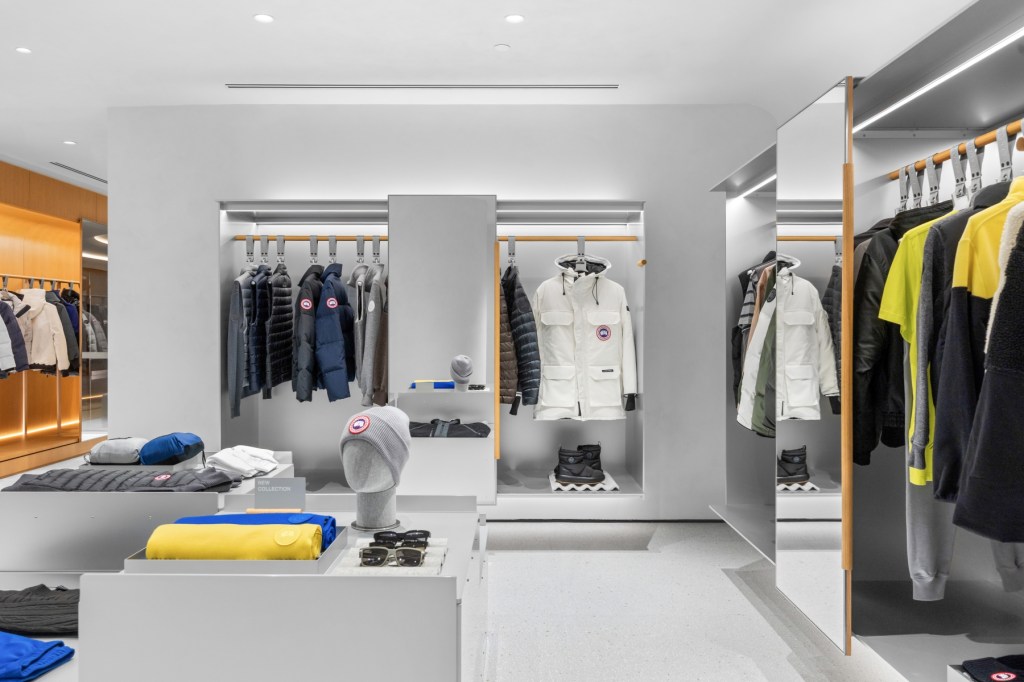
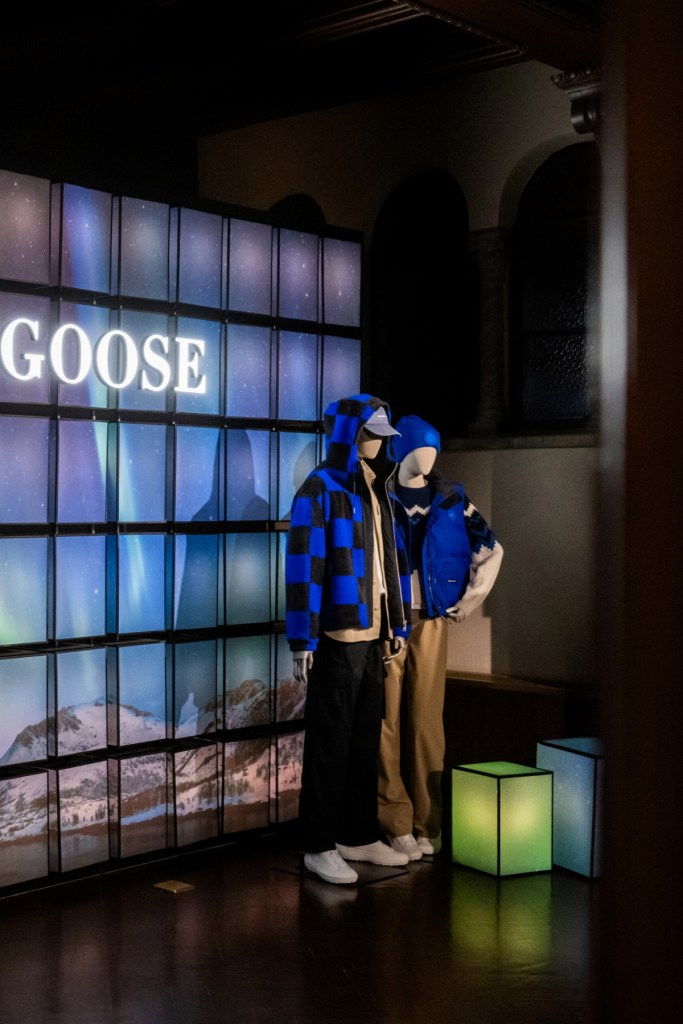
The story told by the merchandise on display, of a brand that has loftier aspirations than being the preferred purveyor of ‘safe’ (albeit extremely well-made) arctic outerwear, was borne out further in the pop-up’s design. Against the polished marble and high ceilings of Kerry Centre, the Canada Goose design language – for its flagship stores across the Asia-Pacific – hove sharply into focus.
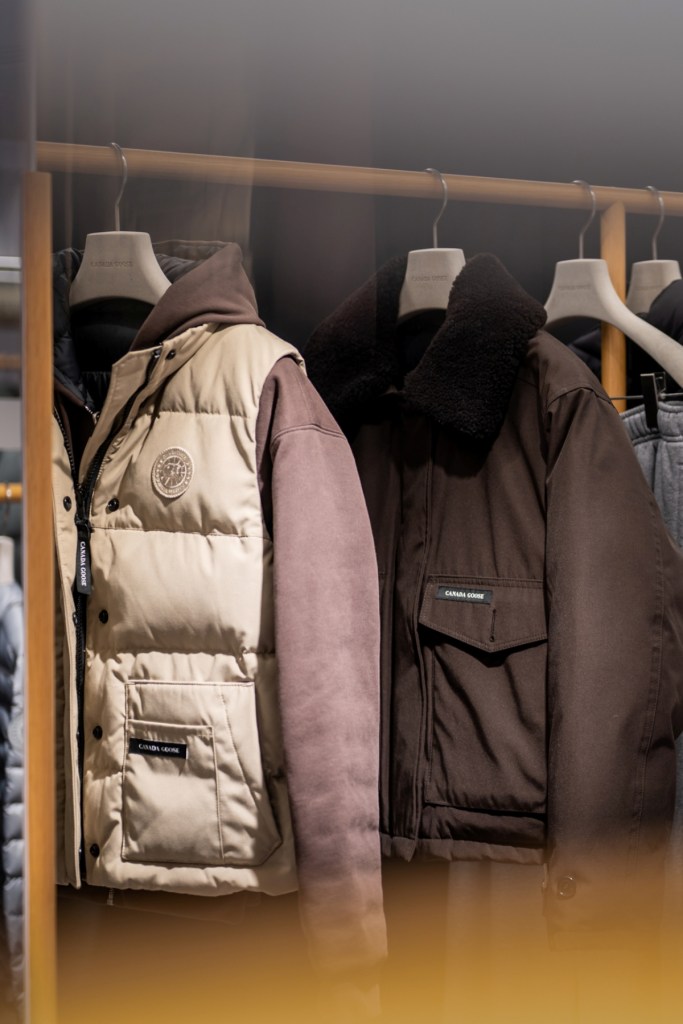
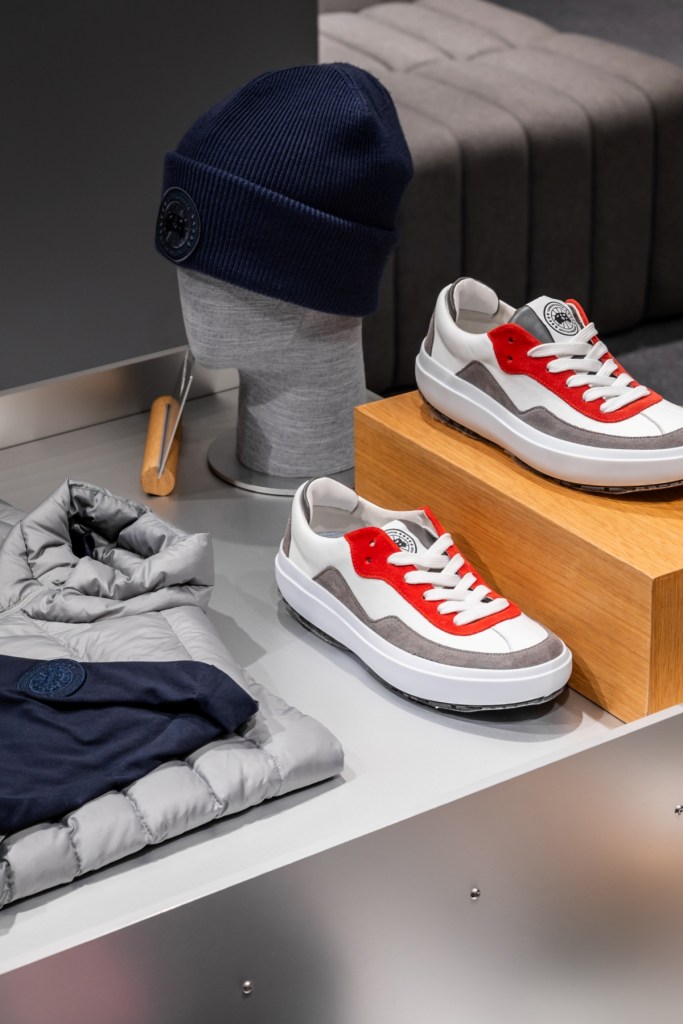
Despite the pop-up’s relatively small square footage, much of the spatial geometry inside remained open and inviting. Hanging racks and integrated storage, tucked neatly at the space’s periphery, helped guests to settle their eyes over a range of knit, quilted and washed garments.
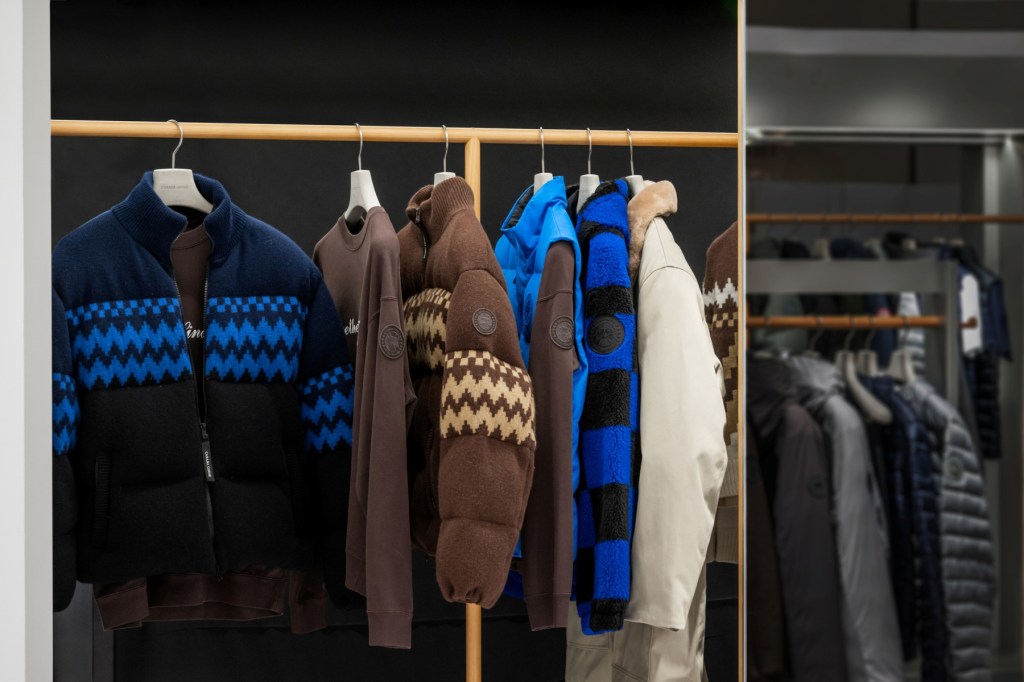
Whenever the brand’s retail designers contemplate a new store opening, their cardinal priority is to create “a warm and layered atmosphere”. To do so, each space is calibrated with contrasting tactile details: such as brushed metal surfaces versus amber lighting, or maplewood racks against wool upholstery.
There’s a clear through-line in how the brand approaches physical retail – enough that even a design neophyte such as myself is able to glean parallels between this pop-up and the new Canada Goose flagship in Sydney, which has just opened 7,800km away.
3:15PM, Shanghai by cruise and ‘Citywalk’
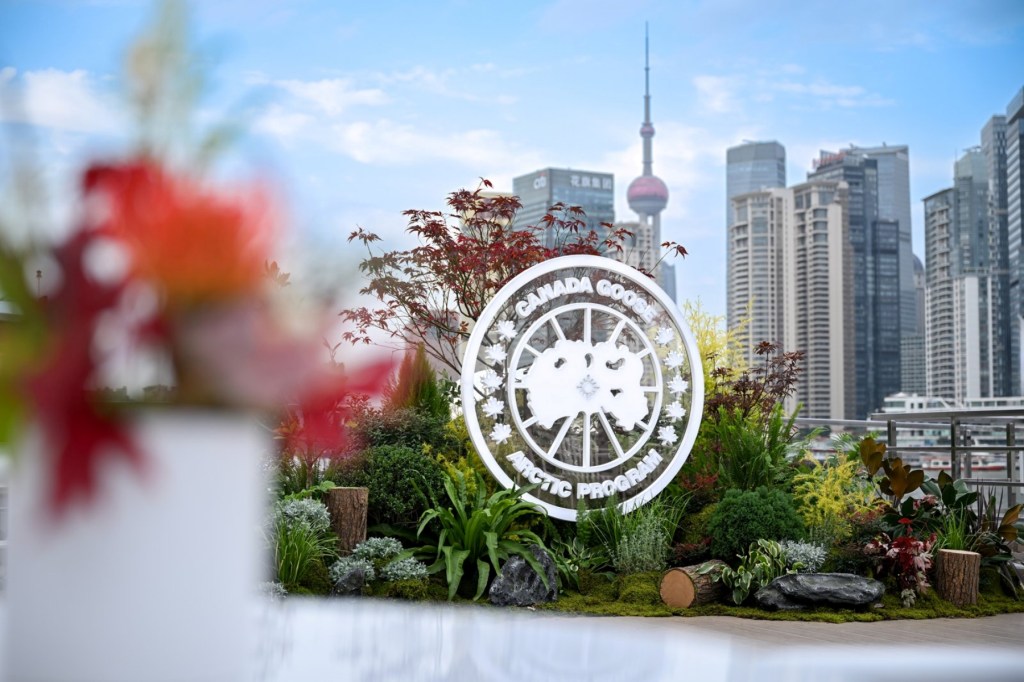
After thumbing through a selection of autumn/winter gear for nearly two hours, the expedition continued onward into Shanghai’s thronged streets. We were shuttled to Waibaidu Bridge – unofficially, one of the most popular set-offs for the viral trend among Chinese netizens of ‘citywalking’.
Like the European concept of flânerie, a citywalk emphasises the individual act of wandering through society: primarily for the purposes of unhurried enjoyment and detached observation. Shanghai is particularly conducive to those aims come November, and once again, it’s evident why leadership at Canada Goose chose to stage their first China expedition here – amid mild weather and crisp daytime temperatures averaging 18 degrees.
This phase of the season, we learn, is called dongzhi: the time in the traditional lunisolar calendar before the mercury plummets into single digits. In any case, it’s an opportune moment to meander down the length of The Bund. Roughly 1.6km from north to south, it offers Shanghai’s best preserved cluster of colonial-era architecture.
A bilingual tour guide seconded to us overseas visitors explains (or attempts to, at least) the long history of the area at breakneck pace. He points out Customs House, Gutzlaff Signal Tower and the iconic Peace Hotel – a mere handful of 52 illustrious landmarks that give The Bund its inimitable, Gotham-esque posture.
Clouds form only occasionally as we make our way to the vessel Canada Goose has chartered for the rest of the afternoon. Even were a sudden downpour to occur, we’ve all been given pouches with disposable raincoats inside.
I can’t help but think that our tour guide is noticeably better prepared: clad in one of the brand’s ‘Rupert’ jackets, complete with sealed seams and reflective detailing.
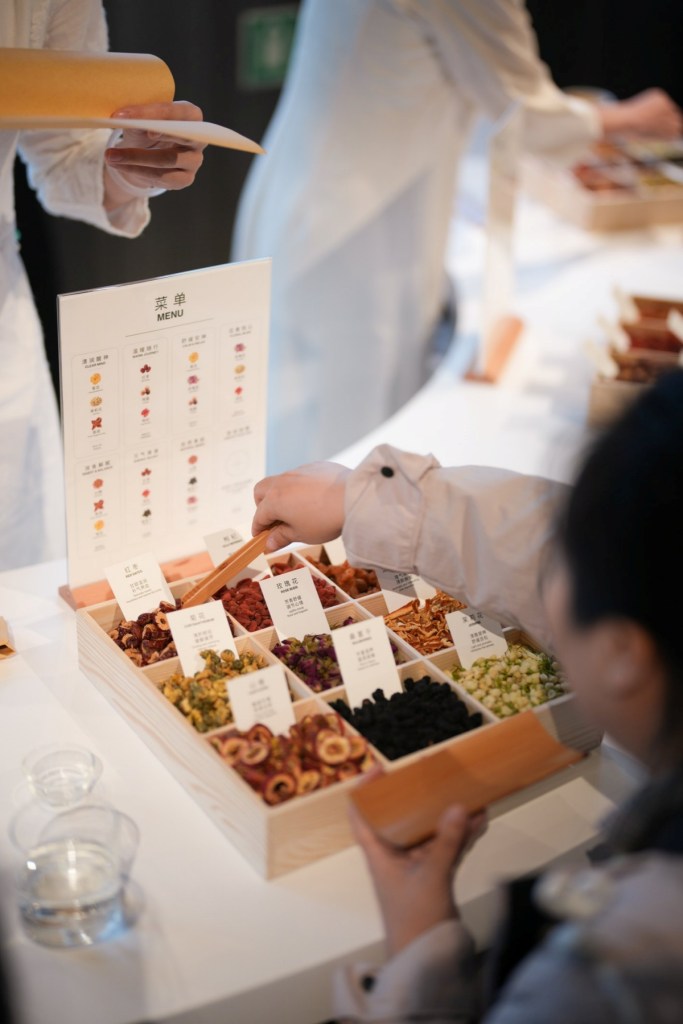
Aboard the “SS Shanghai Goose” (as I decide to unilaterally christen it) a range of workshops once again filter ‘natural intelligence’ through the lens of Chinese culture. There are stations dedicated to TCM-inspired tea blending and coffee grown in Yunnan, while guests of a craftier temperament try their hand at making bag charms.
After the harrowing ordeal of having to walk several hundred metres, I situated myself on the ship’s lower deck, where a documentary entitled Snow Leopard Patrol is being screened. The film plays with little in the way of fanfare, but an audience gradually forms: evidently, people are intrigued by the work of national park rangers – the titular Snow Leopard Patrol – tasked with protecting wildlife and wetlands in a remote expanse of China colloquially known as the ‘Water Tower of Asia’.
7:30PM, an evening of haipai glamour at Sun Ke Villa
Following a more-than-six-hour itinerary – including a store opening, citywalk and cruise along The Bund – you’d assume Canada Goose would put a pin in proceedings after bringing its expedition guests safely ashore. But the brand, it transpired, had one final trick up its sleeve.
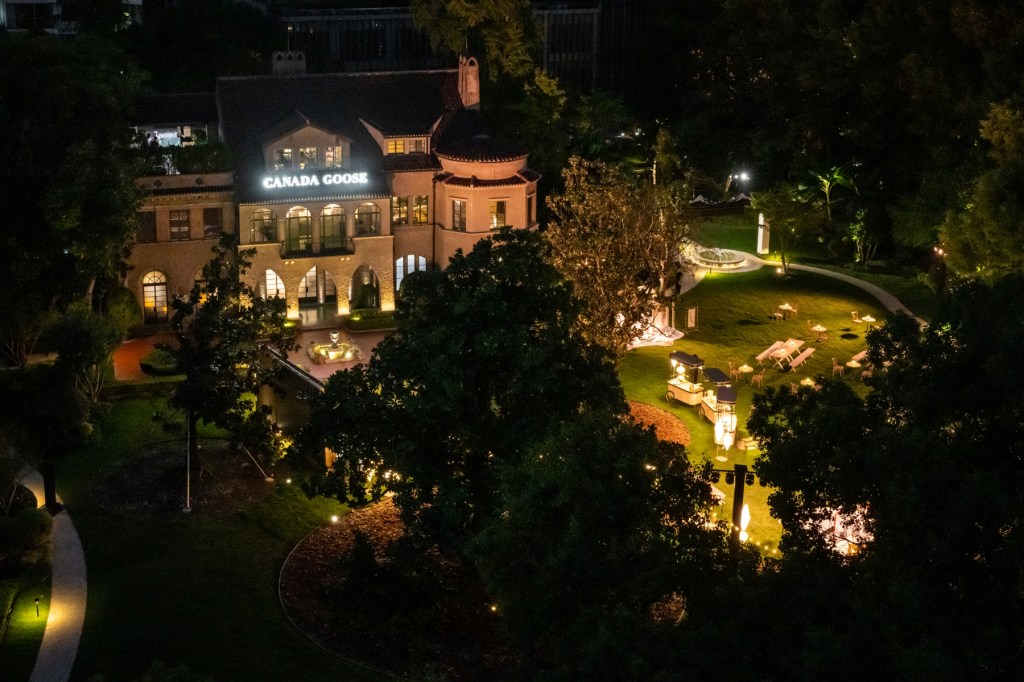
As the sky darkened to a nocturnal blue, we were once again whisked westward to Changning: a highly residential part of Shanghai, known for verdant public parks and its concentration of ‘outstanding historic buildings’. Few structures rival Sun Ke Villa for historical significance – where we are deposited for the evening’s entertainment.
Built in the late 1920s by the prolific Hungarian-Slovak architect László Hudec, the villa began life as the residence of the eponymous Sun Ke: a Republic-era statesman, notable for being the son of China’s ‘Father of the Nation’. Looking around the villa’s manicured gardens and comely Spanish-style arches, it was clear Canada Goose had marshalled every available resource to bring its first China expedition to a memorable conclusion.
Together with a number of satellite markets, including Hong Kong and Macau, ‘Greater China’ accounts for more than 32 per cent of the brand’s annual revenue. The scope and scale of this garden party was a recognition of that reality.
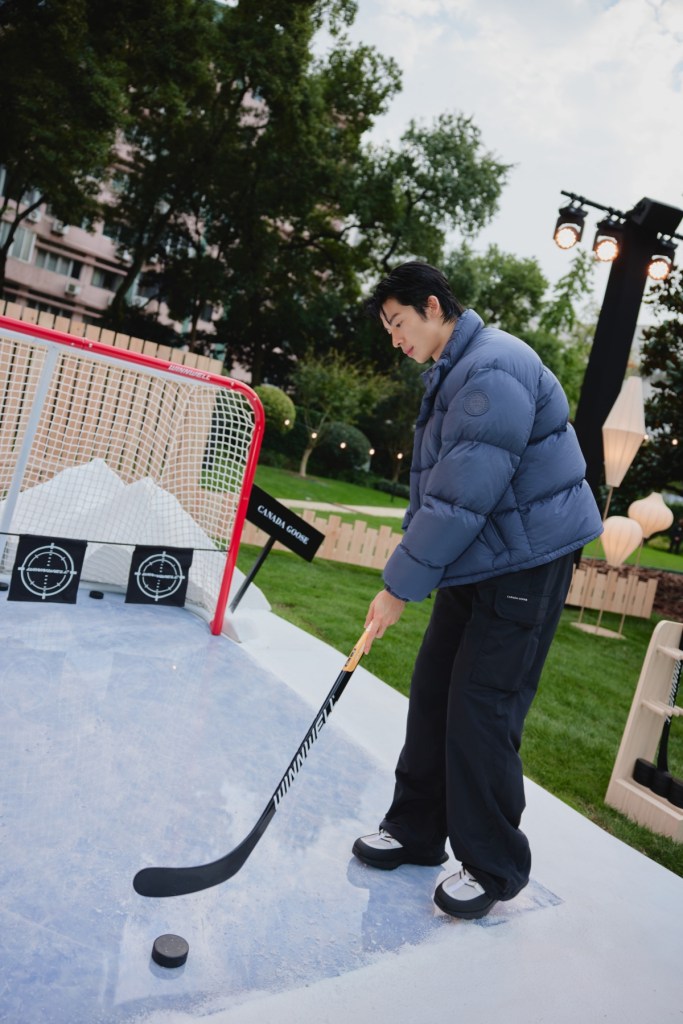
Outside, food stalls parked beneath the villa’s soaring magnolias dispense traditional Shanghainese snacks while the distinct thwack of hockey can be heard intermittently in the background.
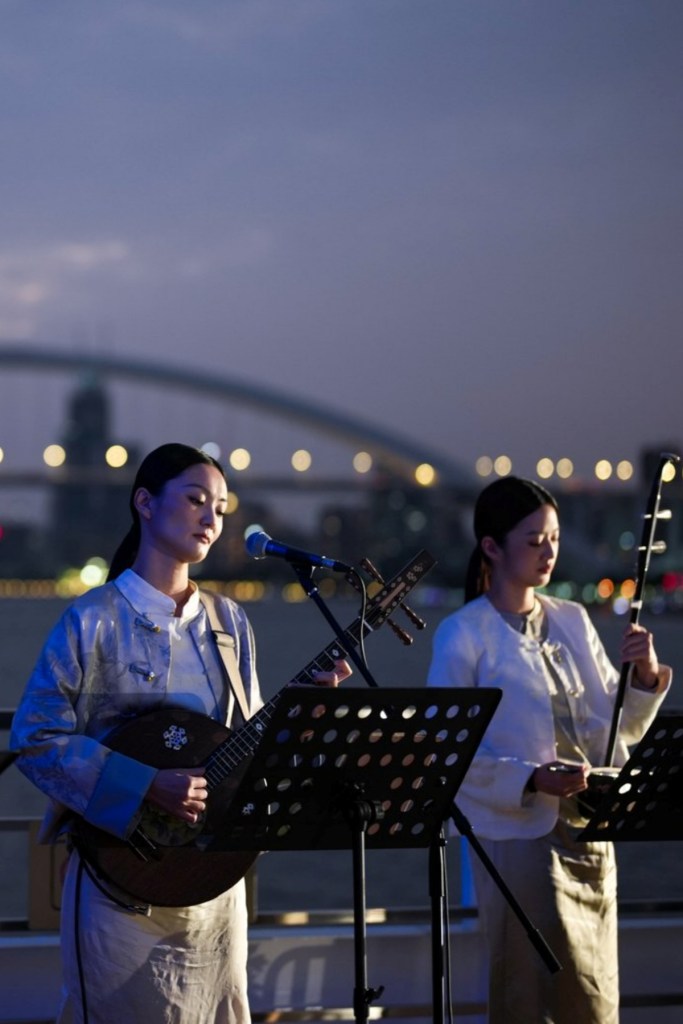
Over the next two hours, there are a handful of musical performances that encourage widespread attention, but guests are largely left to their own devices. Free, in the words of Canada Goose itself, to embrace the “spirit of exploration” – whenever and however they choose.
In an industry where brands habitually spend millions of dollars to hold consumer awareness hostage, online and in situ, inviting your client to choose their own adventure is an underrated gesture.
Want to see more Forbes articles on your feed? Tap here to make Forbes Australia a preferred source on Google.
Look back on the week that was with hand-picked articles from Australia and around the world. Sign up to the Forbes Australia newsletter here or become a member here.