National Geographic, Disney Plus and Wild State Productions teamed up with the Hemsworth family to tell a deeply personal story. The subject matter is diagnosed in 10 million new people every year, and is often not talked about.

Aussie superstar Chris Hemsworth has spent decades in front of the camera, best known for his global action and superhero roles. Yet, for his latest and perhaps most personal project, the cameras turned to watch Hemsworth navigate a personal challenge – his father’s battle with Alzheimer’s disease.
The Hemsworths are far from alone. Globally, dementia is diagnosed in 10 million families a year, according to the World Health Organization (WHO). But this is one of the first times it has been shown so intimately on-screen.
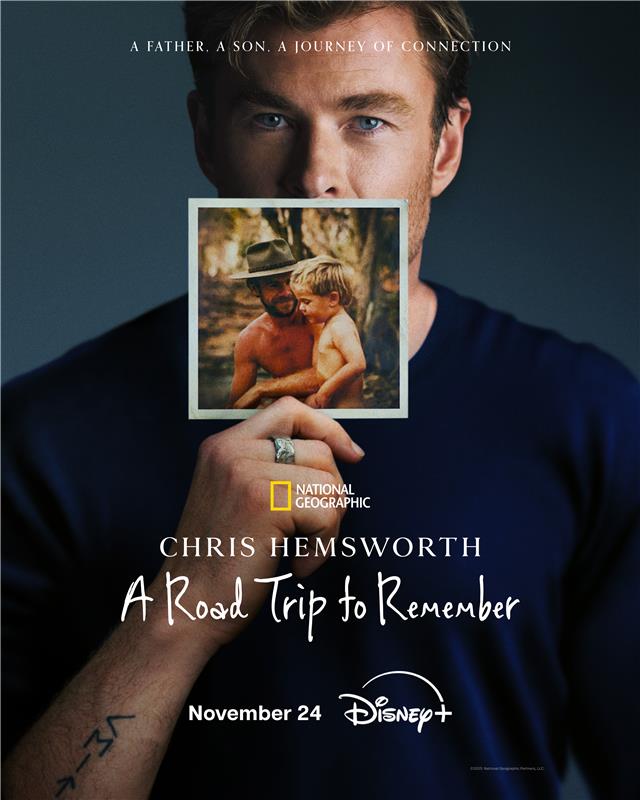
The Disney Plus and National Geographic documentary ‘A Road Trip to Remember’ opens with Hemsworth holding a treasured family photograph. The image captures him as a toddler being held tight by his Akubra-wearing father, Craig, at a Northern Territory Creek. The resemblance between the young father in the photo and Chris today is striking. The photo serves as a powerful foundation to understand both the Hemsworth father-and-son relationship and the documentary’s narrative.
Craig was diagnosed with Alzheimer’s in the last few years. Making this documentary was a way for Chris to understand the disease better and to revive memories of his childhood with his father.
“I feel I’ve been so busy, I probably haven’t spent as much time with my dad as I would want to. And now he’s had a diagnosis,” he says on-screen.
Guided by the advice of medical experts, Chris and Craig journey through two Australian states in a powerful real-life demonstration of Reminiscence Therapy, a non-pharmacological tool to combat cognitive decline.
A road trip in Reminiscence Therapy
This therapeutic strategy traces its intellectual origins back to the 1960s with psychiatrist Dr. Robert Butler’s work on “life review.” Documentary director Tom Barbor-Might says roadtripping into the Hemsworths’ past provided the film with a narrative structure that has largely gone untold.
Chris, his older brother Luke, and younger brother Liam relocated to the region during their childhood years in the 1990s. Their mum Leonie and 40-something-year-old father Craig, relocated the family to the ‘Top End’ from the southern state of Victoria. Craig worked on a cattle station as a stockman and buffalo musterer in the remote outback.
The story comes to life as Chris, now a father himself, journeys back to the formative place that shaped his childhood, at the same age his father was when they lived there.
A tale of two states: Northern Territory and Victoria
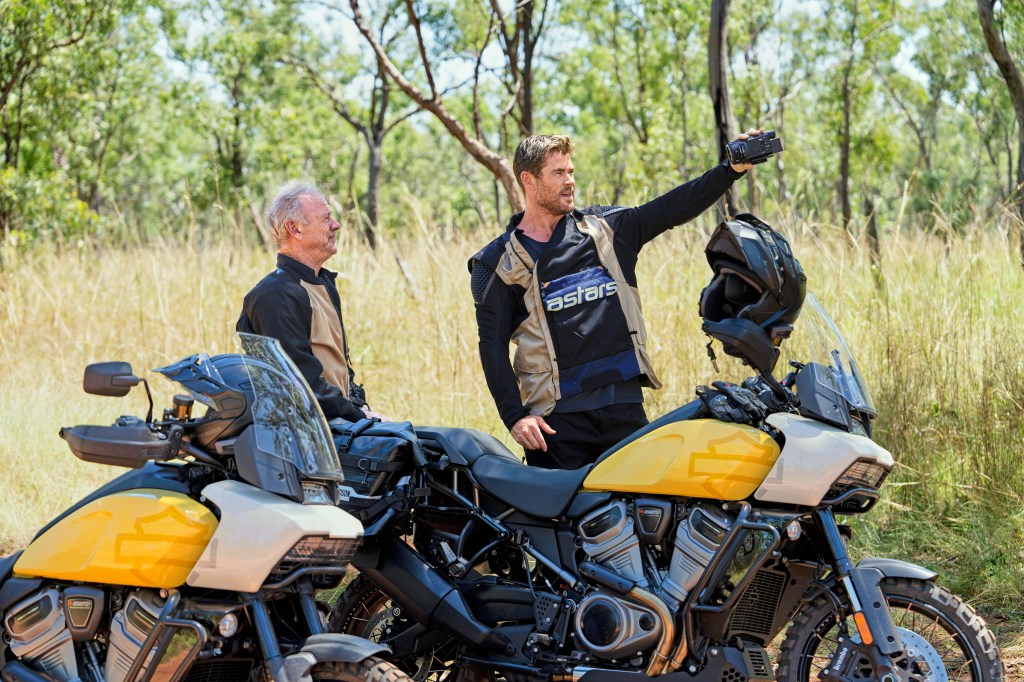
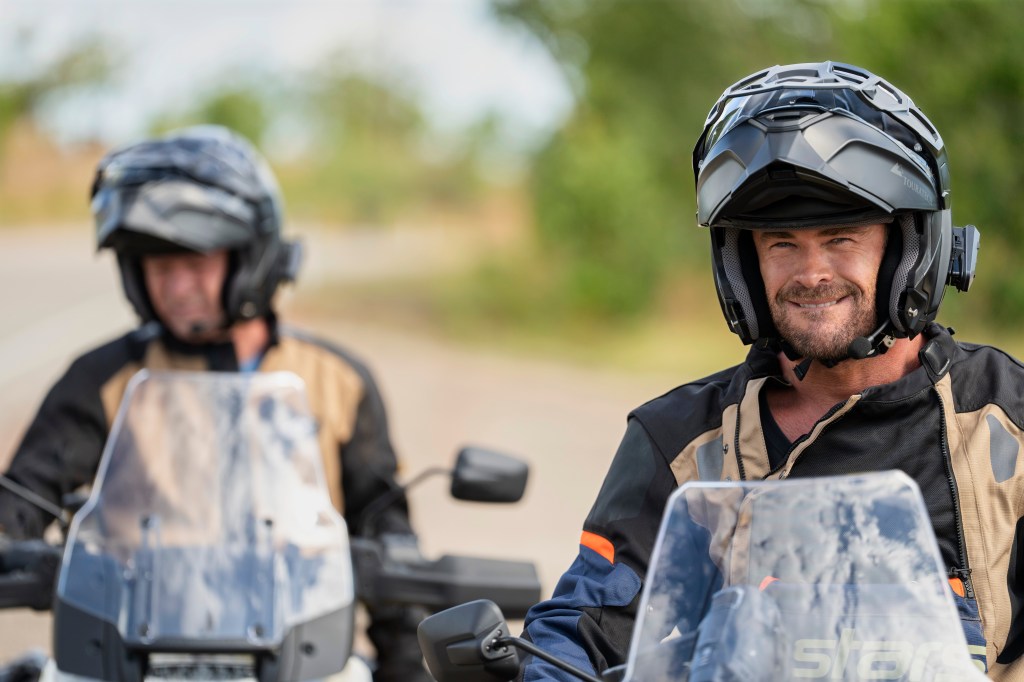
At the outset of the documentary, Chris and Craig set off on Harley-Davidson Pan America 1250s for their 300 km road trip from Katherine to the rural community of Bulman. Barbor-Might, who had worked with Chris previously on his Limitless series, notes that the Bulman years were a “foundational piece of who they are as a family” and a source of “real happiness and pride” for the Hemsworths.
The director says both he and the Hemsworths set out to tell a story that was both intimate and “set against this epic, wide, aerial landscape.” To capture the intensity of the subject matter, Barbor-Might avoided shooting content in standard medium framing, instead focusing on two visual extremes: intimate close-ups to capture details and facial expressions of the subjects, and epic wide or aerial shots to showcase the vast Northern Territory landscape.
Later, the documentary shifts focus, relocating to the Hemsworth boys’ teenage home 4,000 km away in Victoria’s capital city, Melbourne. The use of Reminiscence Therapy goes even further in Melbourne, as the production team went to extraordinary lengths to rent and deck out the Hemsworths’ old Melbourne home with the furniture and exact decor they grew up with.
Reviving the Hemsworth’s Heathmont home
The recreated home included details like a similar couch to the one they had relaxed into as a family and replicas of framed pictures. Chris’s bedroom wall sported the ‘Point Break’ poster he treasured in his teen years, and a replica of his bedspread. A Vegemite jar is seen in the kitchen, and the living room shelves feature the wooden planes Craig made for his boys.
To achieve historical accuracy, the largely Australian-based crew referred to a photo album full of images of the Heathmont home. On-camera, Hemsworth matriarch Leonie guides her husband, son and the audience through the restored memories. The three Hemsworths sit down to watch a home video of teenage Chris imitating Aussie croc legend Steve Irwin. “It’s a step back in time,” notes Craig.

The impact of the trip down memory lane was evident to Leonie and Chris. “I think my dad got a lot out of today. It feels like there’s been a real benefit, and the experience stimulated and triggered his memories,” Chris says.
The science of recall: why Reminiscence Therapy works for dementia
Clinical psychologist Dr. Suraj Samtani explains in the documentary that Reminiscence Therapy forces the brain into a “mental workout” of memory retrieval.
“We know that revisiting past experiences by talking to someone about it, even using objects from the past or places from the past, is a great way to boost our cognition,” Dr. Samtani explains.
The process offers small but consistent benefits for the patient’s quality of life, communication skills, and mood. By requiring Craig’s brain to actively retrieve complex, emotionally rich data, the therapy provides meaningful stimulation and purposeful engagement, stabilising the emotional and practical landscape of the condition.
Director Barbor-Might reiterates the value of the Reminiscence Therapy with a helpful analogy. “Remembering is a workout for the brain it is like going to the gym for your memory.”
The complex reality of cognitive declineoo
The strength of the documentary lies in its frank portrayal of the daily reality of early-stage Alzheimer’s. Barbor-Might’s film, executive produced by Darren Aronofsky, faced the challenge of constructing a deeply personal journey between two stoic men looking to connect on a challenging issue. It is gorgeously shot with all of the bells and whistles you would expect from Disney Plus and Nat Geo, and doesn’t just deliver on its promise, it far exceeds it.
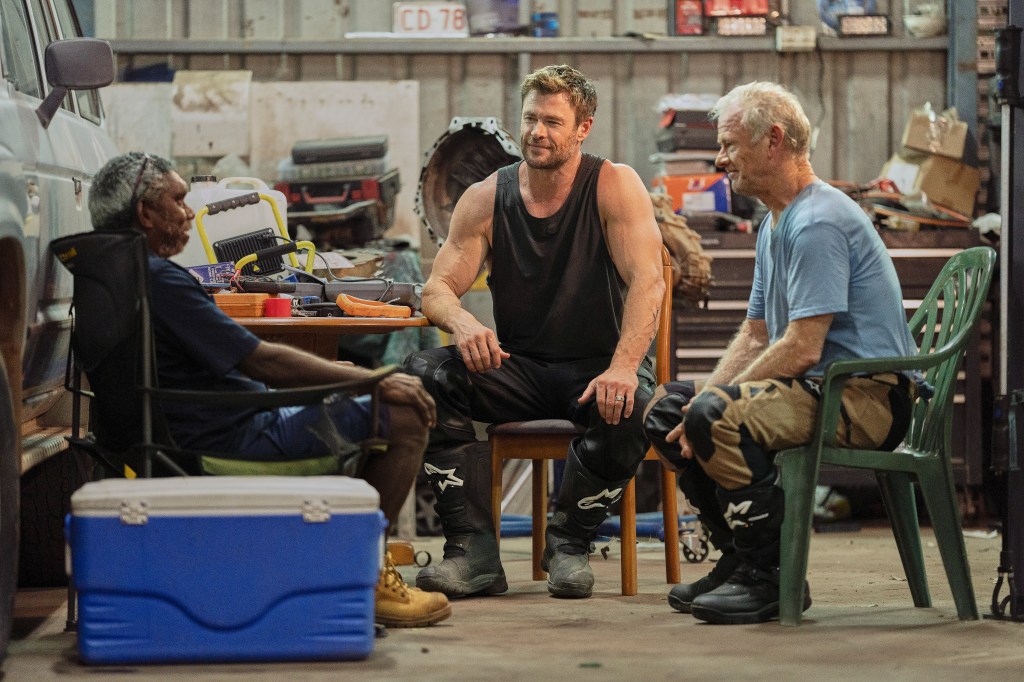
Leonie shared the difficulty of adjusting to the disease’s progression with Chris, speaking honestly about the emotional struggle and the difficulty of watching her partner change as the disease takes hold. It’s a scene that will resonate with families all over the world, facing the same conversations and upheavals that Alzheimer’s inevitably brings. Craig has good days and bad days, she reveals.
“I want that relationship [I had.] And I wake up in the middle of the night, and I’m terrified to think where it’s all going,” Leonie tells her son. Chris also acknowledged the difficulty of navigating the behavioural changes in his steadfast father.
“It’s a confronting and really tough thing to navigate, because with his personality… I’m not sure if he is forgetting, or if he is insisting on doing things his own way.”
How familial relationships and roles can shift
The documentary underscores how Alzheimer’s changes the core relationships of a person living with the condition. It’s a “very specific story… to illuminate a really universal issue,” Barbor-Might says. Craig wanted to open a door for other families to discuss the disease, the director notes.
“His motivation was sharing this experience which feels maybe lonely and esoteric and individual, but actually is anything but,” Barbor-Might says. “I think it’s really easy when you go through these things to sort of feel very alone, and cut off and scared, maybe even ashamed… and actually, you couldn’t be less alone.”
The director’s prior professional relationship with Chris was crucial in establishing the environment necessary for this level of honesty. This history was key to earning the trust required for the family to be so vulnerable on camera.
Stoicism, comfort, and connection
The climax of the father-son journey on motorbikes occurs late in the Northern Territory portion of the trip, where Chris and Craig share a candid conversation while camping near the site of their childhood photograph. Around the campfire, they had their most honest exchange. Chris admits that talking about his father’s condition is difficult: “As strange as it sounds, it’s hard for me to ask those questions. And I think we have been avoiding it… just for our comfort, I guess.”
Craig says the condition’s fluctuating nature is his greatest fear. He candidly discusses the daily reality of his life: “Some days are better than other days. It’s sort of the way that it sneaks up at times and catches you out.” He adds, reflecting on his fear of decline, “Being a burden is probably the biggest issue, I think. And just losing contact with people…”
Chris, sitting across the fire, counters this fear directly, metaphorically and physically reaching out. “You’re not gonna be a burden, mate. We’re all in it together. Just as you took care of us,” he tells his dad.
The APOE4 gene
While the primary focus remains Craig’s experience, the urgency behind the family’s dedication is contextualised by the generational risk facing them. Chris Hemsworth reveals in the documentary he is also at high risk for the disease. In 2022, he learned he is among the 2-3 per cent of people who are carriers of the APOE4 genes.
He is genetically predisposed to be diagnosed in the future, he notes, and is not challenged by Alzheimer’s currently. Still, Craig’s experience provides crucial firsthand insight into the patient experience.
“This has become a very prominent conversation in my world, because I also have two copies of the gene that puts me in a higher risk category for Alzheimer’s,” Chris tells the audience.
By allowing themselves to be vulnerable on camera, this father and son illustrate that while their personal struggle is specific, the short-term benefit is clear:
“I don’t know if this grand piece of reminiscence therapy will have a long-term effect. I know in the short term, he became more engaging and outspoken, more comfortable.” Chris reflects. And that sets the tone for the future.
“I find myself wanting to spend more time with him, and just appreciate every moment.”
Look back on the week that was with hand-picked articles from Australia and around the world. Sign up to the Forbes Australia newsletter here or become a member here.