Liang Wenfeng, founder of China’s homegrown AI giant DeepSeek, shoots up to No. 3 with a $46 billion fortune.
This story is part of Forbes’ coverage of China’s Richest 2026. See the full list here.
China’s AI-driven export boom couldn’t offset the drag over the past year from the domestic market, which continues to be dogged by weak consumption and a sluggish property sector. The benchmark CSI 300 index contracted 7% since we last measured fortunes, causing the wealth of more than half the tycoons on the list to decline. Collective riches are down to $1.3 trillion from $1.35 trillion last year.
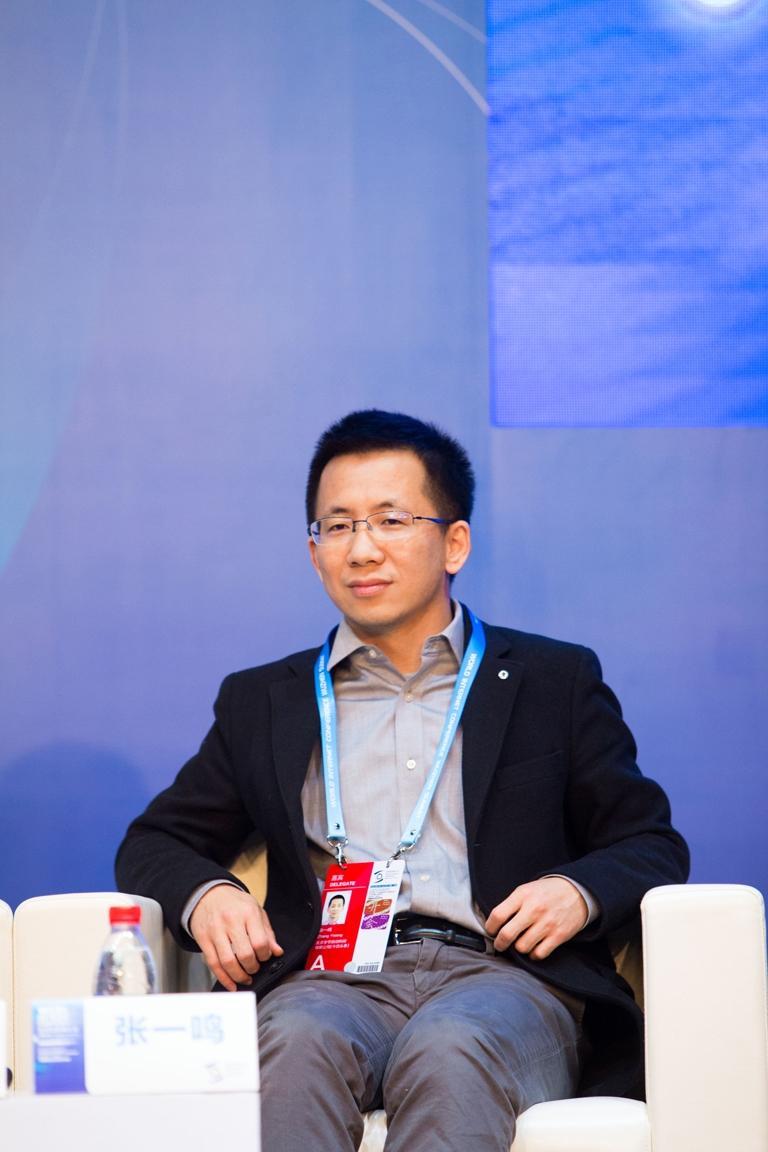
Bucking this trend is ByteDance cofounder Zhang Yiming, who sprints to No. 1 for the first time after boosting his net worth by $14.7 billion to $84 billion. Best known for its TikTok short-video app, the company is going all-in on AI with a proposal to invest as much as $70 billion this year, mainly in
AI infrastructure.
After five years at the top, Nongfu Spring founder Zhong Shanshan slips to No. 2 with his fortune shrinking $16.9 billion to $60.2 billion. Shares of the water and beverage giant dropped by nearly a quarter from a year ago amid slowing revenue growth in a saturated domestic market.
Liang Wenfeng, founder of China’s homegrown AI heavyweight DeepSeek, jumps 31 spots to third place as his fortune balloons by $34.5 billion to $46 billion. Liang is the biggest gainer in dollar terms, thanks to an October funding round that valued the privately held company at over $75 billion.
Another notable gainer is Chen Jianhua, chairman of petrochemicals conglomerate Hengli Group, which floated its shipbuilding unit through a backdoor listing on the Shanghai Stock Exchange last year. Chen more than doubles his fortune to $25.2 billion and rises 30 spots to No. 10 amid surging global demand for new vessels.
The seven newcomers this year all hail from AI, robotics or related fields. The wealthiest is Zhu Yiming, cofounder of chipmaker CXMT, with a $13 billion fortune. Three months after its July listing in Shanghai, the company’s disclosure that it was close to launching the next generation of high-density memory chips sent shares of global rivals tumbling.
The only woman to debut is Wang Xin, chairman and general manager of Guangdong Dtech Technology, a maker of precision cutting tools for printed circuit boards. Another notable newcomer is Wang Xingxing, founder of humanoid robot maker Yushu Technology, also known as Unitree, who at age 36 is now the youngest member of the list.
Six tycoons return to the ranks, including Zhang Wanzhen, who draws the bulk of his wealth from a stake in electronic components maker Chaozhou Three-Circle (Group), where he was chairman until he stepped down in 2021. The company’s Shenzhen-listed shares more than doubled from a year ago on AI-driven demand for its products. There are 13 drop-offs, with the minimum net worth to make the list rising to $4.75 billion from $4.6 billion last year.
Full Coverage of China’s Richest 2026:
- Chinese Chip Magnate Amasses $13 Billion Fortune On Claims Of Tech Breakthrough By CXMT
- Beverage Billionaire Lin Muqin’s Wealth Flattens As Sales Of Energy Drinks Lose Fizz
- Billionaire Humanoid Maker Is Youngest Newcomer Among China’s Richest Despite Post-IPO Stock Dive
- Fast Fashion Giant Shein Loses Sheen Amid Global Headwinds
- The AI Boom Is The Gift That Keeps On Giving For China’s Billionaires
Reporting by Enyi Hu, Zinnia Lee and Chengbo Liu.
Methodology
This list of mainland China’s richest was compiled using shareholding and financial information obtained from families and individuals, stock exchanges, analysts, private databases and other sources. Net worth figures are based on exchange rates and stock prices on Oct. 16, 2026. Private companies are valued by using financial ratios and other comparisons with similar companies that are publicly traded. Some family fortunes were split. In order to facilitate comparisons among individuals with similar backgrounds, we include a number of entrepreneurs from mainland China whose citizenship is not People’s Republic of China but their main source of wealth is in the mainland. The editors reserve the right to amend the list in light of new information.
Acknowledgments
Special thanks to Euromonitor International and other specialists who helped with research and valuations, including Charlie Chai, 86Research; Rohit Chandra, Mordor Intelligence; Chen Shuhui, China Merchants Securities; Roman Kalyuzhny, MSCI; Saikat Saha, Mordor Intelligence; Zeng Xiaofeng, Niko Partners; and Zhang Yi, iiMedia Research.
Want to see more Forbes articles on your feed? Tap here to make Forbes Australia a preferred source on Google.
Look back on the week that was with hand-picked articles from Australia and around the world. Sign up to the Forbes Australia newsletter here or become a member here.